

Do you love deep, resonant bass but lack the floor space for a massive speaker cabinet? You are not alone. Many audio enthusiasts and casual listeners face the challenge of fitting powerful low-end performance into compact living rooms, desktop setups, or home theaters.
This guide is crafted for you. We have assessed the leading compact subwoofers on the market to find models that punch far above their weight. Whether you need to enhance a soundbar, complete a bookshelf speaker pair, or add rumble to your gaming station, a mini subwoofer can be the perfect solution. For a broader look at low-distortion audio, explore our guide on the best subwoofers with low distortion.
Top Contenders: Best Mini Subwoofers at a Glance
How to Choose Your Perfect Mini Subwoofer
Powered vs. Passive Design
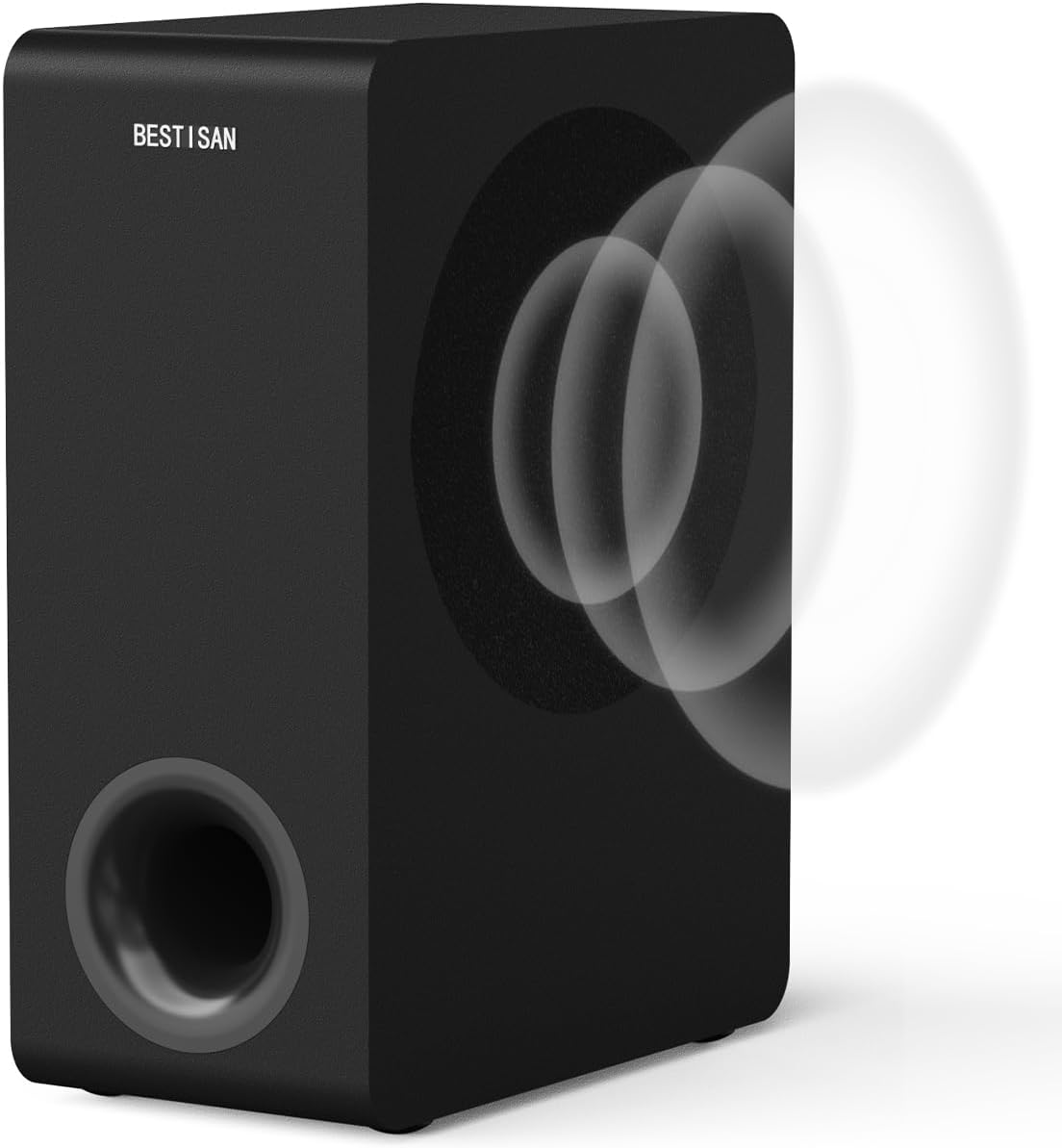
This is your first critical decision. A powered subwoofer, like the BSETISAN Powered Subwoofer, has a built-in amplifier. It simply needs a signal and a power outlet. This makes setup straightforward and versatile.
A passive subwoofer requires an external amplifier to drive it. This offers customization for advanced users with existing audio systems but adds complexity. Always confirm your amplifier’s compatibility, especially with impedance ratings.
Connectivity and System Compatibility
Check what inputs your audio source provides. Most modern mini subs offer line-level RCA inputs, which are common on AV receivers and many soundbars. The LFE input is specifically for home theater receiver connections.
Speaker-level inputs and outputs, found on models like the BESTISAN Powered Subwoofer, let you integrate the sub into a stereo system without a dedicated sub-out port. For wireless ecosystems, a model like the Sonos Sub Mini requires pairing with compatible Sonos speakers.
Driver Size and Cabinet Design
Do not let the small size fool you. Advanced engineering allows compact drivers to produce impressive bass. A 6.5-inch driver in a well-tuned, rigid cabinet can deliver tight and articulate low frequencies suitable for most rooms.
Consider the driver orientation. Side-firing designs can offer placement flexibility, while front-firing models direct sound predictably. The cabinet material, often MDF, is crucial for reducing unwanted resonance and ensuring clean sound, a key feature of modern subwoofers.
Control Features for Fine-Tuning
Look for a low-pass crossover control. This dial lets you set the frequency point where the subwoofer takes over from your main speakers, creating a seamless blend. A phase switch can help align the sub’s sound waves with your speakers for smoother bass.
A dedicated volume knob is essential for balancing the bass level with your system. Some premium models, particularly in wireless systems, offer room correction software via an app to automatically optimize sound for your specific space.
Final Thoughts
Upgrading your audio with a mini subwoofer is a transformative step that adds depth and impact without clutter. For those invested in a seamless wireless ecosystem, the Sonos Sub Mini offers brilliant integration and room-corrected sound. If you seek maximum value and versatile connectivity for a traditional wired setup, the powerful and compact Edifier T5 Powered Subwoofer is an outstanding choice. Whichever you select, you will unlock a new dimension of sound.
Frequently Asked Questions
Can a mini subwoofer really make a difference for my TV or music?
Absolutely. A dedicated subwoofer handles the lowest frequencies that small speakers or soundbars simply cannot reproduce. This adds palpable rumble to movie explosions, weight to musical basslines, and overall richness to any audio content. The effect is not just heard, it is felt, creating a more immersive experience.
Where is the best place to put a mini subwoofer in a small room?
Bass frequencies are omnidirectional, so placement is more flexible than with main speakers. Start by placing the subwoofer near your front speakers or TV console. The classic “subwoofer crawl” method is effective, place the sub in your primary listening seat and crawl around the room to find where it sounds best, then move it there. Corners can amplify bass but may cause boominess.
Do I need a special receiver for a wireless subwoofer like a Sonos model?
Wireless subwoofers from brands like Sonos are designed to work within their specific ecosystem. The Sonos Sub Mini, for example, requires a compatible Sonos soundbar or speaker to function, connecting via your home Wi-Fi network. You do not need a traditional AV receiver, but you are committing to that brand’s platform for seamless operation.
How do I connect a mini subwoofer to my existing bookshelf speakers?
If your amplifier or receiver has a dedicated subwoofer output (often labeled Sub Out or LFE), use a single RCA cable. If it does not, use the speaker-level connections. Run speaker wire from your amplifier to the sub’s speaker-level inputs, and then another set of wires from the sub’s outputs to your bookshelf speakers. For more on pairing components, visit our bookshelf speakers category.





Write Your Review
No reviews yet. Be the first to share your experience!