

You’ve invested in a great sound system, but your room’s architecture presents a unique challenge. A slanted or vaulted ceiling can make standard speaker placement seem impossible, leaving you with compromised audio or cluttered floor space. Finding a mount that can handle the angle while keeping your speakers securely aimed is crucial for both safety and sound quality.
This guide is for anyone looking to install satellite, bookshelf, or surround sound speakers on an angled surface. We focus on mounts with the articulation and robust construction needed to conquer slopes, ensuring your speakers are positioned for optimal performance without risking a fall. The right bracket turns an architectural quirk into an acoustic advantage.
Choosing the Right Mount for an Angled Ceiling
Adjustment Range and Locking Mechanism
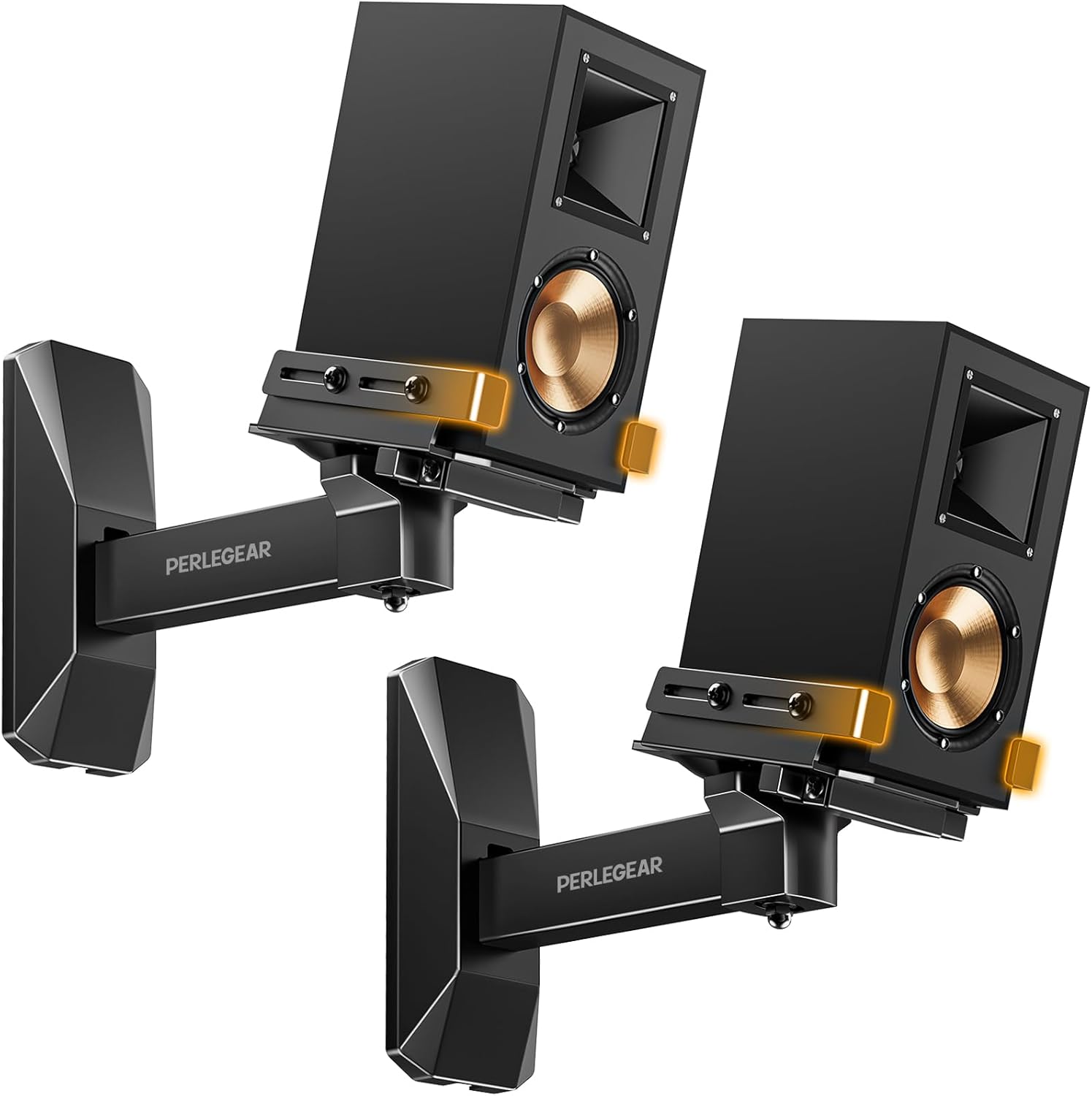
The most critical feature for a slanted ceiling is adjustable tilt. Look for a ball-joint or multi-axis design that offers a wide range of motion, ideally beyond 30 degrees. This allows you to compensate for the ceiling’s pitch and aim the speaker driver directly at your listening area. A secure locking mechanism is equally important. Once you achieve the perfect angle, a friction lock or geared clamp must hold the position firmly, preventing gradual sagging from gravity over time. Products like the Ceiling Speaker Mount for Rear Surround Sound emphasize their locking ball joints for this exact reason.
Weight Capacity and Build Material
An angled installation places different stresses on a mount compared to a flat wall. The leverage effect means you need a bracket with a higher weight rating than your speaker’s actual weight. Always choose a mount rated for at least 1.5 times your speaker’s mass. Construction material is key here. Heavy-duty steel or aluminum builds, like those found in the Surround Sound Rear Speaker Wall Mount, Aluminum, provide the necessary rigidity. Avoid plastic components in critical stress points, as they can creep or crack under constant load on a slope.
Mounting Hardware for Various Surfaces
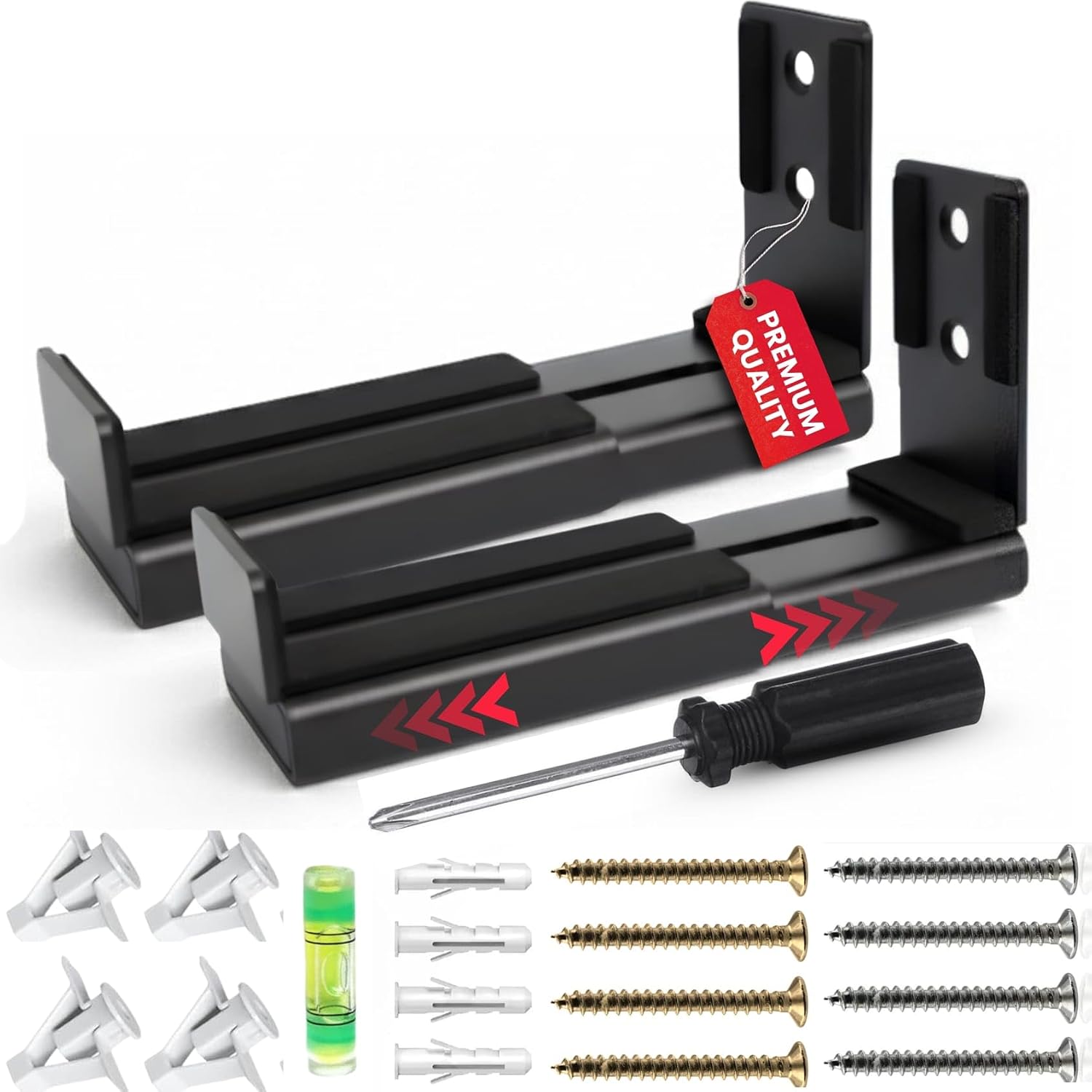
Your slanted ceiling might be drywall, plaster, or even exposed wood. The included hardware must match your surface material to ensure a safe, permanent hold. A complete kit should offer different anchor types. For drywall on joists, long screws into a solid wood beam are best. For mounting between joists on drywall or plaster, high-quality toggle bolts are essential. If your angled ceiling is concrete or brick, you’ll need concrete anchors and possibly a drill bit. Consider your surface and check our guides for drywall, wooden studs, or brick walls for more detailed installation tips.
Compatibility and Installation Flexibility
Verify that the mount fits your speaker’s attachment method. Most modern satellite speakers use a 1/4″-20 thread, 4mm, or 5mm threaded insert, or a keyhole slot. Universal mounts accommodate several of these options. Also, consider the mount’s profile. A low-profile design keeps the speaker closer to the ceiling, which is often desirable on a slanted surface for a cleaner look. Some mounts, like the Pyle Universal Speaker Mounting Bracket, offer telescoping arms for extra positioning flexibility, allowing you to fine-tune distance from the wall or ceiling.
Final Thoughts
Successfully mounting speakers on a slanted ceiling hinges on selecting a bracket designed for the task, prioritizing wide-angle adjustment and a fail-safe locking mechanism. For a versatile, value-oriented solution suitable for most home satellite speakers, the VideoSecu Speaker Wall Ceiling Mount Bracket One is an excellent starting point. If you need to support heavier bookshelf speakers or require extreme tilt adjustment, the robust Speaker Wall, Ceiling, or Shelf Mounts Brackets offers the strength and range of motion needed for challenging angles, ensuring your audio setup is both secure and sonically precise.
Frequently Asked Questions
Can any speaker mount be used on a slanted ceiling?
Not all mounts are suitable. Many basic wall mounts lack sufficient tilt adjustment or a strong enough lock to hold a position against gravity on a slope. You specifically need a mount with a wide-range ball joint or articulated arm and a positive locking mechanism designed to prevent sagging over time.
How do I ensure the mount is secure on an angled drywall ceiling?
The absolute safest method is to locate a ceiling joist and screw the mount’s base plate directly into the solid wood. If you must mount between joists, use the heavy-duty hollow-wall anchors provided in better kits, like toggle bolts, which spread the load behind the drywall. Never rely on simple plastic anchors for this application. Review our guide on speaker mounts for drywall for more specifics.
What should I do if my slanted ceiling is outdoors?
For outdoor installations, you must use mounts specifically rated for exterior use. Look for materials like powder-coated steel or aluminum with corrosion-resistant hardware. The mounting process is similar, but ensuring a weatherproof seal around the mounting points is crucial to prevent water ingress. You can explore options in our dedicated resource for outdoor speaker mounts.
Where can I find more information on different types of speaker mounts?
Our main category page for Speaker Mounts & Wall Brackets is the best place to start. It provides an overview of all the different mount styles, from ceiling and wall brackets to specialized commercial solutions, helping you understand the full range of products available for any audio project.



Write Your Review
No reviews yet. Be the first to share your experience!