

You’ve invested in a great surround sound system, but those rear satellite speakers are still sitting on a shelf or the floor. To achieve that immersive, cinematic audio, they need to be positioned correctly on your walls or ceiling. The challenge often lies in the mounting hardware: many compact speakers use a simple keyhole slot on the back, a feature not all universal brackets support. This leaves you searching for a mount that not only holds your speakers securely but also connects to them properly.
This guide is for anyone looking to mount satellite, bookshelf, or surround sound speakers that have a keyhole slot. We have evaluated five top-rated speaker mounts that include keyhole adapters, ensuring a seamless and secure installation. We focus on universal compatibility, adjustment flexibility, and build quality to help you find the perfect bracket for your home theater, gaming room, or commercial audio setup. For more options tailored to specific speaker types, explore our guide on the best speaker mounts for small speakers.
Buying Guide: How to Choose a Keyhole Speaker Mount
1. Verify Mounting Type Compatibility
The most critical step is confirming how your speaker attaches. Most mounts in this category support multiple methods, including the keyhole slot, a standard 1/4″-20 thread, and smaller metric threads like M4, M5, or M6. Check the back of your speaker for any threaded inserts or a single, recessed keyhole. A truly universal mount will include adapter screws or plates for all these common connections, eliminating guesswork.
This multi-format support future-proofs your purchase. If you upgrade your speakers later, the same bracket will likely accommodate the new model. It provides a hassle-free solution for building or upgrading your system, a key consideration we also highlight in our review of the best speaker mounts for surround sound.
2. Assess Adjustment Range and Ease
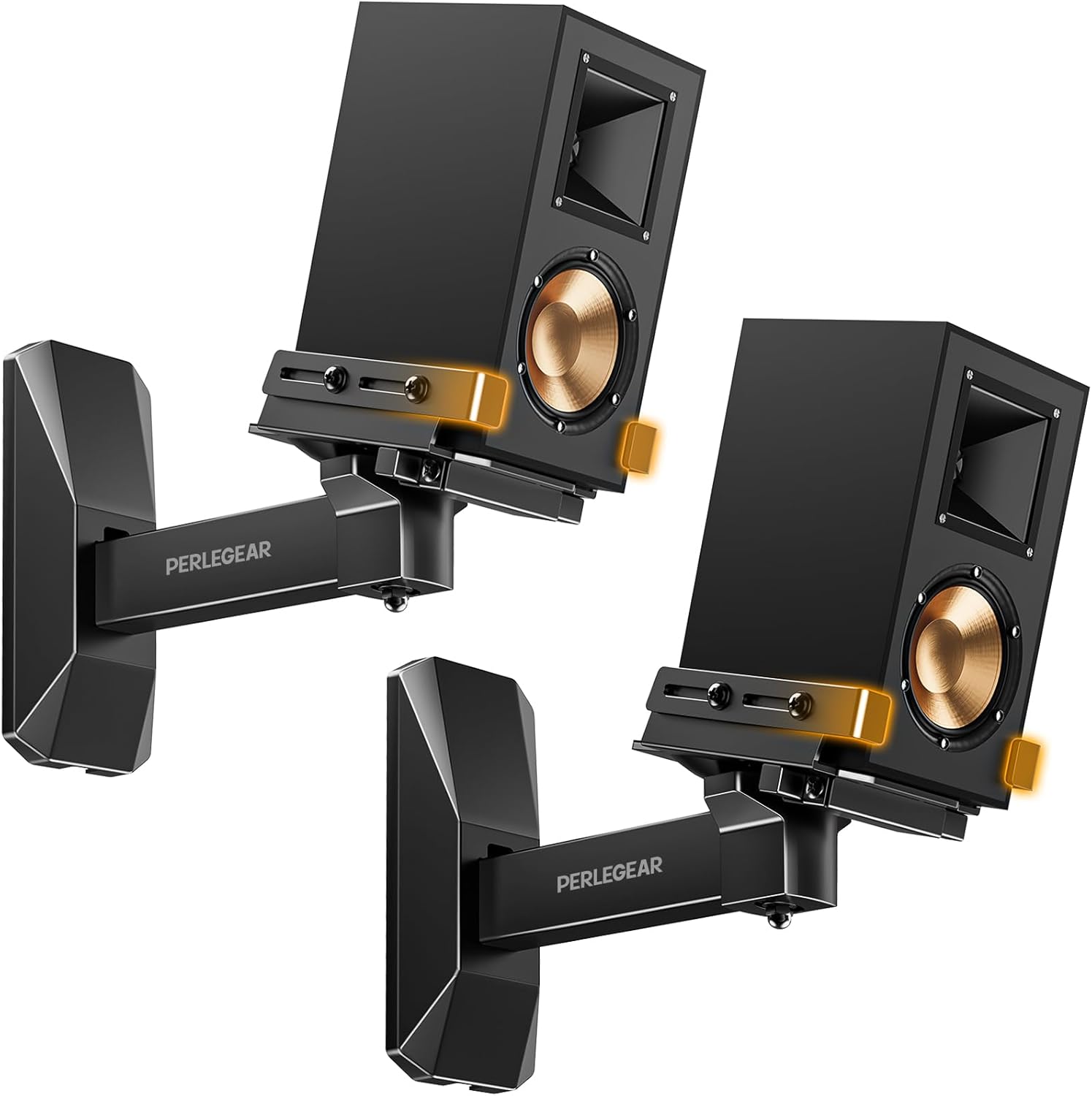
Once mounted, you need to aim your speakers. Look for brackets that offer a wide range of motion. A ball-joint and clamp design is common and provides excellent flexibility, allowing for tilt, pan, and rotation. Some models offer minor adjustments for fine-tuning, while others provide extreme angles, like 120 degrees of tilt, perfect for corner placements or directing sound from a high ceiling.
The goal is to direct audio toward your primary listening area. Easy-adjust mechanisms that lock securely are essential. You want to set the perfect angle without the speaker sagging or shifting over time. This precise positioning is what transforms a standard room into a dedicated listening space.
3. Check Weight Capacity and Build Quality
Always match the bracket’s maximum load rating with your speaker’s weight. Exceeding this limit risks damage to your equipment and your wall. Most mounts for satellite speakers handle between 10 and 32 pounds per bracket. Heavier-duty models use reinforced metal or die-cast aluminum construction for long-term stability.
Durable materials resist corrosion and wear, ensuring your speakers stay safely mounted for years. A robust build is especially important for installations in humid environments like bathrooms or for commercial use. The construction quality directly impacts safety and performance, a principle that applies across all audio mounts, including best Under-TV soundbar mounts.
4. Consider Installation and Included Hardware
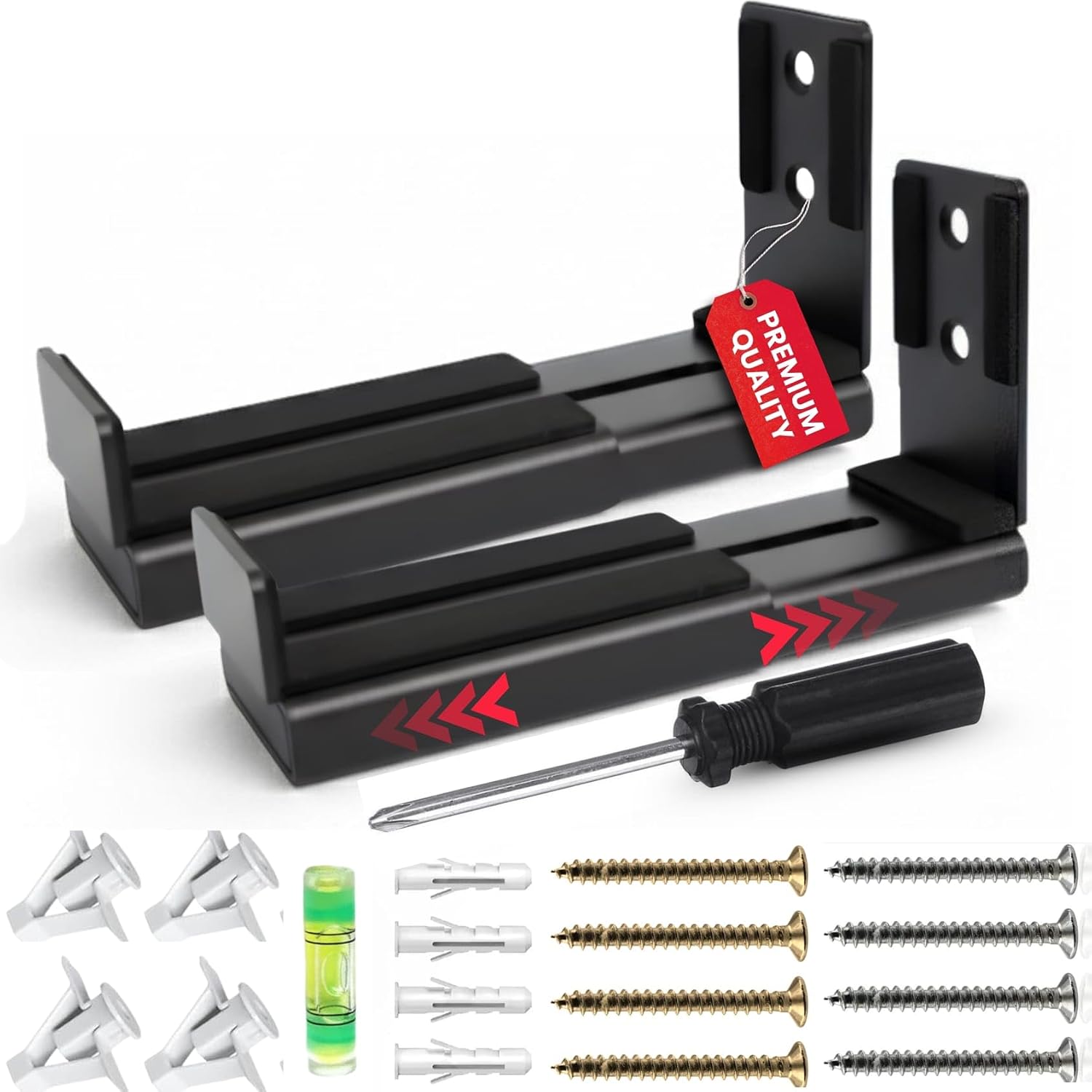
A good mount simplifies installation. Look for kits that include all necessary hardware for different wall types, such as drywall anchors and concrete screws. Clear instructions or even a built-in bubble level can make the process much quicker and more accurate, ensuring your speakers are straight and level.
Consider where you will mount the speakers. Most brackets work on both walls and ceilings, offering placement flexibility. A complete kit means no extra trips to the hardware store. For a broader look at installation solutions for various audio setups, you can visit our main Speaker Mounts and Wall Brackets category page.
Final Thoughts
Choosing the right mount elevates your audio experience by ensuring your speakers are securely positioned for optimal sound. For most users seeking reliable flexibility and wide brand compatibility, the Universal Rear Speaker Wall Mount Bracket is an excellent all-around choice. If your setup requires supporting heavier speakers or more extreme angling, the robust Surround Rear Speaker Wall Mount, Up to 32 lbs offers superior strength and a greater range of motion. Whichever model you select, proper mounting is the final step to unlocking the full potential of your home theater.
Frequently Asked Questions
What is a keyhole mount for a speaker?
A keyhole mount refers to a slot on the back of a speaker shaped like a keyhole. You attach it to a wall by sliding the wider part of the slot over a screw head, then letting the speaker drop down into the narrower section to lock it in place. Many universal speaker brackets include a specific adapter screw with a head designed to fit securely into this type of slot.
Are universal speaker mounts truly compatible with all brands?
While “universal” mounts are designed to fit a very wide range of speakers from major brands like Samsung, Bose, Sony, and JBL, it’s not an absolute guarantee. You must always verify two things: the mounting pattern on your specific speaker model (keyhole, thread size) and that your speaker’s weight is under the bracket’s maximum load capacity. Checking these details before purchase prevents compatibility issues.
Can I use these mounts on a ceiling for Dolby Atmos height speakers?
Yes, most of the mounts reviewed here are rated for both wall and ceiling installation. They are ideal for positioning Dolby Atmos enabled or height channel speakers. The ball-joint adjustment allows you to angle the speaker downward toward the listening area, which is crucial for creating the overhead sound effect that Atmos provides. For more on optimizing a full home theater layout, see our picks for the best speaker mounts for home theater.
How do I know if a mount will hold my speaker’s weight securely?
First, find the weight of your speaker, usually in the manual or product specifications online. Then, compare it to the mount’s rated maximum load capacity. It is a good safety practice to choose a bracket with a capacity that exceeds your speaker’s weight by a comfortable margin. This ensures long-term stability, especially for mounts that will be adjusted frequently.



Write Your Review
No reviews yet. Be the first to share your experience!