

You’ve assembled your dream audio system, from the receiver to the speakers, but something is missing. The deep, room-shaking bass that makes movies immersive and music powerful feels just out of reach. The culprit is often a compatibility gap between your existing gear and a new subwoofer. This is where models with dedicated line level inputs become essential.
This guide is for anyone looking to add substantial low-end power to their setup without replacing their entire system. We focus exclusively on subwoofers that offer line level RCA inputs, a feature that ensures broad compatibility with most receivers, preamps, and integrated amplifiers. By the end, you’ll know exactly which model can fill your room with the bass you crave.
| Pick | Product | BRD Score | Where to buy |
|---|---|---|---|
| Top Pick |
 Klipsch R-12SW 12-Inch 400W Front-Firing Subwoofer |
9.8/10 | View on Amazon.com |
 Klipsch R-100SW 10-Inch Subwoofer with 300W Peak |
9.8/10 | View on Amazon.com | |
| 16% OFF |
 Polk Audio PSW10 10-Inch Powered Subwoofer |
9.7/10 | View on Amazon.com |
Prices and discounts as of Nov 23, 2026 and may have changed. Check Amazon for the current price.
Pros
- High 400-watt output provides authoritative, room-filling bass without distortion
- Copper-spun woofer cone adds rigidity and accuracy for cleaner low-frequency reproduction
- Flexible phase control and crossover settings make integration with existing speaker systems straightforward
- Dual input options (LFE and line level) ensure compatibility with a wide range of receivers and amplifiers
- Compact cabinet dimensions make placement easy without sacrificing output power
Cons
- At 12 inches, it may be too large for very small rooms or minimalist setups where a compact subwoofer would be more appropriate
- Wired-only connectivity means placement is limited by cable length, with no wireless or Bluetooth option available
- Plastic enclosure material may not feel as premium as wood-cabinet alternatives at a similar price point
The Klipsch R-12SW is a 12-inch front-firing powered subwoofer designed for home theater and stereo music systems. It targets enthusiasts who want serious bass performance without stepping into the high-end audiophile price bracket. Whether you are building a 5.1 surround sound setup or upgrading a two-channel music system, this subwoofer is engineered to deliver.
The standout feature is the 12-inch copper-spun woofer paired with a 400-watt all-digital amplifier. This combination produces a frequency response starting as low as 29 Hz, which means you will physically feel deep bass from action movies, electronic music, and orchestral recordings. The copper-spun cone adds stiffness and reduces resonance, resulting in tighter, more accurate bass compared to standard paper or polypropylene cones.
Setup and integration are made simple through the onboard low pass crossover and phase control. These tools allow you to dial in the subwoofer so it blends naturally with your main speakers, avoiding the muddy or disconnected bass that can plague poorly configured systems. Both LFE and line level inputs are included, ensuring compatibility with virtually any modern AV receiver or stereo amplifier.
On the design side, the brushed black polymer veneer cabinet with a satin painted plinth looks clean and modern. The enclosure is compact for a 12-inch driver, measuring roughly 20.5 inches on each side, which keeps placement options practical. The build quality is solid, though the plastic cabinet construction may feel less premium to buyers accustomed to MDF or real wood enclosures found on pricier competitors.
Overall, the Klipsch R-12SW delivers outstanding value for anyone seeking powerful, accurate bass for home theater or music listening. Its high power output, precise tuning controls, and flexible inputs make it a versatile performer that punches well above its price. If you need wireless connectivity or a very compact footprint, you may want to explore alternatives, but for sheer bass performance and build quality at this price, the R-12SW is a compelling choice.
The Klipsch R-12SW features a 12-inch (30.48 cm) copper-spun front-firing woofer and an all-digital amplifier rated at 400 watts of dynamic power. Its frequency response spans 29 Hz to 120 Hz, covering the full range of low-frequency audio content.
Connectivity includes both LFE (Low Frequency Effects) and line level inputs, making it compatible with 5.1, 7.1, and stereo receiver configurations. The unit supports up to 5.1 audio channels and uses wired connectivity only. Onboard controls include a low pass crossover and phase adjustment.
Cabinet dimensions measure 20.5 inches deep by 20.5 inches wide by 18 inches tall, and the enclosure is finished in brushed black vinyl. The model number is R-12SW and it is backed by a 2-year limited warranty from Klipsch. It is designed for floor-standing placement in home theater environments.
When shopping for a subwoofer, the most important factors are room size, power output, and integration flexibility. The Klipsch R-12SW is best suited for medium to large living rooms or dedicated home theater spaces where its 400-watt output can be fully appreciated. In very small rooms, a 10-inch or smaller subwoofer may actually deliver more controlled bass without overwhelming the space.
If you already own an AV receiver with a dedicated subwoofer output (LFE), the R-12SW will connect directly and easily. If you are running a stereo-only setup, the line level inputs ensure compatibility as well. Make sure your receiver supports a subwoofer channel or pre-out before purchasing any powered subwoofer.
For buyers comparing the R-12SW to competitors, consider that Klipsch is known for efficiency and dynamic performance. If you prioritize deep, impactful bass for movies and gaming, this model excels. Audiophiles focused purely on music reproduction at low volumes may want to audition alternatives with sealed enclosures, as ported designs like this one can sometimes trade ultimate accuracy for louder, more dramatic output. At its price point, the R-12SW remains one of the strongest performers available.
Pros
- Impressive 300W peak power output for a subwoofer in this price range
- Deep 32Hz frequency response brings movie soundtracks and music to life with real impact
- Flexible phase and crossover controls make integration with existing speaker setups straightforward
- Solid wood enclosure construction minimizes unwanted resonance and cabinet coloration
- Backed by Klipsch's reputation for audio quality and a strong limited warranty
Cons
- Wired-only connectivity via RCA means no wireless or Bluetooth streaming options for flexible placement
- At over 16 inches tall, the cabinet footprint may feel bulky in smaller living rooms or tight media setups
The Klipsch R-100SW is a 10-inch floor-standing subwoofer designed for home theater and stereo enthusiasts who want authoritative, room-filling bass without breaking the bank. It fits naturally into any 2.1, 5.1, or 7.1 surround sound system and is equally at home in a dedicated media room or a large living space.
At the heart of this subwoofer is a 10-inch front-firing spun-copper IMG woofer paired with an all-digital amplifier rated at 150 watts continuous and 300 watts peak. This combination delivers a frequency response reaching down to 32Hz, which is deep enough to reproduce the low-end rumble of action films, the punch of kick drums, and the resonance of pipe organs with convincing realism.
The R-100SW is built with a wood enclosure finished in a clean black brushed polymer veneer, giving it a refined appearance that blends into most home decor. The front-firing driver configuration adds placement flexibility, allowing the unit to perform well even when positioned close to a wall. Controls for volume, low-pass crossover frequency, and 0 to 180-degree phase adjustment are accessible on the rear panel, making it easy to dial in the perfect blend with your main speakers.
On the downside, the R-100SW is strictly a wired subwoofer, connecting via RCA inputs only, which limits placement flexibility compared to wireless-enabled alternatives. The cabinet is also fairly substantial in size, so buyers with compact rooms should measure carefully before purchasing.
Overall, the Klipsch R-100SW delivers exceptional bass performance and build quality at its price point. With a class-leading 5-year woofer warranty, broad receiver compatibility, and Klipsch's proven acoustic engineering, it is a compelling choice for anyone looking to add serious low-end impact to their home audio system.
The Klipsch R-100SW features a 10-inch (25.4 cm) spun-copper IMG woofer in a front-firing configuration housed in a wood enclosure. Amplifier power is rated at 150 watts continuous and 300 watts peak, delivered by an all-digital amplifier stage.
Frequency response spans 32Hz to 120Hz at plus or minus 3dB, making it suitable for both cinematic low-frequency effects and musical bass reproduction. Connectivity is handled via line-level LFE RCA inputs, ensuring compatibility with the vast majority of AV receivers and stereo amplifiers.
Rear-panel controls include a volume knob, variable low-pass crossover, and a 0 to 180-degree phase switch. The auto power-on feature activates the subwoofer when a signal is detected and powers it down during periods of silence. Cabinet dimensions are approximately 14.5 inches wide by 12.5 inches deep by 16.4 inches tall. The unit is covered by a 5-year limited warranty on the woofer and a 2-year limited warranty on the amplifier.
If you are building or upgrading a home theater system and want to add deep, impactful bass, the Klipsch R-100SW is worth serious consideration. It pairs especially well with Klipsch Reference series bookshelf or floor-standing speakers, but its flexible crossover controls make it compatible with virtually any brand of main speakers.
For rooms up to around 2,000 square feet, the R-100SW provides more than enough output. If you have a very large open-plan space or you listen at consistently high volumes, you may want to consider a larger 12-inch model for additional headroom. For typical living rooms and dedicated home theaters, this unit is more than capable.
When positioning the subwoofer, try placing it near a front corner of the room for maximum bass reinforcement, then use the phase control to align it with your main speakers. Connect it to your AV receiver using a standard RCA subwoofer cable and set your receiver's crossover to around 80Hz as a starting point, adjusting from there based on your main speakers' bass extension. The auto power-on feature means you can leave it plugged in without worrying about standby power consumption.
Pros
- Powerful 100W dynamic output in a compact, space-saving enclosure ideal for smaller rooms
- Versatile hookup options including RCA and speaker-level connections suit a wide range of receivers and amplifiers
- Adjustable crossover and volume controls make tuning simple and precise for any listening environment
- Durable resonance-free driver materials ensure consistent performance during extended high-volume use
- Comprehensive 5-year limited warranty with dedicated amplifier coverage adds strong long-term value
Cons
- At 11.8 kg the unit is relatively heavy for its size, which may complicate placement or repositioning in tight spaces
- The 40-160 Hz frequency response means it is optimized for bass duties only and will not extend into higher mid-range frequencies
- No wireless connectivity option means cable management is required for clean installation in modern setups
The Polk Audio PSW10 is a 10-inch powered subwoofer designed for home theater and stereo enthusiasts who want impactful bass without dedicating a large footprint to their audio setup. It targets small to mid-sized rooms and works as a straightforward upgrade to any existing speaker system, requiring no separate amplifier thanks to its fully self-contained design.
At the heart of the PSW10 is a Dynamic Balance woofer paired with a high-current 50W RMS amplifier capable of delivering up to 100 watts of dynamic power. The configured directed port enhances bass depth and extension, producing a frequency response of 40-160 Hz that covers the full range of cinematic low-end effects and musical bass lines with impressive accuracy and minimal distortion.
The cabinet is engineered from non-resonant materials, which prevents unwanted vibrations from coloring the sound at high volumes. A detachable front grille, clean black finish, and compact 17 x 14.25 x 14.5 inch dimensions give the PSW10 a tidy, unobtrusive appearance that fits neatly alongside most furniture. Connectivity is straightforward, with RCA line-level and speaker-level inputs and outputs on the rear panel alongside a Phase Toggle Switch for users running dual subwoofer configurations.
One honest drawback is the lack of wireless connectivity, which is increasingly common at this price point and would simplify placement in modern living rooms. The unit is also on the heavier side at nearly 12 kg, so moving it around during setup can be a bit cumbersome. Additionally, the crossover filter tops out at 160 Hz, so users pairing it with small satellite speakers should verify their main speakers can cover the upper bass and midrange adequately.
Overall, the Polk Audio PSW10 is a well-engineered, reliable subwoofer that delivers genuine low-frequency performance in a compact package. Its flexible inputs, adjustable crossover, and robust warranty make it a smart and accessible choice for anyone looking to add serious bass to a home theater or music system without complexity or compromise.
Driver Size: 10 inches | Amplifier Power: 50W RMS, 100W Dynamic | Frequency Response: 40-160 Hz (-3dB) | Impedance: 8 ohm | Channels: 5.1 compatible
Crossover: Continuously variable 80-160 Hz low-pass filter | Connectivity: RCA line-level input/output, Speaker-level input/output | Power Source: AC corded | Mounting: Floor mount
Dimensions: 17 inches D x 14.25 inches W x 14.5 inches H | Weight: 11.8 kg | Color: Black | Model Number: AM1055-C (PSW10)
Warranty: 5-year limited warranty, 3 years on amplifier parts and labor | In the Box: Powered subwoofer, grille, online registration card, owner's manual | Manufacturer: DEI Holdings (Polk Audio)
If you are shopping for your first subwoofer, the PSW10 is an excellent starting point. Its self-contained amplifier means you do not need to budget for a separate sub amp, and its dual input options make it compatible with virtually any AV receiver, stereo amplifier, or even a soundbar with a subwoofer output.
Room size is an important consideration. The PSW10 performs best in rooms up to roughly 2,000 square feet. For larger spaces or dedicated home theater rooms, you may want to consider a larger driver or a higher-wattage model, but for typical living rooms and apartments this unit delivers more than enough output.
When positioning the subwoofer, start by placing it near the front of the room close to your main speakers, then use the rotary volume and crossover controls to dial in a balanced blend. The Phase Toggle Switch is particularly useful if you ever expand to a dual-subwoofer setup, helping eliminate bass cancellation between units.
Buyers who prioritize wireless convenience or who are building a fully cable-free setup should note that the PSW10 uses only wired connections. In that case, pairing it with an aftermarket wireless subwoofer adapter is a straightforward workaround. For everyone else, the PSW10 represents a dependable, high-value choice backed by a strong warranty and Polk Audio's decades of acoustic engineering expertise.
Buying Guide for Subwoofers with Line Level Inputs
Assess Your Room Size and Power Needs
The size of your listening space directly influences your subwoofer choice. A compact room may be overwhelmed by a massive 12-inch driver, while a large home theater will leave a small 8-inch model straining. Consider both the physical dimensions of the subwoofer and its amplifier’s RMS power rating.
Models like the Rockville Rock Shaker 10″ Black Powered Subwoofer offer a balanced 300W RMS output suitable for mid-sized rooms. For larger spaces, you might look toward higher-powered options. Matching the subwoofer’s output capability to your room ensures clean, distortion-free bass at any volume. Explore more about powerful options in our guide to the best subwoofers with Built-In amplifiers.
Understand Driver Size and Enclosure Design
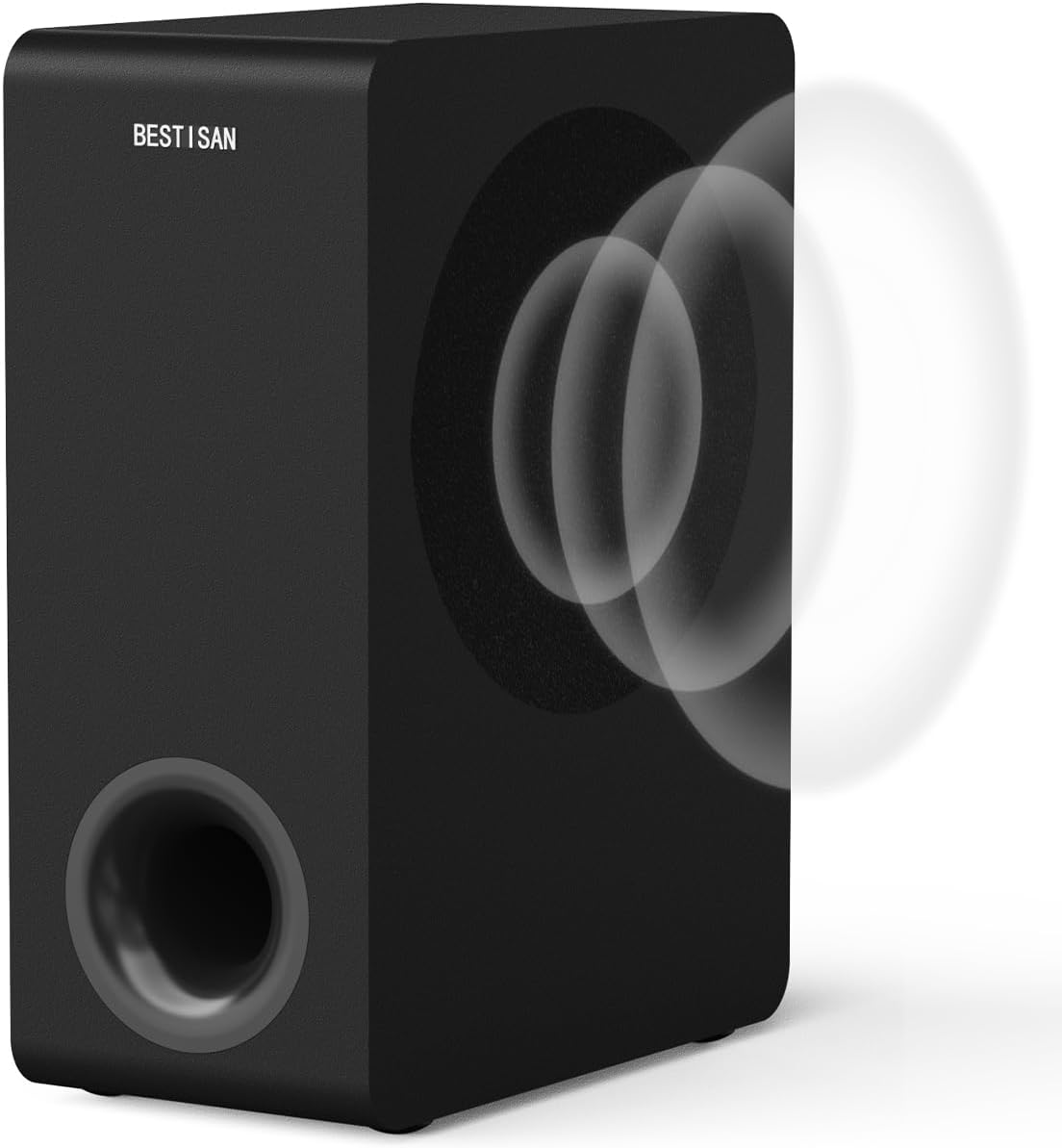
The woofer’s diameter and how it’s mounted affect the character of the bass. Front-firing designs, like those used in the Klipsch models, project sound directly into the room, which can offer more precise impact. Down-firing designs, such as in the BESTISAN subwoofer, can create a more diffuse, room-filling bass effect.
Larger drivers, typically 12 inches and above, can move more air to produce lower frequencies. However, a well-designed 10-inch driver in a proper enclosure can deliver remarkably deep and tight bass. Your preference for punchy, articulate lows versus ultra-deep rumble will guide this choice. For those seeking the lowest frequencies, our review of the best subwoofers with deep bass provides further insight.
Prioritize Connectivity and Control Options
While line level inputs are your primary concern, look at the full suite of connections. The presence of both left and right RCA inputs, a dedicated LFE (Low-Frequency Effects) input, and sometimes speaker-level inputs offers maximum flexibility. This allows you to connect to virtually any audio source or receiver configuration.
Equally important are the control knobs on the back panel. Essential adjustments include volume (or gain), a variable low-pass crossover frequency, and a phase switch (0/180 degrees). These controls let you perfectly blend the subwoofer’s output with your main speakers, eliminating boominess or gaps in the sound. Fine-tuning these settings is key to a cohesive soundstage.
Consider Build Quality and Placement
A subwoofer’s cabinet material significantly impacts its sound. Heavy, rigid enclosures made from materials like MDF (Medium-Density Fiberboard) minimize unwanted resonance, allowing the driver’s energy to produce clean bass. A flimsy cabinet will vibrate and color the sound, reducing clarity.
Think about where the subwoofer will live in your room. Corners can amplify bass response, while placement near a wall or centered along a wall offers different acoustic results. Ensure the model you choose fits your intended space, both aesthetically and physically. For a broader look at all types, visit our main subwoofers category page.
Final Thoughts
Adding a subwoofer with line level inputs is one of the most effective upgrades for any audio system. It unlocks the full emotional impact of your music and movies. For users seeking renowned brand reliability and powerful, dynamic output for home theater, the Klipsch R-12SW 12″ 400W Subwoofer is a standout choice. Conversely, for those on a tighter budget needing solid performance and easy integration into a stereo or small home theater setup, the BESTISAN Powered Subwoofer, Deep Bass Sub offers impressive value. Whichever path you choose, you are one step closer to a truly complete listening experience.
Frequently Asked Questions
What is a line level input on a subwoofer?
A line level input is typically an RCA connector that accepts a pre-amplified audio signal. This signal comes from the preamp or line-out section of your receiver or amplifier. It is the standard and cleanest way to connect a powered subwoofer, as it uses a dedicated cable that carries only the low-frequency information, preventing interference.
Can I connect a subwoofer without a subwoofer output on my receiver?
Yes, you often can. If your subwoofer has speaker-level inputs (high-level inputs), you can connect it using the speaker wires from your receiver’s front left and right channels. Alternatively, if your receiver has preamp outputs (often labeled “Pre-Out”), you can use those as a line level signal. Many subwoofers reviewed here offer both connection types for maximum compatibility.
What’s the difference between LFE and line input?
The LFE (Low-Frequency Effects) input is designed specifically for the “.1” channel in surround sound formats like Dolby Digital. It carries only the dedicated bass effects track from movies. A standard line input (often labeled “Line In” or just “L/R”) accepts a full-range signal, and the subwoofer’s internal crossover filters out the high frequencies. For most home theater setups, use the LFE input. For stereo music systems, use the line inputs. Learn more about advanced bass management in our feature on the best subwoofers with DSP.
How do I set the crossover frequency on my subwoofer?
Start by setting the crossover frequency on your subwoofer to match the low-frequency extension of your main speakers. A common starting point is 80Hz. Play content you know well and adjust the knob slightly up or down. Your goal is a seamless blend where bass notes transition smoothly from the main speakers to the subwoofer without sounding localized or creating a hump at a specific frequency.




Write Your Review
No reviews yet. Be the first to share your experience!