

You settle into your favorite chair, ready to lose yourself in the rich, warm sound of your favorite record. But instead of pure musical bliss, you hear it: a faint hum, a subtle rumble, or a distracting vibration that pulls you out of the moment. For true vinyl enthusiasts, unwanted noise is the enemy of immersion. It is why the quiet operation of a well-designed belt-drive turntable is so essential.
This guide is for anyone seeking that silent foundation for their vinyl collection. We have evaluated several leading models specifically for their ability to deliver high-fidelity audio without the common distractions of motor noise and resonance. Whether you are building a dedicated listening space or integrating a turntable into a quiet room, our recommendations focus on achieving that coveted, noise-free performance. For those prioritizing a serene audio environment, exploring our list of the best turntables with vibration isolation can provide additional insights.
Choosing a Low Noise Belt-Drive Turntable
Motor Isolation and Platter Design
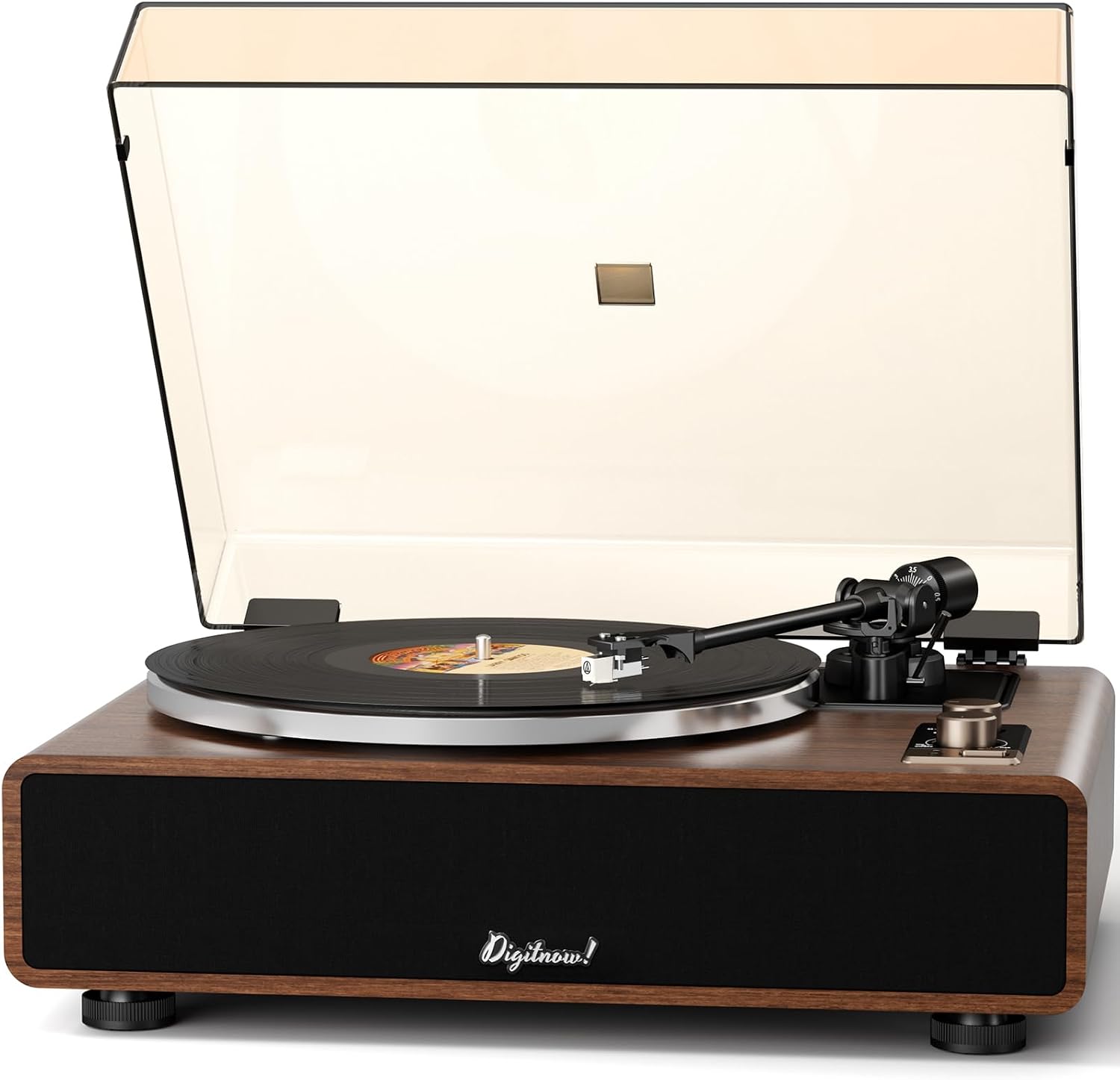
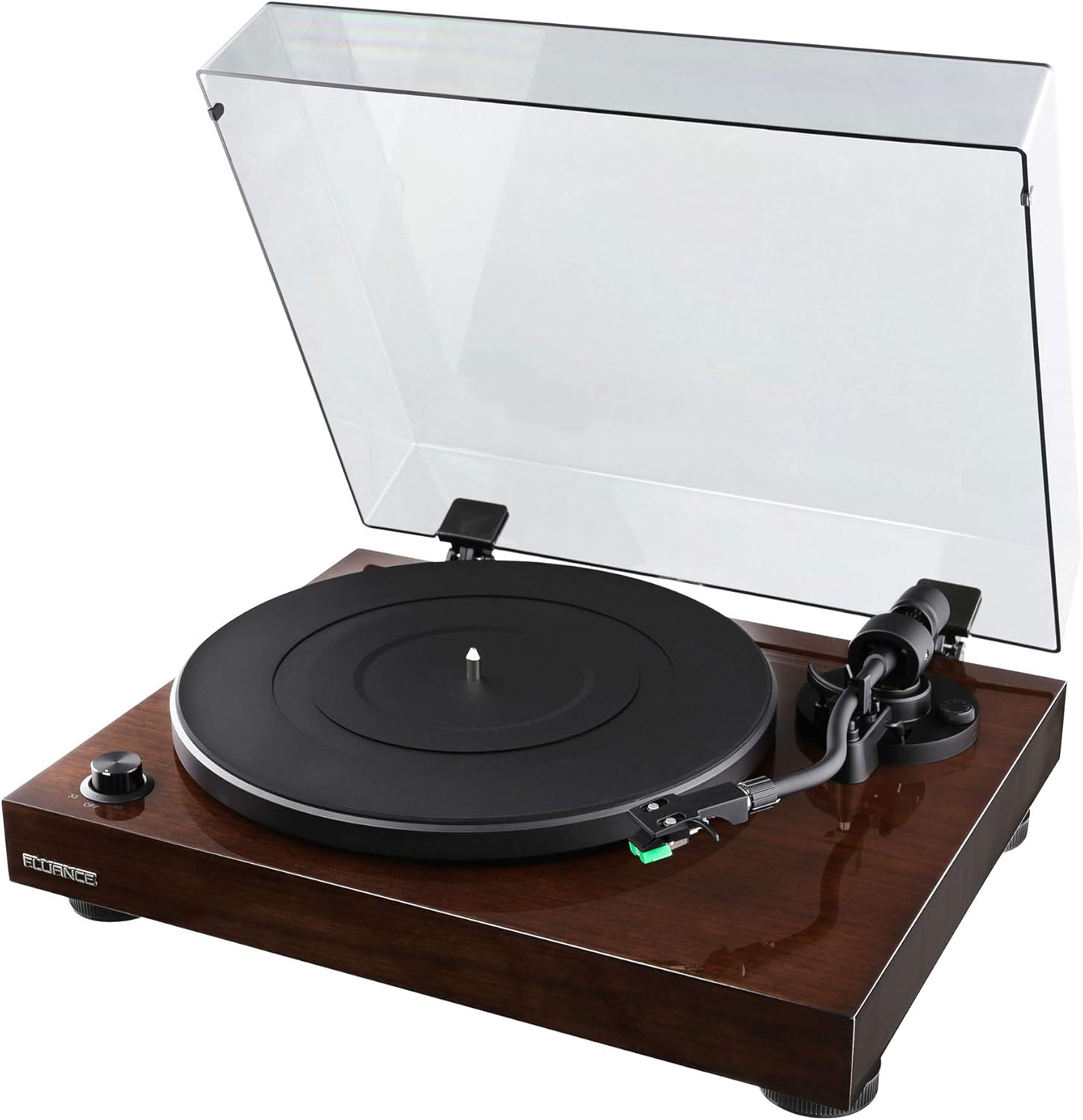
The core of a quiet turntable lies in its motor isolation. A belt-drive system inherently reduces vibration transfer compared to direct-drive models. Look for designs where the motor is strategically decoupled from the plinth. Features like a heavy, anti-resonance platter, often made from die-cast aluminum, further dampen vibrations. This mass stabilizes rotation and absorbs energy that could otherwise become audible noise.
Models that house the AC/DC power conversion in an external adapter, away from the main chassis, also show a clear commitment to noise reduction. This design choice prevents electrical interference from entering the sensitive audio signal path. The result is a cleaner soundstage where the music, not the machinery, takes center stage.
Tonearm and Cartridge Precision
A precisely engineered tonearm is crucial for low-noise playback. A well-balanced arm with effective damping minimizes tracking force variations and reduces resonance. Look for features like a hydraulically damped cueing lever, which lowers the stylus onto the record gently and silently. A redesigned tonearm base can also improve tracking and lower resonance.
The cartridge and stylus play a direct role. A quality diamond-tipped stylus, like those from Audio-Technica, tracks the record’s grooves accurately with minimal friction and distortion. This precise tracking ensures the signal retrieved is the music itself, not surface noise or artifacts introduced by a poor-quality needle. Proper setup, including correct counterweight adjustment, is essential for this performance.
Build Quality and Stability
A solid, inert plinth forms the foundation for a quiet turntable. Construction materials matter; composite or wood-based plinths can effectively absorb vibrations rather than amplifying them. This stability is especially important in environments where footfalls or speaker vibrations might be present. For placement on uneven surfaces, models with adjustable feet are invaluable.
These feet allow you to level the turntable perfectly, ensuring the tonearm tracks correctly and the platter spins evenly. An unlevel turntable can cause uneven wear and introduce subtle speed variations or noise. A sturdy build also minimizes feedback, which is the transfer of acoustic energy from your speakers back into the turntable’s mechanics, a common source of hum or howl.
Feature Set and Placement Considerations
Your listening environment dictates certain needs. For a bedroom or study where absolute quiet is paramount, a fully automatic model offers convenience without the noise of manually cueing the record. Bluetooth capability can also be a boon for low-noise setups, allowing you to place the turntable away from speakers to avoid acoustic feedback.
Consider whether you need a built-in preamp. While convenient, an external phono stage often provides superior noise performance. However, a well-implemented internal preamp with a clean signal path, like those found in higher-end models, can be perfectly sufficient for most listeners and reduces cable clutter. Ultimately, choosing a turntable suited for your space, like those ideal for a living room, ensures it performs optimally in its intended environment.
Final Thoughts
Selecting the right turntable is about preserving the integrity of your music. For listeners who prioritize a silent, vibration-free background, the models we have reviewed represent excellent choices validated for their quiet operation. If your primary need is straightforward, reliable playback with proven noise-reduction engineering, the Audio-Technica AT-LP60X-BK Fully Automatic is a standout entry point. For those seeking more advanced features like high-quality Bluetooth connectivity and a refined tonearm in a quiet package, the Audio-Technica AT-LP3XBT-BK Bluetooth Turntable offers a compelling upgrade path. You can explore more options within this category on our dedicated turntables page.
Frequently Asked Questions
Why is a belt-drive turntable often quieter than a direct-drive?
Belt-drive turntables use a rubber belt to connect the motor to the platter. This belt acts as a natural shock absorber, isolating motor vibrations and preventing them from transferring directly to the platter and stylus. Direct-drive motors are connected solidly to the platter, which can sometimes transmit more mechanical noise, though modern high-end direct-drive models have made significant improvements in this area.
Can I make my existing turntable quieter?
Yes, there are several steps you can take. First, ensure your turntable is perfectly level using adjustable feet or shims. Place it on a solid, heavy, and vibration-isolating stand or platform, away from speakers and foot traffic. Check that the stylus is clean and in good condition, as a worn stylus will increase surface noise. Finally, verify that all connections are secure and that the grounding wire is properly attached to your amplifier to eliminate hum.
Is Bluetooth connection good for audio quality on a turntable?
Modern Bluetooth codecs like aptX Adaptive have greatly improved wireless audio fidelity. While a wired connection remains the benchmark for absolute purity, Bluetooth on a quality turntable provides very good sound quality and immense convenience. It allows for flexible speaker placement, which can actually reduce acoustic feedback in a room, contributing to a cleaner overall listening experience. For critical listening, you can always use the turntable’s wired outputs.
How important is the platter weight for reducing noise?
<!–A heavier platter increases rotational inertia, leading to more stable and consistent speed. This stability minimizes speed variations (known as wow and flutter) that can color the sound. Furthermore, the mass of a heavy platter, especially one made from damped materials like aluminum, helps to absorb vibrations rather than resonate with them. This absorption directly reduces audible noise and provides a solid foundation for the stylus to track the record’s grooves accurately.




Write Your Review
No reviews yet. Be the first to share your experience!