

That slight warp in your favorite record isn’t the only thing that can ruin a perfect track. Even the smallest vibration from a footstep or a passing truck can be picked up by your stylus, muddying the clarity and warmth you bought a turntable to experience. If you’ve ever noticed a persistent hum or a lack of definition in the bass, your setup’s isolation could be the culprit.
This guide is for anyone who wants their vinyl investment to sound its absolute best, free from environmental interference. We focus on a critical but often overlooked feature: adjustable isolation feet. These components are your first line of defense against acoustic feedback and micro-vibrations. Below, we review several top-rated turntables that include this essential technology, helping you choose a model that delivers rock-solid performance. For inspiration on integrating a turntable into a shared space, see our guide on the best turntables for living rooms.
How to Choose a Turntable with Adjustable Feet
Evaluate the Isolation Mechanism
Not all adjustable feet are created equal. The primary goal is to decouple the plinth, or base, from the surface it sits on. Look for feet that offer both height adjustment and damping material, like rubber or sorbothane. Some premium models use a suspended sub-chassis or specially designed springs within the feet themselves. This engineering absorbs energy before it reaches the tonearm, which is crucial for maintaining soundstage integrity and bass response.
The ability to level the platter perfectly is non-negotiable. An unlevel turntable causes uneven stylus wear and can affect tracking. Feet that screw up and down independently allow for precise calibration on any surface, from a sturdy cabinet to a dedicated audio rack. For a deeper dive into high-performance models, explore our category page for turntables (belt-drive/direct-drive).
Consider Drive Type and Motor Isolation
The feet work in tandem with the turntable’s internal design to fight vibration. Belt-drive turntables inherently separate the motor from the platter, reducing a major source of rumble. However, a well-isolated direct-drive motor, often mounted on separate dampers, can be equally quiet and offers superior torque. Your choice here affects speed stability and start-up time more than isolation alone, but the motor’s vibration must be managed by the overall chassis design.
Assess the plinth’s mass and construction. A high-mass, non-resonant plinth made from materials like MDF or acrylic acts as a barrier. It works with the isolation feet to create a stable platform. The combined effect of a heavy plinth and quality feet is a noticeable improvement in sonic clarity, especially for listeners pursuing the best turntables for critical listening.
Match the Turntable to Your Environment
Your room’s acoustics and floor construction dictate how much isolation you need. A turntable placed on a suspended wooden floor above a busy room requires more aggressive damping than one on a concrete slab in a basement. Turntables with robust, adjustable feet give you the flexibility to tune the system to your specific space. They allow you to compensate for less-than-ideal furniture or slight floor tilts.
Also, consider future upgrades. If you plan to move your system or upgrade to a more sensitive cartridge, having a turntable with a solid isolation foundation is a wise long-term investment. It ensures your setup remains versatile and capable of revealing finer details in your music collection as your system evolves. For setups in dedicated entertainment spaces, our review of the best turntables for media rooms offers relevant insights.
Don’t Overlook Aftermarket Solutions
If your current turntable lacks proper feet, all is not lost. Aftermarket isolation spikes, pads, and platforms can provide a significant upgrade. Products like the Facmogu Adjustable Speaker Isolation Spikes demonstrate how a simple addition can lift components and reduce transmitted vibration. When shopping for these, ensure the weight rating is appropriate and that they include protective floor mats.
Integrating these accessories is part of building a holistic audio system. Proper isolation benefits every component in your chain. For more ideas on optimizing your setup, browse our selection of turntable and Hi-Fi accessories.
Final Thoughts
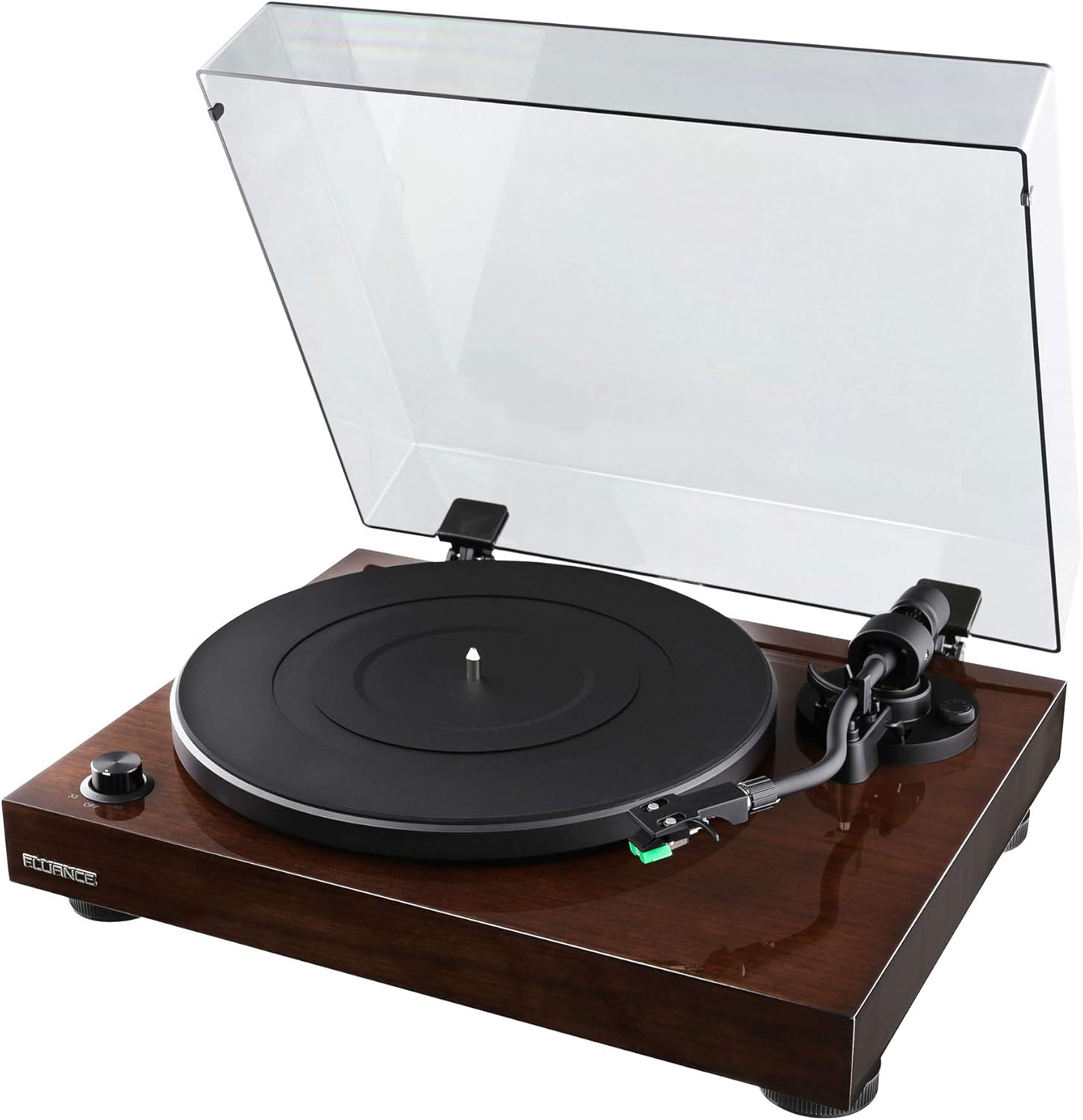
Investing in a turntable with proper adjustable feet is a definitive step toward unlocking the full potential of your vinyl collection. It transforms a good listening experience into a great one by ensuring the only sound you hear is the music itself. For listeners seeking an exceptional high-fidelity experience right out of the box, the Fluance RT85 Reference High Fidelity Vinyl stands out with its integrated vibration damping. Conversely, those who value classic functionality and robust direct-drive performance will find the Audio-Technica AT-LP120XUSB-BK Direct-Drive to be a versatile and reliable workhorse for any setup.
Frequently Asked Questions
Why are adjustable feet important on a turntable?
Adjustable feet serve two primary functions: they allow you to level the turntable platter perfectly, which is essential for proper stylus tracking and even record wear, and they isolate the sensitive mechanics from external vibrations. These vibrations can come from speakers, footfalls, or even ambient room noise, and they are picked up by the stylus, degrading sound clarity and introducing noise.
Can I add adjustable feet to my existing turntable?
<!–Yes, in many cases you can. A wide range of aftermarket isolation feet, spikes, and platforms are available. When selecting them, confirm the thread size matches your turntable’s mounting points and that the weight capacity is sufficient. Installing aftermarket feet is a cost-effective way to enhance the performance of a turntable that lacks high-quality stock isolation.
What’s the difference between isolation spikes and damping feet?
<!–Isolation spikes are designed to concentrate the turntable’s weight onto very small points, mechanically decoupling it from the surface below. They are often used with protective discs on hard floors. Damping feet typically use compliant materials like rubber or specialized polymers to absorb vibrational energy. Some advanced feet systems combine both principles, using a spike that sits within a damped housing for comprehensive isolation.
How often should I check my turntable’s level?
<!–You should verify the level whenever you move the turntable to a new location or if you change or adjust the components on your audio rack. It’s also a good practice to check it periodically, as furniture can settle over time. Keeping your turntable level ensures optimal performance and protects your records and stylus from unnecessary wear, making it a simple but vital part of maintenance for 2026 and beyond.




Write Your Review
No reviews yet. Be the first to share your experience!