

Your live stream video looks crisp, your gameplay is on point, but your audio sounds thin, distant, or plagued by background noise. This disconnect can make even the most engaging content feel unprofessional, frustrating both you and your potential audience. The bridge between a good stream and a great one is often a dedicated audio interface. This piece of hardware elevates your microphone signal from your computer’s basic sound card to broadcast-ready clarity.
We have assessed nine of the most relevant audio interfaces designed for streamers, podcasters, and content creators. Whether you are a solo gamer needing a simple plug-and-play solution or a co-hosted podcast requiring multiple microphone inputs and sound effects, this guide provides a clear comparison to help you invest wisely. For a broader look at tools for modern creators, explore our guide on the best audio interfaces for content creators.
Live Streaming Audio Interfaces Compared

Pros
- Exceptional plug-and-play simplicity with zero latency audio processing and no driver installation needed
- Powerful onboard DSP with Auto Level Mode ensures consistent professional sound across any environment
- Incredibly compact and lightweight design makes it ideal for mobile recording, streaming, and travel
- Works with any XLR microphone including high-end condensers and provides essential 48V phantom power
- Versatile cross-platform compatibility including iPhone, iPad, Mac, Windows, and Android devices
Cons
- MOTIV app support for mobile devices may be limited or incomplete depending on your specific device and firmware version
- Single-channel design limits flexibility if you need to record multiple microphones simultaneously
- Some users report variable quality control from third-party sellers, so purchasing directly from Shure is recommended
The Shure MVX2U Gen 2 is a single-channel XLR-to-USB-C audio interface designed for content creators, podcasters, streamers, and anyone who wants to elevate their recording quality without investing in expensive gear. This compact device bridges the gap between professional XLR microphones and modern computers and mobile devices, making it ideal for creators working across multiple platforms.
What sets the MVX2U Gen 2 apart is its intelligent onboard digital audio processing. The Auto Level Mode automatically adjusts gain in real time, ensuring consistent output regardless of your environment or mic technique. The Real-Time Denoiser and Digital Popper Stopper work at zero latency, meaning you get clean, professional sound with zero delay. Users can select from Dark, Natural, or Bright tone profiles and access advanced controls like compression and EQ through the MOTIV app on desktop or mobile, giving you studio-quality processing in a device smaller than your hand.
Build quality reflects Shure's professional heritage. The interface feels solid and premium despite its compact form factor at just 100 grams. Setup is genuinely effortless: plug in your XLR mic, connect the included USB-C cable, and start recording. The device delivers up to 60dB of clean gain and 48V phantom power, supporting both dynamic and condenser microphones. MFi certification ensures reliable performance on iPhones and iPads, while broad compatibility extends to Mac, Windows, and Android devices.
The primary limitation is that mobile app support may be inconsistent across all devices as of the latest updates. Additionally, the single-channel design means you cannot record multiple microphones simultaneously. Some buyers have noted quality control inconsistencies when purchasing through third-party sellers, making direct purchase from Shure preferable.
The MVX2U Gen 2 delivers exceptional value for creators seeking professional audio without complexity or bulk. Its combination of intelligent processing, universal XLR compatibility, and cross-platform versatility makes it an outstanding choice for podcasters, content creators, and anyone upgrading from built-in device microphones to XLR-based recording.
Connectivity and Compatibility: USB-C connection, compatible with Mac, Windows, iOS, and Android. MFi certified for iPhone and iPad.
Audio Performance: Single XLR input channel, supports up to 192 kHz sample rate, provides up to 60dB clean gain, and includes 48V phantom power for condenser microphones.
Processing Features: Onboard Shure Digital Audio Processing with Auto Level Mode, Real-Time Denoiser, Digital Popper Stopper, three tone profiles (Dark, Natural, Bright), compression, EQ, and limiter controls accessible via MOTIV app.
Physical Specifications: Weight 100g, includes 1m USB-C cable, single-channel design. Warranty: 2-year limited coverage.
Ideal For: Podcasters and streamers using XLR microphones on computers or mobile devices, content creators recording video with professional audio, musicians recording acoustic instruments, journalists and reporters needing portable professional audio, and anyone upgrading from USB microphones to XLR-based recording.
Best Use Cases: Desktop podcasting and streaming, mobile recording on iPhone or iPad, video conferencing with professional microphones, traveling content creation, and hybrid setups combining desktop and mobile recording.
May Not Be Ideal For: Users requiring simultaneous multi-channel recording, those needing extensive analog monitoring controls, or anyone exclusively recording on mobile devices without desktop setup access.
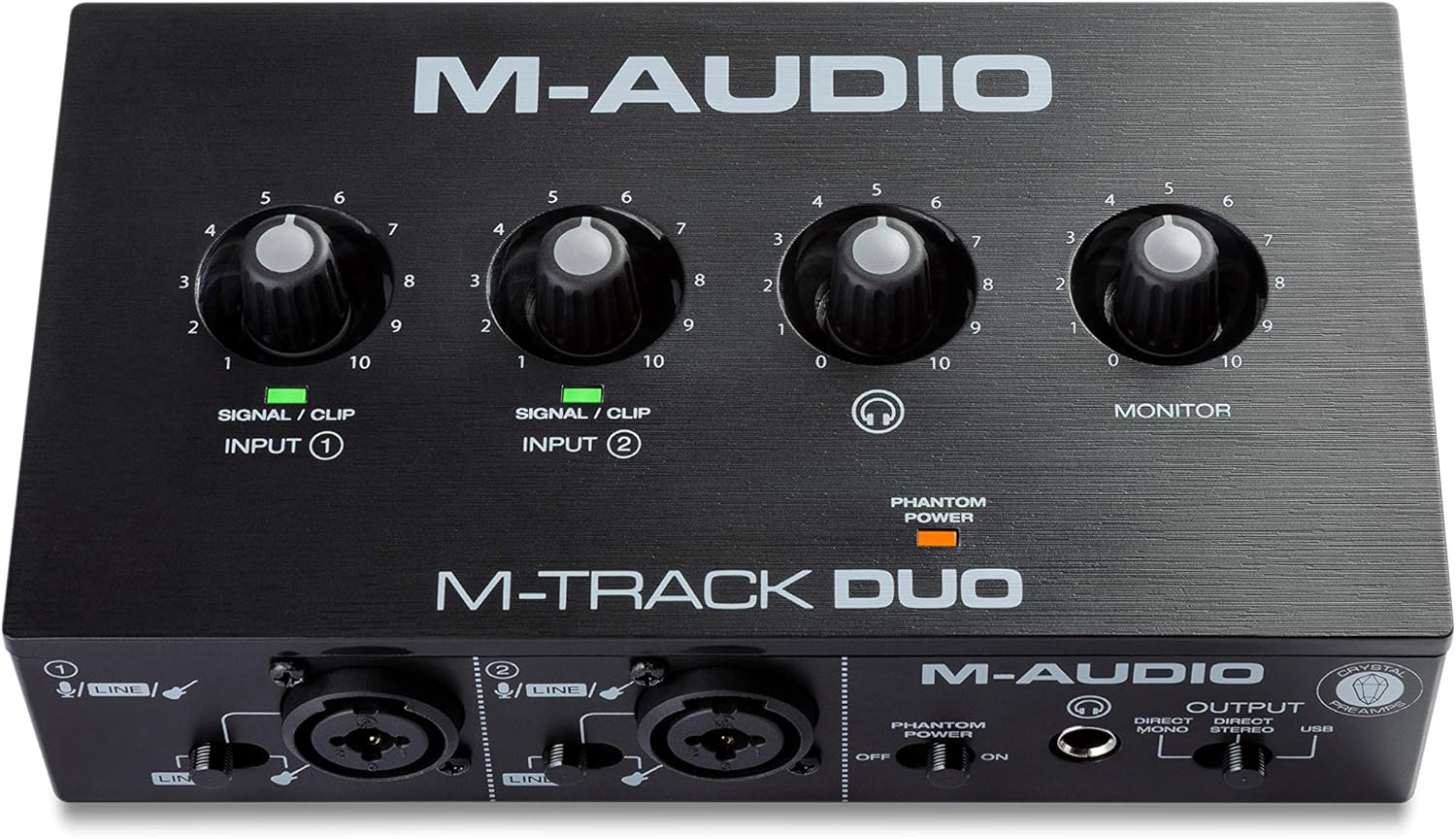
Pros
- Exceptional value at this price point with dual XLR inputs that competitors charge significantly more for
- Compact 7.5-inch width and lightweight design make it genuinely portable for on-the-go recording
- Zero-latency monitoring via USB/Direct switch eliminates the frustration of hearing delayed playback while recording new parts
- Included software suite jumpstarts your production immediately without additional purchases
- Transparent preamps deliver clean, professional-grade audio from entry-level to mid-range microphones
Cons
- Plastic construction feels lightweight, which some users perceive as lower build quality despite reliable performance
- 48kHz maximum sample rate is lower than some competing interfaces, limiting high-resolution audio work
- Gain staging may require careful management with certain microphones, as some users report insufficient gain at maximum levels
The M-Track Duo is a compact USB audio interface designed for podcasters, musicians, and content creators who need professional recording capabilities without the complexity or cost of larger studio setups. With dual XLR combo inputs, phantom power, and integrated instrument switching, this interface handles vocals, acoustic instruments, guitars, keyboards, and line-level devices with equal competence. It's the kind of gear that lets you go from idea to finished recording in minutes rather than hours.
What sets the M-Track Duo apart is its zero-latency direct monitoring feature, which eliminates the maddening delay that plagues cheaper interfaces. The USB/Direct switch lets you blend your live input signal with playback from your DAW, making it easy to record layered parts or add instruments to existing compositions. The transparent Crystal Preamps deliver clean, detailed audio that punches above its weight class, and phantom power support means you can work with professional condenser microphones without compromise.
Build quality is straightforward plastic construction that feels lightweight but proves durable in real-world use. The compact 7.5-inch width and 0.3kg weight make it genuinely portable, fitting easily into a laptop bag. All connections are professional-grade balanced XLR and quarter-inch TRS connectors, with a headphone output that supports standard stereo headphones via a quarter-inch adapter.
The main limitation is the 48kHz maximum sample rate, which is lower than some competing interfaces in higher price brackets. Additionally, some users report that gain staging requires careful management depending on your microphone, though this is rarely a dealbreaker for entry-level recording. The included MPC Beats software and ProTools First bundle provide legitimate production tools, though you'll likely graduate to more advanced DAWs as your skills develop.
The M-Track Duo delivers genuine value and reliability for anyone starting their recording journey or needing a portable backup interface. It handles its core mission of capturing clean, professional audio without fuss, making it an excellent choice for podcasters, singer-songwriters, and bedroom producers with realistic budgets.
Audio Specifications: Maximum sample rate of 48kHz with 16-bit resolution, 20kHz frequency response, and 1 megaohm impedance. Two channels of audio input and output.
Connectivity: Dual balanced XLR microphone inputs with phantom power, balanced quarter-inch line inputs, unbalanced quarter-inch instrument inputs, stereo quarter-inch main outputs, quarter-inch TRS headphone output, and USB Type B connection for computer and compatible iOS devices.
Dimensions and Weight: 7.5 inches wide by 4.34 inches deep by 2.13 inches tall, weighing just 0.3kg for maximum portability. Completely USB-powered with no external power supply required.
Compatibility: Works with Windows 7 and later via ASIO drivers, Mac OS High Sierra through Big Sur with class-compliant support, iOS with Apple Lightning to USB3 adapter, and Android devices. Compatible with all major DAWs including Logic Pro, ProTools, GarageBand, Studio One, Cubase, and Ableton Live.
Included Accessories: USB Type B to Type A cable, software download cards for MPC Beats and ProTools First, user guide, and safety documentation. Backed by a one-year manufacturer warranty.
Ideal For: This interface is perfect for podcasters launching their first show, musicians recording demos at home, content creators adding professional audio to videos, and anyone needing portable recording capability. It's also excellent for experienced engineers who need a reliable backup interface or travel-friendly setup.
Consider Alternatives If: You require sample rates above 48kHz for professional mastering work, need more than two simultaneous inputs, or demand premium metal construction and extensive onboard controls. However, for the vast majority of recording scenarios, the M-Track Duo delivers everything you need.
Budget Consideration: At this price point, the M-Track Duo offers exceptional value compared to single-channel competitors and provides genuine professional features like phantom power and zero-latency monitoring that many similarly-priced interfaces omit entirely.

Pros
- Exceptional audio quality with no background noise, even at budget price point
- Truly plug-and-play functionality works immediately on Windows, Mac, and Linux systems
- Dual combo jacks provide maximum flexibility for microphones, guitars, and line-level sources
- Lightweight and compact form factor ideal for desk space and portability
- Zero-latency monitoring enables confident tracking without hearing delay or echo
Cons
- LED illumination on gain knobs does not function as prominently displayed in product images
- Requires careful gain adjustment when connecting instruments with built-in preamps to avoid clipping
- Limited to 2 input channels, which may not suit users needing more simultaneous inputs
The PIYONE Q2 is a 2x2 USB-C audio interface designed for home recordists, podcasters, guitarists, and content creators who want professional-grade sound without complexity. It bridges the gap between budget-friendly and professional-quality recording, making it an ideal first interface for beginners or a secondary interface for established creators.
The standout feature is its genuine plug-and-play operation. Simply connect the USB-C cable to your computer, and the interface is recognized immediately on Windows, Mac, and Linux systems without any driver installation. The 24-bit/192kHz audio resolution captures professional-quality recordings with excellent clarity and minimal noise. The zero-latency direct monitoring feature eliminates tracking delays, allowing you to hear yourself in real-time without the frustrating latency that plagues cheaper interfaces. Dual XLR/TRS combo inputs with 48V phantom power provide flexibility for condenser microphones, dynamic mics, guitars, and line-level sources.
Build quality and design are impressive for the price. The compact form factor fits easily on any desk without consuming valuable space. The illuminated control knobs create a modern, professional aesthetic that looks great in any studio setup. The interface feels solid and well-constructed, with ergonomic knobs and buttons positioned for comfortable operation during long recording sessions.
One notable drawback is that the LED illumination on the gain knobs does not function as prominently as shown in product images, which may disappoint users specifically drawn to this visual feature. Additionally, users must exercise caution when adjusting gain levels with instruments that have built-in preamps, as excessive gain can cause clipping. The 2-channel limitation means this interface cannot handle multiple simultaneous inputs beyond two sources.
Verdict: The PIYONE Q2 delivers exceptional value for beginners and budget-conscious creators seeking professional audio quality without complexity. Its combination of studio-grade sound, zero-latency monitoring, and truly plug-and-play setup makes it an excellent choice for home recording, podcasting, and content creation. Recommended for anyone starting their recording journey or needing a reliable portable interface.
Audio Quality: 24-bit resolution, 192kHz maximum sample rate, high-performance converters, low-noise design
Connectivity: USB-C port (handles both data transfer and bus power), 3.5mm headphone jack
Inputs: 2 XLR/TRS combo jacks, 48V phantom power supply
Channels: 2 input channels, 2 output channels
Features: Zero-latency direct monitoring, monitor mix function, loopback capability, illuminated control knobs, class-compliant design
Compatibility: Mac, Windows PC, Linux, iOS (via USB-C adapter)
Physical: Compact portable design, 0.74 kg weight, Alloy Red finish
Warranty: 2-year limited warranty
Ideal For: Beginner recording artists, podcasters, singer-songwriters, content creators, home studio enthusiasts, and anyone seeking professional audio quality without complex setup requirements.
Perfect Use Cases: Recording vocals with condenser microphones, capturing acoustic guitar performances, podcasting and voice-over work, streaming with professional audio quality, music production on a budget, portable recording for travel or mobile content creation.
Not Ideal For: Users requiring more than 2 simultaneous inputs, professional studios with extensive I/O requirements, or those specifically seeking prominent LED illumination effects on control knobs.

Pros
- Exceptional audio clarity with 75dB SNR and sub-0.2% distortion ensures your voice cuts through game audio and background noise
- Intuitive game/chat balance control eliminates the need to tab out or adjust software settings mid-game
- Versatile connectivity with optical AUX, 3.5mm AUX-In, and USB-C covers virtually every gaming platform and audio source
- Voice morphing and customizable presets add entertainment value and streamline content creation workflows
- Compact footprint and responsive controls make it ideal for streaming setups with limited desk space
Cons
- XLR cable not included in the box, requiring separate purchase and potentially affecting final audio quality based on cable specifications
- Only compatible with XLR or 6.35mm microphones, not USB microphones, limiting flexibility for users with existing USB mic setups
- Virtual 7.1 surround is software-based rather than true hardware surround, which may appeal less to audiophiles seeking authentic spatial audio
The FIFINE SC8 is a feature-rich gaming mixer built specifically for streamers, esports competitors, and content creators who need professional audio control without the complexity of full-sized mixing consoles. It bridges the gap between budget gaming headsets and expensive studio equipment, offering studio-grade voice capture capabilities in a compact tabletop form factor. This mixer is perfect for anyone serious about competitive gaming, live streaming, or creating polished Discord content.
The standout feature is undoubtedly the dedicated game/chat balance dial, which solves a real problem for competitive gamers who struggle to hear both enemy audio cues and teammate callouts. Combined with 7.1 virtual surround and three EQ presets, you get genuine audio advantages in tactical shooters like Valorant and Call of Duty. The 48V phantom power XLR input delivers studio-quality voice capture with impressive 75dB SNR and sub-0.2% distortion, ensuring your communication stays crisp even during intense firefights. The eight voice morphing effects and four customizable buttons add personality to streams and enable quick preset switching without menu diving.
Build quality feels solid for the price point, with a compact 9.5-inch depth that fits most gaming desks without consuming excessive space. The three smart knobs with push-mute functionality provide intuitive control, and the RGB lighting synchronized to audio peaks adds professional visual flair to your streaming setup. Multi-platform USB-C connectivity works seamlessly across PC, PS5, Nintendo Switch, and mobile devices, making this mixer genuinely versatile for different gaming ecosystems.
The main drawback is that XLR cables are not included, and audio quality depends heavily on cable shielding and specifications. Additionally, the mixer only accepts XLR or 6.35mm microphones, not USB microphones, which could be limiting if you already own a USB mic. The 7.1 surround is software-based virtual processing rather than true hardware surround, which some audiophiles might find less authentic.
The FIFINE SC8 delivers exceptional value for competitive gamers and streamers seeking professional audio control at an accessible price. Its intuitive game/chat balance dial, multi-platform connectivity, and studio-grade voice clarity make it a smart investment for anyone serious about gaming audio performance.
Audio Specifications: 5 channels, 48V phantom power XLR input, 75dB SNR, sub-0.2% distortion, 93dB SNR headphone output, supports dynamic and condenser microphones with up to -50dB gain adjustment.
Connectivity: USB-C (PC, PS5, Nintendo Switch, mobile), Optical AUX (PS4, TV), 3.5mm AUX-In, 3.5mm headphone output (32Ω impedance supported).
Features: 7.1 virtual surround sound, 3 EQ presets (Game, Music, Movie), 8 voice changers, 4 customizable buttons, RGB lighting, dedicated game/chat balance dial, 3 smart knobs with push-mute controls.
Physical: Dimensions 9.53 inches (D) x 6.14 inches (W) x 2.68 inches (H), corded electric power.
Who Should Buy: Competitive gamers playing tactical shooters (Valorant, CS2, Apex Legends), esports enthusiasts requiring reliable team communication, live streamers on Twitch or YouTube, and Discord power users who want professional-grade voice quality.
Who Might Want to Look Elsewhere: Users with existing USB microphones seeking plug-and-play compatibility, budget-conscious buyers unwilling to invest in a quality XLR cable, or casual gamers who don't need advanced audio features.
Setup Considerations: Budget approximately 20-40 dollars for a quality shielded XLR cable to maximize audio quality. Ensure your XLR microphone supports the mixer's dynamic/condenser toggle. Allow time to explore the EQ presets and voice effects to find your preferred audio profile. Test the game/chat balance dial extensively to dial in your ideal audio mix for your specific games.

Pros
- Exceptional audio quality and professional performance at an affordable price point that rivals much more expensive boards
- Seamless Bluetooth connectivity eliminates cable clutter and allows wireless mixing from multiple devices simultaneously
- Rugged sealed steel construction with quality potentiometers resists dust and handles repeated transport and outdoor use
- Versatile input options accommodate microphones, instruments, computers, and mobile devices in any combination
- Lightweight and portable design makes it perfect for backup mixing, podcasting, streaming, karaoke, and small venue events
Cons
- Built-in effects are limited to echo/reverb variations with unclear parameter differences between settings
- Compact size means fewer channels and controls compared to larger professional mixing boards
- No detailed documentation explaining effect parameters, requiring trial-and-error to understand functionality
The Pyle PMXU43BT.5 is a 4-channel compact mixer designed for DJs, podcasters, streamers, event hosts, and musicians who need professional mixing capabilities in a portable package. It combines wireless Bluetooth streaming with traditional wired inputs, making it an excellent choice for anyone mixing audio from multiple sources without expensive equipment.
The standout feature is its impressive sound quality for the price range. Professional sound engineers and experienced musicians consistently praise its clean audio output and precise mixing control. The 3-band EQ on each channel provides professional-level sound shaping, while the 48V phantom power support enables use with quality condenser microphones. Real-world users report excellent performance at worship services, karaoke parties, podcasting sessions, and outdoor events with powered speakers.
Build quality exceeds expectations with a rugged sealed steel chassis and quality potentiometers that provide smooth, reliable control. The compact 7.5x9.3 inch footprint and lightweight design make it genuinely portable for traveling to multiple venues. Sealed rotary controls resist dust and grime, ensuring durability even with frequent use and transport.
The main limitation is the effects section, which offers only echo variations without clear parameter explanations. The Bluetooth range of 25-30 feet with line-of-sight is standard for consumer equipment but may not suit large venues. Additionally, the compact size means fewer channels than larger boards, though this is intentional for portability.
Final verdict: The Pyle PMXU43BT.5 is an outstanding value mixer for anyone needing professional audio mixing in a portable format. Its combination of wireless connectivity, multiple input options, solid build quality, and excellent sound reproduction makes it worthy of consideration as a primary mixer for small venues or an excellent backup for professionals.
Connectivity: Bluetooth wireless, USB, MP3 flash drive, XLR microphone inputs, 1/4 inch combo inputs, 1/4 inch stereo inputs, 1/4 inch send and return inputs, 1/4 inch headphone jack, 1/4 inch main stereo outputs.
Audio Processing: 4 channels, 3-band EQ per channel, 16-bit DSP processor, 48V phantom power, LED peak level indicators, ultra-low noise design with high headroom.
Physical: Dimensions 7.5 inches deep by 9.3 inches wide by 2.6 inches high. Rugged sealed steel chassis with sealed rotary controls. Weight under 5 pounds for easy portability.
Power: Multi-voltage 100-240V AC power supply with 15V DC adapter included. Ideal for worldwide use and international travel.
DJs and Music Producers: Wireless Bluetooth mixing combined with USB connectivity makes this ideal for bedroom producers and mobile DJs mixing tracks from laptops and phones.
Podcasters and Streamers: USB audio interface capabilities allow direct computer connection for streaming and recording, with multiple microphone inputs for guest interviews and co-hosting.
Live Event Professionals: Compact size, portable design, and professional audio quality make it perfect for karaoke hosts, small wedding receptions, corporate events, and outdoor gatherings.
Backup and Portable Mixing: Professional sound engineers use this as a reliable backup mixer or portable solution for small venues when larger boards are unnecessary.

Pros
- Robust build quality with responsive sliders and buttons that feel premium for the price
- Crystal-clear audio output with low-noise gain up to 60dB and 32-bit high-performance chipset
- Exceptional versatility with support for XLR microphones, guitars, instruments, Bluetooth, and multiple input formats
- Comprehensive sound customization options including reverb modes, EQ controls, and individual channel management
- Responsive customer support team available to assist with setup and troubleshooting
Cons
- USB microphones are not supported, limiting compatibility with certain popular microphone models
- Power supply noise can occasionally cause buzzing during operation when charging simultaneously with use
- Some users report the 48V phantom power button can be difficult to toggle on and off reliably
The MAONO AME2 is a 10-channel podcast mixer and audio interface designed for content creators, podcasters, live streamers, and musicians who need professional audio control without the complexity or cost of enterprise-level equipment. It bridges the gap between entry-level and professional setups, making it accessible for beginners while offering enough features for experienced producers.
The standout features include professional 48V phantom power and superior preamps that deliver exceptional audio clarity from dynamic and condenser microphones. The 11 customizable sound pads with up to 60 seconds of recording capability allow podcasters to add atmosphere and effects instantly. Advanced audio processing tools like 6 reverb modes, 12-step auto-tune, 3-band EQ, and pitch adjustment give users professional sound shaping capabilities. Multi-source connectivity through XLR, 6.35mm instrument inputs, 3.5mm audio jacks, Bluetooth, and USB-C makes integration with various devices seamless.
Build quality is impressive for the price point, with responsive sliders, buttons, and controls that feel solid and intuitive. The compact 9.64-inch by 6.18-inch footprint makes it suitable for home studios, mobile setups, and streaming configurations. Users consistently praise the device's robust construction and professional appearance despite its affordable positioning in the market.
Potential drawbacks include limited USB microphone support, occasional power supply noise when charging during operation, and some reports of the phantom power button being finicky. These issues are relatively minor and can often be resolved through proper setup or technical support assistance.
The MAONO AME2 represents excellent value for podcasters, streamers, and musicians seeking studio-quality audio control. Its combination of professional features, versatile connectivity, and user-friendly design makes it a smart choice for anyone looking to elevate their audio production without significant investment.
Audio Inputs: XLR (2x MIC inputs with 48V phantom power), 6.35mm instrument input, 3.5mm audio jack, Bluetooth, USB-C
Audio Outputs: XLR, USB-C, 3.5mm headphone jack, monitor speaker output
Channels: 10-channel mixer with independent control per microphone input
Sound Pads: 11 customizable sound pads (3x 60-second pads with one-key looping, 8x 20-second pads)
Audio Processing: 6 reverb modes, 12-step auto-tune, 3-band EQ (treble, mid-range, bass), pitch changer, sidechain, music-only mode, loopback switch
Preamp Gain: 3-level adjustment, ultra-low noise gain up to 60dB
Chipset: 32-bit high-performance with DENOISE function
Phantom Power: 48V for condenser microphones
Connectivity: USB Type-C, XLR, 3.5mm TRRS, 6.35mm, Bluetooth
Power Source: USB-C corded electric with battery capability
Dimensions: 9.64 inches (D) x 6.18 inches (W) x 2.16 inches (H)
Weight: 0.95 kg (approximately 2.1 lbs)
Warranty: 1 year manufacturer warranty
Compatibility: Windows, Mac OS, iOS, Android, compatible with XLR condenser and dynamic microphones, 6.35mm instruments, 3.5mm microphones
Ideal For: Podcasters launching or scaling shows, live streamers on Twitch and YouTube, musicians recording guitars and bass, voiceover artists, content creators, gaming streamers, and anyone building a home studio on a budget.
Best Use Cases: Podcast recording and editing, live streaming with multiple audio sources, music production with instruments, karaoke setups, online competitions, voice-over projects, and multi-guest interviews with professional sound control.
Skill Level: The AME2 works well for both beginners seeking an all-in-one solution and experienced producers who appreciate its compact form factor and professional features. Intuitive controls make setup straightforward, while advanced features satisfy more demanding users.
Not Ideal For: Users exclusively using USB microphones, those requiring dual-PC streaming setups, or professionals needing enterprise-level mixing capabilities. Consider alternatives if you need more than 10 channels or specialized features beyond standard podcast and streaming applications.

Pros
- Unique hybrid connectivity allows simultaneous recording on computer and mobile devices without workflow interruptions
- Exceptional audio quality at 24-bit/192kHz with extremely low noise floor ideal for professional home studios
- Versatile dual XLR inputs accommodate most professional microphones for podcasting, streaming, and music production
- Intuitive independent controls for mute, headphone, and monitor functions provide precise streaming flexibility
- Included ProStudio 2 software with loopback routing and VST effects adds professional production capabilities
Cons
- Limited to 2 channels, which may be restrictive for users needing more simultaneous audio inputs
- Steep learning curve for ProStudio 2 software features despite intuitive hardware controls
- Requires USB power, limiting portability compared to some battery-powered alternatives
The MAONO P2 is a hybrid USB audio interface designed for content creators who work across multiple devices. Whether you're a podcaster recording on desktop while monitoring mobile uploads, a streamer managing simultaneous audio sources, or a musician tracking guitars and vocals across platforms, this interface bridges the gap between stationary and mobile production workflows. Its dual USB connectivity with MFi certification means you can connect a computer and phone or iPad at the same time without sacrificing quality or functionality.
What sets the P2 apart is its studio-grade audio performance paired with practical creator-focused features. The dual XLR inputs capture 24-bit/192kHz audio with a class-leading -130dB EIN, ensuring your vocals and instruments sound pristine even in untreated home studios. Independent mute controls, real-time signal indicators, and low-latency direct monitoring give you precise control during live streams and recordings. The included ProStudio 2 software handles complex audio routing, VST effects, and multi-source loopback capture, letting you blend backing tracks, desktop audio, and instrument inputs seamlessly.
The hardware itself reflects its creator-focused design philosophy. The compact aluminum-alloy chassis features an ergonomic 15-degree tilt that keeps controls within comfortable reach during long recording sessions. At desk-friendly dimensions, it works equally well in a dedicated home studio or as part of a mobile setup. Build quality feels solid, and the modern aesthetic fits contemporary workspace aesthetics without looking overly technical.
The main limitation is the 2-channel configuration, which restricts simultaneous inputs compared to larger interfaces. Additionally, while the ProStudio 2 software is powerful, its learning curve may challenge beginners unfamiliar with audio routing and VST workflows. USB power dependency also means you'll need a reliable power source for mobile use, unlike some battery-powered alternatives.
The MAONO P2 delivers excellent value for podcasters, streamers, and musicians who need professional audio quality without the complexity and cost of larger interfaces. Its hybrid connectivity solves real workflow problems for multi-device creators, and the audio performance justifies the investment for anyone serious about content quality.
Audio Quality: 24-bit/192kHz recording resolution, -130dB EIN, 56dB gain
Connectivity: Dual USB ports with USB-C to USB-A/C cable included, MFi-certified for iOS devices
Inputs: 2x XLR connectors for condenser and dynamic microphones
Channels: 2 channels with independent controls
Monitoring: Direct low-latency monitoring with independent headphone and monitor controls
Compatibility: Mac, PC, iPhone, Android, cameras, guitars, microphones, headphones, smartphones, tablets
Software: ProStudio 2 with VST effects, noise reduction, loopback routing, ASIO support
Supported Platforms: Ableton Live, Studio One, Logic Pro, Cubase, GarageBand, FL Studio, OBS, Twitch, Discord, YouTube, TikTok
Design: Aluminum-alloy housing, 15-degree ergonomic tilt, compact desk-friendly dimensions
Best For: Content creators who record across multiple devices, podcasters managing simultaneous audio sources, streamers needing independent controls, musicians tracking instruments and vocals with professional quality, and anyone transitioning between desktop and mobile production workflows.
Consider This If: You need more than 2 simultaneous audio inputs or prefer simpler software with less routing complexity. Also consider if you require battery-powered portability for field recording without USB power access.
Setup Requirements: USB power source, compatible microphones with XLR connectors or adapters, and basic familiarity with audio interface software. ProStudio 2 requires a computer or mobile device with sufficient processing power for VST effects.
Real-World Performance: Expect professional-grade vocal and instrument recordings suitable for commercial podcasts, streaming broadcasts, and music production. The dual connectivity eliminates common workflow interruptions when managing content across platforms, making it particularly valuable for creators juggling multiple distribution channels simultaneously.

Pros
- Exceptional value for money with professional-grade features typically found in higher-priced interfaces
- Intuitive one-touch controls and comprehensive manual make setup quick even for beginners
- Compact, portable form factor is perfect for mobile podcasters and content creators on the go
- Rich ecosystem of sound effects and voice processing tools enable creative content differentiation
- Solid build quality and widespread software compatibility ensure long-term usability
Cons
- Sound effect pads limited to 20 seconds of storage with no expandable storage or SD card support
- Noise gate feature could be more sophisticated for advanced audio engineers
- No internal storage capacity for recording directly to the device without a computer connection
The MAONO E2 Gen2 is an all-in-one podcast and streaming interface designed for content creators who want professional audio quality without the complexity or price tag of traditional studio setups. This compact mixer is perfect for solo podcasters, co-hosted shows, live streamers, and musicians looking to upgrade their home recording capabilities.
The standout feature is the dual XLR combo inputs paired with 60dB low-noise preamps that deliver crystal-clear audio suitable for dynamic microphones and professional-grade recordings. The 8 customizable sound effect pads add genuine value for content creators, allowing you to upload intro music, sound bites, or effects to enhance audience engagement. The loopback function simplifies live streaming workflows, and the included voice effects like pitch-changing and reverb presets provide creative flexibility without needing additional software.
Build quality feels solid and purposeful, with an intuitive layout that minimizes the learning curve. The 8-hour battery makes this interface genuinely portable, and the multiple connectivity options (Bluetooth, USB-C, 3.5mm, XLR) ensure compatibility with virtually any device or workflow. Setup is straightforward, and the included manual is comprehensive with online support available.
The main limitation is the 20-second storage limit on sound effect pads and lack of expandable storage options. The noise gate, while functional, may not satisfy advanced audio engineers seeking granular control. Additionally, this is an audio interface only and does not support phone charging or power delivery functions.
Overall, the MAONO E2 Gen2 represents excellent value for podcasters and streamers at any skill level. It successfully balances affordability with professional features, making it an ideal entry point for those starting their podcasting journey or a solid secondary interface for established creators who need portability and flexibility.
Connectivity: Dual XLR combo inputs, Bluetooth, USB-C, 3.5mm audio jack, dual stream outputs
Audio Performance: 60dB gain preamps, 48 kHz maximum sample rate, 20 kHz frequency response, built-in noise reduction
Sound Effects: 8 customizable pads (up to 20 seconds each), 6 preset reverbs, pitch-changing effects, SingAlong mode
Battery: Built-in 1500mA battery providing up to 8 hours of operation
Compatibility: Windows, macOS, iOS, Android. Works with OBS, Discord, Zoom, Audacity, YouTube, Facebook, TikTok, Twitch
Physical: 9.64 inches D x 6.18 inches W x 2.16 inches H, weighs 0.89 kg. Includes USB-A/USB-C cable, 3.5mm cable, and user manual
Warranty: 1 year manufacturer warranty
Best For: Podcasters (solo or co-hosted), live streamers, content creators, musicians, and anyone needing portable, professional audio recording and mixing capabilities.
Consider This If: You need dual microphone inputs for co-hosted shows, want to add custom sound effects to your content, require portability with battery backup, or work across multiple platforms and devices simultaneously.
Skip This If: You need unlimited internal storage for sound pads, require advanced noise gate control, or need a device that supports phone charging or power delivery functions.
Setup Tips: Download the MAONO website resources and tutorial videos before your first session. Pre-record and test your sound effects before going live. Use the loopback function for seamless computer-based streaming workflows. The intuitive layout means most users can be production-ready within 30 minutes.
Value Comparison: This interface delivers features comparable to interfaces priced 50-100 dollars higher, making it an exceptional value for budget-conscious creators without sacrificing professional audio quality or functionality.

Pros
- Excellent value for money with professional-grade features at an affordable price point
- Intuitive control layout and easy setup process requires minimal technical knowledge
- Powerful audio processing capabilities including noise reduction and voice effects for quality recordings
- Compact design fits easily into any home studio or streaming setup without taking up much space
- Versatile compatibility with multiple devices and operating systems for flexible workflow options
Cons
- Some users report connectivity and audio routing issues that may require driver updates or technical support
- Microphone feedback loop problems have been noted by certain users when using headsets
- Limited documentation and instruction materials provided with the device
The SINWE F988 is an affordable compact audio mixer designed for content creators, podcasters, gamers, and aspiring DJs who need professional sound quality without the premium price tag. It serves as an excellent entry point for anyone looking to upgrade their streaming or recording setup with studio-grade equipment.
The standout feature is the dual DSP noise reduction chip that captures audio at 120kHz with 24-bit bitrate, ensuring clear and detailed voice recording. The mixer offers 16 background effects, 7 dedicated podcast modes, 4 voice changer options, and special functions like noise elimination and voice-over capabilities. The RGB lighting system that pulses to music rhythm adds visual flair to live streams. Multi-platform connectivity through USB, XLR, 3.5mm, and Bluetooth inputs allows you to connect multiple devices simultaneously.
Build quality is solid for the price, with a compact footprint of 7.67 inches wide and intuitive button layout that makes navigation straightforward. The device powers on reliably and the control interface is well-organized for quick adjustments during live sessions. However, the included documentation is minimal, which may challenge users unfamiliar with audio equipment.
Some buyers have experienced connectivity issues and microphone feedback problems that required troubleshooting or driver reinstallation. These issues appear isolated to certain setups rather than universal defects. The 30-day return policy and 12-month warranty provide good consumer protection for testing compatibility with your specific equipment.
Overall, the SINWE F988 delivers impressive functionality for budget-conscious creators. It excels as a beginner-to-intermediate mixer for podcasting, gaming streams, and music recording. If you encounter technical issues, responsive customer support is available. For the price, it represents strong value, though users seeking premium build quality may want to invest more in established brands.
Audio Processing: Dual imported DSP noise reduction chips, 120kHz sample rate, 24-bit bitrate
Channels and Connectivity: 4-channel mixer, USB connection, XLR input, 3.5mm inputs and headphone jack, Bluetooth wireless connectivity
Effects and Modes: 16 background effects, 7 podcast/recording modes, 4 voice changer modes, 4 special functions (noise elimination, denoise, voice over, internal play)
Physical Specifications: Dimensions 7.67 inches wide x 4.72 inches deep x 1.96 inches tall, weight 0.41 kg, corded electric power source
Compatibility: Windows, Mac OS, iPad, iPhone (adapters may be required for mobile devices)
Warranty and Support: 12-month manufacturer warranty, 30-day no-questions-asked return policy, 12-hour customer support response time
Ideal For: Beginner podcasters, aspiring DJs, gaming streamers, voice-over artists, and home studio enthusiasts who need professional audio processing on a budget. Perfect for anyone taking their first steps into content creation or audio production.
Use Cases: Podcast recording and editing, live streaming on Twitch or YouTube, gaming commentary, music production, voice-over work, video editing with background music, and small-scale DJ performances.
Not Recommended For: Professional studios requiring enterprise-level equipment, users with complex audio routing needs, or those unable to troubleshoot potential driver and connectivity issues. If you need guaranteed plug-and-play operation without any setup, consider more expensive established brands.
What to Look for in a Streaming Audio Interface
Connectivity and Input Flexibility
Your choice hinges on what you need to connect. A single XLR input, like the one on the Shure MVX2U Gen 2 XLR-to-USB-C Audio Interface, is perfect for a solo broadcaster. For interviews or co-hosting, seek a model with dual combo jacks, such as the Audio Interface, 2X2 24-bit/192kHz Interface. Also, consider auxiliary inputs for adding background music or a line from a gaming console, a feature found on mixers like the Pyle Professional Audio Mixer Sound Board Console.
Built-in Audio Processing and Effects
Onboard digital signal processing (DSP) can be a game-changer for streamers working in untreated spaces. Features like real-time noise suppression, automatic gain control, and built-in limiters help you maintain a consistent, clean sound without complex software setups. The Shure MVX2U excels here with its auto-level mode and denoiser. Other models, like the MAONO AME2 Audio Interface Mixer, offer customizable sound pads and voice effects to add production value directly from the hardware.
Monitoring and Latency Performance
Hearing yourself with zero delay is non-negotiable for natural delivery. Look for a direct monitor function or a USB/direct switch, which routes your microphone input directly to your headphones before it hits your computer. This prevents the distracting echo that can occur with software monitoring. Interfaces like the MAONO P2 Hybrid USB Audio Interface Dual XLR prioritize low-latency performance, crucial for musicians or vocalists who play along to a track.
Software Compatibility and Loopback
Ensure your interface plays nicely with your operating system and streaming software like OBS, Streamlabs, or Zoom. Class-compliant interfaces work instantly with Mac, Windows, and even mobile devices. A loopback function, available on many modern interfaces, is vital for capturing desktop audio (like game sounds or browser music) and mixing it with your microphone into a single stream output. This simplifies your streaming setup significantly. For Windows users, confirming ASIO driver support can enhance performance, as noted in our resource on best audio interfaces for windows.
Final Thoughts
Selecting the right audio interface transforms your stream from amateur to authoritative. For streamers seeking pristine, processed audio with ultimate simplicity, the Shure MVX2U Gen 2 XLR-to-USB-C Audio Interface is a standout choice. Those who need versatile connectivity for multiple hosts, instruments, and creative sound design will find the feature-rich MAONO AME2 Audio Interface Mixer an excellent investment for growing their channel’s production value.
Frequently Asked Questions
Do I need an audio interface if I already have a USB microphone?
While a USB microphone is a great all-in-one start, an audio interface provides more flexibility, better sound quality from higher-end XLR microphones, and the ability to expand your setup. If you plan to upgrade your microphone, add co-hosts, or incorporate instruments, an interface is the logical next step. It future-proofs your audio chain.
What is phantom power, and do I need it?
Phantom power (usually +48V) is required to operate condenser microphones, which are highly sensitive and favored for their detailed vocal capture. If you use or plan to use a condenser mic, you must choose an interface that supplies phantom power. Most interfaces reviewed here offer it, but always verify this key specification, especially for voiceover work as highlighted in our guide on best audio interfaces for voiceovers.
Can I use an audio interface with a console like a PlayStation or Xbox?
Yes, but connectivity options vary. Some mixers, like the FIFINE SC8, feature an optical audio input designed for consoles. Others may require you to use the console’s audio output (like a headphone jack) connected to an auxiliary input on the interface. The interface then mixes your console audio with your microphone before sending it to your streaming computer.
How do I prevent audio feedback or echo during a stream?
The primary cause is your microphone picking up audio from your speakers or monitor. Always use closed-back headphones while streaming. Additionally, utilize your interface’s direct monitor feature instead of software monitoring, which introduces latency. Keeping your microphone gain at an appropriate level and using a noise gate, either in hardware or software, also helps eliminate unwanted background noise.


Write Your Review
No reviews yet. Be the first to share your experience!