

Have you ever joined a video call only to be met with complaints about muffled audio or distracting background noise? In our remote-first world, professional-grade sound is no longer a luxury, it’s a necessity. A dedicated audio interface transforms your voice from a compressed, tinny signal into a rich, clear broadcast, ensuring you’re heard with authority and clarity. This guide is crafted for professionals, streamers, and remote workers who are ready to upgrade their virtual presence beyond the built-in microphone on their laptop or webcam.
We have evaluated a curated selection of eight interfaces designed to tackle the specific challenges of video conferencing. Whether you need a simple plug-and-play solution or a feature-rich hub for streaming and podcasting, our review covers the essential options. For those frequently using platforms like Zoom, a quality interface is the most impactful upgrade you can make.
Top Audio Interfaces for Video Calls

Pros
- Exceptional audio quality with industry-leading 123 dB conversion and low noise floor
- True zero-latency monitoring eliminates CPU strain and processing delays
- Dual headphone outputs with independent mixes are rare at this price point
- Comprehensive software bundle adds significant value and eliminates need for additional purchases
- Colorful display with intuitive controls and customizable themes improves workflow efficiency
Cons
- No user reviews available yet, so real-world reliability and long-term performance remain unverified
- Limited to 2 channels, which may restrict users needing multi-track simultaneous recording
The Antelope Audio Zenith 2 is a professional USB-C audio interface built for content creators, musicians, and podcasters who refuse to compromise on sound quality. Whether you're streaming live, recording vocals, capturing guitar tones, or hosting interviews, this device handles it all with the sophistication of a studio-grade setup in a compact, portable form factor.
What truly sets the Zenith 2 apart is its onboard DSP engine, which delivers real-time effects processing with zero latency. Unlike traditional interfaces that rely on your computer's CPU, you can monitor through compression, EQ, distortion, and amp simulations instantly without lag. The dual independent headphone mixes are a game-changer for collaborative sessions, allowing you to send different monitor mixes to multiple users simultaneously. Add the Smart Vocal Chain and integrated loopback for system audio, and you have a streaming powerhouse that rivals interfaces costing significantly more.
The audio conversion quality is exceptional, with 123 dB of dynamic range at 32-bit/192 kHz resolution. The dual console-grade preamps deliver 75 dB of clean gain, making it effortless to work with demanding microphones like the Shure SM7B. The build quality feels solid, with a vibrant color display that replaces typical LED indicators, offering intuitive navigation and customizable themes that adapt to your workflow. The included software bundle, featuring Bitwig Studio Essentials and 75+ premium effects, eliminates the need for additional purchases and provides immediate creative tools.
The main limitation is the 2-channel configuration, which restricts simultaneous multi-track recording for those needing more inputs. Additionally, as a relatively new product with no user reviews yet, long-term reliability remains to be proven in the field. The $299 price point may also feel steep for casual hobbyists, though professionals will recognize the value proposition immediately.
The Zenith 2 delivers professional-grade audio quality, innovative features like dual headphone mixes, and comprehensive software inclusion in a user-friendly package. It's an excellent choice for anyone serious about streaming, podcasting, or music production who wants studio performance without studio complexity.
Live Streamers and Content Creators: The integrated loopback, Smart Vocal Chain, and dual headphone mixes make this ideal for YouTube, Twitch, and podcast production. Monitor your voice separately from system audio while delivering polished output to viewers.
Home Studio Guitarists: The virtual guitar rig with amp/cab simulations, distortion, compression, and noise gating provides authentic tones with zero latency. Record finished guitar tracks without CPU overhead or external gear.
Podcast Hosts and Interviewers: Dual headphone mixes let guests hear their own voice at different levels than the host. Professional preamps handle any microphone, and the included software provides everything needed for production.
Mobile Musicians: USB-C bus-powered operation and class-compliant design work on PC, Mac, iOS, and Android instantly. Perfect for recording on the go without drivers or complex setup.
Audio Conversion: 123 dB dynamic range, 32-bit/192 kHz maximum sample rate, elite AD/DA conversion
Inputs/Outputs: 2 XLR inputs with dual console-grade preamps, 75 dB clean gain, 2 independent headphone outputs
Connectivity: USB-C bus-powered, class-compliant (driver-free), includes USB-C to USB-A adapter
Compatibility: Windows, macOS, iOS, Android
Physical: Weight 1.07 kg, colorful display with customizable themes and responsive peak meters
Included Software: Bitwig Studio Essentials DAW, Lifeline Lite Bundle, 3-month Antelope Cosmos membership, 75+ premium effects plugins
In the Box: Zenith 2 unit, USB-C cable, USB-C to USB-A adapter, Getting Started Guide
Pros
- Excellent preamp quality produces bright, clear recordings with minimal noise floor
- Air mode adds professional polish to vocal and acoustic recordings without additional equipment
- Compact design perfect for home studios, bedroom producers, and mobile recording setups
- Included software suite eliminates need for expensive DAW purchases
- Highly reliable brand with strong reputation in professional audio industry
Cons
- Single microphone input limits simultaneous multi-instrument recording capabilities
- May require audio driver updates for optimal performance on some Windows systems
- Learning curve for beginners unfamiliar with audio interface operation and gain staging
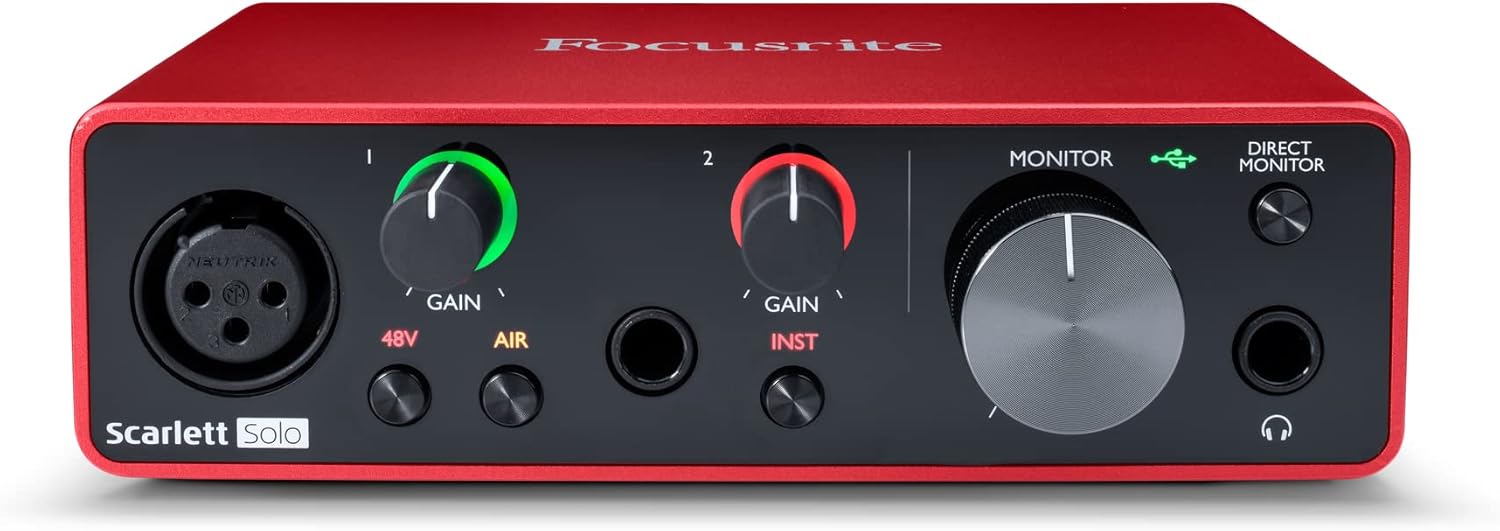
The Focusrite Scarlett Solo 3rd Gen is a professional USB audio interface designed for musicians, podcasters, and content creators who demand studio-quality recordings without the complexity of larger mixing consoles. This compact device bridges the gap between budget-friendly entry-level gear and expensive professional equipment, making it ideal for home studios, bedroom producers, and anyone serious about capturing professional-grade audio.
The standout feature is undoubtedly the high-performance microphone preamp paired with the innovative Air mode, which adds extra clarity and presence to vocals and acoustic instruments. The two high-headroom instrument inputs eliminate clipping and distortion, ensuring your guitar, bass, and other instruments shine through with clarity. Recording at up to 24-bit/192kHz resolution means your productions retain all sonic nuances, while the Gain Halo visual feedback system helps you nail perfect levels every time.
Build quality reflects Focusrite's professional heritage, with a solid metal chassis and intuitive front-panel controls that feel responsive and durable. The USB-C connectivity provides fast, reliable data transfer and modern compatibility with both Mac and Windows systems. The included software bundle (Pro Tools Intro+, Ableton Live Lite, Cubase LE) gives you everything needed to start producing immediately without additional software purchases.
The primary limitation is the single microphone input, which restricts simultaneous multi-track vocal or acoustic recording. Additionally, some Windows users report requiring driver updates for optimal performance. The learning curve for gain staging and audio interface operation may challenge complete beginners, though the included documentation is comprehensive.
The Focusrite Scarlett Solo 3rd Gen represents exceptional value for serious hobbyists and semi-professional creators. Its combination of pristine preamp quality, professional converters, intuitive design, and included software makes it the go-to choice for anyone upgrading from computer microphones or entry-level interfaces. The three-year warranty provides confidence in your investment.
Audio I/O: 1 XLR microphone input, 2 high-impedance instrument inputs, 2 balanced line outputs, headphone output
Audio Quality: 24-bit/192kHz recording and playback resolution with high-performance converters
Connectivity: USB-C to computer, compatible with all major audio recording software
Channels: 2 channels (stereo)
Features: Switchable Air mode, Gain Halo visual feedback, low-noise outputs, headphone monitoring
Software Included: Pro Tools Intro+, Ableton Live Lite, Cubase LE, Hitmaker Expansion
Warranty: 3-year manufacturer warranty worldwide
Compatible Devices: Microphones, instruments, personal computers, headphones, studio monitors
Who Should Buy: Musicians recording at home, podcasters seeking professional audio quality, guitarists and bassists needing quality instrument preamps, content creators upgrading from built-in computer audio, and producers working with limited space.
Who Should Look Elsewhere: Users needing simultaneous multi-microphone recording, those requiring extensive analog mixing features, or professionals running high-channel-count studios requiring more I/O options.
Setup Tips: Ensure your computer meets USB-C requirements and install drivers before first use. Spend time learning gain staging with the Gain Halo visual indicator to avoid clipping. Experiment with Air mode on different sources to understand its impact on your recordings.
Value Comparison: At this price point, the Scarlett Solo 3rd Gen outperforms competitors by offering superior preamp quality, professional software bundle, and proven brand reliability. The included software alone typically costs $200+ if purchased separately.

Pros
- Exceptional audio quality with ESS Sabre DAC and headphone amplifier rivaling dedicated standalone units costing hundreds more
- Industry-leading low latency at 2.5ms makes it perfect for live guitar, keyboard, and vocal recording without monitoring delay
- Built-in LCD metering display is unique in its class, providing clear visual feedback for optimal level management
- Compact, portable form factor with USB-C connectivity makes it ideal for mobile studios and remote recording setups
- Includes comprehensive software bundle and comes with a 2-year warranty backing the build quality
Cons
- Limited to 2-in/2-out configuration, which may not suit users needing more simultaneous inputs for larger recording sessions
- Single USB-C port means you cannot daisy-chain additional devices without a hub, potentially limiting workflow flexibility
- Windows users may experience initial channel configuration issues requiring manual loopback settings adjustment
The MOTU M2 is a professional-grade USB-C audio interface designed for home recording studios, content creators, musicians, and producers who refuse to compromise on audio quality while maintaining a reasonable budget. Its 2-in/2-out configuration with dual microphone preamps makes it perfect for recording vocals and instruments, podcasting, or streaming with pristine clarity and minimal latency.
What sets the M2 apart is its use of ESS Sabre32 Ultra DAC technology, typically found in audio interfaces costing thousands of dollars. This delivers a stunning 120dB dynamic range on outputs and an exceptionally clean -129dBu EIN on microphone inputs. The headphone amplifier alone rivals dedicated standalone units, making this interface equally valuable for mixing and mastering work. Real-time monitoring latency of just 2.5ms at 96kHz means you can confidently record guitars, keyboards, and vocals without the distracting lag that plagues many budget interfaces.
The build quality is immediately apparent when you interact with the device. Smooth, weighted knobs with premium feel, responsive buttons, and a sturdy physical construction inspire confidence. The full-color LCD display showing real-time level meters for all inputs and outputs is a standout feature rarely found at this price point, eliminating guesswork when setting recording levels. The compact 7.5 x 4.25 x 1.75 inch footprint with USB-C connectivity makes it genuinely portable for musicians moving between studios or recording on location.
The main limitation is the 2-in/2-out channel count, which restricts simultaneous recording to two sources. Windows users have occasionally reported initial channel configuration quirks requiring manual loopback settings adjustment, though this is easily resolved. The single USB-C port means external hubs are necessary if you need to connect other peripherals simultaneously.
The MOTU M2 represents exceptional value for anyone serious about recording quality. Whether you're tracking professional vocals, streaming with multiple guests, or building a portable studio, this interface delivers audio fidelity and performance that justifies its reputation as a best-in-class mid-tier solution.
Connectivity and Compatibility: USB-C audio interface compatible with Windows and macOS via expertly engineered MOTU drivers. Also supports iOS for mobile recording workflows.
Audio Specifications: 24-bit/192kHz maximum sample rate. 120dB dynamic range on main outputs. Microphone preamp noise floor of -129dBu EIN. 2.5ms round-trip latency at 96kHz with 32-sample buffer. ESS Sabre32 Ultra DAC on main outputs and headphone output.
I/O Configuration: 2 microphone/line inputs with dedicated preamps. 2 main analog outputs. 1 headphone output. DIN MIDI in/out jacks. Full-color LCD metering display for all inputs and outputs.
Physical Specifications: Dimensions 7.5 inches deep x 4.25 inches wide x 1.75 inches high. Weight 612 grams. USB-powered with physical power switch. Includes 6GB of free software content.
Warranty: 2-year manufacturer warranty included with purchase.
Perfect For: Home recording enthusiasts, singer-songwriters, podcast producers, streamers, content creators, guitar and keyboard players, and producers seeking professional audio quality on a realistic budget. Also ideal for audiophiles who value the ESS Sabre DAC technology and premium headphone amplification.
Consider Alternatives If: You need more than 2 simultaneous inputs for large ensemble recording, require extensive MIDI connectivity beyond basic in/out, or need bus-powered operation without a dedicated power supply.
Best Use Cases: Bedroom recording studio setup. Mobile recording and field production. Podcast and stream audio capture. Mixing and mastering with a high-quality DAC and headphone amp. Guitar and keyboard performance recording with minimal latency. Audiophile-grade home listening through the premium DAC and headphone amplifier.


Pros
- Exceptional plug-and-play simplicity with zero latency audio processing and no driver installation needed
- Powerful onboard DSP with Auto Level Mode ensures consistent professional sound across any environment
- Incredibly compact and lightweight design makes it ideal for mobile recording, streaming, and travel
- Works with any XLR microphone including high-end condensers and provides essential 48V phantom power
- Versatile cross-platform compatibility including iPhone, iPad, Mac, Windows, and Android devices
Cons
- MOTIV app support for mobile devices may be limited or incomplete depending on your specific device and firmware version
- Single-channel design limits flexibility if you need to record multiple microphones simultaneously
- Some users report variable quality control from third-party sellers, so purchasing directly from Shure is recommended
The Shure MVX2U Gen 2 is a single-channel XLR-to-USB-C audio interface designed for content creators, podcasters, streamers, and anyone who wants to elevate their recording quality without investing in expensive gear. This compact device bridges the gap between professional XLR microphones and modern computers and mobile devices, making it ideal for creators working across multiple platforms.
What sets the MVX2U Gen 2 apart is its intelligent onboard digital audio processing. The Auto Level Mode automatically adjusts gain in real time, ensuring consistent output regardless of your environment or mic technique. The Real-Time Denoiser and Digital Popper Stopper work at zero latency, meaning you get clean, professional sound with zero delay. Users can select from Dark, Natural, or Bright tone profiles and access advanced controls like compression and EQ through the MOTIV app on desktop or mobile, giving you studio-quality processing in a device smaller than your hand.
Build quality reflects Shure's professional heritage. The interface feels solid and premium despite its compact form factor at just 100 grams. Setup is genuinely effortless: plug in your XLR mic, connect the included USB-C cable, and start recording. The device delivers up to 60dB of clean gain and 48V phantom power, supporting both dynamic and condenser microphones. MFi certification ensures reliable performance on iPhones and iPads, while broad compatibility extends to Mac, Windows, and Android devices.
The primary limitation is that mobile app support may be inconsistent across all devices as of the latest updates. Additionally, the single-channel design means you cannot record multiple microphones simultaneously. Some buyers have noted quality control inconsistencies when purchasing through third-party sellers, making direct purchase from Shure preferable.
The MVX2U Gen 2 delivers exceptional value for creators seeking professional audio without complexity or bulk. Its combination of intelligent processing, universal XLR compatibility, and cross-platform versatility makes it an outstanding choice for podcasters, content creators, and anyone upgrading from built-in device microphones to XLR-based recording.
Connectivity and Compatibility: USB-C connection, compatible with Mac, Windows, iOS, and Android. MFi certified for iPhone and iPad.
Audio Performance: Single XLR input channel, supports up to 192 kHz sample rate, provides up to 60dB clean gain, and includes 48V phantom power for condenser microphones.
Processing Features: Onboard Shure Digital Audio Processing with Auto Level Mode, Real-Time Denoiser, Digital Popper Stopper, three tone profiles (Dark, Natural, Bright), compression, EQ, and limiter controls accessible via MOTIV app.
Physical Specifications: Weight 100g, includes 1m USB-C cable, single-channel design. Warranty: 2-year limited coverage.
Ideal For: Podcasters and streamers using XLR microphones on computers or mobile devices, content creators recording video with professional audio, musicians recording acoustic instruments, journalists and reporters needing portable professional audio, and anyone upgrading from USB microphones to XLR-based recording.
Best Use Cases: Desktop podcasting and streaming, mobile recording on iPhone or iPad, video conferencing with professional microphones, traveling content creation, and hybrid setups combining desktop and mobile recording.
May Not Be Ideal For: Users requiring simultaneous multi-channel recording, those needing extensive analog monitoring controls, or anyone exclusively recording on mobile devices without desktop setup access.

Pros
- Outstanding value for the price with more I/O options than comparable competitors
- Crystal clear sound quality perfect for recording music, podcasts, and vocals
- Solid metal construction built to withstand frequent use and transport
- Easy setup with no drivers required, compatible with Windows and Mac systems
- Versatile mixer-interface hybrid design works for recording, live performance, and streaming
Cons
- Output volume levels reported as slightly weak by some users, may require external amplification
- Windows-focused software support, limited compatibility with Linux operating systems
- Steep learning curve for beginners unfamiliar with audio interface controls and effect selection
The Pyle PMUX9 is a professional USB audio interface designed for musicians, podcasters, and content creators who need reliable recording capabilities without breaking the bank. This hybrid mixer-interface device bridges the gap between entry-level interfaces and professional mixing consoles, making it ideal for home studios, small venues, and portable recording setups.
What sets the PMUX9 apart is its impressive feature set: 24 onboard digital effects, 48V phantom power, and extensive connectivity options including XLR combo jacks, 6.35mm guitar inputs, 3.5mm auxiliary, and RCA stereo inputs. The 24-bit, 48kHz recording resolution delivers crystal-clear audio quality, while independent control knobs for each input and output channel provide precise mixing capabilities directly on the unit without relying on computer software.
The build quality is exceptional for the price point. The rugged metal housing feels solid and durable, while the compact dimensions (1.5 x 6.8 x 4.7 inches) make it perfect for small spaces and easy transport between locations. Setup is straightforward with no complex driver installations required, and the unit works seamlessly with both Windows and Mac systems.
The main drawback is that output volume levels run slightly lower than some users prefer, potentially requiring external amplification for certain applications. Additionally, Linux users may encounter compatibility issues. Despite these minor limitations, the PMUX9 delivers exceptional value with more I/O connectivity and built-in effects than competing interfaces at similar price points.
The Pyle PMUX9 is a smart investment for anyone serious about home recording, live streaming, or music production on a budget. Its combination of solid build quality, versatile connectivity, onboard effects, and professional audio quality makes it a compelling choice for beginners and intermediate users alike.
Audio Performance: 24-bit, 48kHz resolution with ultra-low noise design and less than 0.5% THD at +4dBu. Frequency response of plus or minus 1dB at +4dBu and 1kHz.
Connectivity: USB 2.0 Type-B connection. Input: 2 combo XLR and 6.35mm jacks, 1 additional 6.35mm jack, 1 AUX 3.5mm jack, 1 RCA stereo pair. Output: 6.35mm headphone jack, 3.5mm stereo headphone jack, 3.5mm stereo output, 1 RCA monitor pair.
Power and Effects: DC 5V power supply with 7W power consumption and 1A output current. Includes 48V phantom power with LED indicator. Features 24 preset digital effects including reverb, delay, echo, phaser, flanger, chorus, tremolo, wah-wah, and pitch change.
Physical Specifications: Compact dimensions of 1.5 x 6.8 x 4.7 inches. Weight: 0.89 kg. Rugged metal housing. 2 independent channels.
Home Recording: Perfect for recording guitars, vocals, and instruments directly to your computer with professional sound quality and onboard effects.
Podcasting: Multiple microphone inputs and phantom power support make this ideal for podcast production with clean, clear audio capture.
Live Streaming: The mixer-interface hybrid design with independent controls and effects works great for YouTube, Twitch, and social media streaming applications.
Music Production: Beginner and intermediate music producers benefit from the 24 onboard effects and multiple input options without needing additional hardware.
Portable Recording: The compact size and rugged metal construction make this excellent for musicians who record in different locations or perform live with backing tracks.

Pros
- Exceptional value for money with professional-grade features typically found in higher-priced interfaces
- Intuitive one-touch controls and comprehensive manual make setup quick even for beginners
- Compact, portable form factor is perfect for mobile podcasters and content creators on the go
- Rich ecosystem of sound effects and voice processing tools enable creative content differentiation
- Solid build quality and widespread software compatibility ensure long-term usability
Cons
- Sound effect pads limited to 20 seconds of storage with no expandable storage or SD card support
- Noise gate feature could be more sophisticated for advanced audio engineers
- No internal storage capacity for recording directly to the device without a computer connection
The MAONO E2 Gen2 is an all-in-one podcast and streaming interface designed for content creators who want professional audio quality without the complexity or price tag of traditional studio setups. This compact mixer is perfect for solo podcasters, co-hosted shows, live streamers, and musicians looking to upgrade their home recording capabilities.
The standout feature is the dual XLR combo inputs paired with 60dB low-noise preamps that deliver crystal-clear audio suitable for dynamic microphones and professional-grade recordings. The 8 customizable sound effect pads add genuine value for content creators, allowing you to upload intro music, sound bites, or effects to enhance audience engagement. The loopback function simplifies live streaming workflows, and the included voice effects like pitch-changing and reverb presets provide creative flexibility without needing additional software.
Build quality feels solid and purposeful, with an intuitive layout that minimizes the learning curve. The 8-hour battery makes this interface genuinely portable, and the multiple connectivity options (Bluetooth, USB-C, 3.5mm, XLR) ensure compatibility with virtually any device or workflow. Setup is straightforward, and the included manual is comprehensive with online support available.
The main limitation is the 20-second storage limit on sound effect pads and lack of expandable storage options. The noise gate, while functional, may not satisfy advanced audio engineers seeking granular control. Additionally, this is an audio interface only and does not support phone charging or power delivery functions.
Overall, the MAONO E2 Gen2 represents excellent value for podcasters and streamers at any skill level. It successfully balances affordability with professional features, making it an ideal entry point for those starting their podcasting journey or a solid secondary interface for established creators who need portability and flexibility.
Connectivity: Dual XLR combo inputs, Bluetooth, USB-C, 3.5mm audio jack, dual stream outputs
Audio Performance: 60dB gain preamps, 48 kHz maximum sample rate, 20 kHz frequency response, built-in noise reduction
Sound Effects: 8 customizable pads (up to 20 seconds each), 6 preset reverbs, pitch-changing effects, SingAlong mode
Battery: Built-in 1500mA battery providing up to 8 hours of operation
Compatibility: Windows, macOS, iOS, Android. Works with OBS, Discord, Zoom, Audacity, YouTube, Facebook, TikTok, Twitch
Physical: 9.64 inches D x 6.18 inches W x 2.16 inches H, weighs 0.89 kg. Includes USB-A/USB-C cable, 3.5mm cable, and user manual
Warranty: 1 year manufacturer warranty
Best For: Podcasters (solo or co-hosted), live streamers, content creators, musicians, and anyone needing portable, professional audio recording and mixing capabilities.
Consider This If: You need dual microphone inputs for co-hosted shows, want to add custom sound effects to your content, require portability with battery backup, or work across multiple platforms and devices simultaneously.
Skip This If: You need unlimited internal storage for sound pads, require advanced noise gate control, or need a device that supports phone charging or power delivery functions.
Setup Tips: Download the MAONO website resources and tutorial videos before your first session. Pre-record and test your sound effects before going live. Use the loopback function for seamless computer-based streaming workflows. The intuitive layout means most users can be production-ready within 30 minutes.
Value Comparison: This interface delivers features comparable to interfaces priced 50-100 dollars higher, making it an exceptional value for budget-conscious creators without sacrificing professional audio quality or functionality.

Pros
- Genuinely portable design fits in your pocket and includes convenient back clip for hands-free use
- Excellent audio quality at 24-bit/48kHz with low-latency processing ensures synchronized video recordings
- Works across multiple platforms and devices including iOS, Android, Windows, Mac, and Linux
- Simple one-button operation with no learning curve for beginners and musicians
- Comprehensive compatibility with popular music apps like AmpliTube, Rocksmith+, Yousician, and Tone Bridge
Cons
- Limited app compatibility means some recording software may not work, requiring use of built-in device recorders as fallback
- Mono signal input from most guitars means headphone output will be mono, not stereo
- Not compatible with MacBook Air running Monterey and certain guitar effects software according to manufacturer
The KYXAIN MOMIX CAB is a minimalist portable guitar audio interface designed for musicians and content creators who need to capture high-quality guitar audio on their smartphones or laptops. This pocket-sized device bridges your electric guitar or bass directly to your mobile device or computer, making it perfect for songwriting sessions, live streaming performances, online lessons, karaoke recording, and podcast production. At just 20.5 grams with a convenient clip design, it's genuinely portable enough to carry in your pocket or gig bag.
The standout feature is its 24-bit/48kHz audio quality combined with low-latency digital processing that ensures your recorded audio stays perfectly synced with video. Unlike full-featured audio interfaces, the MOMIX CAB embraces simplicity by handling only recording and monitoring without mixing or effects, making it ideal for beginners who want professional results without complexity. The device connects via Type-C for Android devices and laptops, includes a Lightning adapter for iPhones and iPads, and features a standard 1/4" guitar input jack plus 3.5mm headphone monitoring output.
Build quality is solid for the price point, with a compact form factor and intuitive controls. The volume adjustment buttons and color-coded indicator lights (green for normal, red for peak distortion) make it easy to manage recording levels during live sessions. Plug-and-play operation requires no batteries or software installation, making setup nearly instantaneous. The included Type-C cable, smartphone adapter, and user manual round out the package nicely.
The main limitation is app compatibility, as the MOMIX CAB works as a simple audio interface rather than a full sound card, meaning some recording applications may not recognize it. The manufacturer recommends using your device's built-in recorder if third-party apps don't support it, which is a reasonable workaround. Additionally, most guitars produce mono signals, so you'll get mono output through your headphones rather than stereo monitoring. MacBook Air users on Monterey should be aware of reported compatibility issues.
Overall, the KYXAIN MOMIX CAB delivers excellent value for budget-conscious musicians and streamers who prioritize portability and ease of use over advanced features. If you need straightforward, high-quality guitar recording for your phone or laptop without technical complications, this interface punches well above its price point. It's particularly recommended for beginners, casual musicians, content creators, and anyone seeking a travel-friendly solution for capturing guitar audio on the move.
The MOMIX CAB works with most modern smartphones and computers, but compatibility varies by device and software. For iPhones and iPads, you'll use the included Lightning to Type-C adapter. Android users connect directly via Type-C USB. Windows, Mac, and Linux computers all support the device via USB connection, though MacBook Air users running Monterey may experience issues.
Recording app compatibility includes confirmed support for AmpliTube, Rocksmith+, Yousician, Tone Bridge, Piascore, and Gibson Guitar App. However, not all recording applications recognize the MOMIX CAB, so the manufacturer recommends using your device's built-in voice recorder or audio recorder app as a reliable fallback option. Always test compatibility with your preferred app before purchasing if you have specific software requirements.
Audio Quality: 24-bit resolution, 48 kHz maximum sample rate, monaural recording capability
Connectivity: Type-C USB (Android/Laptop), Lightning (iPhone/iPad), 1/4" guitar input jack, 3.5mm headphone output
Channels: 2-channel configuration
Operating Systems: iOS, Android, Windows, macOS, Linux
Physical: Weight 20.5g, pocket-sized with back clip design
Power: Bus-powered via USB, no batteries required
Warranty: One year manufacturer warranty
Package Contents: MOMIX CAB interface, Type-C male-to-male cable, smartphone port converter, user manual
Choosing Your Video Call Audio Interface
Inputs and Connectivity
The number and type of inputs determine your setup’s flexibility. A single XLR/combo jack is perfect for a solo presenter using a dynamic microphone like the Shure SM7B. If you host interviews or co-hosted sessions, look for a model with two or more preamps, such as the MAONO E2 Gen2. Also, confirm USB-C compatibility for modern laptops and verify mobile support if you plan to call from a tablet or smartphone.
Onboard DSP and Loopback
Digital Signal Processing (DSP) is a game-changer for live communication. Features like real-time noise suppression, compression, and a built-in limiter polish your audio before it reaches the software, reducing the need for complex app settings. Loopback functionality, found on interfaces like the Antelope Audio Zenith 2, is vital for streamers, as it allows you to blend your microphone with computer audio (like presentation slides or music) into a single, clean output for your meeting or broadcast.
Monitoring and Latency
Zero-latency monitoring lets you hear your own voice in real-time through connected headphones, which prevents you from speaking too loudly or softly. This direct monitoring path is independent of your computer’s processing, ensuring no distracting delay. A clear headphone output with ample power, like the one on the MOTU M2, is essential for accurate monitoring during long calls. Explore more professional monitoring setups in our broader audio interfaces category.
Portability and Power
<!–Consider where you’ll be taking calls. Bus-powered interfaces draw power directly from your computer via USB, eliminating extra cables and making them ideal for a clean desk or mobile use. If you need to use a condenser microphone, ensure the interface provides 48V phantom power. For ultimate portability, compact options like the KYXAIN pocket interface or the Shure MVX2U are designed for on-the-go creators who call from different locations.
Final Thoughts
Investing in a dedicated audio interface is the most effective step toward professional-sounding video calls. For the vast majority of users seeking a perfect balance of legendary sound quality, reliability, and value, the Focusrite Scarlett Solo 3rd Gen USB-C Audio remains our top recommendation. If your needs extend to mobile streaming or you require ultra-simple integration with an existing XLR microphone, the compact and powerful Shure MVX2U Gen 2 XLR-to-USB-C Audio Interface offers exceptional processing in a tiny package. Either choice will ensure your voice is presented with the clarity and professionalism it deserves.
Frequently Asked Questions
Do I need an audio interface if I already have a USB microphone?
While a good USB microphone is a solid start, an interface provides greater flexibility, superior preamps for clearer gain, and the ability to upgrade to professional XLR microphones in the future. It also offers essential features like dedicated monitoring and hardware mixing.
Can I use an audio interface with my phone or tablet for video calls?
Yes, many modern interfaces are class-compliant and work with iOS and Android devices. You will need the appropriate USB adapter cable. This is perfect for high-quality mobile streaming or taking important calls on the go. Check our guide on the best audio interfaces for iPhone for compatible models.
What’s the main advantage of an interface over my computer’s built-in sound card?
Built-in sound cards are prone to electrical interference, resulting in hums or buzzes. A dedicated interface uses higher-quality analog-to-digital converters and isolated preamps, delivering a vastly cleaner, more detailed, and robust audio signal that makes you sound like you’re in the same room.
How do I reduce background noise during my calls?
Start by using a dynamic microphone with a cardioid pickup pattern, which focuses on your voice and rejects sound from the sides and rear. Many interfaces, like the Shure MVX2U or Antelope Zenith 2, also include real-time DSP noise gates or suppressors that actively remove constant background noise like fans or keyboard clicks.


Write Your Review
No reviews yet. Be the first to share your experience!