

Picture this: your phone battery dips into the red zone just as you need to navigate a new city or confirm a ride. That familiar pang of low-power anxiety is a modern frustration. A reliable portable charger is no longer a luxury, it is a necessity for daily life. However, not all power banks are created equal. The difference between waiting hours for a trickle charge and getting a significant boost in minutes comes down to fast-charging technology.
This guide is for anyone who relies on their smartphone, tablet, or other devices while on the move. We have assessed the current market to identify portable chargers that combine high-speed charging with practical design. Whether you are a frequent traveler, a busy professional, or someone who simply hates being tethered to a wall outlet, the right power bank can transform your day. For more options across different budgets, explore our guide to the best portable chargers under $50.
How to Choose a Fast-Charging Portable Charger
Prioritize Output Wattage and Charging Protocols
Speed is the defining feature. Look for the maximum output wattage, measured in watts (W). Chargers with 18W or higher typically support Power Delivery (PD) or Quick Charge (QC) protocols. These intelligent systems communicate with your device to deliver the fastest, safest possible charge. A 20W PD charger can refill an iPhone to 50% in roughly 30 minutes, a game-changer compared to standard 5W charging.
Match Capacity to Your Daily Needs
Capacity, measured in milliampere-hours (mAh), dictates how many full charges you can expect. A compact 10,000mAh bank is ideal for topping up a smartphone 2-3 times, perfect for a day out. For extended trips or powering multiple devices, consider 20,000mAh or higher. Remember, higher capacity often means more size and weight, so balance your need for longevity with portability. Our roundup of the best fast chargers under $50 includes models with excellent capacity-to-size ratios.
Evaluate Port Selection and Built-in Cables
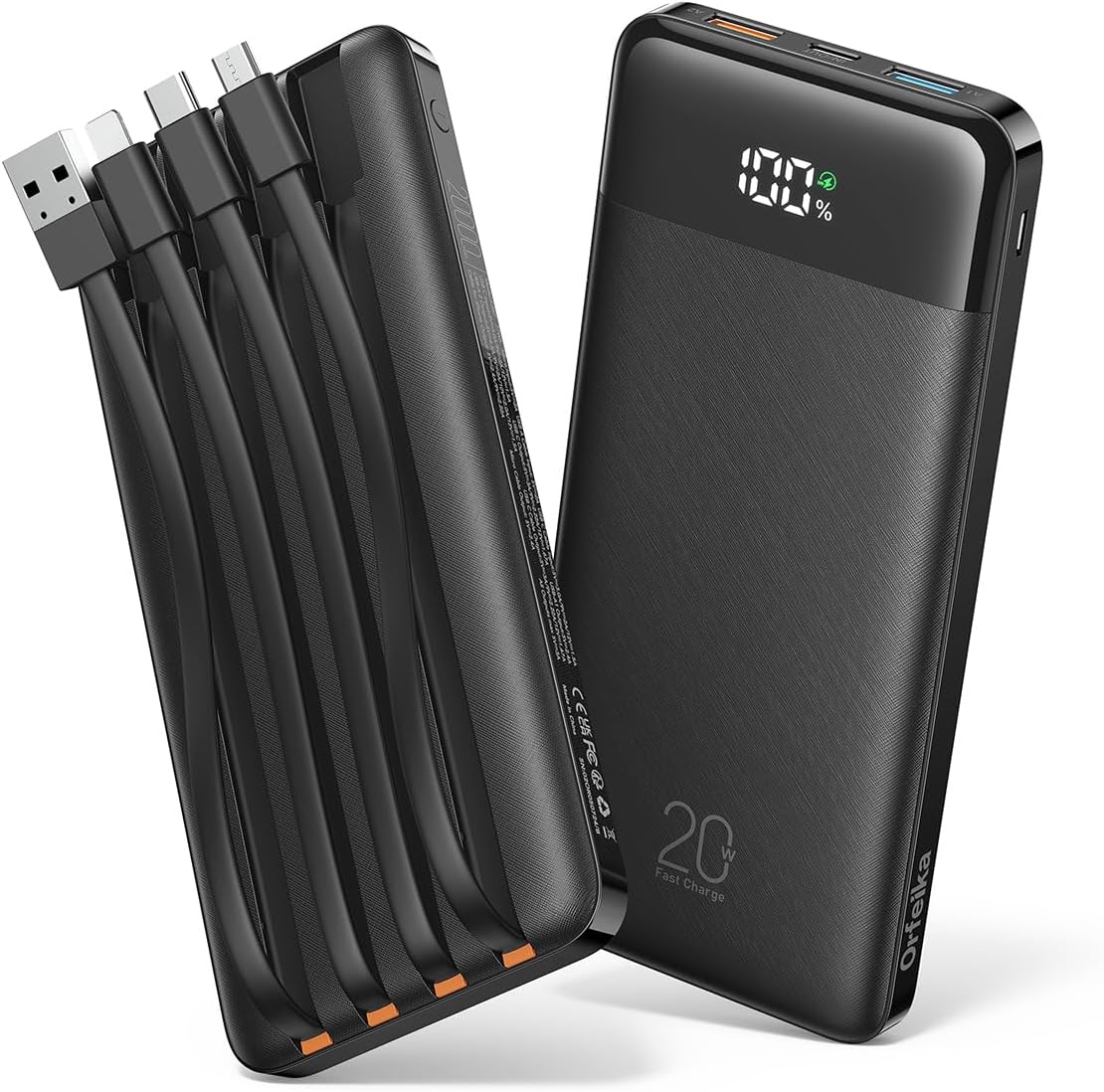
<!–Convenience is key. Multiple output ports let you charge a phone, earbuds, and smartwatch simultaneously. Some models feature built-in cables, eliminating the need to carry separate ones and reducing clutter. Check that the included cables or ports match your devices, whether USB-C, Lightning, or Micro-USB. A charger with a USB-C input port also recharges itself much faster.
Consider Size, Weight, and Travel Regulations
<!–If you carry it everywhere, size matters. New battery technologies allow for smaller, lighter power banks with impressive capacity. For air travel, the Federal Aviation Administration (FAA) permits power banks in carry-on luggage with a rating under 100 watt-hours. Most consumer models, including all 10,000mAh units, meet this rule. Always confirm the specifications if you travel frequently with larger packs. For a broader selection of high-capacity options, see our list of the best power banks under $100.
Final Thoughts
Selecting the right portable charger hinges on your specific balance of speed, capacity, and convenience. For the ultimate in compact, high-speed charging, the INIU 10000mAh 45W Fast Charging Portable Charger is a standout choice, especially for users of modern laptops and tablets that demand higher power. If your priority is maximum battery life for group trips or outdoor adventures without constant access to an outlet, the IAPOS 60000mAh 22.5W Fast Charge Portable Charger provides exceptional value and multi-device capability. Whichever model you choose, a quality fast-charging power bank is an investment that pays off in reliability and freedom every day.
Frequently Asked Questions
What does ‘fast charging’ mean on a portable charger?
Fast charging refers to technology that delivers higher electrical power (wattage) to your device, significantly reducing charging time compared to a standard 5W charger. It requires both the power bank and your device to support a common fast-charging protocol like USB Power Delivery (PD) or Qualcomm Quick Charge (QC). When matched correctly, you can see a 50% charge in 30 minutes or less.
Can I use a portable charger while it’s plugged in to recharge?
This is called pass-through charging, and not all power banks support it safely. Using a charger in this mode can generate excess heat and potentially strain the battery. We recommend consulting your specific model’s manual. For optimal battery health and safety, it is generally better to recharge the power bank fully first, then use it to charge your devices.
How do I know if a portable charger is safe for airline travel?
The key factor is the battery’s energy rating in watt-hours (Wh). The FAA allows power banks with less than 100 Wh in carry-on luggage without airline approval. Most common portable chargers list capacity in mAh. You can calculate the approximate Wh by finding the voltage (usually 3.7V) and capacity. A 10,000mAh (10Ah) bank at 3.7V is about 37 Wh, which is well under the limit. Always check the manufacturer’s specifications. For more gear suited for travel, check our recommendations for the best car chargers to stay powered on road trips.
How long do portable chargers typically last?
The lifespan of a quality power bank is usually measured in charge cycles. A good model can retain most of its capacity for 500 full charge cycles or more, which translates to several years of regular use. Factors like exposure to extreme temperatures, using incompatible chargers to recharge it, or frequently draining it to zero can shorten its life. Choosing a reputable brand from our main Chargers & Batteries category is a good start for a durable product.


Write Your Review
No reviews yet. Be the first to share your experience!