

You are on a long flight, your phone battery is dipping into the red, and the thought of untangling a charging cable feels like a chore. Or perhaps you are halfway through a hiking trail, relying on your phone for navigation and photos, with no outlet in sight. In our connected world, running out of battery is more than an inconvenience, it can disrupt your day, your work, or your adventure.
This guide is for anyone who needs reliable power without the tether of cables. We focus specifically on power banks that integrate wireless charging, a feature that combines backup power with modern convenience. Whether you prioritize magnetic attachment for your iPhone, massive capacity for camping trips, or a slim design for your pocket, we have reviewed key options to match your needs. For broader power solutions, explore our guide on the best portable chargers with AC outlet.
How to Choose a Wireless Power Bank
Capacity and Charging Speed
Capacity, measured in milliampere-hours (mAh), dictates how many full charges you can expect. A 10,000mAh bank can typically recharge a modern smartphone nearly twice. Your choice should balance this with physical size, as larger capacities mean more weight.
Equally important is charging speed, measured in watts (W). Wireless charging is generally slower than wired. Look for power banks supporting at least 7.5W for standard wireless or 15W for faster Qi2 or proprietary standards. Wired ports may support higher speeds, like 20W or 30W, for when you need a quick boost. If you need to charge larger devices, consider our review of the best power banks for tablets.
Magnetic vs. Standard Wireless Charging
This is a crucial distinction for iPhone users. MagSafe-compatible power banks use strong magnets to snap onto the back of your phone, creating a secure connection. This allows you to use your phone while it charges, ideal for navigation or video calls.
Standard Qi wireless charging pads require you to place your device in a specific spot. They are universally compatible with all Qi-enabled phones, including most Android models, but alignment is less precise. Your choice here defines the user experience, between locked-on convenience and broader device support.
Portability and Build Quality
A power bank should fit your lifestyle. For everyday carry in a pocket or small bag, slim and lightweight designs under 0.6 inches thick are ideal. For outdoor adventures, look for rugged builds with features like water resistance, integrated cables, or even solar panels for emergency topping.
Build quality ensures longevity. Materials like metal frames or reinforced plastics protect the internal battery. Safety certifications and features like temperature monitoring are essential for protecting both the power bank and your expensive devices during charging.
Additional Features and Connectivity
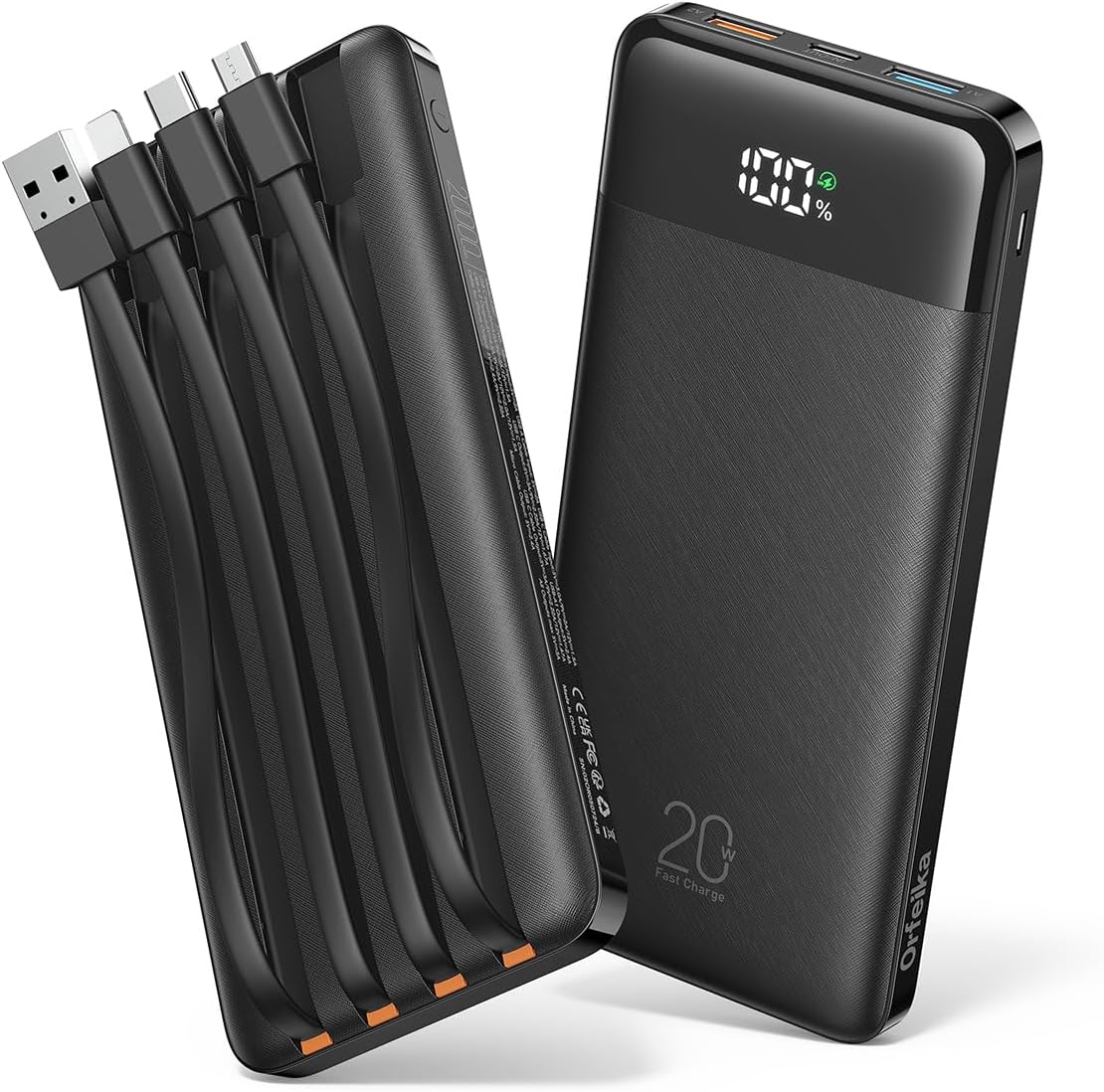
Beyond the basics, useful extras can make a model stand out. Some power banks include built-in charging cables, eliminating the need to pack separate ones. Others feature LED displays to show remaining battery percentage precisely, or integrated flashlights for emergencies.
Check the input and output ports. A USB-C port that supports both charging the bank and outputting power offers great versatility. Having both USB-C and older USB-A ports ensures compatibility with a wider range of gadgets, from Android phones to older accessories. For more versatile charging solutions, see our picks for the best 2-in-1 power banks.
Final Thoughts
Choosing the right wireless power bank ultimately depends on your primary use case. For users deeply invested in the Apple ecosystem who value a seamless, attached charging experience, the Anker MagGo Power Bank, 10,000mAh Qi2-Certified stands out with its premium build and certified fast charging. Conversely, for adventurers, campers, or anyone who needs maximum power and preparedness away from the grid, the BLASOUL Solar Power Bank,49800mAh is a robust tool with its massive capacity, built-in cables, and solar input. You can explore more options in our dedicated Chargers & Batteries category. We hope this focused review helps you cut through the clutter and find a power solution that keeps you connected, conveniently and reliably.
Frequently Asked Questions
Can I use a MagSafe power bank with an Android phone?
Yes, but with limitations. The magnetic ring will only align and attach securely to phones with MagSafe cases or magnetic rings attached. Without this, it will function as a standard Qi wireless charger, but the hold will not be secure. For dedicated Android options, our guide to the best portable chargers for android is a great resource.
Is wireless charging slower than using a cable?
Generally, yes. Even with fast wireless standards like 15W Qi2, energy transfer is less efficient than a direct wired connection, which can deliver 20W, 30W, or more. Wireless charging is best for convenient, all-day top-ups, while using the cable is recommended when you need the fastest possible charge.
How do I know what capacity I need?
A good rule of thumb is to look for a capacity that is 2-3 times your phone’s battery size. For example, a phone with a 4,000mAh battery would be well-served by a 10,000mAh power bank, providing about two full charges. Consider how many devices you need to charge and how long you will be away from an outlet.
Are solar panels on power banks practical for charging?
Solar panels on portable power banks are primarily for emergency backup. They charge very slowly due to their small surface area and require direct, prolonged sunlight. They are excellent for trickle-charging the bank’s internal battery over a day outdoors, but you should not rely on them as a primary charging method.


Write Your Review
No reviews yet. Be the first to share your experience!