

Picture this: you’re on a breathtaking summit, miles from the nearest outlet, and your phone’s battery is dangerously low. Or perhaps a sudden storm knocks out your home’s power. In these moments, a dependable solar power bank transitions from a convenience to an essential tool. These portable energy hubs combine large battery capacity with the sun’s renewable power, offering freedom and security for outdoor enthusiasts and prepared households alike.
This guide is crafted for anyone who needs reliable power beyond the grid. We have assessed eight leading solar power banks and portable power stations, examining their real-world performance for activities like hiking, camping, and emergency preparedness. You will find a detailed comparison, a practical buying guide, and clear recommendations to match the right unit with your specific energy needs. For more insights on gear for the outdoors, explore our guide on the best portable chargers for outdoor use.
How to Choose Your Solar Power Bank
Battery Capacity and Power Needs
Capacity, measured in milliampere-hours (mAh) or watt-hours (Wh), dictates how many times you can recharge your devices. A compact 10,000mAh bank is perfect for solo day trips, while a 50,000mAh unit can support a small group over a weekend. For charging laptops or small appliances, look for models with a high watt-hour rating and AC outlets. Consider your typical usage: are you just topping up a smartphone, or do you need to run a CPAP machine or a mini cooler?
Charging Speed and Port Options
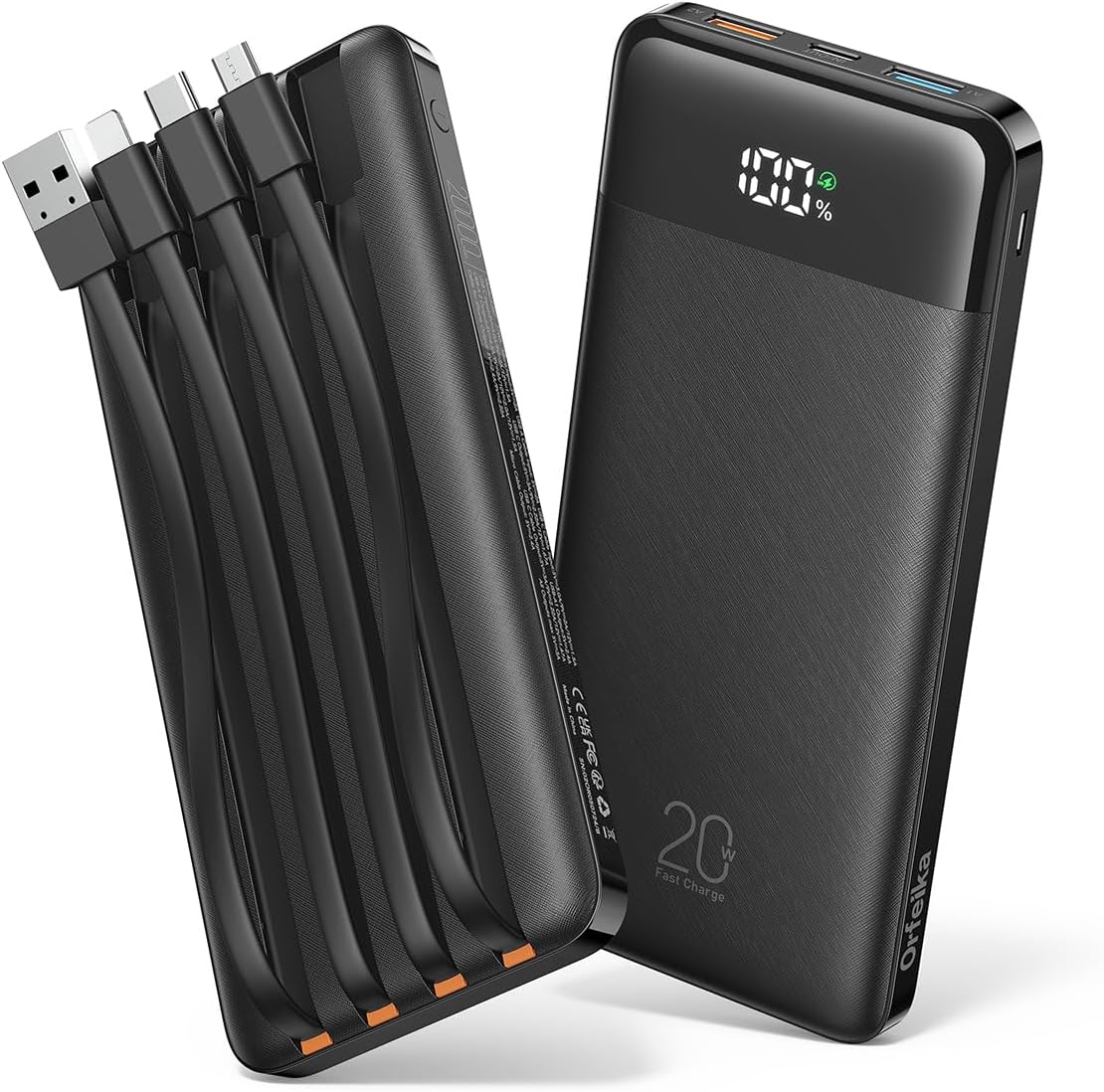
Modern devices demand fast charging. Look for support for technologies like Power Delivery (PD) and Quick Charge (QC), which can significantly reduce charging times. The number and type of ports are equally crucial. Built-in cables eliminate the hassle of carrying extras, while multiple USB-A, USB-C, and even wireless charging pads allow you to power several gadgets simultaneously. This versatility is key for families or anyone with multiple devices. You can find more on managing multiple devices with our review of the best multi-port USB chargers.
Durability and Outdoor Features
A solar power bank meant for the outdoors must be built to withstand it. An IP rating for water and dust resistance is a strong indicator of ruggedness. Additional practical features include a bright LED flashlight, often with SOS modes, which can be vital in emergencies. Some models integrate a compass or a hand crank for absolute worst-case scenarios. The construction materials should feel robust, with protective bumpers or silicone covers for ports. For other durable power options with lighting, check out our selection of the best portable batteries with LED flashlight.
Solar Panel Efficiency
It is important to have realistic expectations about solar charging. While invaluable for topping up in a pinch, solar panels on these units are not typically meant for a full recharge from zero; that is best done via a wall outlet. However, panel efficiency varies. Models with multiple or larger monocrystalline panels will gather energy faster than those with a single small panel. This feature is your lifeline during extended off-grid adventures, slowly replenishing power during the day so you have it available at night.
Final Thoughts
Selecting the right solar power bank ultimately depends on balancing capacity, portability, and the specific features you value most. For those seeking a high-capacity all-in-one solution with unique survival tools, the FEELLE Solar Power Bank 50000mAh Magnetic is a compelling choice with its hand crank and built-in compass. If your priority is a compact, airline-friendly unit that can power a laptop via a real AC outlet, the MARBERO Portable Power Station with AC Outlet 100W offers remarkable capability in a lightweight package. Whichever model you choose, you are investing in preparedness and the freedom to explore without being tethered to a wall socket. For a broader look at power solutions, visit our main Chargers & Batteries category.
Frequently Asked Questions
How long does it take to fully charge a solar power bank using only the sun?
Charging times via solar vary dramatically based on panel size, sunlight intensity, and battery capacity. It can take anywhere from 20 to 50 hours of direct, optimal sunlight for a full charge. For this reason, solar is best used for maintaining a charge or providing a supplemental top-up. The primary recharge should be done using a wall adapter for speed and reliability.
Can I bring a solar power bank on an airplane?
Yes, but with important restrictions. The key factor is the battery’s energy rating, measured in watt-hours (Wh). Most airlines permit power banks with a rating of 100Wh or less in carry-on luggage without special approval. Many portable power stations are designed specifically to be under this limit. Always check your airline’s current policy before traveling.
What is the difference between a solar power bank and a portable power station?
While the terms are sometimes used interchangeably, a solar power bank is typically a smaller unit focused on charging phones and tablets via USB. A portable power station is larger, often includes a pure sine wave AC outlet for laptops and small appliances, and may have a higher Wh capacity. Some power stations are sold with or are compatible with separate, larger solar panels for more efficient off-grid recharging.
Are wireless charging solar power banks worth it?
Wireless charging adds undeniable convenience, allowing you to power up compatible phones without fumbling for a cable. It is a valuable feature for reducing clutter, especially if the bank also has built-in cables for other devices. If you frequently use wireless charging at home or in your car, you will likely appreciate having it in your portable kit as well. Discover more about this technology in our guide to the best power banks with wireless charging.


Write Your Review
No reviews yet. Be the first to share your experience!