

Picture this: you’re miles from the nearest outlet, capturing a stunning sunset on your phone when the low-battery warning flashes. Staying connected outdoors shouldn’t be a source of anxiety. Whether you’re backpacking, camping, or simply enjoying a long day hike, a reliable portable charger is an essential piece of gear. This guide is for anyone who ventures outside and needs dependable backup power for smartphones, cameras, GPS units, and other essential electronics. We have reviewed six top-performing portable chargers specifically chosen for their outdoor readiness, from rugged solar banks to versatile power stations.
Our selection prioritizes products that can handle the elements while delivering the power you need. We assess factors like battery capacity, charging speed, build durability, and special features like built-in lights or cables. For those needing more than just USB power, we also explore options with AC outlets in our related guide on the best portable chargers with AC outlet. Now, let’s dive into the detailed comparison of your top choices.
How to Choose Your Outdoor Power Bank
Capacity and Output Needs
Your first consideration should be battery capacity, measured in milliamp-hours (mAh) or watt-hours (Wh). A higher capacity means more charges for your devices. Think about how many gadgets you carry and how long you’ll be away from power. For simple phone top-ups on a weekend trip, a 20,000mAh bank like the Belkin 20000mAh 15W 3 Port Power Bank may suffice. For multi-day expeditions or powering larger devices like tablets, look for capacities of 30,000mAh or more, or a dedicated power station.
Durability and Weather Resistance
Outdoor conditions are unpredictable. Look for chargers with an IP (Ingress Protection) rating, such as IP65 or IP67. These ratings confirm resistance to dust and water splashes, which is crucial for gear exposed to rain, sand, or accidental drops. A rugged build ensures your power source survives the journey. Pairing your charger with a protective case or stand from our accessories section can offer extra protection during transit.
Charging Speed and Port Options
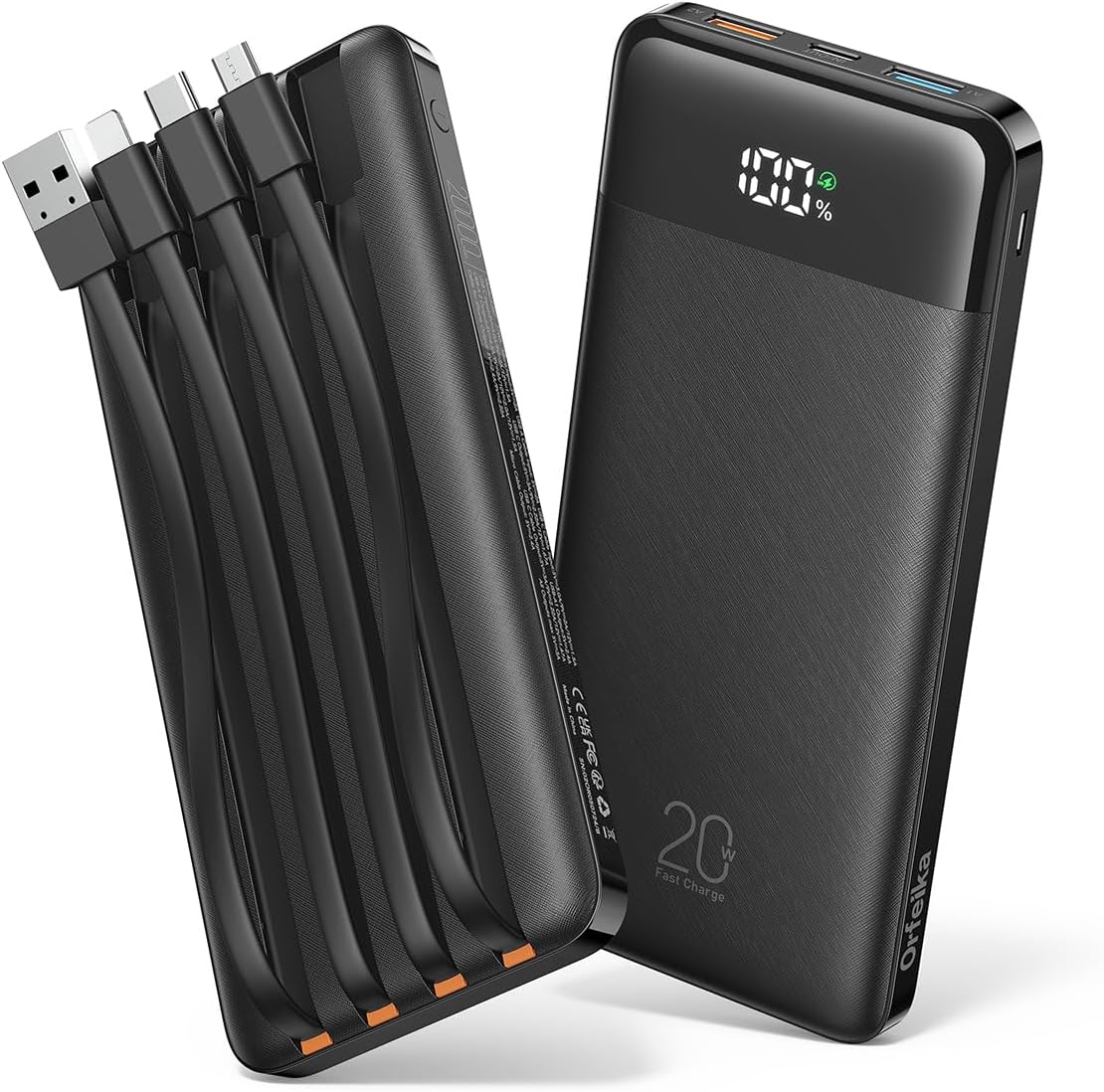
Fast charging technology like Power Delivery (PD) or Quick Charge (QC) can replenish your phone’s battery in a fraction of the usual time. Check the maximum wattage output. Also, consider how many devices you need to charge simultaneously. Multiple USB ports, built-in cables, and even wireless charging pads add significant convenience, eliminating the need to pack extra cords. For maximum versatility, some models function as 2-in-1 power banks, combining a battery pack with other useful features.
Special Features for Emergencies
<!–Many outdoor-focused chargers include valuable extras. Integrated LED flashlights with SOS modes are common and can be vital in low-light situations. Solar panels provide a slow but potentially lifesaving emergency recharge method when you’re off-grid for extended periods. While not a primary charging solution, this feature offers valuable peace of mind. Always check our main Chargers & Batteries category for the latest reviews on innovative features.
Final Thoughts
Selecting the right portable charger ultimately depends on balancing your power needs with the demands of your adventure. For extended off-grid trips where solar charging and massive capacity are key, the BLASOUL Solar Power Bank,49800mAh is a robust contender. If your outdoor activities involve powering small appliances, cameras, or laptops, a compact power station like the Jackery Explorer 300 Portable Power Station,292Wh offers unparalleled versatility. Whichever model you choose, investing in reliable outdoor power ensures your devices, and your adventures, never run out of juice.
Frequently Asked Questions
How long does it take to recharge a portable power bank with solar panels?
Solar charging is significantly slower than using a wall outlet. The time varies greatly based on sunlight intensity, panel size, and battery capacity. It is best viewed as an emergency or supplemental charging method to extend your power bank’s life during multi-day trips, not as a primary recharge solution. For daily use, always use the provided adapter for a faster, more reliable charge.
Can I take a portable power station on an airplane?
Yes, but with strict limits. The Federal Aviation Administration (FAA) allows power banks and portable chargers in carry-on luggage only. The limit is typically 100 watt-hours (Wh) per battery. Most power stations under 100Wh, like many in our review, are approved. Always check your specific model’s Wh rating and confirm with your airline before traveling in 2026, as regulations can be updated.
What does ‘mAh’ mean, and how many charges will I get?
mAh stands for milliamp-hour and indicates the battery’s energy storage capacity. To estimate full charges for your phone, divide the power bank’s mAh by your phone’s battery mAh. For example, a 20,000mAh bank can theoretically charge a phone with a 4,000mAh battery about five times. In reality, you’ll get fewer charges due to energy conversion loss, but it provides a good baseline for comparison.
Are power banks with built-in cables reliable?
Modern power banks with integrated cables are generally reliable and offer excellent convenience by reducing cable clutter. They are built to withstand repeated use. However, if a built-in cable were to fail, you cannot replace it independently as you could with a standard cable. Many models also include standard ports, giving you both options for charging flexibility.


Write Your Review
No reviews yet. Be the first to share your experience!