

You have a collection of favorite records and a library of digital music, but your current setup just doesn’t do justice to the richness and detail you know is there. The sound feels flat, lacking the warmth and power you crave for a truly immersive listening session. Finding an amplifier that unlocks this potential often seems like a quest reserved for high-end audiophiles with deep pockets.
This guide is for the music lover who demands great sound without the extravagant price tag. We have evaluated a range of amplifiers to bring you options that deliver exceptional audio performance, modern features, and reliable power, all within a reasonable budget. Whether you’re building your first serious stereo system or upgrading an existing one, these selections provide a clear path to superior sound. For a broader look at two-channel setups, explore our guide on the best stereo amplifiers.
| Pick | Product | BRD Score | Where to buy |
|---|---|---|---|
| Top Pick |
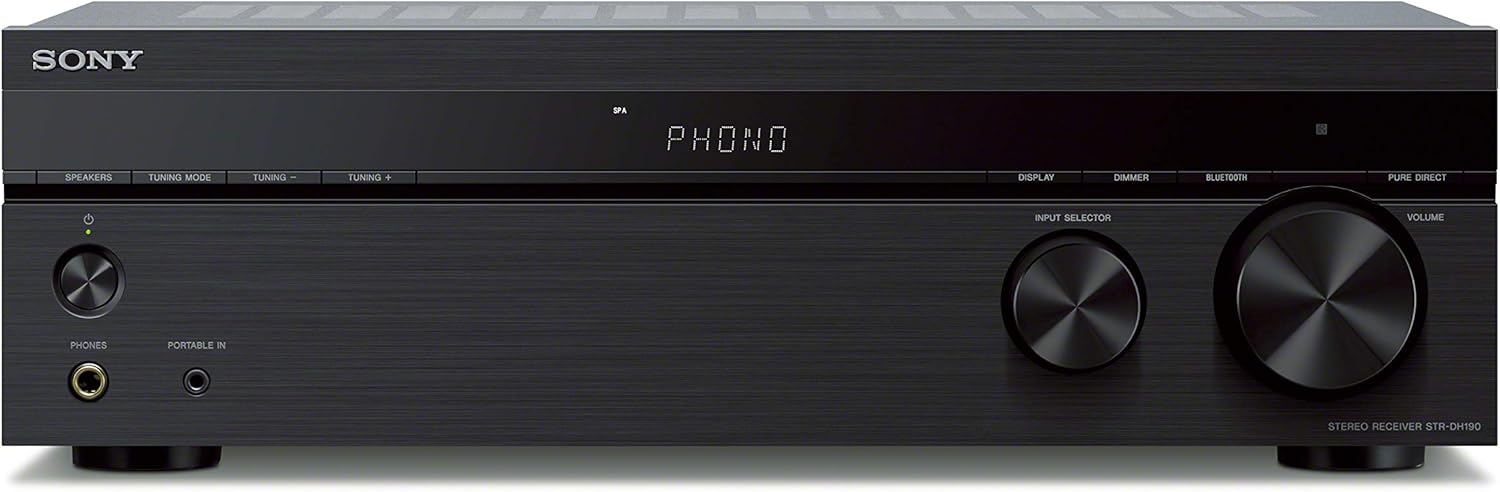 Sony STRDH190 2-Channel Home Stereo Receiver |
9.8/10 | View on Amazon.com |
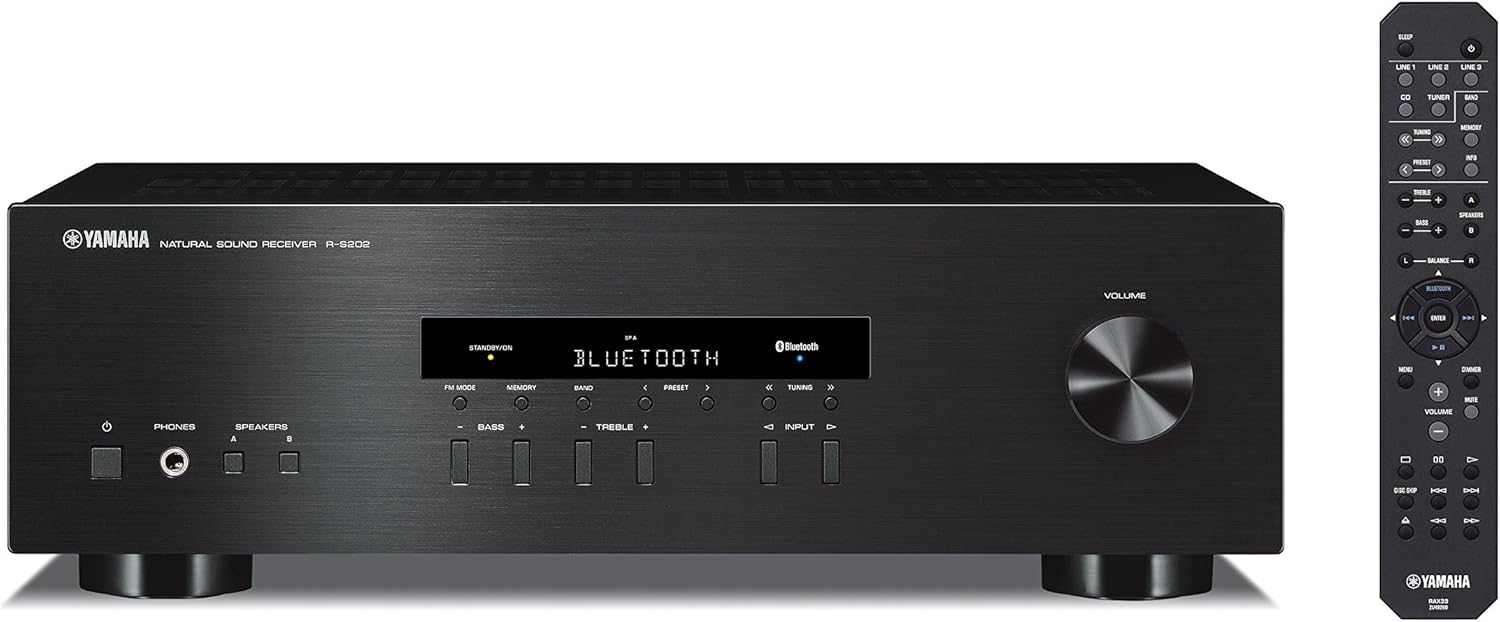 Yamaha R-S202BL Stereo Receiver with Bluetooth |
9.8/10 | View on Amazon.com |
Pros
- Excellent sound clarity with balanced highs, mids, and bass across all input sources
- Phono input eliminates the need for a separate turntable preamp, saving money and desk space
- Bluetooth connection is quick to pair and remains stable during extended listening sessions
- Compact low-profile design fits standard AV furniture without any awkward modifications
- Highly rated by a large number of verified buyers, reflecting consistent real-world reliability
Cons
- Maximum volume output may feel limited for larger rooms or listeners who prefer concert-level loudness
- 2-channel stereo only, so it is not suitable for home theater surround sound setups
- No digital optical or coaxial inputs, which may frustrate users wanting to connect modern TVs or DACs directly
The Sony STRDH190 is a 2-channel home stereo receiver designed for music lovers who want a clean, capable hub for multiple audio sources. Whether you are spinning vinyl, streaming from a phone, or tuning into FM radio, this receiver handles it all in one compact unit. It is particularly well suited to first-time stereo system builders and returning audiophiles who value simplicity over complexity.
Sound performance is the STRDH190's strongest suit. With 100 watts per channel and Sony's large-capacity power transformer, the receiver delivers a composed, detailed soundstage with crisp highs and solid bass. Customer feedback consistently praises its clarity at moderate to high volumes, and High-Resolution Audio support means the unit can resolve fine details that compressed streaming formats often obscure.
The feature set is thoughtfully chosen for its target audience. The built-in phono preamp is a genuine convenience for turntable users, while Bluetooth pairing is described by owners as fast and reliable. The A/B speaker switching is a practical bonus, allowing two pairs of speakers to run simultaneously or independently for multi-room flexibility. A full-size headphone jack and 30-preset FM tuner round out the everyday usability.
On the design side, the STRDH190's low-profile chassis at just over 5 inches tall is a real-world advantage for anyone working with a standard AV cabinet. Build quality feels solid for the price point, and the included remote adds a layer of convenience that budget receivers often skip. The unit weighs 17 pounds, which speaks to the substantial internal components rather than hollow construction.
The main limitations are its 2-channel-only configuration, which rules it out for surround sound duties, and a lack of digital inputs for users wanting to connect a TV or external DAC. Volume headroom in very large rooms can also feel modest. That said, for a stereo-focused listener who values vinyl, Bluetooth, and clean audio in one tidy package, the STRDH190 is a genuinely impressive and well-rounded receiver.
Model: Sony STRDH190 | Color: Black | Channels: 2 (Stereo) | Output Power: 100W x 2 (8 ohms, 1 kHz) | Total Wattage: 200W
Speaker Impedance: 6 to 16 ohms | Inputs: Phono input, 4x stereo RCA, 3.5mm aux | Outputs: Stereo RCA, A/B speaker terminals, 1/4-inch headphone jack
Wireless: Bluetooth (2.4 GHz, max output 5.0 dBm) | FM Tuner: 30 station presets | Audio Format: WMA, High-Resolution Audio
Dimensions: 11"D x 17"W x 5.2"H | Weight: 17.1 lbs | Power: AC 120V, 60 Hz | Warranty: 1 year limited
In the Box: Receiver, remote control (RMT-AA400U), batteries, FM antenna | ASIN: B078WFDR8D | UPC: 027242908383
If you are shopping for your first stereo receiver, the STRDH190 is one of the most complete entry-level options available. It covers all the essential bases: Bluetooth streaming, FM radio, a phono stage for turntables, and enough inputs for a CD player, TV audio output, and more. You will not need to buy a separate phono preamp, which keeps your total system cost down.
Pairing advice: this receiver works best with bookshelf or floor-standing speakers rated between 6 and 16 ohms. Popular matches noted by owners include Yamaha bookshelf speakers and classic Bose 301s. For turntable users, Sony's own PS-LX310BT is a frequently recommended companion that integrates seamlessly with the STRDH190's phono input.
Consider your room size before purchasing. The 100-watt-per-channel rating is more than adequate for small to medium rooms, but listeners in large open-plan spaces who prefer very high volume levels may eventually want to step up to a higher-powered model. For most living rooms and dedicated listening spaces, however, the power on offer is genuinely sufficient.
This receiver is not the right choice if you need surround sound for a home theater setup, or if you want to connect a modern TV via optical or coaxial digital audio. For those use cases, a dedicated AV receiver would be a better fit. But as a pure stereo music receiver with broad source compatibility, the STRDH190 is hard to beat at its price point.
Pros
- Trusted Yamaha build quality with a solid 14.8-pound chassis that feels premium and durable
- Bluetooth 4.1 + EDR provides reliable wireless streaming from smartphones, tablets, and other compatible devices
- Dual speaker selector allows connection of two speaker systems for versatile listening setups
- Wide 10 Hz to 100 kHz frequency response delivers exceptional audio fidelity beyond typical receiver ranges
- Included remote control and intuitive layout make daily operation simple and convenient
Cons
- No HDMI ARC or digital optical inputs, which may limit integration with modern TVs and home theater setups
- At 2 channels only, it is not suitable for users looking to build a surround sound or multi-channel home theater system
The Yamaha R-S202BL is a 2-channel stereo receiver designed for music lovers who want straightforward, high-quality audio performance without the complexity of a full home theater system. Rated at 100 watts of output power and built around Yamaha's Natural Sound philosophy, it targets both entry-level audiophiles and everyday listeners who value reliability and clean sound reproduction.
The standout feature is its Bluetooth 4.1 + EDR connectivity, which allows seamless wireless streaming from smartphones, tablets, and other devices. Paired with a wide frequency response of 10 Hz to 100 kHz, the R-S202BL reproduces audio with impressive detail and accuracy. The built-in 40-station FM/AM preset tuner adds traditional broadcast radio support, making this receiver a genuinely versatile audio hub for the living room or dedicated listening space.
In terms of design, the R-S202BL sports a brushed aluminum finish with a clean, minimalist front panel that looks premium and timeless. At 14.8 pounds, the chassis feels substantial and well-built, consistent with Yamaha's reputation for durable construction. The compact 15 x 20 x 8-inch footprint means it fits neatly into most AV furniture without dominating the space.
On the downside, the receiver lacks digital inputs such as optical or coaxial, and there is no HDMI connectivity for direct TV integration despite the spec sheet listing HDMI as a connector type. Users building a modern home theater setup may find the input options limiting. Additionally, being a 2-channel unit, it is strictly a stereo receiver and does not support surround sound configurations.
Overall, the Yamaha R-S202BL is a compelling choice for anyone who wants a reliable, great-sounding stereo receiver with the convenience of Bluetooth streaming and traditional tuner functionality. It earns its strong reputation through solid build quality, wide frequency performance, and the trusted Yamaha name, making it a smart buy for music-focused listeners on a reasonable budget.
Model: Yamaha R-S202BL | Color: Black | Output Power: 100 Watts | Channels: 2.0 Stereo
Frequency Response: 10 Hz to 100 kHz (0 +/- 0.5 dB / 0 +/- 3.0 dB) | Input Sensitivity (CD): 500 mV / 47k Ohms | Audio Encoding: Stereo, WMA
Wireless: Bluetooth 4.1 + EDR | Compatible Devices: Smartphone, Tablet, Speaker, Television, Game Console | Tuner: FM/AM with 40 preset stations
Speaker Systems: Dual speaker selector with A/B output terminals | Headphone Terminal: Yes | Remote Control: Included
Dimensions: 20 inches D x 15 inches W x 8 inches H | Weight: 14.8 pounds | Warranty: 1-year manufacturer warranty | UPC: 027108954103
If you are shopping for your first stereo receiver or upgrading from a basic all-in-one system, the Yamaha R-S202BL offers an excellent balance of performance, features, and value. It is best suited for dedicated stereo music listening rather than home theater use, so consider your primary use case before purchasing.
For speaker pairing, the R-S202BL works well with bookshelf or floor-standing speakers rated between 6 and 16 ohms. With 100 watts of output power, it can drive moderately sensitive speakers in small to medium-sized rooms with ease. Avoid pairing it with very inefficient or power-hungry speakers that require more than 100 watts to perform well.
The Bluetooth feature makes this receiver especially appealing for users who stream music from services like Spotify, Apple Music, or Amazon Music. Since it supports Bluetooth 4.1 + EDR, you can expect a stable wireless connection with minimal dropout from most modern smartphones and tablets within a typical room distance.
Keep in mind that the R-S202BL does not include digital audio inputs, so if you plan to connect a TV, gaming console, or media player via optical or coaxial cable, you will need to use analog RCA connections instead. For users who only need stereo music playback from analog and Bluetooth sources, this limitation is unlikely to matter. It is a focused, well-executed stereo receiver that does exactly what it promises.
What to Look for in an Amplifier
Power Output and Speaker Compatibility
An amplifier’s power rating, measured in watts per channel, determines how loud and clear it can drive your speakers. More power isn’t always better, but having sufficient headroom prevents distortion at higher volumes. Crucially, you must match the amplifier’s supported impedance (measured in ohms) with your speakers’ requirements.
A mismatch can lead to poor performance or even damage. Most home speakers are rated at 6 or 8 ohms. Look for an amplifier that clearly states its power output at a specific impedance, like 100 watts per channel at 8 ohms. This ensures it can handle your speakers properly and deliver dynamic, controlled sound.
Connectivity and Input Options
Your amplifier is the central hub of your audio system. Its input selection dictates what sources you can connect. At a minimum, you’ll want multiple RCA inputs for components like a CD player or streamer. A dedicated phono input with a proper preamp is essential for connecting a turntable without an external box.
Modern needs extend beyond analog. Built-in Bluetooth is incredibly convenient for wireless streaming from phones and tablets. For the highest digital audio quality, look for optical or coaxial digital inputs. Some advanced models even include a USB input for direct connection to a computer, acting as an external sound card. Understanding these options helps you build a versatile system.
Sound Quality and Technology
The core purpose of an amplifier is to make your music sound better. Sound quality is influenced by the amplifier’s design class (like Class A/B or Class D) and the quality of its internal components. Look for specifications like Total Harmonic Distortion (THD), where a lower percentage indicates a cleaner, more accurate signal reproduction.
Some amplifiers incorporate a high-quality Digital-to-Analog Converter (DAC), which can significantly improve the sound from digital sources. Features like tone controls (bass and treble) allow for subtle adjustments to suit your room and preferences. For those seeking the ultimate in component flexibility, our review of the best preamplifiers offers deeper insight.
Final Thoughts
Upgrading your amplifier is one of the most impactful steps you can take toward enjoying your music collection to its fullest. The options presented here prove that excellent sound quality and modern features are accessible. For the listener who values a classic, full-featured stereo experience with seamless vinyl integration, the Sony STRDH190 2-ch Home Stereo Receiver with Phono is a standout choice. Conversely, if your priority is cutting-edge digital audio performance with hi-res decoding and a sleek, modern design, the AIYIMA A80 Bluetooth Stereo DAC Amplifier represents incredible technological value. Whichever path you choose, you’re investing in countless hours of superior listening pleasure.
Frequently Asked Questions
Do I need a separate preamp and power amp, or is an integrated amplifier sufficient?
For most listeners, an integrated amplifier is the perfect and most cost-effective solution. It combines both the preamplifier (which controls source selection and volume) and the power amplifier (which drives the speakers) in one unit. Separate components offer ultimate upgradeability and performance but at a higher cost and complexity. The amplifiers in our guide are all integrated models, offering simplicity and excellent performance. You can learn more about dedicated components in our article on best power amplifiers.
What is the advantage of an amplifier with a built-in DAC?
A built-in Digital-to-Analog Converter (DAC) processes digital audio signals from sources like TVs, computers, or streamers, converting them into an analog signal the amplifier can amplify. Using the amplifier’s dedicated, often high-quality DAC usually results in better sound than relying on the basic converter in your TV or computer. It simplifies your setup by reducing box count and can provide support for high-resolution audio formats for stunning detail.
Can I use any of these amplifiers for a home theater setup?
These amplifiers are designed primarily for two-channel stereo music listening, not for decoding surround sound formats like Dolby Atmos. However, they can serve as excellent amplifiers for a 2.1 channel setup (two speakers and a subwoofer) or be integrated into a system focused on music. For a pure home theater experience with multiple surround channels, an Audio/Video Receiver (AVR) is the appropriate choice. For the best combination of music and movie performance, consider an integrated amplifier with home theater bypass functionality.
How do I know if an amplifier will work with my existing speakers?
Check the specifications of both your speakers and the amplifier. The key compatibility points are impedance (measured in ohms) and power handling. Your speaker’s nominal impedance (e.g., 8 ohms) should fall within the amplifier’s supported range (e.g., 6-16 ohms). Furthermore, the amplifier’s power output should be appropriate for your speakers’ sensitivity and recommended power range. Connecting speakers with too low an impedance can overload an amplifier, while an underpowered amp driven too hard can damage speakers.





Write Your Review
No reviews yet. Be the first to share your experience!