

Building a high quality home audio system often means juggling multiple sources. You might have a turntable, a CD player, a smart TV, and a streaming device, all demanding a connection. The central hub that brings everything together is an amplifier with sufficient and versatile main inputs.
This guide is for anyone setting up a new stereo system or upgrading an old one to accommodate modern and classic gear. We have reviewed a selection of amplifiers known for their robust input options. Our goal is to help you find a model that not only powers your speakers but also seamlessly integrates every component in your audio chain.
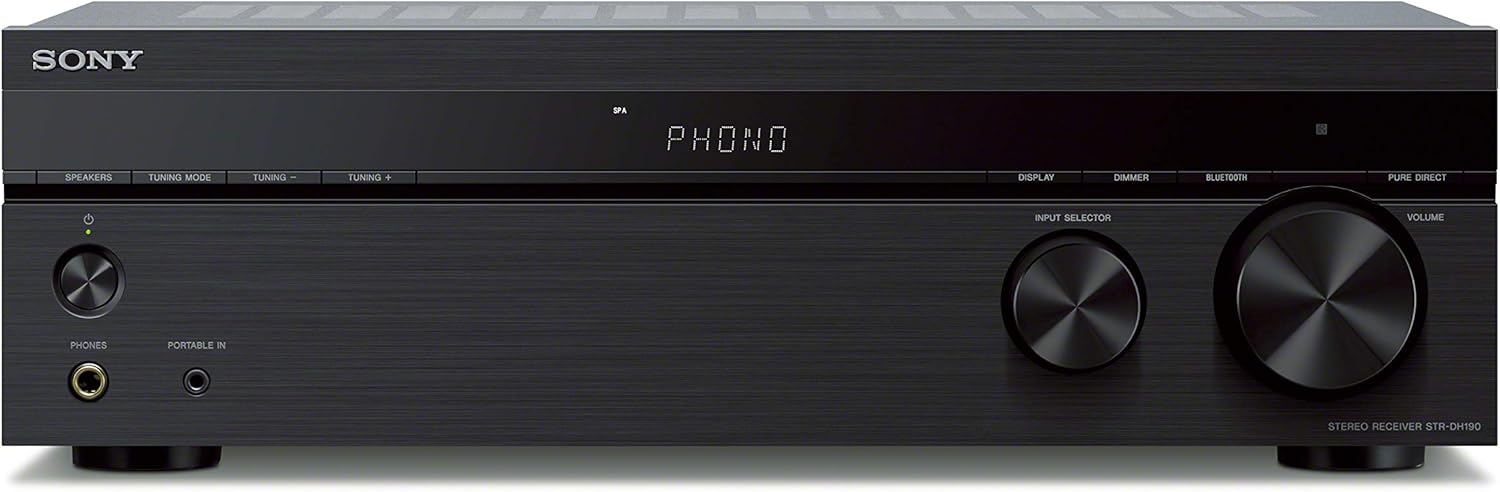
Pros
- Excellent sound clarity with balanced highs, mids, and bass across all input sources
- Phono input eliminates the need for a separate turntable preamp, saving money and desk space
- Bluetooth connection is quick to pair and remains stable during extended listening sessions
- Compact low-profile design fits standard AV furniture without any awkward modifications
- Highly rated by a large number of verified buyers, reflecting consistent real-world reliability
Cons
- Maximum volume output may feel limited for larger rooms or listeners who prefer concert-level loudness
- 2-channel stereo only, so it is not suitable for home theater surround sound setups
- No digital optical or coaxial inputs, which may frustrate users wanting to connect modern TVs or DACs directly
The Sony STRDH190 is a 2-channel home stereo receiver designed for music lovers who want a clean, capable hub for multiple audio sources. Whether you are spinning vinyl, streaming from a phone, or tuning into FM radio, this receiver handles it all in one compact unit. It is particularly well suited to first-time stereo system builders and returning audiophiles who value simplicity over complexity.
Sound performance is the STRDH190's strongest suit. With 100 watts per channel and Sony's large-capacity power transformer, the receiver delivers a composed, detailed soundstage with crisp highs and solid bass. Customer feedback consistently praises its clarity at moderate to high volumes, and High-Resolution Audio support means the unit can resolve fine details that compressed streaming formats often obscure.
The feature set is thoughtfully chosen for its target audience. The built-in phono preamp is a genuine convenience for turntable users, while Bluetooth pairing is described by owners as fast and reliable. The A/B speaker switching is a practical bonus, allowing two pairs of speakers to run simultaneously or independently for multi-room flexibility. A full-size headphone jack and 30-preset FM tuner round out the everyday usability.
On the design side, the STRDH190's low-profile chassis at just over 5 inches tall is a real-world advantage for anyone working with a standard AV cabinet. Build quality feels solid for the price point, and the included remote adds a layer of convenience that budget receivers often skip. The unit weighs 17 pounds, which speaks to the substantial internal components rather than hollow construction.
The main limitations are its 2-channel-only configuration, which rules it out for surround sound duties, and a lack of digital inputs for users wanting to connect a TV or external DAC. Volume headroom in very large rooms can also feel modest. That said, for a stereo-focused listener who values vinyl, Bluetooth, and clean audio in one tidy package, the STRDH190 is a genuinely impressive and well-rounded receiver.
Model: Sony STRDH190 | Color: Black | Channels: 2 (Stereo) | Output Power: 100W x 2 (8 ohms, 1 kHz) | Total Wattage: 200W
Speaker Impedance: 6 to 16 ohms | Inputs: Phono input, 4x stereo RCA, 3.5mm aux | Outputs: Stereo RCA, A/B speaker terminals, 1/4-inch headphone jack
Wireless: Bluetooth (2.4 GHz, max output 5.0 dBm) | FM Tuner: 30 station presets | Audio Format: WMA, High-Resolution Audio
Dimensions: 11"D x 17"W x 5.2"H | Weight: 17.1 lbs | Power: AC 120V, 60 Hz | Warranty: 1 year limited
In the Box: Receiver, remote control (RMT-AA400U), batteries, FM antenna | ASIN: B078WFDR8D | UPC: 027242908383
If you are shopping for your first stereo receiver, the STRDH190 is one of the most complete entry-level options available. It covers all the essential bases: Bluetooth streaming, FM radio, a phono stage for turntables, and enough inputs for a CD player, TV audio output, and more. You will not need to buy a separate phono preamp, which keeps your total system cost down.
Pairing advice: this receiver works best with bookshelf or floor-standing speakers rated between 6 and 16 ohms. Popular matches noted by owners include Yamaha bookshelf speakers and classic Bose 301s. For turntable users, Sony's own PS-LX310BT is a frequently recommended companion that integrates seamlessly with the STRDH190's phono input.
Consider your room size before purchasing. The 100-watt-per-channel rating is more than adequate for small to medium rooms, but listeners in large open-plan spaces who prefer very high volume levels may eventually want to step up to a higher-powered model. For most living rooms and dedicated listening spaces, however, the power on offer is genuinely sufficient.
This receiver is not the right choice if you need surround sound for a home theater setup, or if you want to connect a modern TV via optical or coaxial digital audio. For those use cases, a dedicated AV receiver would be a better fit. But as a pure stereo music receiver with broad source compatibility, the STRDH190 is hard to beat at its price point.
How to Choose an Amplifier with Main Inputs
Assess Your Required Input Types
Start by listing all the devices you need to connect. A classic turntable requires a dedicated phono input with proper pre amplification. Modern TVs and game consoles often output audio via optical or coaxial digital connections.
For maximum flexibility, look for an amplifier that offers a mix of analog and digital inputs. Common needs include RCA inputs for CD players, a phono stage for vinyl, and digital optical for televisions. If you need professional gear, confirm the presence of XLR inputs for balanced connections.
Consider Power Output and Speaker Compatibility
The amplifier’s power rating must match your speakers’ requirements and the size of your room. Power is typically measured in watts per channel into a specific impedance, like 8 ohms. Using an underpowered amp can lead to distortion at higher volumes.
Check your speakers’ nominal impedance and sensitivity. A higher sensitivity rating means the speakers produce more volume with less power. Ensure the amplifier can comfortably drive your specific speaker model for clean, dynamic sound.
Evaluate Additional Features and Connectivity
<!–Modern amplifiers often include wireless streaming via Bluetooth 5.0 or Wi Fi. This adds convenience for streaming from phones or computers. Some models feature built in DACs for high resolution audio playback from digital sources.
Think about future expansion. Features like pre outs allow you to add a separate power amplifier or a subwoofer later. For multi room setups, some amplifiers offer zone control or bridgeable channels. These features provide long term system flexibility.
Prioritize Build Quality and Design
<!–The physical construction affects both durability and sound quality. A well built chassis with quality internal components resists vibration and electrical interference. This results in a cleaner audio signal and greater longevity.
Consider where the unit will live. A sleek, low profile integrated amplifier fits well in a living room cabinet. For professional or installation use, a rugged rack mount design with efficient cooling is essential. The design should suit your space and usage.
Final Thoughts
Choosing the right amplifier is about matching its capabilities to your specific audio sources and listening goals. For a refined hi fi experience with excellent digital and analog inputs, the Denon PMA-600NE Bluetooth Stereo Amplifier is a standout choice. If you need a powerful, versatile solution for commercial spaces or complex multi zone setups, the robust Dayton Audio DAX88 8-Source 8-Zone Bridgeable amplifier offers exceptional control and scalability. Explore more options in our dedicated amplifiers category to find your perfect audio hub.
Frequently Asked Questions
What is the difference between a phono input and a regular RCA input?
A phono input is specifically designed for turntables. It applies the RIAA equalization curve to correct the audio signal from a vinyl record and provides the necessary pre amplification. Plugging a turntable into a standard RCA input will result in very low volume and incorrect sound. Always use the dedicated phono input for vinyl playback.
Can I connect a subwoofer to any amplifier with main inputs?
<!–You can connect a subwoofer if the amplifier has a dedicated subwoofer output, usually labeled “Sub Out” or “LFE Out.” This is a pre amp level signal. If your amplifier lacks this, you can sometimes use speaker level outputs from the amp to the subwoofer’s speaker level inputs, if the subwoofer supports it. Check the manuals for both components for compatibility.
How many inputs do I realistically need for a home stereo?
<!–For a typical modern setup, plan for at least four inputs. Common needs include one phono input for a turntable, one or two RCA inputs for a CD player or streamer, and one digital optical input for a television. Including multiple RCA inputs provides flexibility for future additions. Built in Bluetooth also counts as a wireless input for streaming.
Do I need a special amplifier for high resolution audio files?
<!–To fully benefit from high resolution audio files, an amplifier with a capable built in digital to analog converter (DAC) is recommended. Look for specs supporting formats like 24 bit 192kHz. The DAC converts the digital file into an analog signal the amplifier can process. Many modern amplifiers and integrated amplifiers for audiophiles feature high quality DACs for this purpose.





Write Your Review
No reviews yet. Be the first to share your experience!