

Your turntable holds a world of warm, rich sound, but unlocking it requires the right connection. The heart of that connection is an amplifier with a dedicated phono input. This specialized input applies the necessary RIAA equalization and provides proper gain to bring your vinyl records to life. Without it, the sound from your turntable will be faint and lackluster.
This guide is for anyone building or upgrading a dedicated listening space centered around their record collection. Whether you are a new enthusiast assembling your first hi-fi system or an audiophile refining your setup, selecting the right amplifier is crucial. We have reviewed leading models to simplify your search, focusing on performance, features, and value. For a deeper look at the phono stage itself, explore our guide on the best amplifiers with phono preamp.
Pros
- Excellent sound clarity with balanced highs, mids, and bass across all input sources
- Phono input eliminates the need for a separate turntable preamp, saving money and desk space
- Bluetooth connection is quick to pair and remains stable during extended listening sessions
- Compact low-profile design fits standard AV furniture without any awkward modifications
- Highly rated by a large number of verified buyers, reflecting consistent real-world reliability
Cons
- Maximum volume output may feel limited for larger rooms or listeners who prefer concert-level loudness
- 2-channel stereo only, so it is not suitable for home theater surround sound setups
- No digital optical or coaxial inputs, which may frustrate users wanting to connect modern TVs or DACs directly
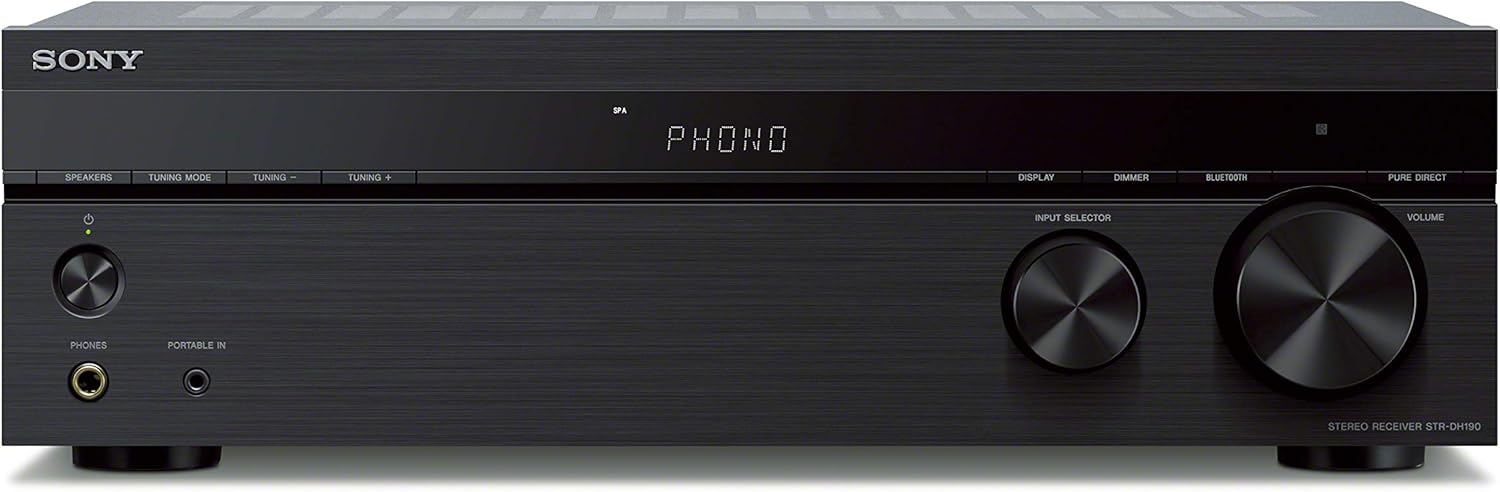
The Sony STRDH190 is a 2-channel home stereo receiver designed for music lovers who want a clean, capable hub for multiple audio sources. Whether you are spinning vinyl, streaming from a phone, or tuning into FM radio, this receiver handles it all in one compact unit. It is particularly well suited to first-time stereo system builders and returning audiophiles who value simplicity over complexity.
Sound performance is the STRDH190's strongest suit. With 100 watts per channel and Sony's large-capacity power transformer, the receiver delivers a composed, detailed soundstage with crisp highs and solid bass. Customer feedback consistently praises its clarity at moderate to high volumes, and High-Resolution Audio support means the unit can resolve fine details that compressed streaming formats often obscure.
The feature set is thoughtfully chosen for its target audience. The built-in phono preamp is a genuine convenience for turntable users, while Bluetooth pairing is described by owners as fast and reliable. The A/B speaker switching is a practical bonus, allowing two pairs of speakers to run simultaneously or independently for multi-room flexibility. A full-size headphone jack and 30-preset FM tuner round out the everyday usability.
On the design side, the STRDH190's low-profile chassis at just over 5 inches tall is a real-world advantage for anyone working with a standard AV cabinet. Build quality feels solid for the price point, and the included remote adds a layer of convenience that budget receivers often skip. The unit weighs 17 pounds, which speaks to the substantial internal components rather than hollow construction.
The main limitations are its 2-channel-only configuration, which rules it out for surround sound duties, and a lack of digital inputs for users wanting to connect a TV or external DAC. Volume headroom in very large rooms can also feel modest. That said, for a stereo-focused listener who values vinyl, Bluetooth, and clean audio in one tidy package, the STRDH190 is a genuinely impressive and well-rounded receiver.
Model: Sony STRDH190 | Color: Black | Channels: 2 (Stereo) | Output Power: 100W x 2 (8 ohms, 1 kHz) | Total Wattage: 200W
Speaker Impedance: 6 to 16 ohms | Inputs: Phono input, 4x stereo RCA, 3.5mm aux | Outputs: Stereo RCA, A/B speaker terminals, 1/4-inch headphone jack
Wireless: Bluetooth (2.4 GHz, max output 5.0 dBm) | FM Tuner: 30 station presets | Audio Format: WMA, High-Resolution Audio
Dimensions: 11"D x 17"W x 5.2"H | Weight: 17.1 lbs | Power: AC 120V, 60 Hz | Warranty: 1 year limited
In the Box: Receiver, remote control (RMT-AA400U), batteries, FM antenna | ASIN: B078WFDR8D | UPC: 027242908383
If you are shopping for your first stereo receiver, the STRDH190 is one of the most complete entry-level options available. It covers all the essential bases: Bluetooth streaming, FM radio, a phono stage for turntables, and enough inputs for a CD player, TV audio output, and more. You will not need to buy a separate phono preamp, which keeps your total system cost down.
Pairing advice: this receiver works best with bookshelf or floor-standing speakers rated between 6 and 16 ohms. Popular matches noted by owners include Yamaha bookshelf speakers and classic Bose 301s. For turntable users, Sony's own PS-LX310BT is a frequently recommended companion that integrates seamlessly with the STRDH190's phono input.
Consider your room size before purchasing. The 100-watt-per-channel rating is more than adequate for small to medium rooms, but listeners in large open-plan spaces who prefer very high volume levels may eventually want to step up to a higher-powered model. For most living rooms and dedicated listening spaces, however, the power on offer is genuinely sufficient.
This receiver is not the right choice if you need surround sound for a home theater setup, or if you want to connect a modern TV via optical or coaxial digital audio. For those use cases, a dedicated AV receiver would be a better fit. But as a pure stereo music receiver with broad source compatibility, the STRDH190 is hard to beat at its price point.
How to Choose Your Amplifier with Phono Input
Power Output and Speaker Compatibility
Amplifier power, measured in watts, determines how loud and clear your music can play. It must match your speakers’ impedance and sensitivity. An underpowered amp can distort at higher volumes, while an overpowered one risks damaging sensitive speakers.
Check your speaker specifications for their recommended power range and impedance, typically 4, 6, or 8 ohms. An amplifier rated for 50-100 watts per channel into 8 ohms suits most bookshelf and floor-standing speakers in a medium-sized room. This ensures clean, dynamic sound without strain.
Sound Quality and Phono Stage Performance
<!–The built-in phono stage’s quality directly impacts your vinyl experience. A good phono preamp accurately applies the RIAA curve, minimizes noise, and provides a strong, clean signal. Look for amplifiers that highlight high-quality audio components in their phono section.
Some audiophiles prefer a separate, external phono preamp for ultimate sound tailoring. However, a well-integrated phono stage in an amplifier offers convenience and often excellent performance. It simplifies your setup by reducing the number of components and cables needed.
Connectivity and Versatility
<!–Beyond the essential phono input, consider what other sources you will use. Modern amplifiers often include digital inputs like optical and coaxial for connecting a TV, CD player, or streamer. Bluetooth connectivity is highly convenient for wireless streaming from a phone or tablet.
Having multiple analog RCA inputs allows you to connect a CD player, tape deck, or other legacy gear. If you plan to use digital sources, ensure the amplifier has a built-in DAC for high-quality conversion. For more on this feature, see our list of the best amplifiers with Built-In DACs.
Form Factor and Design
<!–The amplifier’s size and design should fit your space and aesthetic. Traditional integrated amplifiers have a substantial, component-style look. Modern receivers might offer a slimmer profile to fit into media cabinets more easily.
Consider the front panel layout for ease of use. A clear display, intuitive volume knob, and well-placed input selectors enhance daily interaction. Build quality also matters, a solid chassis helps reduce vibrations that can color the sound.
Final Thoughts
Finding the right amplifier with a phono input elevates your vinyl listening from a simple playback to a rich, immersive experience. Our evaluation shows a strong option for balanced performance and modern features is the Denon PMA-600NE Bluetooth Stereo Amplifier, which excels in both analog purity and digital convenience. For those seeking exceptional power and audiophile-grade construction for a dedicated stereo system, the YAMAHA A-S801BL Natural Sound Integrated Stereo is a compelling choice. Whichever model you choose, ensure it complements your existing turntable and speakers to create a system that truly honors your music.
Frequently Asked Questions
Can I connect a turntable to an amplifier without a phono input?
Yes, but you will need an external phono preamplifier. This standalone device performs the same RIAA equalization and signal boosting as a built-in phono stage. You would connect your turntable to the phono preamp, and then connect the preamp’s output to a standard line-level input on your amplifier.
What is the difference between an integrated amplifier and a receiver?
An integrated amplifier combines a preamplifier and a power amplifier in one unit, focusing solely on amplifying audio signals from sources like a turntable or CD player. A receiver is an integrated amplifier that also includes a radio tuner, typically FM. Many modern receivers add features like Bluetooth and multiple digital inputs, making them versatile hubs.
How important is Bluetooth in an amplifier for a vinyl setup?
While not essential for playing records, Bluetooth adds significant versatility. It allows you to stream music from your smartphone, tablet, or computer wirelessly. This feature is perfect for listening to podcasts, digital music services, or internet radio without switching components. For dedicated options, browse our selection of the best bluetooth amplifiers for every audio setup.
Should I buy an amplifier with more power than I think I need?
Having some extra power headroom is generally beneficial. It allows the amplifier to operate comfortably without straining, even during dynamic musical passages at higher volumes. This results in cleaner, more controlled sound and less risk of distortion or clipping, which can protect your speakers.





Write Your Review
No reviews yet. Be the first to share your experience!