

You’re ready to capture your music, podcast, or stream with professional clarity, but the weak link is often the conversion from digital to analog sound. An audio interface with a subpar built-in DAC can leave your recordings sounding flat, muddy, or plagued by digital noise. The right converter is the heart of your audio chain, transforming your digital data into the rich, detailed sound you envision. This guide is crafted for musicians, content creators, and audiophiles seeking interfaces where the integrated DAC is a standout feature, not an afterthought. We’ve assessed the latest models to help you make an informed choice. For more on essential recording tools, explore our full audio interfaces category.
Pros
- Excellent preamp quality produces bright, clear recordings with minimal noise floor
- Air mode adds professional polish to vocal and acoustic recordings without additional equipment
- Compact design perfect for home studios, bedroom producers, and mobile recording setups
- Included software suite eliminates need for expensive DAW purchases
- Highly reliable brand with strong reputation in professional audio industry
Cons
- Single microphone input limits simultaneous multi-instrument recording capabilities
- May require audio driver updates for optimal performance on some Windows systems
- Learning curve for beginners unfamiliar with audio interface operation and gain staging
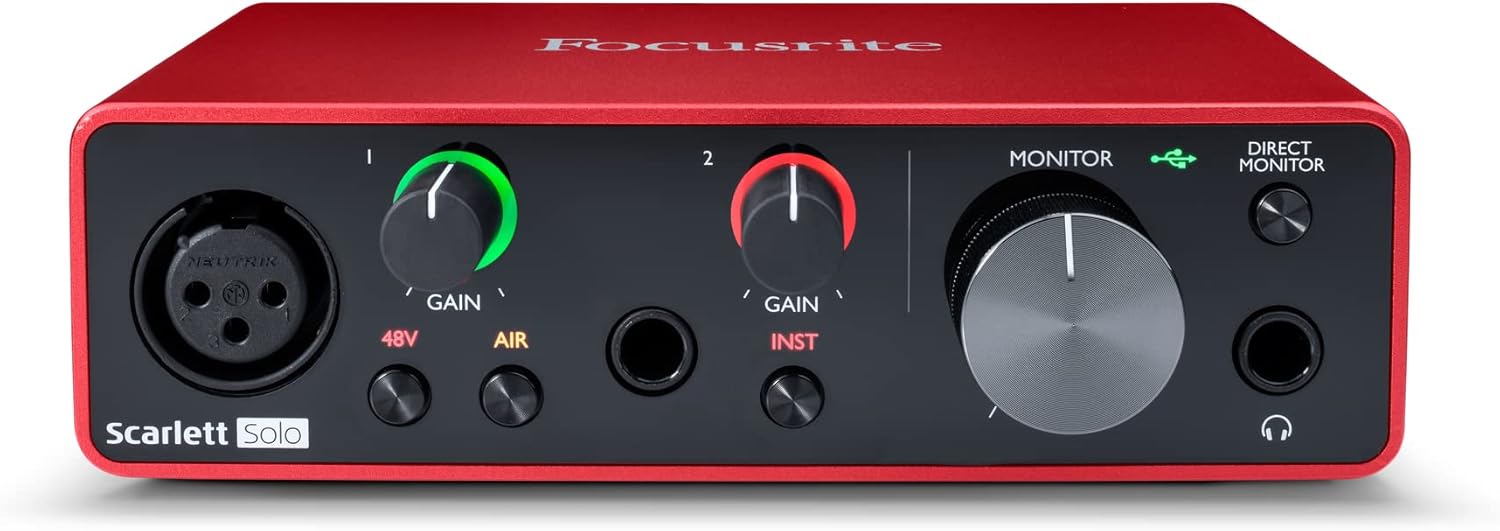
The Focusrite Scarlett Solo 3rd Gen is a professional USB audio interface designed for musicians, podcasters, and content creators who demand studio-quality recordings without the complexity of larger mixing consoles. This compact device bridges the gap between budget-friendly entry-level gear and expensive professional equipment, making it ideal for home studios, bedroom producers, and anyone serious about capturing professional-grade audio.
The standout feature is undoubtedly the high-performance microphone preamp paired with the innovative Air mode, which adds extra clarity and presence to vocals and acoustic instruments. The two high-headroom instrument inputs eliminate clipping and distortion, ensuring your guitar, bass, and other instruments shine through with clarity. Recording at up to 24-bit/192kHz resolution means your productions retain all sonic nuances, while the Gain Halo visual feedback system helps you nail perfect levels every time.
Build quality reflects Focusrite's professional heritage, with a solid metal chassis and intuitive front-panel controls that feel responsive and durable. The USB-C connectivity provides fast, reliable data transfer and modern compatibility with both Mac and Windows systems. The included software bundle (Pro Tools Intro+, Ableton Live Lite, Cubase LE) gives you everything needed to start producing immediately without additional software purchases.
The primary limitation is the single microphone input, which restricts simultaneous multi-track vocal or acoustic recording. Additionally, some Windows users report requiring driver updates for optimal performance. The learning curve for gain staging and audio interface operation may challenge complete beginners, though the included documentation is comprehensive.
The Focusrite Scarlett Solo 3rd Gen represents exceptional value for serious hobbyists and semi-professional creators. Its combination of pristine preamp quality, professional converters, intuitive design, and included software makes it the go-to choice for anyone upgrading from computer microphones or entry-level interfaces. The three-year warranty provides confidence in your investment.
Audio I/O: 1 XLR microphone input, 2 high-impedance instrument inputs, 2 balanced line outputs, headphone output
Audio Quality: 24-bit/192kHz recording and playback resolution with high-performance converters
Connectivity: USB-C to computer, compatible with all major audio recording software
Channels: 2 channels (stereo)
Features: Switchable Air mode, Gain Halo visual feedback, low-noise outputs, headphone monitoring
Software Included: Pro Tools Intro+, Ableton Live Lite, Cubase LE, Hitmaker Expansion
Warranty: 3-year manufacturer warranty worldwide
Compatible Devices: Microphones, instruments, personal computers, headphones, studio monitors
Who Should Buy: Musicians recording at home, podcasters seeking professional audio quality, guitarists and bassists needing quality instrument preamps, content creators upgrading from built-in computer audio, and producers working with limited space.
Who Should Look Elsewhere: Users needing simultaneous multi-microphone recording, those requiring extensive analog mixing features, or professionals running high-channel-count studios requiring more I/O options.
Setup Tips: Ensure your computer meets USB-C requirements and install drivers before first use. Spend time learning gain staging with the Gain Halo visual indicator to avoid clipping. Experiment with Air mode on different sources to understand its impact on your recordings.
Value Comparison: At this price point, the Scarlett Solo 3rd Gen outperforms competitors by offering superior preamp quality, professional software bundle, and proven brand reliability. The included software alone typically costs $200+ if purchased separately.

Pros
- Exceptional audio quality with ESS Sabre DAC and headphone amplifier rivaling dedicated standalone units costing hundreds more
- Industry-leading low latency at 2.5ms makes it perfect for live guitar, keyboard, and vocal recording without monitoring delay
- Built-in LCD metering display is unique in its class, providing clear visual feedback for optimal level management
- Compact, portable form factor with USB-C connectivity makes it ideal for mobile studios and remote recording setups
- Includes comprehensive software bundle and comes with a 2-year warranty backing the build quality
Cons
- Limited to 2-in/2-out configuration, which may not suit users needing more simultaneous inputs for larger recording sessions
- Single USB-C port means you cannot daisy-chain additional devices without a hub, potentially limiting workflow flexibility
- Windows users may experience initial channel configuration issues requiring manual loopback settings adjustment
The MOTU M2 is a professional-grade USB-C audio interface designed for home recording studios, content creators, musicians, and producers who refuse to compromise on audio quality while maintaining a reasonable budget. Its 2-in/2-out configuration with dual microphone preamps makes it perfect for recording vocals and instruments, podcasting, or streaming with pristine clarity and minimal latency.
What sets the M2 apart is its use of ESS Sabre32 Ultra DAC technology, typically found in audio interfaces costing thousands of dollars. This delivers a stunning 120dB dynamic range on outputs and an exceptionally clean -129dBu EIN on microphone inputs. The headphone amplifier alone rivals dedicated standalone units, making this interface equally valuable for mixing and mastering work. Real-time monitoring latency of just 2.5ms at 96kHz means you can confidently record guitars, keyboards, and vocals without the distracting lag that plagues many budget interfaces.
The build quality is immediately apparent when you interact with the device. Smooth, weighted knobs with premium feel, responsive buttons, and a sturdy physical construction inspire confidence. The full-color LCD display showing real-time level meters for all inputs and outputs is a standout feature rarely found at this price point, eliminating guesswork when setting recording levels. The compact 7.5 x 4.25 x 1.75 inch footprint with USB-C connectivity makes it genuinely portable for musicians moving between studios or recording on location.
The main limitation is the 2-in/2-out channel count, which restricts simultaneous recording to two sources. Windows users have occasionally reported initial channel configuration quirks requiring manual loopback settings adjustment, though this is easily resolved. The single USB-C port means external hubs are necessary if you need to connect other peripherals simultaneously.
The MOTU M2 represents exceptional value for anyone serious about recording quality. Whether you're tracking professional vocals, streaming with multiple guests, or building a portable studio, this interface delivers audio fidelity and performance that justifies its reputation as a best-in-class mid-tier solution.
Connectivity and Compatibility: USB-C audio interface compatible with Windows and macOS via expertly engineered MOTU drivers. Also supports iOS for mobile recording workflows.
Audio Specifications: 24-bit/192kHz maximum sample rate. 120dB dynamic range on main outputs. Microphone preamp noise floor of -129dBu EIN. 2.5ms round-trip latency at 96kHz with 32-sample buffer. ESS Sabre32 Ultra DAC on main outputs and headphone output.
I/O Configuration: 2 microphone/line inputs with dedicated preamps. 2 main analog outputs. 1 headphone output. DIN MIDI in/out jacks. Full-color LCD metering display for all inputs and outputs.
Physical Specifications: Dimensions 7.5 inches deep x 4.25 inches wide x 1.75 inches high. Weight 612 grams. USB-powered with physical power switch. Includes 6GB of free software content.
Warranty: 2-year manufacturer warranty included with purchase.
Perfect For: Home recording enthusiasts, singer-songwriters, podcast producers, streamers, content creators, guitar and keyboard players, and producers seeking professional audio quality on a realistic budget. Also ideal for audiophiles who value the ESS Sabre DAC technology and premium headphone amplification.
Consider Alternatives If: You need more than 2 simultaneous inputs for large ensemble recording, require extensive MIDI connectivity beyond basic in/out, or need bus-powered operation without a dedicated power supply.
Best Use Cases: Bedroom recording studio setup. Mobile recording and field production. Podcast and stream audio capture. Mixing and mastering with a high-quality DAC and headphone amp. Guitar and keyboard performance recording with minimal latency. Audiophile-grade home listening through the premium DAC and headphone amplifier.

Pros
- Exceptional audio quality and low noise floor at a fraction of the cost of higher-end interfaces
- Blazingly fast USB drivers deliver class-leading low latency for responsive live monitoring
- Unique color LCD display provides real-time visual feedback for precise gain staging and level control
- Powerful headphone amplifier drives high-impedance headphones without dedicated amp needed
- Includes comprehensive software bundle and XLR cable, providing excellent value out of the box
Cons
- Limited to 2x2 channel configuration, which may not suit users needing more simultaneous inputs or outputs
- USB-C connectivity requires quality cables and compatible computers, potential compatibility consideration for older systems
- Setup and driver configuration require attention to detail, particularly regarding sample rates and buffer settings for optimal performance
The MOTU M2 is a professional-grade 2x2 USB-C audio interface designed for musicians, producers, podcasters, and content creators who demand pristine audio quality without the premium price tag. Its compact size and straightforward feature set make it ideal for home studios, mobile recording setups, and anyone seeking reliable audio capture and monitoring capabilities.
At the heart of the M2 lies ESS Sabre32 Ultra DAC technology, the same converter found in high-end interfaces costing thousands of dollars. This translates to a measured 120 dB dynamic range on outputs, exceptional headphone amplification that rivals dedicated amps, and ultra-clean mic preamps with -129 dBu equivalent input noise. Real-world performance is equally impressive, with users consistently praising the clarity and fidelity of recordings, whether capturing vocals, acoustic instruments, or podcast dialogue.
The standout feature is the full-color LCD display with detailed level meters for all inputs and outputs, a rarity in this price category. Combined with MOTU's expertly engineered USB drivers, the M2 achieves class-leading 2.5ms round trip latency at 96 kHz, enabling responsive live monitoring through your computer without the delay that plagues many budget interfaces. This makes it genuinely usable for real-time guitar, keyboard, or vocal monitoring while recording.
Build quality is solid and straightforward, with a compact aluminum chassis that feels durable and professional. The interface includes a generous software bundle featuring Ableton Live Lite, MOTU Performer Lite, 100+ instruments, and 6GB of loops and samples, plus a quality XLR-XLR cable. Some users report that optimal performance requires attention to USB cable quality and proper sample rate configuration, particularly on Windows systems, though this is a minor consideration for users willing to invest time in setup.
The MOTU M2 represents exceptional value for anyone seeking professional audio quality in a portable, user-friendly package. Its combination of premium converter technology, low latency, visual feedback, and included software makes it a compelling choice for both beginners upgrading from basic interfaces and professionals seeking a reliable secondary unit. Highly recommended for serious hobbyists and professionals on a budget.
Audio Specifications
Dynamic Range: 120 dB (outputs), -129 dBu EIN (mic inputs)
Sample Rate: Up to 192 kHz
Latency: 2.5ms round trip at 96 kHz with 32 sample buffer
Converter Technology: ESS Sabre32 Ultra DAC
Physical Specifications
Channels: 2x2 (2 inputs, 2 outputs)
Connectivity: USB-C
Weight: 1.46 kg
Model Number: 3120
UPC: 745150759186
Included Software
MOTU Performer Lite
Ableton Live Lite
100+ instruments
6GB of loops and sample packs
XLR-XLR cable
Compatibility
Operating System: Windows and Mac
Audio Input: USB
Best for: Personal computers with USB-C ports
Ideal For
Home studio musicians and producers seeking professional audio quality on a budget
Podcasters and content creators needing reliable mic input with low latency monitoring
Gamers wanting superior audio quality and responsive mic monitoring for streaming
Mobile recording enthusiasts requiring a portable, USB-powered interface
Musicians upgrading from basic interfaces or needing a secondary unit for live use
Not Ideal For
Users requiring more than 2 simultaneous audio inputs or outputs
Those needing legacy USB-A connectivity without adapters
Anyone seeking a fully integrated solution with built-in preamps, effects, or mixing capabilities beyond basic monitoring

Pros
- Exceptional audio quality with professional-grade analog conversion and minimal noise floor
- Massive plugin value included, eliminating need for separate purchases worth over $1,300
- Compact, bus-powered design perfect for mobile studios and space-constrained setups
- Unison preamp emulations enable authentic vintage mic and amp modeling during recording
- Excellent build quality with premium components and reliable performance across Mac and Windows
Cons
- Windows Thunderbolt compatibility requires BIOS configuration and ASIO driver setup, which can be cumbersome
- Limited to 2 XLR inputs and 4 outputs, which may constrain complex multi-track recording sessions
- Requires Thunderbolt 3 cable purchased separately for full functionality
The Universal Audio Apollo Solo Heritage Edition is a professional desktop audio interface engineered for producers, recording engineers, mixing professionals, and content creators who demand exceptional sound quality without sacrificing portability. This special edition combines UA's acclaimed Apollo Solo hardware with a curated collection of five award-winning UAD plugins, delivering a complete recording solution valued at over $1,300.
The standout feature is the UAD SOLO Core processor, which enables real-time tracking through vintage compressors, EQs, tape emulations, and guitar amp models with near-zero latency. The Unison mic preamp technology is particularly impressive, offering authentic emulations of legendary preamps from Neve, API, Avalon, Manley, Marshall, and Fender. Users report capturing professional-quality vocals and instruments directly during recording, eliminating the need for post-processing compromises. The included plugin suite provides immediate access to Teletronix and Pultec dynamics and EQ tools, giving users industry-standard processing capabilities out of the box.
Build quality is exceptional, with premium components and uncompromising analog design reflected in its compact 9x9x6 inch footprint and solid 16-ounce chassis. The interface supports up to 192 kHz sample rates and features a best-in-class headphone amplifier for detailed, low-noise monitoring. Bus-powered operation via Thunderbolt 3 minimizes cable clutter and makes the interface genuinely portable for remote recording sessions or travel between studios.
The primary drawback is Thunderbolt 3 compatibility on Windows systems, which requires BIOS configuration and ASIO driver setup that some users find frustrating. Additionally, with only two XLR inputs and four outputs, the interface may feel limiting for complex multi-track recording scenarios. Mac users benefit from the free LUNA recording system, which further streamlines the workflow.
The Apollo Solo Heritage Edition represents exceptional value for serious recording professionals seeking studio-grade audio conversion, real-time plugin processing, and premium tools in a portable package. The included plugin suite alone justifies the investment, while the hardware delivers the reliability and sound quality that Universal Audio is renowned for.
Audio I/O: 2 XLR mic/line inputs, 4 analog outputs, 6 total channels, 192 kHz maximum sample rate
Connectivity: Thunderbolt 3 bus-powered connection for Mac and Windows systems
Preamps: 2 Unison mic preamps with vintage preamp emulations from Neve, API, Avalon, Manley, Marshall, and Fender
Processing: UAD SOLO Core realtime plugin processor with included 5-plugin suite from Teletronix, Pultec, and UA collections
Software Compatibility: VST, AU, and AAX 64-bit formats in Pro Tools, Logic Pro, Cubase, Ableton Live, and all major DAWs. LUNA recording system included for Mac
Physical Dimensions: 9 inches D x 9 inches W x 6 inches H, weighs 16 ounces
Warranty: 1-year manufacturer warranty with industry-leading technical support
Who Should Buy This: The Apollo Solo Heritage Edition is ideal for professional and semi-professional recording engineers, music producers, mixing specialists, voice-over artists, and podcasters who prioritize audio quality and need portable, reliable recording solutions. The included plugin suite makes it particularly valuable for those who cannot justify separate plugin purchases.
Who Might Look Elsewhere: If you require more than 2 simultaneous XLR inputs for live band recording or large-scale sessions, consider the Apollo Twin or larger interfaces. Windows users should be aware of Thunderbolt 3 setup complexities before purchasing. Those seeking budget-friendly options should explore more affordable entry-level interfaces, though the included plugins offset the premium price.
Key Considerations: Verify your computer has Thunderbolt 3 connectivity before purchasing. Mac users gain additional value from the included LUNA recording system. Purchase a quality Thunderbolt 3 cable separately, as it is not included. Allow time for driver setup on Windows systems, particularly for BIOS configuration if required.
Value Assessment: The $1,300 plugin suite alone represents exceptional value, making this interface a smart investment even if you only use the hardware fundamentals. The combination of professional audio conversion, Unison preamp technology, and included processing tools delivers studio-quality results at a fraction of the cost of purchasing equivalent components separately.

Pros
- Unison preamps deliver authentic analog tone without expensive hardware gear
- Massive plugin library covers mixing, mastering, and creative production needs
- Sonarworks-powered room correction ensures accurate mixes in any acoustic environment
- Auto-Gain saves time during recording sessions by automating input level setup
- Excellent 4.6 out of 5 rating reflects genuine user satisfaction and reliability
Cons
- Requires Thunderbolt 3 compatibility, limiting compatibility with older computers or some Windows systems
- Learning curve for maximizing the extensive plugin library and Unison preamp features
- Premium price point reflects professional-grade quality but may exceed hobbyist budgets
The Universal Audio Apollo Twin X DUO Gen 2 represents a significant investment in professional audio production, designed for recording engineers, music producers, and serious home studio operators who refuse to compromise on sound quality. This Thunderbolt 3 audio interface bridges the gap between affordable home recording and expensive analog hardware, delivering studio-grade results without the space or budget constraints of traditional gear.
The standout feature is undoubtedly the Unison preamp technology, which allows you to record through authentic emulations of legendary hardware from Neve, API, Avalon, Manley, and Fender in real-time. Combined with access to over 200 UAD plugins including award-winning tools like Capitol Chambers and EL8 Distressor, this interface becomes a complete production ecosystem. The Auto-Gain feature is a practical addition that automatically balances levels across multiple inputs, ensuring you capture clean takes without tedious manual adjustments.
Build quality and connectivity are handled professionally with Thunderbolt 3 providing the bandwidth necessary for low-latency performance during recording and mixing. The 32 channels of I/O accommodate complex workflows, while the Apollo Monitor Correction system powered by Sonarworks ensures your mixes translate accurately across playback systems. Bass management with subwoofer support rounds out the monitoring capabilities for serious mastering work.
The main consideration is the learning curve involved with the extensive plugin ecosystem and Unison preamp options. Additionally, Thunderbolt 3 compatibility may be a limitation for users with older computers or certain Windows setups. The premium pricing reflects professional-grade quality but represents a significant commitment.
The Apollo Twin X DUO Gen 2 earns its strong user rating by delivering on the promise of professional analog warmth and mixing precision in a compact interface. For producers and engineers serious about their craft, this is a transformative tool that justifies its investment through superior sound quality and workflow efficiency.
Connectivity: Thunderbolt 3
Channels: 32 channels of I/O
Brand: Universal Audio
Compatible Systems: Windows and macOS
Software Support: All major DAWs supporting UAD plugins
Key Features: Unison preamps, 200+ UAD plugins, Sonarworks room correction, Auto-Gain, bass management
Ideal For: Professional recording engineers, music producers, mixing and mastering specialists, and serious home studio owners who prioritize analog warmth and comprehensive plugin access.
Consider Alternatives If: You need USB 2.0 compatibility, operate on a tight budget, or work primarily with native plugins without hardware emulation needs.
Pros
- Exceptional audio quality and clarity that rivals DACs costing significantly more, making it outstanding value for money
- Extremely user-friendly setup that works immediately when connected to USB and audio outputs with no driver hassles
- Versatile connectivity with USB-C, optical, and coaxial inputs plus RCA and subwoofer outputs for flexible system integration
- Durable aluminum construction and compact footprint that looks professional while saving desktop space
- Supports highest-resolution audio formats including DSD512 and PCM 768kHz for future-proof listening
Cons
- The input selector knob may initially confuse users who expect volume control, requiring brief familiarization
- Compact size means limited space for component upgrades compared to larger DAC units
- Requires USB power connection, so it cannot operate as a standalone device without a powered source
The Fosi Audio Q6 is a desktop digital-to-analog converter designed for anyone looking to dramatically improve their digital audio playback without spending a fortune. Whether you're connecting a streaming device, computer, TV, or CD player to your stereo amplifier, powered speakers, or headphone amp, this compact DAC acts as the crucial bridge that transforms digital signals into beautiful analog sound.
What makes the Q6 truly stand out is its impressive technical foundation combined with real-world listening performance. The AKM AK4493S DAC chip, XMOS XU316 processor, and OPA1612 op-amp work together to support extremely high-resolution audio formats including PCM up to 32bit/768kHz and DSD512. Users consistently report that the sound quality rivals DACs costing significantly more, with praise for clarity, dynamics, and the ability to reveal nuances in music that cheaper converters miss. The measured performance backing this up is equally impressive, with a signal-to-noise ratio exceeding 121dB and distortion below 0.00012%, ensuring clean and accurate conversion.
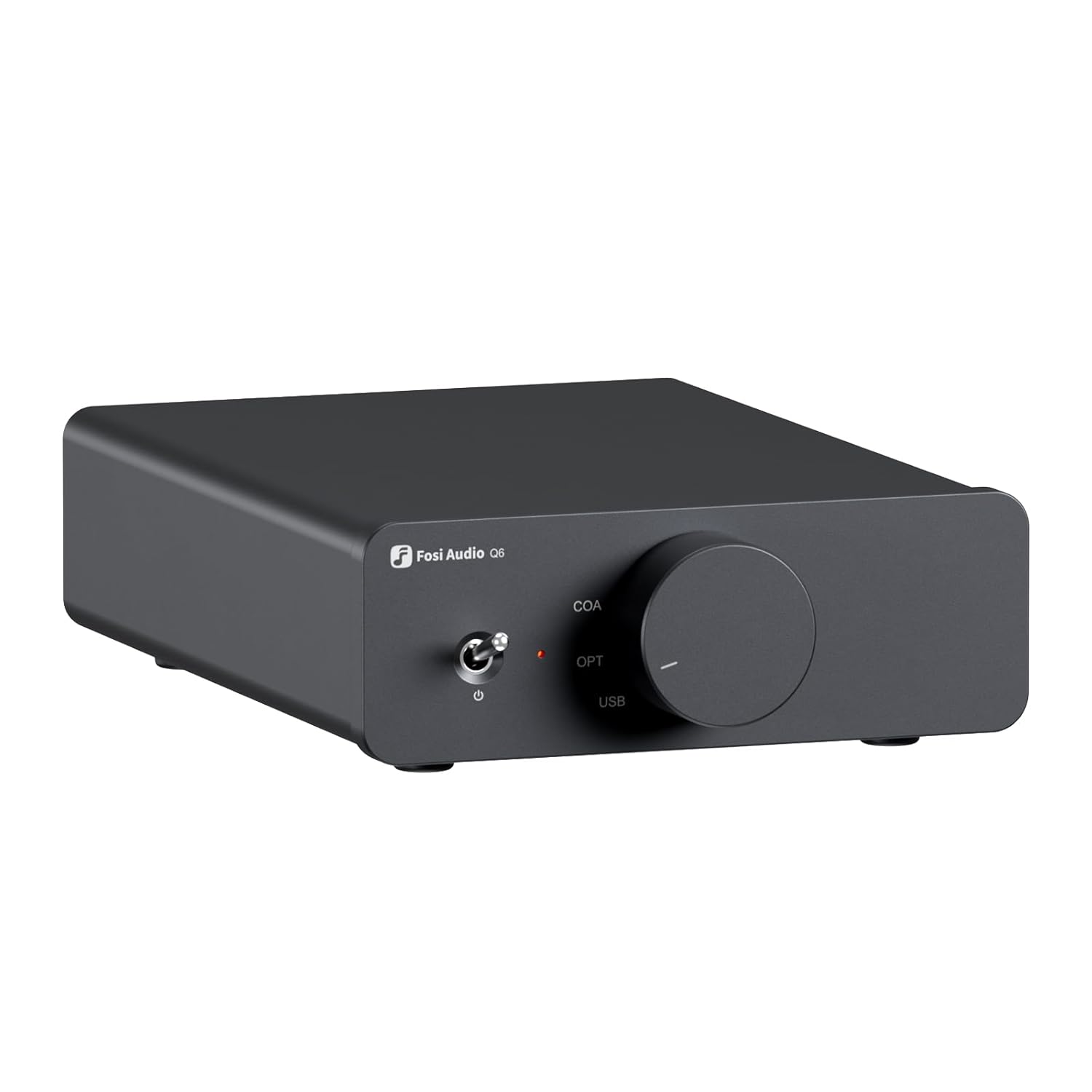
The design philosophy here is refreshingly practical. The aluminum alloy chassis is built to last, with a sleek profile that fits naturally on any desktop without taking up excessive space. The input selector knob on the front is the only control, making operation intuitive once you understand it switches between USB, optical, and coaxial inputs rather than controlling volume. Connectivity is comprehensive, offering USB-C, optical, and coaxial digital inputs alongside RCA stereo outputs and a dedicated subwoofer output, making it compatible with virtually any audio source and destination.
Setup is genuinely effortless. Many users report simply plugging in the USB connection and audio cables, then immediately enjoying improved sound quality without any driver installation or configuration hassles on Windows, macOS, or Linux. This plug-and-play reliability makes the Q6 accessible to both casual listeners and experienced audiophiles. Some users have even upgraded the internal op-amp to aftermarket components, with excellent results for those seeking further refinement.
The main consideration is that the Q6 requires USB power, so it cannot operate independently. Additionally, while the compact design is a strength for desktop placement, it leaves limited room for internal modifications compared to larger units. Despite these minor points, the Q6 represents outstanding value in the desktop DAC category, delivering professional-grade audio conversion at a price that makes high-resolution audio accessible to everyone.
Audio Performance: Maximum sampling rates of PCM 32bit/768kHz and DSD512 support, Signal-to-Noise Ratio greater than 121dB, Total Harmonic Distortion less than 0.00012%
Processor and Components: AKM AK4493S DAC chip, XMOS XU316 audio processor, OPA1612 operational amplifier
Connectivity: Digital inputs: USB-C, Optical (TOSLINK), Coaxial (RCA). Audio outputs: RCA stereo, Subwoofer output (RCA)
Compatibility: Windows, macOS, Linux, and all USB audio sources including computers, tablets, CD players, and streaming devices
Construction: High-quality aluminum alloy chassis, compact form factor, 2 channels stereo audio, 2.2 pounds
Warranty: 24-month manufacturer warranty included
Who Should Buy This: Music enthusiasts and casual listeners who want noticeably better sound quality from their digital sources, including those upgrading old receivers or amplifiers to work with modern streaming devices and computers. Also ideal for anyone seeking high-resolution audio support without the premium pricing of boutique DAC manufacturers.
Connection Setup: Connect your digital source (computer, streamer, CD player, TV) to one of the three digital inputs using USB-C, optical, or coaxial cable. Connect the RCA outputs to your amplifier, powered speakers, or headphone amplifier. The subwoofer output can feed a powered subwoofer for enhanced bass in your system.
Key Advantages Over Built-in Audio: Most computers, tablets, and televisions have mediocre built-in audio converters. The Q6's superior components and design eliminate the digital noise and distortion inherent in consumer electronics, revealing more detail, clarity, and musicality in your favorite recordings.
Upgrade Potential: While the Q6 performs excellently out of the box, some experienced audiophiles have successfully upgraded the op-amp to higher-performance alternatives, which can provide further refinement. The unit's design accommodates this modification for those interested in tweaking.

Pros
- Eliminates PC audio hum and flatness with clean digital-to-analog conversion
- Powerful headphone amplification drives high-impedance headphones with authority and bass impact
- Adjustable EQ knobs provide flexibility that many competitors lack at this price
- Universal compatibility works with PCs, TVs, DVD players, and speaker systems
- Excellent value compared to premium DACs with only minor sonic differences
Cons
- Some units may produce subtle white noise or hissing, particularly noticeable with low-impedance headphones
- Not ideal for professional critical listening or studio mastering applications
- No microphone input limits functionality for voice chat or recording applications
The Fosi Audio Q4 is an entry-level DAC and headphone amplifier designed for PC users, gamers, and home theater enthusiasts seeking audio improvement without complexity. This compact device bridges the gap between budget audio solutions and higher-end equipment, delivering meaningful upgrades to sound quality for everyday listening across multiple content types.
The Q4 excels in eliminating common PC audio problems like ground hum and digital flatness while providing enough amplification power to drive demanding headphones up to 200Ω impedance. The standout feature is the adjustable bass and treble controls, which break from the audiophile orthodoxy of flat response and instead offer real-world flexibility for optimizing sound to your preferences and headphone characteristics. Users report noticeable improvements in clarity, bass impact, and overall engagement compared to standard PC audio jacks.
Build quality impresses with a full metal chassis, quality metal knobs, and a compact footprint that fits naturally into any desktop setup. The device includes all necessary cables for immediate use and supports high-resolution audio up to 24-bit/192kHz with low jitter circuitry. Connectivity is comprehensive with USB, Optical, and Coaxial inputs alongside RCA and 3.5mm outputs, making it compatible with virtually any audio source or destination.
The main limitation is occasional white noise or hissing on certain units, though this is often less noticeable with higher-impedance headphones and may reflect individual unit variation rather than a design flaw. The Q4 is not intended for critical studio work or professional mastering, but for general use across music, movies, and gaming, it delivers excellent performance at its price point.
Verdict: The Fosi Audio Q4 represents outstanding value for anyone seeking meaningful audio improvement on a budget. Its combination of multiple inputs, headphone amplification, sound tuning controls, and no-driver convenience make it an excellent entry point into quality desktop audio without requiring significant investment or technical knowledge.
Audio Specifications: Supports 24-bit/192kHz HD audio with low jitter circuitry. Drives headphones from 16Ω to 200Ω impedance. Stereo output with adjustable bass and treble controls.
Connectivity: Inputs: USB, Optical (TOSLINK), Coaxial. Outputs: RCA (stereo), 3.5mm headphone jack. No microphone input.
Physical Specifications: Dimensions: 3.9 inches length x 2.9 inches width. Weight: 430 grams. Full metal chassis construction. Tabletop mount design.
Power: 5V DC power supply. USB powered or external power adapter compatible.
Warranty: 24-month manufacturer warranty. Includes USB charging cable, optical cable, and PC-USB to Type-B cable.
Who Should Buy: PC gamers seeking improved audio quality, home theater enthusiasts wanting to upgrade TV sound, music listeners with high-impedance headphones, and anyone experiencing ground hum or audio flatness from standard computer outputs.
Who Should Look Elsewhere: Professional audio engineers requiring critical listening tools, users needing microphone inputs for streaming or recording, and those seeking premium sound quality willing to spend significantly more.
Key Considerations: Verify your headphone impedance rating for optimal performance. Higher impedance headphones (100Ω and above) tend to exhibit less background noise. Check your audio source compatibility with USB, Optical, or Coaxial outputs. Consider placement near your PC or audio system for convenient cable management.
Setup Tips: No driver installation needed for USB connection on most systems. Adjust bass and treble controls to match your headphone characteristics and listening preferences. Use optical or coaxial inputs for superior isolation from PC electrical noise if available on your source device.

Pros
- Exceptional audio clarity and transparency with minimal distortion, verified by multiple reviewers with high-end headphone collections
- Dual output options (3.5mm single-ended and 4.4mm balanced) allow users to optimize sound for different headphones and impedance levels
- Compact, well-built metal construction with premium feel and comfortable grip for daily portable use
- Works universally across all major devices and platforms without requiring drivers or complex configuration
- Excellent customer support from Fosi Audio, as documented in verified customer reviews
Cons
- Power consumption is notably high on newer iPhone models, which may reduce overall battery life during extended listening sessions
- Included USB cable is reported as cheap quality by some users, requiring aftermarket alternatives for optimal performance
- Lacks internal battery, making it dependent on your device's power supply unlike some competing models
The Fosi Audio DS2 is a portable USB-C DAC and headphone amplifier designed for audiophiles, music producers, and mobile enthusiasts who demand professional-grade sound quality on the go. It bridges the gap between your smartphone, tablet, or laptop and your high-end headphones, delivering the amplification and digital-to-analog conversion needed to unlock the full potential of premium audio gear.
The standout feature is the dual Cirrus Logic CS43131 DAC chipset, which processes high-resolution audio formats including DSD256 and PCM 32-bit/384kHz with exceptional precision. Real-world testing by reviewers confirms that the DS2 produces noticeably improved clarity, deeper bass response, and more detailed soundstage compared to built-in device audio. The 170mW per channel output proves sufficient for demanding headphones like the Sennheiser HD 660S2 (300-ohm impedance), and the dual output configuration (3.5mm and 4.4mm balanced) allows users to select the connection type that best suits their headphones for optimal performance.
Build quality is genuinely premium for the price point. The all-metal CNC-machined chassis feels solid and durable, with a smooth, comfortable grip that makes extended use pleasant. The compact pocket-friendly form factor means you can carry professional audio quality anywhere. The intuitive 60-step volume control operates independently with memory function, eliminating the need for complicated software or settings.
The primary drawback is significant power consumption on newer iPhones, which can noticeably reduce battery life during extended listening sessions. Additionally, the included USB-C cable is reportedly of lower quality than expected, though this is easily remedied with an aftermarket alternative. The device lacks an internal battery unlike some competing options, though this keeps the form factor ultra-compact.
For users with high-end headphones or IEMs seeking noticeable sound quality improvements on mobile devices, the DS2 represents exceptional value. Its universal compatibility, dual output flexibility, and professional-grade audio performance make it a versatile tool for home studios, mobile listening, and professional work environments alike.
Audio Processing: Dual Cirrus Logic CS43131 DAC chips, supports DSD256 and PCM 32-bit/384kHz
Audio Performance: 170mW per channel at 32-ohm impedance, 1μV noise floor, 0.0001% THD, 130dB SNR, 109dB SINAD
Connectivity: USB-C input, 3.5mm single-ended output, 4.4mm balanced output
Design: All-metal CNC-machined construction, compact portable form factor
Controls: 60-step independent volume control with memory function
Compatibility: iPhone 15 series, iPad Pro, Android devices, Mac, Windows, gaming consoles
Physical Specifications: Weight 1.92 ounces, includes detachable USB-C cable
Warranty: 24-month manufacturer warranty
Ideal For: Audiophiles with high-end headphones or IEMs seeking noticeable sound quality improvements, music producers and audio engineers working on mobile devices, travelers and gym enthusiasts wanting portable professional audio, gamers using external sound cards for competitive advantage, professionals who need consistent audio quality across multiple devices.
Best Use Cases: Mobile music listening with premium headphones, iPad Pro content creation and mixing, gaming on Android or iPhone with high-impedance headphones, laptop audio enhancement for video work or music production, connecting high-end audio gear to smartphones for on-location recording or monitoring.
Not Ideal For: Users prioritizing maximum battery life on smartphones, those seeking an integrated rechargeable battery solution, casual listeners with budget earbuds who won't notice audio improvements, users unwilling to purchase quality USB-C cables separately.

Pros
- Exceptional audio quality with no background noise, even at budget price point
- Truly plug-and-play functionality works immediately on Windows, Mac, and Linux systems
- Dual combo jacks provide maximum flexibility for microphones, guitars, and line-level sources
- Lightweight and compact form factor ideal for desk space and portability
- Zero-latency monitoring enables confident tracking without hearing delay or echo
Cons
- LED illumination on gain knobs does not function as prominently displayed in product images
- Requires careful gain adjustment when connecting instruments with built-in preamps to avoid clipping
- Limited to 2 input channels, which may not suit users needing more simultaneous inputs
The PIYONE Q2 is a 2x2 USB-C audio interface designed for home recordists, podcasters, guitarists, and content creators who want professional-grade sound without complexity. It bridges the gap between budget-friendly and professional-quality recording, making it an ideal first interface for beginners or a secondary interface for established creators.
The standout feature is its genuine plug-and-play operation. Simply connect the USB-C cable to your computer, and the interface is recognized immediately on Windows, Mac, and Linux systems without any driver installation. The 24-bit/192kHz audio resolution captures professional-quality recordings with excellent clarity and minimal noise. The zero-latency direct monitoring feature eliminates tracking delays, allowing you to hear yourself in real-time without the frustrating latency that plagues cheaper interfaces. Dual XLR/TRS combo inputs with 48V phantom power provide flexibility for condenser microphones, dynamic mics, guitars, and line-level sources.
Build quality and design are impressive for the price. The compact form factor fits easily on any desk without consuming valuable space. The illuminated control knobs create a modern, professional aesthetic that looks great in any studio setup. The interface feels solid and well-constructed, with ergonomic knobs and buttons positioned for comfortable operation during long recording sessions.
One notable drawback is that the LED illumination on the gain knobs does not function as prominently as shown in product images, which may disappoint users specifically drawn to this visual feature. Additionally, users must exercise caution when adjusting gain levels with instruments that have built-in preamps, as excessive gain can cause clipping. The 2-channel limitation means this interface cannot handle multiple simultaneous inputs beyond two sources.
Verdict: The PIYONE Q2 delivers exceptional value for beginners and budget-conscious creators seeking professional audio quality without complexity. Its combination of studio-grade sound, zero-latency monitoring, and truly plug-and-play setup makes it an excellent choice for home recording, podcasting, and content creation. Recommended for anyone starting their recording journey or needing a reliable portable interface.
Audio Quality: 24-bit resolution, 192kHz maximum sample rate, high-performance converters, low-noise design
Connectivity: USB-C port (handles both data transfer and bus power), 3.5mm headphone jack
Inputs: 2 XLR/TRS combo jacks, 48V phantom power supply
Channels: 2 input channels, 2 output channels
Features: Zero-latency direct monitoring, monitor mix function, loopback capability, illuminated control knobs, class-compliant design
Compatibility: Mac, Windows PC, Linux, iOS (via USB-C adapter)
Physical: Compact portable design, 0.74 kg weight, Alloy Red finish
Warranty: 2-year limited warranty
Ideal For: Beginner recording artists, podcasters, singer-songwriters, content creators, home studio enthusiasts, and anyone seeking professional audio quality without complex setup requirements.
Perfect Use Cases: Recording vocals with condenser microphones, capturing acoustic guitar performances, podcasting and voice-over work, streaming with professional audio quality, music production on a budget, portable recording for travel or mobile content creation.
Not Ideal For: Users requiring more than 2 simultaneous inputs, professional studios with extensive I/O requirements, or those specifically seeking prominent LED illumination effects on control knobs.

Pros
- Exceptional audio clarity and detail with professional-grade DAC chip and optimized circuit design for low distortion
- Versatile connectivity with USB Type C, optical, and coaxial inputs compatible with virtually any audio source
- Powerful amplification drives high-impedance headphones with ease while maintaining clean, detailed sound
- Intuitive physical controls for bass and treble adjustments allow quick sound tuning without menu navigation
- Solid build quality with aluminum housing and premium feel inspires confidence in long-term reliability
Cons
- USB Type C port serves dual purpose for both charging and audio input, which may limit simultaneous phone charging while using the DAC
- Requires separate USB-A to USB-C cable for some devices, adding minor complexity to initial setup
- May require driver installation on some older PC systems for full compatibility
The Fosi Audio K5 Pro is a premium desktop DAC and headphone amplifier designed for gamers, music enthusiasts, and anyone seeking superior audio quality from their PS5, PC, Mac, or mobile device. This compact unit functions as an external sound card, converting digital audio signals into clean analog output while simultaneously amplifying headphones to their full potential.
What sets the K5 Pro apart is its impressive technical foundation. Built around the renowned Texas Instruments NE5532 op-amp chip, this DAC achieves exceptionally low distortion (THD at 0.003%) and a noise floor that rivals much more expensive equipment. The multiple connectivity options, including USB Type C, optical, and coaxial inputs, ensure compatibility with virtually any modern audio source. Users report noticeably improved audio clarity, better spatial imaging in games, and the ability to hear subtle details like footsteps and directional cues that competitive gamers value.
The physical design deserves praise. The all-aluminum chassis feels solid and premium, with rubber feet that prevent vibration and movement on desktop surfaces. The rotary knobs for volume, bass, and treble adjustment provide satisfying tactile feedback and allow real-time sound customization without diving into software menus. The compact footprint makes it unobtrusive in any gaming or music setup, while the dual headphone and microphone jacks eliminate cable clutter.
One consideration is the dual-purpose USB Type C port, which handles both power and audio input simultaneously. While this design is clever and space-efficient, it means you cannot charge a phone while using the DAC. Additionally, some older PC systems may require driver installation for full compatibility, though most modern computers recognize it immediately as a supported audio device.
The K5 Pro delivers exceptional value for the price, offering studio-quality audio conversion and powerful headphone amplification that transforms gaming and music listening experiences. Whether you're a competitive gamer seeking audio clarity, a music lover wanting better sound quality, or someone tired of weak onboard audio, this DAC amp combo represents a smart upgrade that pays dividends immediately.
Audio Specifications
USB Type C input: 24-bit/96kHz maximum sampling rate
Optical/Coaxial input: 24-bit/192kHz maximum sampling rate
Total Harmonic Distortion (THD): Less than 0.003%
Signal-to-Noise Ratio (SNR): Greater than or equal to 110dB
Output power: 1000mW at 16 ohms, 500mW at 32 ohms, 300mW at 64 ohms, 150mW at 128 ohms, 80mW at 300 ohms
Connectivity
Inputs: USB Type C, Optical (SPDIF), Coaxial (RCA)
Outputs: 3.5mm headphone jack, RCA stereo outputs, 3.5mm microphone input
Headphone impedance support: 16 ohms to 300 ohms
Physical Specifications
Housing: Aluminum chassis with rubber feet
Controls: Combined power and volume button (long press to power on), separate bass and treble controls, input mode selector
Included accessories: 3.5mm headphone splitter, 2-in-1 USB Type A/C to Type C cable, optical cable, user manual
Who Should Buy the K5 Pro
The Fosi Audio K5 Pro is ideal for PS5 and PC gamers seeking audio advantages, audiophiles wanting better sound from their computers, and anyone with high-impedance headphones that their current equipment struggles to drive. It's also excellent for content creators, streamers, and music producers who need clean audio conversion without breaking the bank.
Compatibility Considerations
The K5 Pro works seamlessly with PS5 via USB-A to USB-C cable connection. PC and Mac users benefit from plug-and-play compatibility on most modern systems, though older Windows installations may require driver setup. The dual USB Type C port handles both power and audio, so ensure your source device has USB Type C capability or use the included USB-A to USB-C adapter cable.
Headphone Pairing
This DAC excels with high-impedance headphones (100 ohms and above) that struggle with standard headphone outputs. However, it also drives sensitive IEMs beautifully thanks to its low noise floor. The bass and treble controls allow customization for different headphone signatures, making it versatile across various audio gear.
Setup Tips
For optimal performance, use the included cables when possible. When connecting to powered speakers or subwoofers via RCA outputs, ensure proper gain staging to avoid distortion. The optical and coaxial inputs support higher resolution audio (up to 192kHz), so prioritize these connections for critical listening when available.
How to Choose an Audio Interface with a Great DAC
1. DAC Chipset and Audio Resolution
The core component is the digital-to-analog converter chipset itself. High-end models often feature renowned chips from ESS Sabre or AKM, which are celebrated for their low distortion and wide dynamic range. Pay close attention to the supported resolutions, such as 24-bit/192kHz, which determines the depth and detail of your audio. A superior chipset ensures your final output matches the integrity of your original recording.
2. Input/Output Configuration and Connectivity
Your specific needs dictate the ideal I/O layout. A solo vocalist might thrive with a simple single XLR input, while a guitarist who sings may need a combo input with a dedicated Hi-Z instrument jack. Consider future expansion, too. Do you need multiple outputs for studio monitors, or a dedicated headphone output with independent volume control? Connectivity extends to the computer connection, with USB-C offering modern speed and reliability.
3. Preamplifier Quality and Features
The DAC handles the output, but the microphone preamp defines the input. A clean, quiet preamp with sufficient gain is non-negotiable for capturing subtle performances. Look for features like switchable phantom power for condenser microphones and special modes, like Air on the Focusrite Scarlett series, which add clarity and presence to recordings. The preamp and DAC should work in harmony for a transparent signal path from start to finish.
4. Software Bundle and Workflow Integration
The included software can dramatically accelerate your production. Many interfaces come bundled with popular digital audio workstations (DAWs) like Ableton Live Lite or Pro Tools Intro. Some, particularly Universal Audio’s Apollo series, offer exclusive access to powerful DSP-powered plugin emulations of classic analog gear. This value-added software can enhance your creative workflow and provide tools you might otherwise purchase separately. For creators starting with a simpler setup, understanding the role of a dedicated interface versus a USB microphone is a helpful first step.
Final Thoughts
Selecting an audio interface with a high-fidelity built-in DAC is a critical investment in your sound’s quality. For most home studio musicians and podcasters seeking proven performance and an excellent software suite, the Focusrite Scarlett Solo 3rd Gen USB-C Audio remains a top-tier and reliable choice. If your priority is the absolute pinnacle of conversion quality and real-time analog processing for professional recordings, the Universal Audio Apollo Twin X DUO Gen 2 with UAD offers an unparalleled ecosystem. Whichever model aligns with your needs and budget, you’ll be equipped to capture and enjoy audio with remarkable clarity and detail.
Frequently Asked Questions
Why is the DAC in an audio interface important?
The DAC is responsible for converting the digital audio data from your computer into an analog signal that your speakers and headphones can play. A high-quality DAC results in clearer, more detailed, and more accurate sound reproduction with less background noise and distortion, which is crucial for both critical listening and professional mixing.
Can I use a separate DAC with my audio interface?
Typically, you would use the DAC built into your interface for your main outputs. Using an external DAC is generally more common in dedicated hi-fi listening setups, not for the recording and monitoring functions of an interface. Choosing an interface with a great internal DAC simplifies your setup and ensures optimal performance for both recording and playback tasks.
Do I need a special audio interface for high-resolution audio files?
Yes, to fully benefit from high-resolution audio files (like those in 24-bit/192kHz format), your audio interface must support that same resolution. Its DAC and analog circuitry must be capable of accurately processing that level of detail. Many modern interfaces support these high resolutions, which is a key feature to confirm if you work with or listen to high-res audio sources.
What is zero-latency monitoring and why does it matter?
Zero-latency monitoring, often called direct monitoring, allows you to hear your microphone or instrument input directly through the interface’s hardware, bypassing the computer’s processing. This eliminates the slight delay that can occur when monitoring through your software, which is essential for performing comfortably and in time. It’s a vital feature confirmed in our guide to the best audio interfaces with direct monitoring.


Write Your Review
No reviews yet. Be the first to share your experience!