

You are ready to record your next podcast episode, vocal track, or guitar riff, but you know the raw sound needs some immediate tonal adjustment. Having an audio interface with built-in EQ lets you sculpt your audio right from the start, saving valuable time in post-production. This guide is for creators, musicians, and streamers who want professional-grade sound shaping at their fingertips, without needing complex software setups for basic tonal correction.
We have evaluated nine top-tier audio interfaces that feature some form of equalization, whether through onboard hardware DSP, dedicated software control, or integrated mixer functions. Our focus is on practical tools that deliver clarity, flexibility, and professional results. For more on essential monitoring features, explore our guide on the best audio interfaces with direct monitoring.
Top Audio Interfaces with EQ

Pros
- Exceptional mic preamp quality with +75 dB gain handles demanding microphones and delicate ribbon mics without external boosters
- Flexible I/O configuration supports multi-mic drums, full bands, synth-heavy setups, and hardware-focused workflows
- DC-coupled outputs and 5-pin MIDI I/O provide tight integration with modular synths, keyboards, and drum machines
- Standalone mixer and mic pre modes enable operation without a computer for live mixing or classroom use
- Included Fender Studio Pro DAW with premium amp modeling eliminates need for additional software purchases
Cons
- Large 19-inch width requires dedicated desk space and may not suit compact or portable studio setups
- No reviews currently available to validate real-world performance and user experiences
The Fender Quantum LT 16 is a flagship audio interface designed for professional studios, hybrid setups, and creators who need expansive I/O without sacrificing quality. This 16-in, 8-out USB-C interface targets multi-instrument musicians, electronic producers, recording engineers, and anyone integrating substantial outboard gear into their workflow.
At the heart of the LT 16 are eight MAX-HD microphone preamps delivering an impressive +75 dB of clean, low-noise gain. This transparency and headroom make capturing drum kits, full orchestras, Foley sessions, and fragile ribbon microphones effortless without external preamp boosters. Combined with six front-panel XLR/TRS combo inputs and eight rear-panel TRS line inputs with selectable +4 dBu / -10 dBV operation, the interface provides extraordinary flexibility for integrating synthesizers, mixers, outboard effects, and multi-mic setups.
Build quality reflects Fender's professional heritage, with a solid 19-inch wide chassis, balanced TRS outputs, and a powerful headphone amplifier for accurate monitoring. The inclusion of DC-coupled outputs unlocks direct CV control for modular and analog synth rigs, while 5-pin MIDI I/O ensures tight hardware synchronization. Custom low-latency drivers and pristine converters deliver responsive monitoring ideal for tracking, mixing, and streaming. Advanced standalone functionality including Mixer Mode and Mic Pre Mode allows operation without a computer for live mixing or classroom applications.
The primary drawback is the $399.99 price tag and 19-inch width, which may challenge bedroom producers or those with compact desk space. Additionally, the interface currently lacks user reviews to validate real-world performance claims, though specifications and feature set are comprehensive.
The Fender Quantum LT 16 is an exceptional choice for professional and semi-professional studios prioritizing I/O flexibility, preamp quality, and hybrid workflow integration. The included Fender Studio Pro DAW with premium amp modeling adds significant value. Recommended for recording engineers, electronic musicians, and multi-instrument creators who demand maximum connectivity and professional sound quality.
Connectivity and I/O: 16 inputs, 8 outputs via USB-C. Six front-panel XLR/TRS combo inputs, eight rear-panel TRS line inputs, two Fender-designed instrument inputs, balanced TRS outputs, 5-pin MIDI I/O, DC-coupled outputs for CV control.
Microphone Preamps: Eight MAX-HD mic preamps with +75 dB of gain, low-noise design, selectable +4 dBu / -10 dBV operation on line inputs.
Audio Quality: Maximum sample rate 192 kHz, high-quality converters, low-latency custom drivers, powerful headphone amplifier with high headroom.
Physical Specifications: Dimensions 19 inches wide x 5 inches deep x 1.75 inches tall. Weight 4.8 pounds.
Compatibility: USB-C connection, compatible with Windows and macOS. Supports Fender Studio Pro and all major audio recording software.
Warranty: 2-year manufacturer warranty included.
Who Should Buy: Professional recording engineers, electronic musicians, multi-instrument creators, podcast producers, livestreamers, and anyone building a hybrid studio with substantial outboard gear. Ideal for drum recording, ensemble tracking, synth-heavy production, and hardware-focused workflows.
Who May Want to Consider Alternatives: Bedroom producers on tight budgets, mobile musicians requiring portability, or those needing fewer than eight mic inputs. Beginners may find the extensive I/O overwhelming if not planning to expand their setup.
Key Considerations: Verify your desk has adequate space for the 19-inch width. Ensure USB-C compatibility with your computer. The included Fender Studio Pro DAW provides excellent value, but compatibility with your preferred DAW is important. The DC-coupled outputs and MIDI I/O are valuable for synth integration but unnecessary for basic recording setups.
Value Assessment: At $399.99, the LT 16 offers professional-grade preamp quality, exceptional I/O flexibility, standalone functionality, and included premium software. The price is competitive for interfaces in this I/O class and represents strong value for serious creators planning long-term studio growth.
Pros
- Excellent preamp quality produces bright, clear recordings with minimal noise floor
- Air mode adds professional polish to vocal and acoustic recordings without additional equipment
- Compact design perfect for home studios, bedroom producers, and mobile recording setups
- Included software suite eliminates need for expensive DAW purchases
- Highly reliable brand with strong reputation in professional audio industry
Cons
- Single microphone input limits simultaneous multi-instrument recording capabilities
- May require audio driver updates for optimal performance on some Windows systems
- Learning curve for beginners unfamiliar with audio interface operation and gain staging
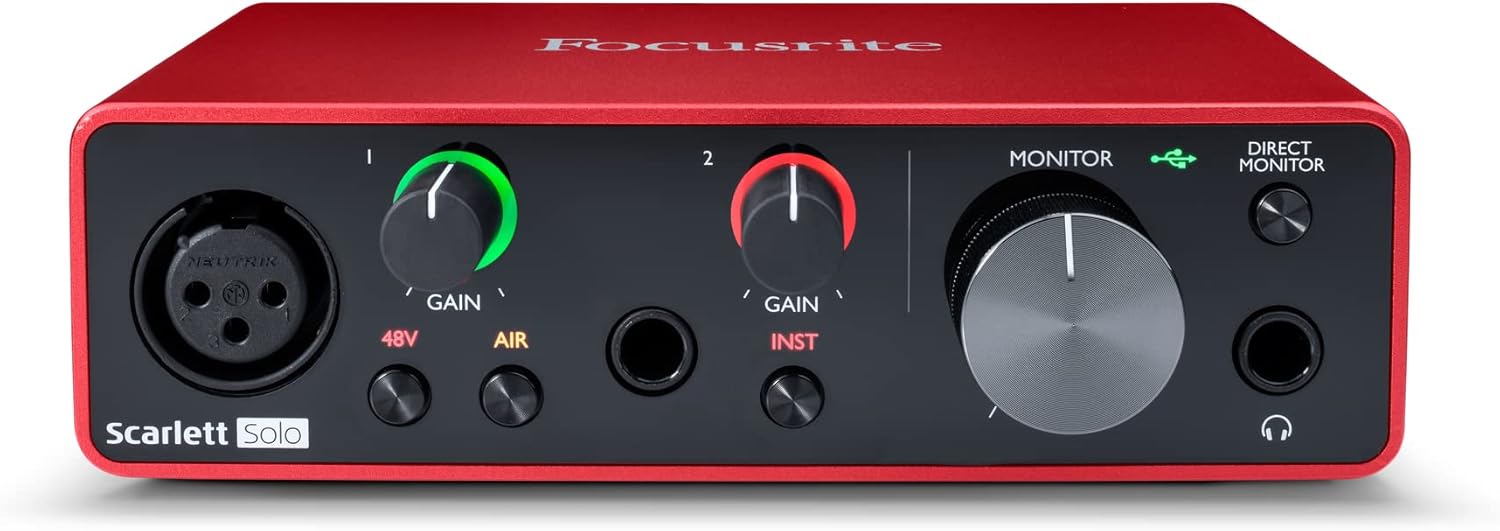
The Focusrite Scarlett Solo 3rd Gen is a professional USB audio interface designed for musicians, podcasters, and content creators who demand studio-quality recordings without the complexity of larger mixing consoles. This compact device bridges the gap between budget-friendly entry-level gear and expensive professional equipment, making it ideal for home studios, bedroom producers, and anyone serious about capturing professional-grade audio.
The standout feature is undoubtedly the high-performance microphone preamp paired with the innovative Air mode, which adds extra clarity and presence to vocals and acoustic instruments. The two high-headroom instrument inputs eliminate clipping and distortion, ensuring your guitar, bass, and other instruments shine through with clarity. Recording at up to 24-bit/192kHz resolution means your productions retain all sonic nuances, while the Gain Halo visual feedback system helps you nail perfect levels every time.
Build quality reflects Focusrite's professional heritage, with a solid metal chassis and intuitive front-panel controls that feel responsive and durable. The USB-C connectivity provides fast, reliable data transfer and modern compatibility with both Mac and Windows systems. The included software bundle (Pro Tools Intro+, Ableton Live Lite, Cubase LE) gives you everything needed to start producing immediately without additional software purchases.
The primary limitation is the single microphone input, which restricts simultaneous multi-track vocal or acoustic recording. Additionally, some Windows users report requiring driver updates for optimal performance. The learning curve for gain staging and audio interface operation may challenge complete beginners, though the included documentation is comprehensive.
The Focusrite Scarlett Solo 3rd Gen represents exceptional value for serious hobbyists and semi-professional creators. Its combination of pristine preamp quality, professional converters, intuitive design, and included software makes it the go-to choice for anyone upgrading from computer microphones or entry-level interfaces. The three-year warranty provides confidence in your investment.
Audio I/O: 1 XLR microphone input, 2 high-impedance instrument inputs, 2 balanced line outputs, headphone output
Audio Quality: 24-bit/192kHz recording and playback resolution with high-performance converters
Connectivity: USB-C to computer, compatible with all major audio recording software
Channels: 2 channels (stereo)
Features: Switchable Air mode, Gain Halo visual feedback, low-noise outputs, headphone monitoring
Software Included: Pro Tools Intro+, Ableton Live Lite, Cubase LE, Hitmaker Expansion
Warranty: 3-year manufacturer warranty worldwide
Compatible Devices: Microphones, instruments, personal computers, headphones, studio monitors
Who Should Buy: Musicians recording at home, podcasters seeking professional audio quality, guitarists and bassists needing quality instrument preamps, content creators upgrading from built-in computer audio, and producers working with limited space.
Who Should Look Elsewhere: Users needing simultaneous multi-microphone recording, those requiring extensive analog mixing features, or professionals running high-channel-count studios requiring more I/O options.
Setup Tips: Ensure your computer meets USB-C requirements and install drivers before first use. Spend time learning gain staging with the Gain Halo visual indicator to avoid clipping. Experiment with Air mode on different sources to understand its impact on your recordings.
Value Comparison: At this price point, the Scarlett Solo 3rd Gen outperforms competitors by offering superior preamp quality, professional software bundle, and proven brand reliability. The included software alone typically costs $200+ if purchased separately.

Pros
- Unison preamps deliver authentic analog tone without expensive hardware gear
- Massive plugin library covers mixing, mastering, and creative production needs
- Sonarworks-powered room correction ensures accurate mixes in any acoustic environment
- Auto-Gain saves time during recording sessions by automating input level setup
- Excellent 4.6 out of 5 rating reflects genuine user satisfaction and reliability
Cons
- Requires Thunderbolt 3 compatibility, limiting compatibility with older computers or some Windows systems
- Learning curve for maximizing the extensive plugin library and Unison preamp features
- Premium price point reflects professional-grade quality but may exceed hobbyist budgets
The Universal Audio Apollo Twin X DUO Gen 2 represents a significant investment in professional audio production, designed for recording engineers, music producers, and serious home studio operators who refuse to compromise on sound quality. This Thunderbolt 3 audio interface bridges the gap between affordable home recording and expensive analog hardware, delivering studio-grade results without the space or budget constraints of traditional gear.
The standout feature is undoubtedly the Unison preamp technology, which allows you to record through authentic emulations of legendary hardware from Neve, API, Avalon, Manley, and Fender in real-time. Combined with access to over 200 UAD plugins including award-winning tools like Capitol Chambers and EL8 Distressor, this interface becomes a complete production ecosystem. The Auto-Gain feature is a practical addition that automatically balances levels across multiple inputs, ensuring you capture clean takes without tedious manual adjustments.
Build quality and connectivity are handled professionally with Thunderbolt 3 providing the bandwidth necessary for low-latency performance during recording and mixing. The 32 channels of I/O accommodate complex workflows, while the Apollo Monitor Correction system powered by Sonarworks ensures your mixes translate accurately across playback systems. Bass management with subwoofer support rounds out the monitoring capabilities for serious mastering work.
The main consideration is the learning curve involved with the extensive plugin ecosystem and Unison preamp options. Additionally, Thunderbolt 3 compatibility may be a limitation for users with older computers or certain Windows setups. The premium pricing reflects professional-grade quality but represents a significant commitment.
The Apollo Twin X DUO Gen 2 earns its strong user rating by delivering on the promise of professional analog warmth and mixing precision in a compact interface. For producers and engineers serious about their craft, this is a transformative tool that justifies its investment through superior sound quality and workflow efficiency.
Connectivity: Thunderbolt 3
Channels: 32 channels of I/O
Brand: Universal Audio
Compatible Systems: Windows and macOS
Software Support: All major DAWs supporting UAD plugins
Key Features: Unison preamps, 200+ UAD plugins, Sonarworks room correction, Auto-Gain, bass management
Ideal For: Professional recording engineers, music producers, mixing and mastering specialists, and serious home studio owners who prioritize analog warmth and comprehensive plugin access.
Consider Alternatives If: You need USB 2.0 compatibility, operate on a tight budget, or work primarily with native plugins without hardware emulation needs.
Pros
- Exceptional value at this price point with dual XLR inputs that competitors charge significantly more for
- Compact 7.5-inch width and lightweight design make it genuinely portable for on-the-go recording
- Zero-latency monitoring via USB/Direct switch eliminates the frustration of hearing delayed playback while recording new parts
- Included software suite jumpstarts your production immediately without additional purchases
- Transparent preamps deliver clean, professional-grade audio from entry-level to mid-range microphones
Cons
- Plastic construction feels lightweight, which some users perceive as lower build quality despite reliable performance
- 48kHz maximum sample rate is lower than some competing interfaces, limiting high-resolution audio work
- Gain staging may require careful management with certain microphones, as some users report insufficient gain at maximum levels
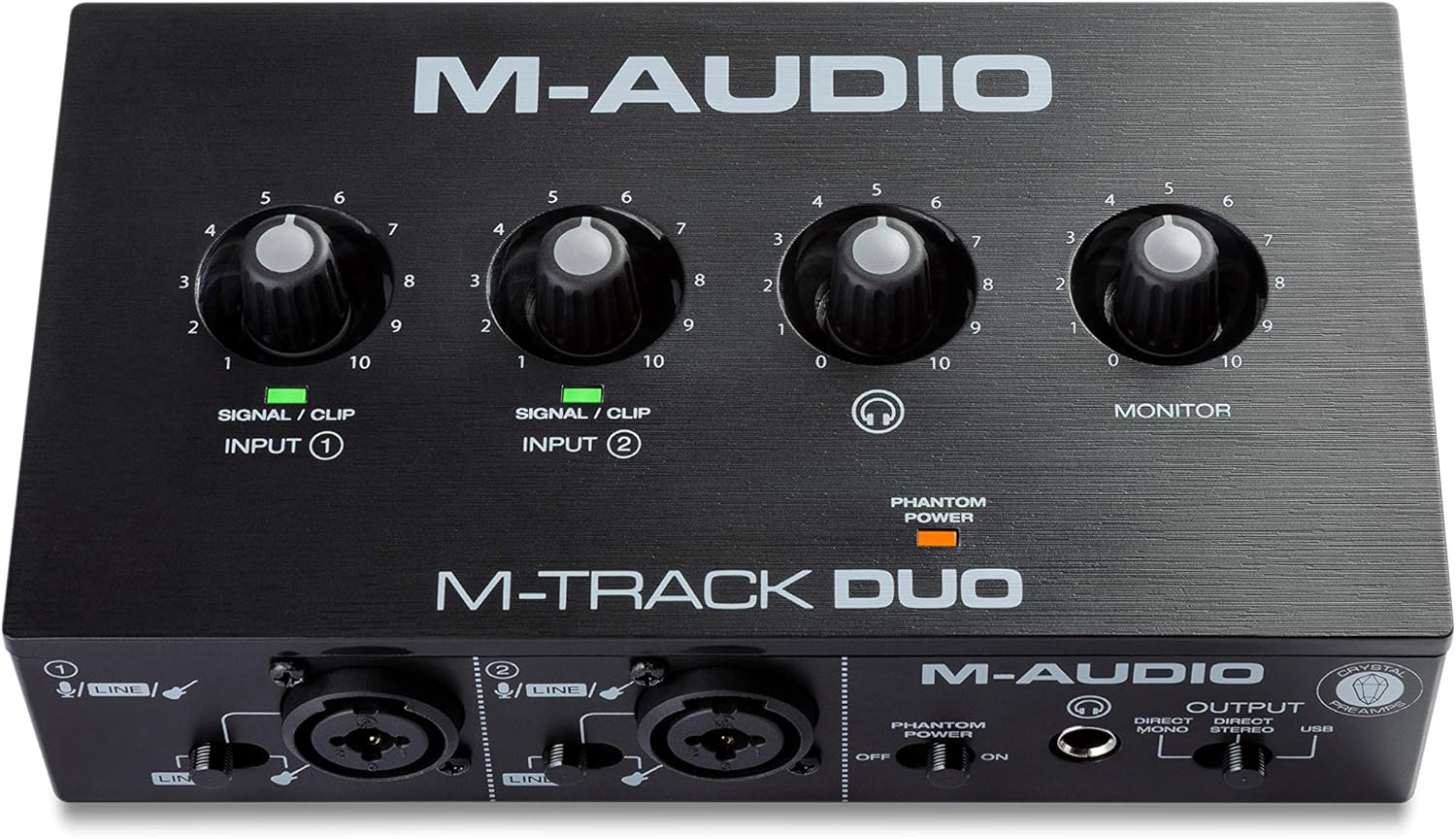
The M-Track Duo is a compact USB audio interface designed for podcasters, musicians, and content creators who need professional recording capabilities without the complexity or cost of larger studio setups. With dual XLR combo inputs, phantom power, and integrated instrument switching, this interface handles vocals, acoustic instruments, guitars, keyboards, and line-level devices with equal competence. It's the kind of gear that lets you go from idea to finished recording in minutes rather than hours.
What sets the M-Track Duo apart is its zero-latency direct monitoring feature, which eliminates the maddening delay that plagues cheaper interfaces. The USB/Direct switch lets you blend your live input signal with playback from your DAW, making it easy to record layered parts or add instruments to existing compositions. The transparent Crystal Preamps deliver clean, detailed audio that punches above its weight class, and phantom power support means you can work with professional condenser microphones without compromise.
Build quality is straightforward plastic construction that feels lightweight but proves durable in real-world use. The compact 7.5-inch width and 0.3kg weight make it genuinely portable, fitting easily into a laptop bag. All connections are professional-grade balanced XLR and quarter-inch TRS connectors, with a headphone output that supports standard stereo headphones via a quarter-inch adapter.
The main limitation is the 48kHz maximum sample rate, which is lower than some competing interfaces in higher price brackets. Additionally, some users report that gain staging requires careful management depending on your microphone, though this is rarely a dealbreaker for entry-level recording. The included MPC Beats software and ProTools First bundle provide legitimate production tools, though you'll likely graduate to more advanced DAWs as your skills develop.
The M-Track Duo delivers genuine value and reliability for anyone starting their recording journey or needing a portable backup interface. It handles its core mission of capturing clean, professional audio without fuss, making it an excellent choice for podcasters, singer-songwriters, and bedroom producers with realistic budgets.
Audio Specifications: Maximum sample rate of 48kHz with 16-bit resolution, 20kHz frequency response, and 1 megaohm impedance. Two channels of audio input and output.
Connectivity: Dual balanced XLR microphone inputs with phantom power, balanced quarter-inch line inputs, unbalanced quarter-inch instrument inputs, stereo quarter-inch main outputs, quarter-inch TRS headphone output, and USB Type B connection for computer and compatible iOS devices.
Dimensions and Weight: 7.5 inches wide by 4.34 inches deep by 2.13 inches tall, weighing just 0.3kg for maximum portability. Completely USB-powered with no external power supply required.
Compatibility: Works with Windows 7 and later via ASIO drivers, Mac OS High Sierra through Big Sur with class-compliant support, iOS with Apple Lightning to USB3 adapter, and Android devices. Compatible with all major DAWs including Logic Pro, ProTools, GarageBand, Studio One, Cubase, and Ableton Live.
Included Accessories: USB Type B to Type A cable, software download cards for MPC Beats and ProTools First, user guide, and safety documentation. Backed by a one-year manufacturer warranty.
Ideal For: This interface is perfect for podcasters launching their first show, musicians recording demos at home, content creators adding professional audio to videos, and anyone needing portable recording capability. It's also excellent for experienced engineers who need a reliable backup interface or travel-friendly setup.
Consider Alternatives If: You require sample rates above 48kHz for professional mastering work, need more than two simultaneous inputs, or demand premium metal construction and extensive onboard controls. However, for the vast majority of recording scenarios, the M-Track Duo delivers everything you need.
Budget Consideration: At this price point, the M-Track Duo offers exceptional value compared to single-channel competitors and provides genuine professional features like phantom power and zero-latency monitoring that many similarly-priced interfaces omit entirely.

Pros
- Exceptional audio quality with no background noise, even at budget price point
- Truly plug-and-play functionality works immediately on Windows, Mac, and Linux systems
- Dual combo jacks provide maximum flexibility for microphones, guitars, and line-level sources
- Lightweight and compact form factor ideal for desk space and portability
- Zero-latency monitoring enables confident tracking without hearing delay or echo
Cons
- LED illumination on gain knobs does not function as prominently displayed in product images
- Requires careful gain adjustment when connecting instruments with built-in preamps to avoid clipping
- Limited to 2 input channels, which may not suit users needing more simultaneous inputs
The PIYONE Q2 is a 2x2 USB-C audio interface designed for home recordists, podcasters, guitarists, and content creators who want professional-grade sound without complexity. It bridges the gap between budget-friendly and professional-quality recording, making it an ideal first interface for beginners or a secondary interface for established creators.
The standout feature is its genuine plug-and-play operation. Simply connect the USB-C cable to your computer, and the interface is recognized immediately on Windows, Mac, and Linux systems without any driver installation. The 24-bit/192kHz audio resolution captures professional-quality recordings with excellent clarity and minimal noise. The zero-latency direct monitoring feature eliminates tracking delays, allowing you to hear yourself in real-time without the frustrating latency that plagues cheaper interfaces. Dual XLR/TRS combo inputs with 48V phantom power provide flexibility for condenser microphones, dynamic mics, guitars, and line-level sources.
Build quality and design are impressive for the price. The compact form factor fits easily on any desk without consuming valuable space. The illuminated control knobs create a modern, professional aesthetic that looks great in any studio setup. The interface feels solid and well-constructed, with ergonomic knobs and buttons positioned for comfortable operation during long recording sessions.
One notable drawback is that the LED illumination on the gain knobs does not function as prominently as shown in product images, which may disappoint users specifically drawn to this visual feature. Additionally, users must exercise caution when adjusting gain levels with instruments that have built-in preamps, as excessive gain can cause clipping. The 2-channel limitation means this interface cannot handle multiple simultaneous inputs beyond two sources.
Verdict: The PIYONE Q2 delivers exceptional value for beginners and budget-conscious creators seeking professional audio quality without complexity. Its combination of studio-grade sound, zero-latency monitoring, and truly plug-and-play setup makes it an excellent choice for home recording, podcasting, and content creation. Recommended for anyone starting their recording journey or needing a reliable portable interface.
Audio Quality: 24-bit resolution, 192kHz maximum sample rate, high-performance converters, low-noise design
Connectivity: USB-C port (handles both data transfer and bus power), 3.5mm headphone jack
Inputs: 2 XLR/TRS combo jacks, 48V phantom power supply
Channels: 2 input channels, 2 output channels
Features: Zero-latency direct monitoring, monitor mix function, loopback capability, illuminated control knobs, class-compliant design
Compatibility: Mac, Windows PC, Linux, iOS (via USB-C adapter)
Physical: Compact portable design, 0.74 kg weight, Alloy Red finish
Warranty: 2-year limited warranty
Ideal For: Beginner recording artists, podcasters, singer-songwriters, content creators, home studio enthusiasts, and anyone seeking professional audio quality without complex setup requirements.
Perfect Use Cases: Recording vocals with condenser microphones, capturing acoustic guitar performances, podcasting and voice-over work, streaming with professional audio quality, music production on a budget, portable recording for travel or mobile content creation.
Not Ideal For: Users requiring more than 2 simultaneous inputs, professional studios with extensive I/O requirements, or those specifically seeking prominent LED illumination effects on control knobs.

Pros
- Robust build quality with responsive sliders and buttons that feel premium for the price
- Crystal-clear audio output with low-noise gain up to 60dB and 32-bit high-performance chipset
- Exceptional versatility with support for XLR microphones, guitars, instruments, Bluetooth, and multiple input formats
- Comprehensive sound customization options including reverb modes, EQ controls, and individual channel management
- Responsive customer support team available to assist with setup and troubleshooting
Cons
- USB microphones are not supported, limiting compatibility with certain popular microphone models
- Power supply noise can occasionally cause buzzing during operation when charging simultaneously with use
- Some users report the 48V phantom power button can be difficult to toggle on and off reliably
The MAONO AME2 is a 10-channel podcast mixer and audio interface designed for content creators, podcasters, live streamers, and musicians who need professional audio control without the complexity or cost of enterprise-level equipment. It bridges the gap between entry-level and professional setups, making it accessible for beginners while offering enough features for experienced producers.
The standout features include professional 48V phantom power and superior preamps that deliver exceptional audio clarity from dynamic and condenser microphones. The 11 customizable sound pads with up to 60 seconds of recording capability allow podcasters to add atmosphere and effects instantly. Advanced audio processing tools like 6 reverb modes, 12-step auto-tune, 3-band EQ, and pitch adjustment give users professional sound shaping capabilities. Multi-source connectivity through XLR, 6.35mm instrument inputs, 3.5mm audio jacks, Bluetooth, and USB-C makes integration with various devices seamless.
Build quality is impressive for the price point, with responsive sliders, buttons, and controls that feel solid and intuitive. The compact 9.64-inch by 6.18-inch footprint makes it suitable for home studios, mobile setups, and streaming configurations. Users consistently praise the device's robust construction and professional appearance despite its affordable positioning in the market.
Potential drawbacks include limited USB microphone support, occasional power supply noise when charging during operation, and some reports of the phantom power button being finicky. These issues are relatively minor and can often be resolved through proper setup or technical support assistance.
The MAONO AME2 represents excellent value for podcasters, streamers, and musicians seeking studio-quality audio control. Its combination of professional features, versatile connectivity, and user-friendly design makes it a smart choice for anyone looking to elevate their audio production without significant investment.
Audio Inputs: XLR (2x MIC inputs with 48V phantom power), 6.35mm instrument input, 3.5mm audio jack, Bluetooth, USB-C
Audio Outputs: XLR, USB-C, 3.5mm headphone jack, monitor speaker output
Channels: 10-channel mixer with independent control per microphone input
Sound Pads: 11 customizable sound pads (3x 60-second pads with one-key looping, 8x 20-second pads)
Audio Processing: 6 reverb modes, 12-step auto-tune, 3-band EQ (treble, mid-range, bass), pitch changer, sidechain, music-only mode, loopback switch
Preamp Gain: 3-level adjustment, ultra-low noise gain up to 60dB
Chipset: 32-bit high-performance with DENOISE function
Phantom Power: 48V for condenser microphones
Connectivity: USB Type-C, XLR, 3.5mm TRRS, 6.35mm, Bluetooth
Power Source: USB-C corded electric with battery capability
Dimensions: 9.64 inches (D) x 6.18 inches (W) x 2.16 inches (H)
Weight: 0.95 kg (approximately 2.1 lbs)
Warranty: 1 year manufacturer warranty
Compatibility: Windows, Mac OS, iOS, Android, compatible with XLR condenser and dynamic microphones, 6.35mm instruments, 3.5mm microphones
Ideal For: Podcasters launching or scaling shows, live streamers on Twitch and YouTube, musicians recording guitars and bass, voiceover artists, content creators, gaming streamers, and anyone building a home studio on a budget.
Best Use Cases: Podcast recording and editing, live streaming with multiple audio sources, music production with instruments, karaoke setups, online competitions, voice-over projects, and multi-guest interviews with professional sound control.
Skill Level: The AME2 works well for both beginners seeking an all-in-one solution and experienced producers who appreciate its compact form factor and professional features. Intuitive controls make setup straightforward, while advanced features satisfy more demanding users.
Not Ideal For: Users exclusively using USB microphones, those requiring dual-PC streaming setups, or professionals needing enterprise-level mixing capabilities. Consider alternatives if you need more than 10 channels or specialized features beyond standard podcast and streaming applications.

Pros
- Exceptional gain power handles hungry dynamic microphones without requiring external boosters or preamps
- Dual USB connectivity lets you record to computer and mobile simultaneously, perfect for multi-platform creators
- Auto-Gain and independent mute controls eliminate guesswork and prevent accidental noise during streams
- Low-latency direct monitoring and ASIO support deliver professional audio performance for music production
- Comprehensive software routing and loopback capabilities simplify complex audio workflows without DAW complications
Cons
- No customer reviews available yet to validate real-world performance and user experience
- Compact size may feel cramped for users accustomed to larger mixing consoles with more physical controls
- Limited to 2 channels, which may restrict advanced multi-track recording setups for complex productions
The MAONO P1 is a hybrid USB audio interface designed for modern content creators who juggle multiple devices and platforms. Whether you're a podcaster recording on your laptop while monitoring on your phone, a streamer managing OBS on PC while capturing mobile content, or a musician recording covers simultaneously across devices, the P1 eliminates workflow friction by connecting to multiple devices at once.
The standout feature is the powerful 70dB gain paired with a class-leading -130dB EIN noise floor. This combination means you can drive hungry dynamic microphones directly without external preamps or boosters, capturing vocal nuance and guitar detail in pristine 24-bit/192kHz quality. The auto-gain feature takes the guesswork out of level setting by automatically optimizing microphone input in OBS Studio, while independent mute controls prevent unwanted noise during instrument changes or stream transitions.
Build quality reflects its creator-focused design. The zinc-alloy metal housing feels durable and professional, while the ergonomic 15-degree tilt angle keeps controls within easy reach on crowded desks. At 5.9 x 5.98 x 3.46 inches, it occupies minimal desk space, making it practical for home studios or mobile setups. The included USB-C to USB-A/C cable ensures compatibility across Mac, PC, iOS, and Android devices.
The built-in loopback and routing software deserve special mention. You can simultaneously capture your instrument, voice, backing tracks, and browser or streaming audio into dedicated channels without diving into complex system settings. This simplifies workflows in FL Studio, Ableton, or even direct streaming to TikTok and YouTube. The low-latency direct monitoring means you hear your voice or instrument in real time without distracting delays.
The main limitation is the lack of user reviews to validate long-term reliability and real-world performance across different setups. Additionally, with just 2 channels, it's designed for solo creators rather than multi-track recording projects. For podcasters, solo streamers, musicians, and content creators seeking professional audio quality with minimal complexity, the MAONO P1 delivers exceptional value and flexibility.
Connectivity and Compatibility: Dual USB ports with MFi-certified connectivity. Works with Mac, PC, iPhone, iPad, Android, and cameras. Compatible with Pro Tools, Ableton Live, Studio One, Logic Pro, Cubase, GarageBand, FL Studio, OBS Studio, YouTube, TikTok, Twitch, and Discord.
Audio Performance: Maximum sample rate of 192 kHz at 24-bit depth. Frequency response of 20 kHz. Up to 70dB gain. Noise floor of -130dB EIN. Supports ASIO for low-latency monitoring.
Physical Specifications: Dimensions are 5.9 inches deep, 5.98 inches wide, and 3.46 inches high. Features ergonomic 15-degree tilt angle. Durable zinc-alloy metal housing. 2 independent channels.
Included Accessories: Audio interface unit, USB-C to USB-A/C connection cable, and user manual. One-year manufacturer warranty included.
Podcasters and Voice Creators: Auto-gain leveling and independent mute controls eliminate manual adjustments during recording. Stream Mode sends voice equally to both channels for balanced audio.
Streamers and Content Creators: Dual USB connectivity lets you record to computer and mobile simultaneously. Built-in loopback captures desktop audio, backing tracks, and your voice in one workflow. Compatible with OBS Studio, Twitch, YouTube, and TikTok.
Musicians and Guitarists: Powerful 70dB gain handles dynamic microphones and guitars without external boosters. Direct low-latency monitoring lets you hear your instrument in real time. Studio-grade 24-bit/192kHz recording captures every nuance.
Music Producers: ASIO support and routing software simplify complex audio workflows. Loopback functionality captures instrument, voice, and backing tracks simultaneously. Compatible with FL Studio, Ableton Live, Logic Pro, and other major DAWs.

Pros
- Exceptional value for money with professional-grade features typically found in higher-priced interfaces
- Intuitive one-touch controls and comprehensive manual make setup quick even for beginners
- Compact, portable form factor is perfect for mobile podcasters and content creators on the go
- Rich ecosystem of sound effects and voice processing tools enable creative content differentiation
- Solid build quality and widespread software compatibility ensure long-term usability
Cons
- Sound effect pads limited to 20 seconds of storage with no expandable storage or SD card support
- Noise gate feature could be more sophisticated for advanced audio engineers
- No internal storage capacity for recording directly to the device without a computer connection
The MAONO E2 Gen2 is an all-in-one podcast and streaming interface designed for content creators who want professional audio quality without the complexity or price tag of traditional studio setups. This compact mixer is perfect for solo podcasters, co-hosted shows, live streamers, and musicians looking to upgrade their home recording capabilities.
The standout feature is the dual XLR combo inputs paired with 60dB low-noise preamps that deliver crystal-clear audio suitable for dynamic microphones and professional-grade recordings. The 8 customizable sound effect pads add genuine value for content creators, allowing you to upload intro music, sound bites, or effects to enhance audience engagement. The loopback function simplifies live streaming workflows, and the included voice effects like pitch-changing and reverb presets provide creative flexibility without needing additional software.
Build quality feels solid and purposeful, with an intuitive layout that minimizes the learning curve. The 8-hour battery makes this interface genuinely portable, and the multiple connectivity options (Bluetooth, USB-C, 3.5mm, XLR) ensure compatibility with virtually any device or workflow. Setup is straightforward, and the included manual is comprehensive with online support available.
The main limitation is the 20-second storage limit on sound effect pads and lack of expandable storage options. The noise gate, while functional, may not satisfy advanced audio engineers seeking granular control. Additionally, this is an audio interface only and does not support phone charging or power delivery functions.
Overall, the MAONO E2 Gen2 represents excellent value for podcasters and streamers at any skill level. It successfully balances affordability with professional features, making it an ideal entry point for those starting their podcasting journey or a solid secondary interface for established creators who need portability and flexibility.
Connectivity: Dual XLR combo inputs, Bluetooth, USB-C, 3.5mm audio jack, dual stream outputs
Audio Performance: 60dB gain preamps, 48 kHz maximum sample rate, 20 kHz frequency response, built-in noise reduction
Sound Effects: 8 customizable pads (up to 20 seconds each), 6 preset reverbs, pitch-changing effects, SingAlong mode
Battery: Built-in 1500mA battery providing up to 8 hours of operation
Compatibility: Windows, macOS, iOS, Android. Works with OBS, Discord, Zoom, Audacity, YouTube, Facebook, TikTok, Twitch
Physical: 9.64 inches D x 6.18 inches W x 2.16 inches H, weighs 0.89 kg. Includes USB-A/USB-C cable, 3.5mm cable, and user manual
Warranty: 1 year manufacturer warranty
Best For: Podcasters (solo or co-hosted), live streamers, content creators, musicians, and anyone needing portable, professional audio recording and mixing capabilities.
Consider This If: You need dual microphone inputs for co-hosted shows, want to add custom sound effects to your content, require portability with battery backup, or work across multiple platforms and devices simultaneously.
Skip This If: You need unlimited internal storage for sound pads, require advanced noise gate control, or need a device that supports phone charging or power delivery functions.
Setup Tips: Download the MAONO website resources and tutorial videos before your first session. Pre-record and test your sound effects before going live. Use the loopback function for seamless computer-based streaming workflows. The intuitive layout means most users can be production-ready within 30 minutes.
Value Comparison: This interface delivers features comparable to interfaces priced 50-100 dollars higher, making it an exceptional value for budget-conscious creators without sacrificing professional audio quality or functionality.

Pros
- Exceptional audio clarity and gain headroom suitable for dynamic and condenser XLR microphones
- Intuitive touch controls with visual LED feedback eliminate the learning curve for beginners
- Wave Link software provides powerful routing capabilities without requiring external mixers
- Compact desktop footprint fits seamlessly into any streaming or podcasting setup
- Solid build quality with included 150cm USB-C cable and 2-year manufacturer warranty
Cons
- AI noise cancellation feature has limitations with persistent background noise like fans and room ambience
- Requires Windows 11 or macOS 14.2 and higher, excluding older system compatibility
- Some users report the onboard effects sound overly processed if not carefully tuned
The Elgato Wave XLR MK.2 is a professional-grade USB audio interface designed for content creators who demand studio-quality sound without complex setup. It's perfect for streamers, podcasters, and remote professionals who want to elevate their XLR microphone performance with minimal effort. The device bridges the gap between entry-level and professional audio gear by delivering serious power in a compact, user-friendly package.
What sets this interface apart is its combination of raw power and accessibility. The 80dB gain is genuinely impressive, allowing you to drive even quiet condenser microphones to broadcast levels. The ultra-low-latency monitoring at 24-bit, 48kHz resolution ensures you hear exactly what your audience hears with zero perceptible delay. The onboard DSP effects processor unifies voice enhancement, compression, and EQ in a single signal chain, meaning you can achieve polished audio without juggling multiple software plugins. Touch controls with customizable LED lighting make real-time adjustments intuitive, while Wave Link integration provides advanced routing for multi-application setups.
The build quality reflects Elgato's commitment to creator tools. The interface feels solid and premium with a thoughtful industrial design that complements professional workspaces. The included 150cm USB-C cable provides flexibility for desktop placement, and the compact footprint won't clutter your desk. The 2-year warranty demonstrates manufacturer confidence in longevity and reliability.
The primary limitation is that the AI noise cancellation feature struggles with persistent environmental noise like fans and room ambience, so you may still need acoustic treatment for optimal results. Additionally, the onboard effects can sound overly processed if not carefully adjusted, requiring some audio knowledge to dial in properly. System requirements are fairly current, requiring Windows 11 or macOS 14.2 or higher.
The Elgato Wave XLR MK.2 represents excellent value for creators serious about audio quality. It delivers professional-grade features in an accessible package that doesn't require deep technical knowledge. Whether you're upgrading from basic USB microphones or replacing aging audio interfaces, this device will noticeably improve your sound and streamline your workflow.
Audio Performance: 80dB gain, 24-bit resolution at 48kHz, 192kHz maximum sample rate, 2 channels, ultra-low-latency monitoring
Connectivity: USB-C to USB-C cable included (150cm), compatible with Laptop and Personal Computer
Compatibility: Windows 11 and higher, macOS 14.2 and higher, Stream Deck integration, Wave Link software required
Physical: 11.36 ounces, compact desktop form factor with touch controls and customizable LED feedback
Warranty: 2-year manufacturer warranty included
Best For: Content creators, streamers, podcasters, and remote professionals who use professional XLR microphones and want studio-quality audio without complex setup.
Ideal If You: Already own a quality XLR microphone, need ultra-low-latency monitoring, want built-in effects processing, or use Elgato's Stream Deck ecosystem.
Consider Alternatives If: You require extensive noise cancellation, use only USB microphones, have older computer systems, or prefer analog mixing consoles.
Buying Guide: Choosing an Audio Interface with EQ
Type of EQ: Hardware DSP vs. Software Control
Consider whether you need physical knobs for immediate adjustment or if software-based control suits your workflow. Interfaces like the Elgato Wave XLR MK.2 offer onboard DSP with a built-in voice enhancer, compressor, and EQ. Others, such as the Universal Audio Apollo Twin X, provide legendary UAD plugin access for detailed software equalization.
Hardware EQ is ideal for live streaming or recording where latency and simplicity are key. Software solutions often offer more precise control and recallability for studio production. Your choice depends on whether you prioritize tactile, real-time adjustments or in-depth, automated processing.
Input Channels and Routing Flexibility
Match the interface’s input count to your typical recording scenario. A solo creator might thrive with a simple 2-in/2-out model like the Focusrite Scarlett Solo. For multi-mic podcast setups or recording ensembles, the Fender Quantum LT 16 or the MAONO AME2 mixer with multiple XLR inputs are more appropriate.
Advanced routing is crucial for applying EQ to specific sources independently. Look for interfaces with dedicated software mixers or flexible internal routing, like the loopback functionality found on many modern units. This allows you to process your microphone separately from your backing tracks or game audio.
Integration with Your Creative Software
The best EQ is useless if it does not integrate seamlessly with your digital audio workstation (DAW) or streaming software. Some interfaces come bundled with production suites, like the Focusrite Scarlett Solo’s included Ableton Live Lite and Pro Tools Intro. Others feature proprietary control software for managing EQ and effects.
Confirm that the interface’s control panel or DSP software is compatible with your operating system and primary applications. For creators who use auto-gain features to maintain consistent levels, our review of the best audio interfaces with auto gain offers additional insights into automated level control.
Sound Quality and Preamps
An EQ can only enhance an already clean signal. Prioritize interfaces with high-quality, low-noise preamplifiers. The Universal Audio Apollo’s Unison preamps and the MAONO P1’s 70dB gain stage ensure your source audio is pristine before any equalization is applied.
High-resolution converters, typically 24-bit/192kHz, preserve the full frequency spectrum you are trying to shape. This technical foundation is what separates professional results from amateur recordings, making the EQ’s adjustments more effective and musical.
Final Thoughts
Selecting an audio interface with EQ empowers you to craft your signature sound from the moment you hit record. For podcasters and streamers seeking immediate vocal control with onboard DSP, the Elgato Wave XLR MK.2 is a standout choice. Musicians and producers requiring studio-grade flexibility and expansive plugin-based equalization will find the Universal Audio Apollo Twin X exceptionally capable. Explore all our top picks on the audio interfaces category page to find the perfect tool for your creative workflow.
Frequently Asked Questions
Why should I get an audio interface with built-in EQ instead of using my DAW’s plugins? Onboard EQ reduces CPU load, eliminates latency for monitoring, and provides immediate tactile control. This is invaluable for live streaming, podcasting, or recording when you need to hear the processed sound in real time without software round-trip delays.
Can I use the EQ on an interface for multiple inputs independently? It depends on the model. Advanced interfaces and mixers like the MAONO AME2 or E2 Gen2 offer independent channel controls, allowing you to apply different EQ settings to each microphone. Simpler 2-input interfaces typically apply global EQ to the main output or monitor mix.
Are audio interfaces with EQ compatible with both Mac and PC? Most modern USB-C and class-compliant interfaces, including all models reviewed here, are cross-platform compatible. Always verify driver support on the manufacturer’s website, especially for interfaces relying on proprietary control software for their EQ functionality.
What is the main benefit of a hardware EQ versus a software EQ? The primary benefit is zero-latency processing during monitoring and recording. A hardware EQ processes the audio signal before it reaches your computer, allowing you to sing or play along with the equalized sound instantly, which feels more natural and improves performance.


Write Your Review
No reviews yet. Be the first to share your experience!