

Your microphone captures the raw sound, but the magic of turning that into a crisp, professional recording happens in the preamplifier. Whether you are laying down vocals, recording a guitar, or producing a podcast, the quality of your audio interface’s preamps is the single most critical factor. A great preamp boosts your signal with clarity and minimal noise, while a poor one can introduce hiss and color your sound in undesirable ways.
This guide is crafted for musicians, podcasters, and home studio creators who demand professional-grade sound without the professional-grade complexity. We have assessed the leading models on the market, focusing on the performance and features of their built-in preamplifiers. From legendary console emulation to pristine Class-A circuits, you will find the perfect partner for your creative process.
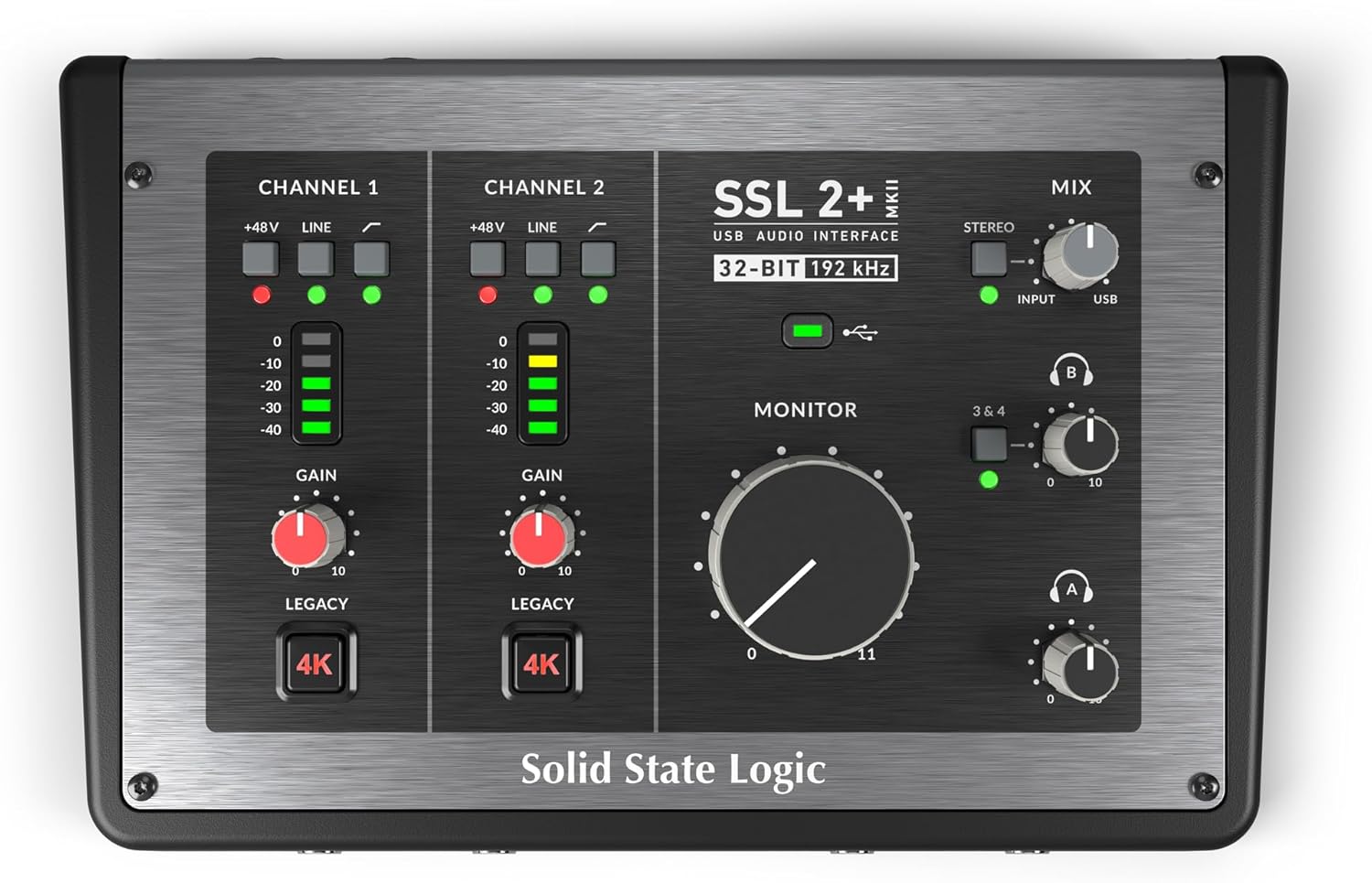
Pros
- Exceptional zero-latency performance eliminates monitoring delay for real-time recording
- Dual independent headphone outputs with separate volume controls enable simultaneous different mixes
- Built-in DI functionality on front inputs removes need for external DI boxes for guitars and keyboards
- Legacy 4K analog enhancement adds professional SSL character to vocal and instrument tracking
- Premium analog interface with physical knobs and buttons preferred by professional engineers over touchscreens
Cons
- Microphone preamp gain requires careful calibration and runs near maximum on some condenser mics
- Main volume knob is plastic rather than metal, which may feel less durable than expected at this price point
- Limited to 2x4 I/O configuration, which may constrain users needing more simultaneous inputs or outputs
The SSL 2+ MKII is a professional audio interface that brings decades of SSL's mixing console heritage into a compact, bus-powered format. Designed for producers, podcasters, engineers, and musicians, this interface prioritizes sound quality and ease of use without requiring external power supplies or complex setup procedures.
The standout feature is genuine zero-latency monitoring combined with dual independent headphone outputs, each with its own volume control. This enables real-time recording without monitoring delay and allows collaborative sessions where artists and producers hear different mixes simultaneously. The 32-bit/192 kHz converters with Legacy 4K analog enhancement deliver the classic SSL "air" and harmonic character that professionals have relied on for decades, adding polish to vocals and instruments without additional plugins.
Build quality impresses with premium analog controls, stainless steel construction, and responsive knobs and buttons that feel substantial and professional. The interface includes built-in DI functionality on front 1/4" inputs, eliminating the need for external DI boxes when connecting guitars, keyboards, or other high-impedance instruments. The dual XLR mic preamps and four 1/4" line outputs provide flexible routing for most home studio and portable recording scenarios.
The primary consideration is that microphone preamp gain operates near maximum on some condenser microphones, leaving limited headroom for gain adjustment. Additionally, the main volume knob uses plastic rather than metal construction, which some users may find less durable than expected. The 2x4 I/O configuration works well for solo recording but may feel limiting for those requiring simultaneous multi-track recording or more complex routing.
The SSL 2+ MKII delivers professional audio quality, intuitive analog controls, and genuine zero-latency performance in a portable package. It represents excellent value for producers and engineers upgrading from entry-level interfaces while remaining accessible for musicians beginning their recording journey.
Audio I/O: 2 XLR mic preamps, 2 x 1/4" line/hi-Z inputs, 2 discrete headphone outputs, 4 x 1/4" line outputs
Audio Specifications: 32-bit/192 kHz AD/DA converters, 48V phantom power, high-pass filters, stereo loopback, Legacy 4K analog enhancement
Connectivity: USB-C bus-powered, MIDI I/O on 5-pin DIN jacks, compatible with Windows and macOS
Physical: Stainless steel construction, 6.18 x 9.21 x 2.76 inches, 1.94 pounds
Software: SSL Production Pack software bundle included, supports major DAWs including Cubase Pro
Best For: Home studio producers, music engineers, podcasters, and musicians who prioritize audio quality and zero-latency monitoring. Ideal for those upgrading from entry-level interfaces or working in collaborative tracking sessions.
Perfect If You: Record vocals and instruments simultaneously, need independent headphone mixes for artist and producer, prefer analog controls over digital displays, work with guitars and keyboards requiring DI connectivity, or want professional SSL sound without purchasing a mixing console.
Consider Alternatives If: You require more than 4 simultaneous audio inputs, need extensive MIDI connectivity beyond basic I/O, or prioritize the lowest possible price over sound quality and features.
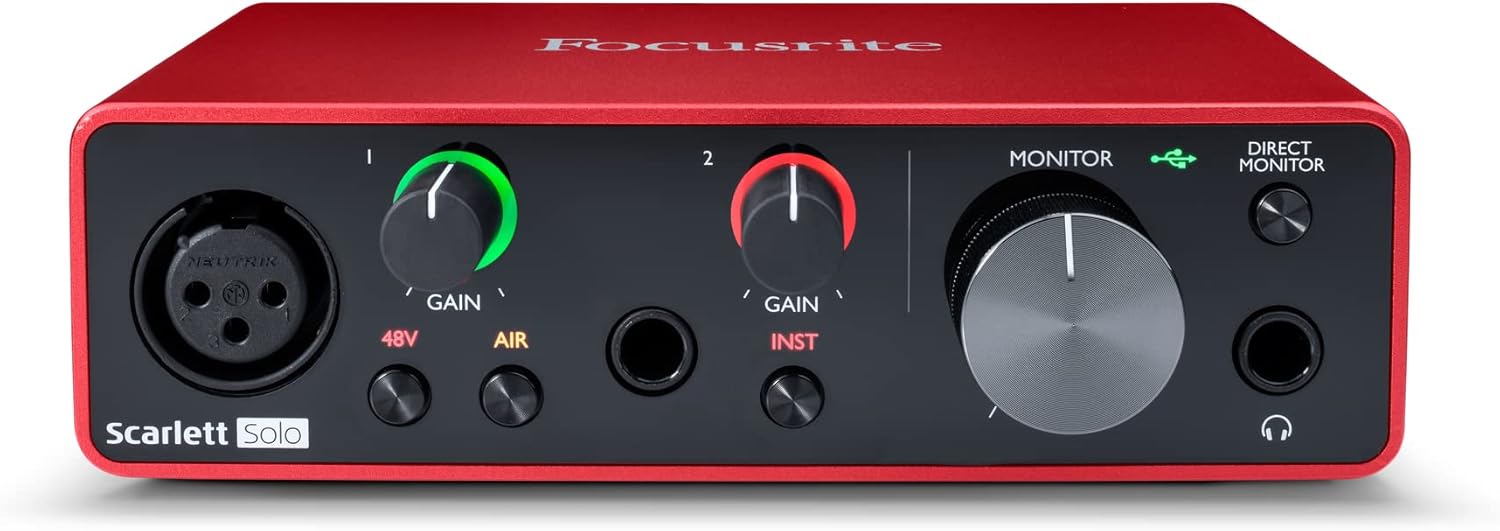
Pros
- Excellent preamp quality produces bright, clear recordings with minimal noise floor
- Air mode adds professional polish to vocal and acoustic recordings without additional equipment
- Compact design perfect for home studios, bedroom producers, and mobile recording setups
- Included software suite eliminates need for expensive DAW purchases
- Highly reliable brand with strong reputation in professional audio industry
Cons
- Single microphone input limits simultaneous multi-instrument recording capabilities
- May require audio driver updates for optimal performance on some Windows systems
- Learning curve for beginners unfamiliar with audio interface operation and gain staging
The Focusrite Scarlett Solo 3rd Gen is a professional USB audio interface designed for musicians, podcasters, and content creators who demand studio-quality recordings without the complexity of larger mixing consoles. This compact device bridges the gap between budget-friendly entry-level gear and expensive professional equipment, making it ideal for home studios, bedroom producers, and anyone serious about capturing professional-grade audio.
The standout feature is undoubtedly the high-performance microphone preamp paired with the innovative Air mode, which adds extra clarity and presence to vocals and acoustic instruments. The two high-headroom instrument inputs eliminate clipping and distortion, ensuring your guitar, bass, and other instruments shine through with clarity. Recording at up to 24-bit/192kHz resolution means your productions retain all sonic nuances, while the Gain Halo visual feedback system helps you nail perfect levels every time.
Build quality reflects Focusrite's professional heritage, with a solid metal chassis and intuitive front-panel controls that feel responsive and durable. The USB-C connectivity provides fast, reliable data transfer and modern compatibility with both Mac and Windows systems. The included software bundle (Pro Tools Intro+, Ableton Live Lite, Cubase LE) gives you everything needed to start producing immediately without additional software purchases.
The primary limitation is the single microphone input, which restricts simultaneous multi-track vocal or acoustic recording. Additionally, some Windows users report requiring driver updates for optimal performance. The learning curve for gain staging and audio interface operation may challenge complete beginners, though the included documentation is comprehensive.
The Focusrite Scarlett Solo 3rd Gen represents exceptional value for serious hobbyists and semi-professional creators. Its combination of pristine preamp quality, professional converters, intuitive design, and included software makes it the go-to choice for anyone upgrading from computer microphones or entry-level interfaces. The three-year warranty provides confidence in your investment.
Audio I/O: 1 XLR microphone input, 2 high-impedance instrument inputs, 2 balanced line outputs, headphone output
Audio Quality: 24-bit/192kHz recording and playback resolution with high-performance converters
Connectivity: USB-C to computer, compatible with all major audio recording software
Channels: 2 channels (stereo)
Features: Switchable Air mode, Gain Halo visual feedback, low-noise outputs, headphone monitoring
Software Included: Pro Tools Intro+, Ableton Live Lite, Cubase LE, Hitmaker Expansion
Warranty: 3-year manufacturer warranty worldwide
Compatible Devices: Microphones, instruments, personal computers, headphones, studio monitors
Who Should Buy: Musicians recording at home, podcasters seeking professional audio quality, guitarists and bassists needing quality instrument preamps, content creators upgrading from built-in computer audio, and producers working with limited space.
Who Should Look Elsewhere: Users needing simultaneous multi-microphone recording, those requiring extensive analog mixing features, or professionals running high-channel-count studios requiring more I/O options.
Setup Tips: Ensure your computer meets USB-C requirements and install drivers before first use. Spend time learning gain staging with the Gain Halo visual indicator to avoid clipping. Experiment with Air mode on different sources to understand its impact on your recordings.
Value Comparison: At this price point, the Scarlett Solo 3rd Gen outperforms competitors by offering superior preamp quality, professional software bundle, and proven brand reliability. The included software alone typically costs $200+ if purchased separately.

Pros
- MIDAS preamps deliver clean, low-noise signal path comparable to much more expensive interfaces
- Intuitive plug-and-play setup with minimal driver hassle on both Mac and Windows systems
- Robust build quality and metal construction designed to withstand years of studio use
- Four simultaneous inputs and outputs provide flexibility for multi-track recording and live streaming
- Outstanding value proposition offering professional-grade specs at entry-level pricing
Cons
- Some users report occasional driver compatibility issues on certain Windows OS versions
- MIDI functionality may require additional configuration compared to audio I/O setup
- Limited customer support documentation compared to higher-end competitors
The Behringer U-PHORIA UMC404HD is a compact 4x4 USB audio interface engineered for home studio owners, podcasters, content creators, and mobile recording professionals. It delivers professional-grade audio quality at a price point that makes it accessible to anyone serious about recording but budget-conscious. The interface has earned respect from experienced audio engineers and casual users alike for punching well above its price class.
The standout feature is the inclusion of four MIDAS-designed mic preamps with +48V phantom power, which typically appear only on interfaces costing two to three times as much. Users consistently praise the clean, low-noise signal path and the ability to capture vocals and instruments with clarity and detail. The 24-bit/192 kHz resolution ensures future-proof audio quality, while ultra-low latency streaming supports real-time monitoring during recording sessions. Compatibility with Pro Tools, Ableton Live, Cubase, and other major DAWs means you can integrate it into virtually any existing workflow.
Build quality reflects Behringer's partnership with MIDAS and acquisition of Music Tribe assets. The metal chassis feels solid and impact-resistant, designed to handle the rigors of studio use and travel. The interface is compact at just 11.5 inches wide, making it ideal for portable recording setups or tight desk spaces. Balanced XLR and 1/4-inch outputs ensure professional connectivity to studio monitors and mixing equipment.
The main drawbacks involve driver setup on certain Windows systems and MIDI configuration, which some users find less intuitive than audio I/O setup. A small percentage of users report compatibility issues, though this appears to be system-specific rather than a widespread product defect. Driver support for Mac OS is notably streamlined, with native OS integration requiring minimal configuration.
The Behringer UMC404HD represents genuine value in the audio interface market. It combines professional-grade components, solid engineering, and proven reliability at a price that makes it the obvious choice for anyone building a home studio or upgrading from entry-level equipment. Experienced audio professionals and beginners alike will find it a capable, dependable tool that won't compromise recording quality.
Audio Specifications: 24-bit/192 kHz resolution, 10 Hz to 43 kHz frequency response (0/+0.3 dB). Maximum input levels: Microphone -4 dBu, Line +20 dBu, Instrument -3 dBu. Four MIDAS-designed mic preamps with +48V phantom power.
Connectivity: USB 2.0 interface with 4 inputs/4 outputs plus 1x MIDI I/O. Balanced XLR and 1/4-inch TRS connectors for main outputs. Supports both Mac OS X and Windows XP or higher.
Compatibility: Works with Avid Pro Tools, Ableton Live, Steinberg Cubase, Reaper, Audacity, and other major DAWs. Native driver support for Mac OS, simple driver installation for Windows.
Physical Dimensions: 11.5 inches D x 5.12 inches W x 1.81 inches H. Weight: 2.7 pounds. Rugged metal chassis with impact-resistant construction.
Ideal For: Home studio owners, podcasters, content creators, musicians recording at home, audio engineers on a budget, and anyone upgrading from entry-level USB interfaces. Perfect for mobile recording setups and professional use in tight spaces.
Experience Level: Suitable for beginners through advanced users. The plug-and-play setup welcomes newcomers, while the professional-grade preamps and specifications satisfy experienced engineers.
Use Cases: Music production and multi-track recording, podcast and voiceover recording, live streaming with high-quality audio, instrument recording, vocal tracking, and field recording with a portable setup.

Pros
- Exceptional audio quality and clarity that rivals interfaces at significantly higher price points
- Class A preamp design captures natural tone and richness in vocal and acoustic recordings
- Solid metal construction feels premium and withstands portable use without degradation
- Dual headphone outputs with independent control provide professional monitoring options
- Straightforward setup with included USB-C cable and broad OS compatibility
Cons
- Headphone output may require external amplification for high-impedance or demanding headphones
- Printed logos on the interface can fade over time with regular use
- Limited to 2 channels of simultaneous recording, which may constrain multi-track live capture
The Audient iD4 MKII is a professional-grade audio interface designed for home recording enthusiasts, podcast producers, and content creators who demand studio-quality sound without the bulk or complexity of larger mixing consoles. Its compact footprint and robust feature set make it an excellent choice for bedroom studios, mobile recording setups, and anyone upgrading from budget-tier interfaces.
The standout feature is undoubtedly the Class A microphone preamp, borrowed from Audient's high-end ASP8024 HE console. Users consistently report remarkable clarity and natural tone reproduction in vocal recordings, with the preamp capturing subtle nuances while maintaining clean gain across a wide range of microphone types. The JFET instrument input adds analog warmth and character to guitar and bass recordings, while the dual headphone outputs with independent monitor mixing and panning enable flexible monitoring during sessions.
Build quality is genuinely impressive for the price. The all-metal chassis feels substantial and professional, with tactile knobs that inspire confidence during use. The new USB-C connector eliminates the need for multiple cables and provides improved power delivery compared to the original iD4. At 740 grams with compact dimensions of 133x120x40.7mm, it's genuinely portable while maintaining a desktop-friendly footprint.
A few considerations exist. The headphone output, while clean, may struggle with high-impedance studio headphones and could benefit from an external amplifier in demanding scenarios. Additionally, the printed logos can fade with regular handling, though this is purely cosmetic. The interface maxes out at 2 simultaneous recording channels, which is appropriate for its positioning but worth noting for multi-track live recording scenarios.
Verdict: The iD4 MKII delivers exceptional value and professional sound quality that justifies its investment. Whether you're recording vocals, instruments, or podcasts, the Class A preamp and thoughtful feature set provide tools typically found in much more expensive interfaces. It's a genuine step up from consumer-grade alternatives and an excellent choice for serious home recordists.
Connectivity and Compatibility: USB-C connection with support for Mac, PC, and iOS devices. Includes 1-meter USB-C cable. Frequency response up to 96 kHz with maximum sample rate of 96 kHz.
Audio Channels and I/O: 2 channels of simultaneous recording. Includes 3.5mm and 6.3mm headphone connectors with dual independent headphone outputs featuring monitor mix and panning control. JFET instrument input and XLR microphone input with Class A preamp.
Physical Specifications: Dimensions 133mm x 120mm x 40.7mm (5.2 x 4.72 x 1.57 inches). Weight 740 grams. All-metal chassis construction. Available in black.
Included Software: Steinberg Cubase LE, Cubasis LE 2, Retrologue 2 Synth, TwoNotes Wall of Sound, and Loopmasters Sample Pack. 3-year manufacturer warranty.
Who Should Buy: The iD4 MKII is ideal for home recording producers, podcast creators, musicians recording vocals or instruments, and anyone upgrading from entry-level interfaces like the Scarlett 2i2. It's particularly suited for those prioritizing microphone preamp quality and seeking professional sound in a compact package.
Who Should Consider Alternatives: If you require more than 2 simultaneous recording channels or need extensive MIDI connectivity, larger interfaces may be more appropriate. Similarly, if budget is the primary concern, entry-level options exist at lower price points, though they lack the sonic quality of the iD4 MKII.
Setup Considerations: The interface works immediately upon connection with most operating systems. For optimal headphone monitoring, consider pairing with quality studio headphones or an external headphone amplifier if using high-impedance models. The dual headphone outputs with independent panning make it excellent for collaborative recording or client monitoring scenarios.
Value Assessment: Compared to similarly-priced interfaces, the iD4 MKII stands out for its Class A preamp quality and build construction. Users consistently report it punches above its weight class, delivering sound quality typically associated with interfaces at significantly higher price points.

Pros
- Exceptional audio quality and low noise floor at a fraction of the cost of higher-end interfaces
- Blazingly fast USB drivers deliver class-leading low latency for responsive live monitoring
- Unique color LCD display provides real-time visual feedback for precise gain staging and level control
- Powerful headphone amplifier drives high-impedance headphones without dedicated amp needed
- Includes comprehensive software bundle and XLR cable, providing excellent value out of the box
Cons
- Limited to 2x2 channel configuration, which may not suit users needing more simultaneous inputs or outputs
- USB-C connectivity requires quality cables and compatible computers, potential compatibility consideration for older systems
- Setup and driver configuration require attention to detail, particularly regarding sample rates and buffer settings for optimal performance
The MOTU M2 is a professional-grade 2x2 USB-C audio interface designed for musicians, producers, podcasters, and content creators who demand pristine audio quality without the premium price tag. Its compact size and straightforward feature set make it ideal for home studios, mobile recording setups, and anyone seeking reliable audio capture and monitoring capabilities.
At the heart of the M2 lies ESS Sabre32 Ultra DAC technology, the same converter found in high-end interfaces costing thousands of dollars. This translates to a measured 120 dB dynamic range on outputs, exceptional headphone amplification that rivals dedicated amps, and ultra-clean mic preamps with -129 dBu equivalent input noise. Real-world performance is equally impressive, with users consistently praising the clarity and fidelity of recordings, whether capturing vocals, acoustic instruments, or podcast dialogue.
The standout feature is the full-color LCD display with detailed level meters for all inputs and outputs, a rarity in this price category. Combined with MOTU's expertly engineered USB drivers, the M2 achieves class-leading 2.5ms round trip latency at 96 kHz, enabling responsive live monitoring through your computer without the delay that plagues many budget interfaces. This makes it genuinely usable for real-time guitar, keyboard, or vocal monitoring while recording.
Build quality is solid and straightforward, with a compact aluminum chassis that feels durable and professional. The interface includes a generous software bundle featuring Ableton Live Lite, MOTU Performer Lite, 100+ instruments, and 6GB of loops and samples, plus a quality XLR-XLR cable. Some users report that optimal performance requires attention to USB cable quality and proper sample rate configuration, particularly on Windows systems, though this is a minor consideration for users willing to invest time in setup.
The MOTU M2 represents exceptional value for anyone seeking professional audio quality in a portable, user-friendly package. Its combination of premium converter technology, low latency, visual feedback, and included software makes it a compelling choice for both beginners upgrading from basic interfaces and professionals seeking a reliable secondary unit. Highly recommended for serious hobbyists and professionals on a budget.
Audio Specifications
Dynamic Range: 120 dB (outputs), -129 dBu EIN (mic inputs)
Sample Rate: Up to 192 kHz
Latency: 2.5ms round trip at 96 kHz with 32 sample buffer
Converter Technology: ESS Sabre32 Ultra DAC
Physical Specifications
Channels: 2x2 (2 inputs, 2 outputs)
Connectivity: USB-C
Weight: 1.46 kg
Model Number: 3120
UPC: 745150759186
Included Software
MOTU Performer Lite
Ableton Live Lite
100+ instruments
6GB of loops and sample packs
XLR-XLR cable
Compatibility
Operating System: Windows and Mac
Audio Input: USB
Best for: Personal computers with USB-C ports
Ideal For
Home studio musicians and producers seeking professional audio quality on a budget
Podcasters and content creators needing reliable mic input with low latency monitoring
Gamers wanting superior audio quality and responsive mic monitoring for streaming
Mobile recording enthusiasts requiring a portable, USB-powered interface
Musicians upgrading from basic interfaces or needing a secondary unit for live use
Not Ideal For
Users requiring more than 2 simultaneous audio inputs or outputs
Those needing legacy USB-A connectivity without adapters
Anyone seeking a fully integrated solution with built-in preamps, effects, or mixing capabilities beyond basic monitoring

Pros
- Outstanding audio quality with quiet, transparent preamps that capture full warmth and clarity from microphones
- Premium all-metal build quality feels professional and portable enough for travel between studios
- Dual headphone outputs with independent monitoring provide flexibility for collaborative recording sessions
- USB-C connector offers faster, more stable connection than older USB standards with simplified cable management
- Excellent value for professional-grade preamps at mid-range pricing compared to competitor offerings
Cons
- No physical power switch requires unplugging to fully disconnect, which some users find inconvenient
- Steeper learning curve than some competitors due to unique control layout and menu system
- May experience connectivity loss when computer enters sleep mode on some systems
The Audient iD14 MKII is a professional-grade USB audio interface designed for home studio recording, music production, and content creation. It targets serious musicians, podcast producers, and audio engineers who demand studio-quality sound without the price tag of larger mixing consoles. This interface bridges the gap between budget-friendly options and enterprise-level gear.
The standout feature is the dual Class-A microphone preamps, borrowed directly from Audient's professional ASP8024 HE mixing console. Users consistently report that these preamps deliver exceptional clarity, warmth, and detail, with remarkably low noise floors that capture every nuance of vocals and instruments. The new USB-C connector provides faster data transfer and improved power delivery compared to the original iD14, while the dual headphone outputs enable independent monitoring for collaborative sessions. Real-world testing shows the interface drives high-impedance headphones effortlessly with clean, detailed reproduction.
Build quality is exceptional throughout. The all-metal chassis feels substantial and professional, with a compact footprint that fits easily on crowded studio desks while remaining portable enough for mobile recording setups. The included 1m USB-C cable and software bundle (Cubase LE, Retrologue 2, and sample packs) provide immediate production capability out of the box.
Potential drawbacks include the lack of a dedicated power switch and occasional sleep-mode connectivity issues on certain computer configurations. The control layout also requires a brief learning period compared to more straightforward interfaces, though users report this complexity becomes intuitive with minimal practice.
The Audient iD14 MKII delivers professional preamp quality and build standards that justify its mid-range price point. It represents an excellent upgrade path for producers outgrowing entry-level interfaces while remaining accessible to those building their first serious home studio setup.
Connectivity and Compatibility
USB-C connector with high-speed data transfer. Compatible with Mac, PC, and iOS devices. Includes 1m USB-C cable. Supported software: Steinberg Cubase LE, Cubasis LE 2, Retrologue 2 Synth, TwoNotes Wall of Sound, Waldorf Edition 2 LE, and Loopmasters Sample Pack.
Audio Performance
Maximum sample rate: 96 kHz. 4 channels total. Two Class-A microphone preamps derived from Audient's ASP8024 HE console. Dual headphone outputs for independent monitoring. Exceptional headroom and low-noise amplification for transparent audio capture.
Physical Specifications
Dimensions: 173 x 120 x 62 mm (6.81 x 4.72 x 2.44 inches). Weight: 1250g (2.75 lbs). All-metal chassis construction. Available in black finish. Compact desktop form factor with portability for mobile studio applications.
Warranty and Support
3-year manufacturer warranty. Backed by Audient's professional audio reputation. Model number: iD14MKII. UPC: 656942526773.
Ideal For
Home studio professionals seeking transparent, high-quality preamps. Music producers upgrading from budget interfaces. Podcast and voiceover creators requiring clean vocal capture. Recording engineers building portable studio setups. Musicians pairing with quality microphones and headphones for critical monitoring and recording.
May Not Be Ideal For
Users requiring extensive MIDI connectivity or analog I/O options. Those needing simple plug-and-play functionality without learning control layouts. Budget-conscious beginners with minimal production requirements. Users requiring onboard effects processing or DSP capabilities.
Best Paired With
Quality condenser microphones like Rode NT1 or similar. Closed-back monitoring headphones like Sennheiser HD650 or Audio-Technica AT2020. Professional studio monitors for mix referencing. Acoustic treatment for optimal recording environment.

Pros
- Exceptional I/O flexibility with 16 channels in and out, supporting complex studio setups
- Professional-grade audio conversion quality at a mid-range price point
- Intuitive workflow features like Auto Gain and Clip Safe save time during recording sessions
- Included software suite provides immediate production capabilities without additional purchases
- Air modes add character and warmth that rival expensive console emulations
Cons
- Larger form factor and higher price point may be overkill for bedroom producers with simple needs
- Steep learning curve for beginners unfamiliar with professional audio routing and ADAT connectivity
- USB-C requirement means older computers may need additional adapters or upgrades
The Focusrite Scarlett 16i16 4th Gen is a powerhouse audio interface designed for professional recording studios, music producers, and audio engineers who demand extensive connectivity and uncompromising sound quality. This interface targets users who have outgrown entry-level models and need flexible routing options for complex recording setups.
The standout features include the newly designed 4th Generation preamps delivering 69dB of gain, two Hi-Z inputs for direct instrument recording, and six dedicated line inputs for maximum connectivity. The 24-bit/192kHz converters with 122dB dynamic range ensure studio-quality audio capture, while the Air modes add vintage console warmth and presence to vocals and instruments without needing external gear.
Build quality is solid throughout, with a professional metal chassis, reliable USB-C connectivity, and intuitive front-panel controls. The Auto Gain feature intelligently sets optimal input levels, while Clip Safe monitoring prevents distortion in real-time, making the recording process smoother and more forgiving for both experienced engineers and ambitious home studio owners.
The main drawback is complexity, as the 16-in/16-out configuration with ADAT and S/PDIF I/O requires understanding professional audio routing. Additionally, the price and size may exceed the needs of casual bedroom producers or beginners still learning recording fundamentals.
The Scarlett 16i16 4th Gen is an excellent investment for serious content creators and professional studios seeking reliable, high-quality audio conversion with extensive I/O flexibility and included professional software tools.
Connectivity and I/O
16 analog inputs and outputs, 2 microphone preamps, 2 Hi-Z inputs, 6 line inputs, ADAT digital I/O, S/PDIF digital I/O, MIDI I/O, USB-C connection
Audio Quality
24-bit resolution, 192kHz sample rate, 122dB dynamic range, 69dB preamp gain, Air mode processing for vintage console character
Compatibility
Compatible with microphones, instruments, personal computers, headphones, and studio monitors. Supports all major audio recording software including Pro Tools, Ableton Live, Cubase, and more.
Included Software
Pro Tools Intro+, Ableton Live Lite, Cubase LE, and Hitmaker Expansion with effects and mastering tools
Smart Features
Auto Gain for automatic level optimization, Clip Safe for real-time clipping prevention and gain adjustment
Who Should Buy This Interface
Professional recording studios, music producers working with multiple instruments, audio engineers, content creators with complex recording needs, and experienced home studio owners ready to expand beyond entry-level interfaces.
Who Might Want to Consider Alternatives
Beginners taking their first steps into recording may benefit from simpler 2-in/2-out interfaces. Podcasters and voiceover artists with minimal I/O needs can find more affordable options. Mobile producers requiring portability should explore compact interfaces.
Key Considerations Before Purchase
Ensure your computer has USB-C connectivity or plan for adapter costs. Verify your studio space can accommodate the larger chassis. Consider whether you truly need 16 channels or if a smaller interface would serve your current needs. Review the learning curve for ADAT and S/PDIF routing if you're new to professional audio.
Value Assessment
At its price point, the Scarlett 16i16 4th Gen delivers exceptional value through professional-grade converters, extensive I/O flexibility, and included software. The Air modes and automatic gain features provide functionality typically found in much more expensive interfaces.
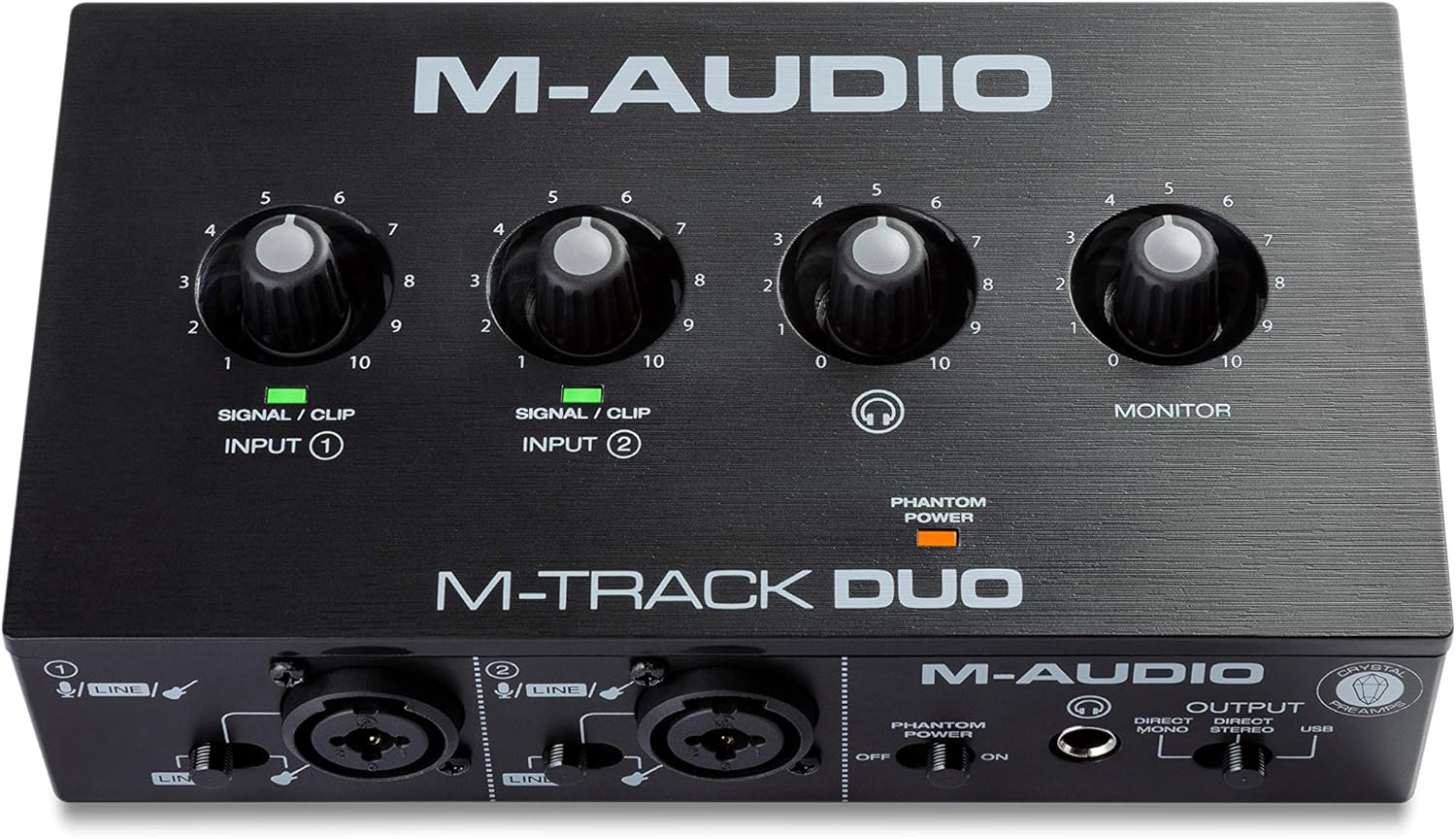
Pros
- Exceptional value at this price point with dual XLR inputs that competitors charge significantly more for
- Compact 7.5-inch width and lightweight design make it genuinely portable for on-the-go recording
- Zero-latency monitoring via USB/Direct switch eliminates the frustration of hearing delayed playback while recording new parts
- Included software suite jumpstarts your production immediately without additional purchases
- Transparent preamps deliver clean, professional-grade audio from entry-level to mid-range microphones
Cons
- Plastic construction feels lightweight, which some users perceive as lower build quality despite reliable performance
- 48kHz maximum sample rate is lower than some competing interfaces, limiting high-resolution audio work
- Gain staging may require careful management with certain microphones, as some users report insufficient gain at maximum levels
The M-Track Duo is a compact USB audio interface designed for podcasters, musicians, and content creators who need professional recording capabilities without the complexity or cost of larger studio setups. With dual XLR combo inputs, phantom power, and integrated instrument switching, this interface handles vocals, acoustic instruments, guitars, keyboards, and line-level devices with equal competence. It's the kind of gear that lets you go from idea to finished recording in minutes rather than hours.
What sets the M-Track Duo apart is its zero-latency direct monitoring feature, which eliminates the maddening delay that plagues cheaper interfaces. The USB/Direct switch lets you blend your live input signal with playback from your DAW, making it easy to record layered parts or add instruments to existing compositions. The transparent Crystal Preamps deliver clean, detailed audio that punches above its weight class, and phantom power support means you can work with professional condenser microphones without compromise.
Build quality is straightforward plastic construction that feels lightweight but proves durable in real-world use. The compact 7.5-inch width and 0.3kg weight make it genuinely portable, fitting easily into a laptop bag. All connections are professional-grade balanced XLR and quarter-inch TRS connectors, with a headphone output that supports standard stereo headphones via a quarter-inch adapter.
The main limitation is the 48kHz maximum sample rate, which is lower than some competing interfaces in higher price brackets. Additionally, some users report that gain staging requires careful management depending on your microphone, though this is rarely a dealbreaker for entry-level recording. The included MPC Beats software and ProTools First bundle provide legitimate production tools, though you'll likely graduate to more advanced DAWs as your skills develop.
The M-Track Duo delivers genuine value and reliability for anyone starting their recording journey or needing a portable backup interface. It handles its core mission of capturing clean, professional audio without fuss, making it an excellent choice for podcasters, singer-songwriters, and bedroom producers with realistic budgets.
Audio Specifications: Maximum sample rate of 48kHz with 16-bit resolution, 20kHz frequency response, and 1 megaohm impedance. Two channels of audio input and output.
Connectivity: Dual balanced XLR microphone inputs with phantom power, balanced quarter-inch line inputs, unbalanced quarter-inch instrument inputs, stereo quarter-inch main outputs, quarter-inch TRS headphone output, and USB Type B connection for computer and compatible iOS devices.
Dimensions and Weight: 7.5 inches wide by 4.34 inches deep by 2.13 inches tall, weighing just 0.3kg for maximum portability. Completely USB-powered with no external power supply required.
Compatibility: Works with Windows 7 and later via ASIO drivers, Mac OS High Sierra through Big Sur with class-compliant support, iOS with Apple Lightning to USB3 adapter, and Android devices. Compatible with all major DAWs including Logic Pro, ProTools, GarageBand, Studio One, Cubase, and Ableton Live.
Included Accessories: USB Type B to Type A cable, software download cards for MPC Beats and ProTools First, user guide, and safety documentation. Backed by a one-year manufacturer warranty.
Ideal For: This interface is perfect for podcasters launching their first show, musicians recording demos at home, content creators adding professional audio to videos, and anyone needing portable recording capability. It's also excellent for experienced engineers who need a reliable backup interface or travel-friendly setup.
Consider Alternatives If: You require sample rates above 48kHz for professional mastering work, need more than two simultaneous inputs, or demand premium metal construction and extensive onboard controls. However, for the vast majority of recording scenarios, the M-Track Duo delivers everything you need.
Budget Consideration: At this price point, the M-Track Duo offers exceptional value compared to single-channel competitors and provides genuine professional features like phantom power and zero-latency monitoring that many similarly-priced interfaces omit entirely.

Pros
- Exceptional audio quality with no background noise, even at budget price point
- Truly plug-and-play functionality works immediately on Windows, Mac, and Linux systems
- Dual combo jacks provide maximum flexibility for microphones, guitars, and line-level sources
- Lightweight and compact form factor ideal for desk space and portability
- Zero-latency monitoring enables confident tracking without hearing delay or echo
Cons
- LED illumination on gain knobs does not function as prominently displayed in product images
- Requires careful gain adjustment when connecting instruments with built-in preamps to avoid clipping
- Limited to 2 input channels, which may not suit users needing more simultaneous inputs
The PIYONE Q2 is a 2x2 USB-C audio interface designed for home recordists, podcasters, guitarists, and content creators who want professional-grade sound without complexity. It bridges the gap between budget-friendly and professional-quality recording, making it an ideal first interface for beginners or a secondary interface for established creators.
The standout feature is its genuine plug-and-play operation. Simply connect the USB-C cable to your computer, and the interface is recognized immediately on Windows, Mac, and Linux systems without any driver installation. The 24-bit/192kHz audio resolution captures professional-quality recordings with excellent clarity and minimal noise. The zero-latency direct monitoring feature eliminates tracking delays, allowing you to hear yourself in real-time without the frustrating latency that plagues cheaper interfaces. Dual XLR/TRS combo inputs with 48V phantom power provide flexibility for condenser microphones, dynamic mics, guitars, and line-level sources.
Build quality and design are impressive for the price. The compact form factor fits easily on any desk without consuming valuable space. The illuminated control knobs create a modern, professional aesthetic that looks great in any studio setup. The interface feels solid and well-constructed, with ergonomic knobs and buttons positioned for comfortable operation during long recording sessions.
One notable drawback is that the LED illumination on the gain knobs does not function as prominently as shown in product images, which may disappoint users specifically drawn to this visual feature. Additionally, users must exercise caution when adjusting gain levels with instruments that have built-in preamps, as excessive gain can cause clipping. The 2-channel limitation means this interface cannot handle multiple simultaneous inputs beyond two sources.
Verdict: The PIYONE Q2 delivers exceptional value for beginners and budget-conscious creators seeking professional audio quality without complexity. Its combination of studio-grade sound, zero-latency monitoring, and truly plug-and-play setup makes it an excellent choice for home recording, podcasting, and content creation. Recommended for anyone starting their recording journey or needing a reliable portable interface.
Audio Quality: 24-bit resolution, 192kHz maximum sample rate, high-performance converters, low-noise design
Connectivity: USB-C port (handles both data transfer and bus power), 3.5mm headphone jack
Inputs: 2 XLR/TRS combo jacks, 48V phantom power supply
Channels: 2 input channels, 2 output channels
Features: Zero-latency direct monitoring, monitor mix function, loopback capability, illuminated control knobs, class-compliant design
Compatibility: Mac, Windows PC, Linux, iOS (via USB-C adapter)
Physical: Compact portable design, 0.74 kg weight, Alloy Red finish
Warranty: 2-year limited warranty
Ideal For: Beginner recording artists, podcasters, singer-songwriters, content creators, home studio enthusiasts, and anyone seeking professional audio quality without complex setup requirements.
Perfect Use Cases: Recording vocals with condenser microphones, capturing acoustic guitar performances, podcasting and voice-over work, streaming with professional audio quality, music production on a budget, portable recording for travel or mobile content creation.
Not Ideal For: Users requiring more than 2 simultaneous inputs, professional studios with extensive I/O requirements, or those specifically seeking prominent LED illumination effects on control knobs.
How to Choose Your Audio Interface with Preamps
Evaluate Preamp Quality and Character
The core of any interface is its microphone preamplifier. Look for specifications like EIN (Equivalent Input Noise), which indicates how quiet the preamp is. A lower number is better. Beyond specs, some preamps add desirable color. For example, the Focusrite Scarlett Solo 3rd Gen USB-C Audio features an Air mode that adds high-end sparkle. Others, like those in the Solid State Logic 2 MKII Plus USB-C Audio, emulate the harmonic richness of classic studio consoles.
Determine Your Input and Output Needs
Consider what you need to connect now and in the near future. A solo vocalist might only need one mic input, while a guitarist who sings would require two. For full bands or advanced podcast setups, interfaces like the Focusrite Scarlett 16i16 4th Gen USB-C Audio offer expandability via ADAT. Also, assess your output needs for studio monitors and headphones. If you collaborate often, multiple headphone outputs are essential.
Check Connectivity and Driver Stability
<!–Modern interfaces predominantly use USB-C for fast, reliable data transfer and bus power. Ensure the interface is compatible with your computer’s operating system. Class-compliant interfaces work seamlessly with Mac, iOS, and often Windows without extra drivers. For more advanced control, dedicated drivers can offer lower latency and additional features. Stability is key to avoiding frustrating dropouts during a perfect take. For related gear, explore our guide to the best USB microphones under $200.
Consider Included Software and Workflow Features
Many interfaces come bundled with powerful digital audio workstation (DAW) software and plugin suites. These can provide incredible value, especially for beginners. Also, evaluate physical controls. A large, smooth gain knob with a clear visual indicator, like on the Motu M2 2×2 USB-C Audio Interface with XLR-XLR, makes setting levels intuitive. Features like loopback for streaming, high-pass filters, and zero-latency monitoring directly impact your daily workflow. For interfaces with even more onboard processing, see our review of the best audio interfaces with DSP.
Final Thoughts
Investing in a quality audio interface with excellent preamps is the most effective upgrade for your home studio. For most creators starting out or working with a single microphone, the Focusrite Scarlett Solo 3rd Gen USB-C Audio offers legendary reliability and a sound-enhancing Air mode that is hard to beat. If your projects demand the unmistakable character of a classic recording console and you are ready for that step up, the Solid State Logic 2 MKII Plus USB-C Audio delivers professional heritage in a compact unit. Whichever you choose, you are building a foundation for exceptional sound. You can find more essential studio gear in our Recording & Musical Instruments category.
Frequently Asked Questions
Why are preamps in an audio interface so important?
The microphone preamplifier is the first circuit your microphone signal hits. Its job is to amplify the very low-level signal from your mic to a usable line level. A high-quality preamp does this with minimal added noise and distortion, preserving the detail and clarity of your source. A poor preamp can make even the best microphone sound thin, noisy, or dull.
Do I need an interface with multiple preamps if I only record one thing at a time?
While you can manage with a single preamp, having at least two offers significant flexibility. It allows you to record a vocal and an acoustic guitar simultaneously in true stereo, or to host a podcast with a guest. It also provides a backup input and lets you connect different source types without constantly swapping cables. For solo creators, a two-preamp interface is a very practical standard.
What is the difference between a Class-A preamp and other types?
Class-A refers to a specific circuit design where the amplifying transistor is always conducting current. This design is often associated with a smoother, more harmonically rich sound that many describe as “warm” or “musical.” Brands like Audient use Class-A designs, as found in their Audient Audio Interface iD4 MKII, derived from their high-end studio consoles. Other circuit designs can also sound excellent and are often more power-efficient.
How important is the bit depth and sample rate of an interface?
For most recording applications, 24-bit/48kHz is perfectly sufficient and is considered professional quality. The 24-bit depth provides a huge dynamic range, ensuring quiet passages are clean and loud ones do not clip. Higher sample rates like 96kHz or 192kHz, offered by many interfaces in 2026, are beneficial for certain high-end music production or audio restoration work, but the differences are often subtle and come with larger file sizes. The quality of the preamps and converters is more critical than the maximum sample rate.


Write Your Review
No reviews yet. Be the first to share your experience!