

You have decided to elevate your home audio experience from ordinary to extraordinary. The quest for rich, detailed sound that fills your room without breaking the bank leads you directly to the world of floorstanding speakers. Finding the right pair among the many options can feel overwhelming, especially when you seek true audiophile quality on a realistic budget.
This guide is crafted for the discerning listener who values sonic accuracy and immersive performance. We have assessed several leading models from respected brands like Klipsch, Polk Audio, and Fluance, all designed to deliver high-fidelity audio. Whether your priority is a dedicated stereo setup for music or a dynamic home theater system, our analysis will help you make an informed choice. For a broader look at options in this category, explore our dedicated floorstanding speakers hub.
Buying Guide
Sound Signature and Driver Configuration
The driver configuration defines a speaker’s character. A three-way design, like that found in the Fluance Signature series, separates bass, midrange, and treble duties across dedicated drivers. This often results in clearer sound staging and less distortion. Two-way designs, common in many towers, can be exceptionally well-tuned for a balanced output.
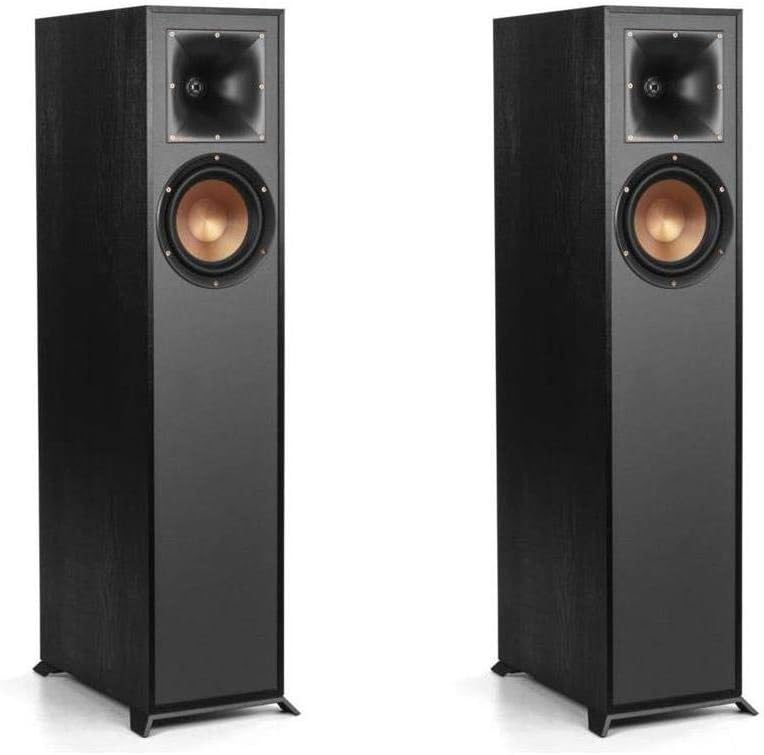
Consider the sound signature you prefer. Horn-loaded tweeters, a Klipsch hallmark, deliver high efficiency and dynamic, forward sound. Ring radiator or soft-dome tweeters, as used by Polk and Fluance, often provide a smoother, more detailed high-end. Your choice should match whether you crave excitement or nuanced accuracy, a decision that shapes your long-term satisfaction. For a focus on full-range performance, our guide on the best tower floorstanding speakers offers further insights.
Room Size and Placement
The physical dimensions of your listening space are crucial. Larger rooms benefit from speakers with bigger woofers, like the dual 8-inch drivers in the Fluance towers, which can move more air to fill the volume. In a medium-sized room, models with dual 6.5-inch woofers provide ample output without overwhelming the space.
Placement is equally important. Most floorstanding speakers perform best when placed several feet away from walls to allow bass ports to breathe properly. Consider the footprint and height of the speaker to ensure it integrates well with your furniture and allows for an optimal listening triangle between you and the speakers. If your space calls for a more compact profile, our list of best Mid-Size floorstanding speakers is a valuable resource.
Features for Future-Proofing
Look for features that add longevity to your investment. Dolby Atmos integration, as seen in the Klipsch R-26FA, adds a three-dimensional sound dimension without requiring ceiling cutouts. This is a significant advantage for home theater enthusiasts wanting to keep up with modern audio formats.
Bi-wiring or bi-amping capability, offered by several models here, provides flexibility for future amplifier upgrades. High-resolution audio certification ensures the speaker can reveal the details in lossless music files. Choosing a speaker with these forward-looking technologies protects your purchase from becoming quickly outdated.
Build Quality and Aesthetics
A speaker is a long-term investment and a piece of furniture. Cabinets constructed from high-density MDF with internal bracing, like those in the Polk Reserve series, minimize unwanted resonance for cleaner sound. The finish should complement your decor, whether you prefer a classic wood veneer or a modern piano black.
Details matter. Magnetic grilles offer a clean look when removed, while sturdy binding posts ensure a secure connection. A well-built speaker not only sounds better but also stands the test of time visually and physically. For designs that blend seamlessly into modern living spaces, consider our recommendations for best minimalist floorstanding speakers.
Final Thoughts
Selecting the right floorstanding speakers transforms your listening environment, bringing concert-hall energy and studio clarity into your home. After a thorough assessment, two models stand out for distinct reasons. For the home theater enthusiast seeking an immersive, three-dimensional experience right out of the box, the Klipsch R-26FA Dolby Atmos Floorstanding Speaker is a compelling choice with its integrated elevation channel. Conversely, for the dedicated music listener who prioritizes a wide soundstage and deep, controlled bass from a stereo pair, the Fluance Signature HiFi 3-Way Floorstanding Tower offers remarkable performance. Pairing either with a quality subwoofer can further elevate the experience, ensuring your system meets all your audio demands for years to come.
Frequently Asked Questions
Do I need a separate subwoofer with floorstanding speakers?
Many floorstanding speakers, especially those with larger woofers, produce satisfying bass on their own for music listening. However, adding a dedicated subwoofer allows the main speakers to focus on mid and high frequencies, often improving clarity. For home theater effects like explosions, a subwoofer is highly recommended to handle the deepest low-frequency effects.
What is the main advantage of 3-way floorstanding speakers?
A 3-way design uses separate drivers for bass, midrange, and treble frequencies. This dedicated approach can reduce distortion and intermodulation, as each driver operates within a more specific range. The result is often improved clarity, especially in complex musical passages, and a more coherent soundstage compared to some 2-way designs.
How important is speaker sensitivity?
Sensitivity, measured in decibels, indicates how loud a speaker will play with a given amount of amplifier power. Higher sensitivity speakers, like those from Klipsch, are easier to drive and can reach high volumes with less powerful amplifiers. Lower sensitivity models may require more robust amplification to perform at their best, which is an important factor in system matching.
Can I use these speakers in a small room?
While possible, large floorstanding speakers in a small room can be challenging. They may produce excessive bass that overwhelms the space, and you might not be able to position them optimally. For smaller rooms, consider bookshelf speakers on stands or specifically designed compact towers to achieve balanced sound without compromise.


Write Your Review
No reviews yet. Be the first to share your experience!