

Your music collection holds more detail than you’ve ever heard. High-resolution streaming services offer masters straight from the studio, but to unlock that pristine quality, your audio gear needs to speak the language. That’s where a DAC with MQA support becomes essential. MQA, or Master Quality Authenticated, is a technology that folds high-resolution audio files into a smaller, streamable format without losing the original studio sound. A dedicated MQA DAC then unfolds and renders this audio, delivering an experience that gets you closer to the artist’s intent.
This guide is for anyone ready to elevate their listening, whether you’re building a serious desktop Hi-Fi system or seeking high-fidelity sound on the go. We have evaluated and compared six of the leading DACs with full MQA decoding. From powerful desktop units with balanced outputs to versatile portable receivers, you’ll find a model that fits your setup and unlocks the full potential of your music.

Pros
- Exceptional musicality and organic sound character that audiophiles consistently praise in reviews
- Versatile connectivity with balanced XLR, dual RCA, and dual headphone outputs for any system
- Powerful amplification section handles high-impedance and demanding headphones effortlessly
- Intuitive app-based 10-band PEQ with presets makes sound tuning accessible and enjoyable
- Wireless LDAC streaming provides high-resolution audio quality without wired limitations
Cons
- Remote control features loud, stiff buttons that may feel less refined than competing products
- EQ settings require app access for full control, which some users find less convenient than physical controls
- Premium pricing positions it at the higher end of the desktop DAC/amp market
The FiiO K13 R2R is a desktop DAC and headphone amplifier designed for serious music listeners who value sound quality and versatility. This unit combines a proprietary R2R digital-to-analog converter with a powerful headphone amplifier in a compact package, making it perfect for anyone upgrading from consumer-grade audio equipment to true high-fidelity sound.
What sets the K13 apart is its proprietary 24-bit R2R DAC architecture, built with 192 ultra-precise 0.1% thin-film resistors that deliver warmth, musicality, and organic character that digital audio enthusiasts consistently describe as transformative. The dual NOS/OS modes give you flexibility to preserve original recordings or enhance clarity through upsampling to 384kHz. With 2400mW of power output and support for PCM 384kHz/32-bit and DSD256, this amplifier handles even demanding headphones with exceptional control and detail.
The connectivity is genuinely comprehensive. You get XLR balanced line outputs, dual RCA outputs, a 4.4mm balanced headphone jack, and a 6.35mm single-ended headphone output. The 10-band parametric EQ with app control and web interface adds professional-grade sound customization, letting you match the K13 to your specific headphones and listening preferences. LDAC Bluetooth 5.4 support means you can enjoy high-resolution wireless streaming without compromising audio quality.
Build quality is solid with a compact footprint that fits naturally on any desktop setup. The unit runs cool and quiet with a dual power supply for stable, clean amplification. Some users note the remote control buttons are stiffer and louder than competitors, and full EQ control requires smartphone access rather than physical knobs, which may feel inconvenient to some.
The FiiO K13 R2R represents excellent value for audiophiles seeking a versatile, powerful desktop audio solution. Whether you're upgrading from basic equipment or sidestepping expensive dedicated preamps and amplifiers, this unit consistently delivers the musicality and performance that justify its investment.
DAC Architecture: Proprietary 24-bit R2R, fully differential, 4-channel design with 192 ultra-precise 0.1% thin-film resistors
Audio Support: PCM up to 384kHz/32-bit, DSD256, LDAC/AAC/SBC over Bluetooth 5.4
Output Power: 2400mW maximum headphone output for powerful, controlled amplification
Connectivity: XLR balanced line out, dual RCA line out, 4.4mm balanced headphone jack, 6.35mm single-ended headphone jack
EQ: 10-band parametric EQ with app control, web interface, and preset library
Operating Modes: NOS (Non-Oversampling) and OS (Oversampling to 384kHz)
Physical: Compact desktop design, 0.7 kg weight, includes quick start guide and 1-year warranty
Who Should Buy This: The K13 R2R is ideal for desktop audiophiles, music producers, and headphone enthusiasts who want professional-grade sound quality without the complexity of multi-component systems. If you own quality headphones (over 100 ohms impedance) or high-end speakers, this unit will unlock their full potential. It's also perfect for anyone seeking wireless high-resolution audio combined with wired connectivity flexibility.
Who Might Want to Look Elsewhere: If you prioritize minimalist design with physical controls over app-based customization, or if you have a strict budget under 300 dollars, consider exploring entry-level DAC/amp combos. Those seeking only headphone amplification without preamp functionality may find dedicated headphone amps more cost-effective.
Setup Considerations: The K13 works as a standalone headphone amp, a desktop preamp for powered speakers, or a digital hub for your audio system. Ensure your audio source supports high-resolution formats to maximize the DAC's capabilities. The app-based EQ requires smartphone access, so factor that into your workflow preferences.
Value Assessment: At its price point, the K13 R2R competes favorably with dedicated DACs and amplifiers costing significantly more. The combination of R2R architecture, parametric EQ, wireless LDAC support, and multiple outputs delivers exceptional versatility that justifies the investment for serious listeners.
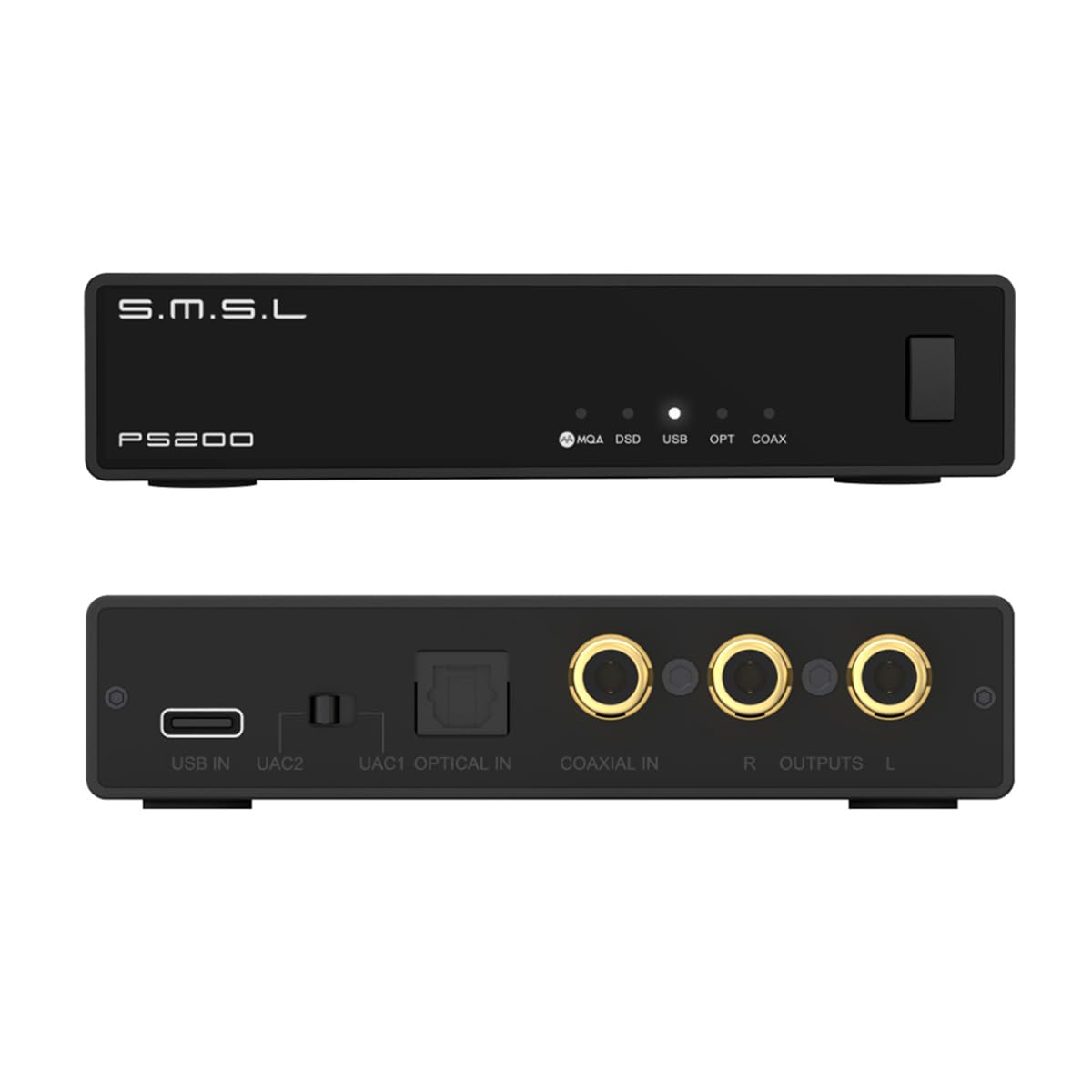
Pros
- Outstanding audio performance with industry-leading ES9039Q2M DAC chip and ultra-low distortion specifications
- Versatile connectivity with three input types and UAC mode switching eliminates need for multiple adapters
- Durable aluminum construction provides superior build quality and improved heat management over plastic alternatives
- MQA decoding support maximizes audio quality from compatible streaming platforms and high-resolution music files
- Compact, portable design makes it ideal for desktop setups, gaming consoles, and portable audio systems
Cons
- UAC mode switching requires device restart to take effect, adding minor inconvenience when switching between different source devices
- Limited to stereo RCA output, which may require additional equipment for surround sound or multi-channel audio setups
- Compact size means smaller heat dissipation surface compared to larger DAC units, though aluminum construction mitigates this concern
The SMSL PS200PRO is a high-performance digital-to-analog converter designed for audiophiles, gamers, and music enthusiasts who demand studio-quality sound from their digital devices. This compact DAC serves as an essential bridge between modern digital sources like PCs, gaming consoles, and streaming devices, converting digital audio into pristine analog signals that reveal the full detail and nuance of your favorite music.
The standout feature of the PS200PRO is its exceptional technical foundation, built around the ESS ES9039Q2M DAC chip paired with an XMOS XU-316 processor and quad dual op-amp configuration. This combination delivers extraordinary performance metrics: USB input handles PCM up to 32bit/768kHz and DSD512, while maintaining a remarkable 125dB signal-to-noise ratio and virtually imperceptible distortion at 0.00009% THD+N. Real-world performance reflects these specs, delivering audio that is noticeably clearer, more detailed, and more dynamic than typical onboard sound solutions.
The aluminum alloy chassis represents a significant upgrade from the original PS200, offering superior durability and improved thermal management for stable, consistent audio output. The device provides three input options (USB, optical, coaxial) with full MQA and MQA-CD support across all inputs, making it compatible with virtually any digital audio source. The UAC1/2 mode switch ensures optimal compatibility with PS5 and Switch consoles as well as PCs and tablets, though switching modes does require a device restart.
The main limitation is the stereo RCA output configuration, which restricts use in multi-channel or surround sound scenarios. Additionally, the compact form factor, while beneficial for portability, provides less surface area for passive cooling compared to larger desktop DACs, though the aluminum construction effectively mitigates heat concerns.
The SMSL PS200PRO delivers professional-grade audio performance at a compelling price point, making it an excellent choice for anyone serious about improving their digital audio quality without breaking the bank. Whether upgrading a gaming setup, enhancing a PC audio system, or building a portable audiophile rig, this DAC consistently punches above its weight in sound quality and versatility.
Audio Performance: ESS ES9039Q2M DAC chip, XMOS XU-316 processor, 4x dual op-amp configuration, 125dB SNR, 0.00009% THD+N at -120.5dB
Audio Format Support: PCM 32bit/768kHz, DSD512, MQA decoding, MQA-CD, DoP64
Connectivity: USB (UAC1/2 switchable), Optical, Coaxial inputs; Stereo RCA outputs
Physical Specs: 4.13 inches length x 4.13 inches width, aluminum alloy construction, 6-pin configuration
Compatibility: PC, PS5, Nintendo Switch, tablets, CD players, televisions
Who Should Buy This DAC? The PS200PRO is ideal for PC gamers seeking console-quality audio, music enthusiasts using high-resolution streaming services, console gamers upgrading from standard audio outputs, and anyone with a quality audio system looking to maximize digital source performance.
Setup Considerations: Ensure your audio source supports at least one of the three input types (USB, optical, or coaxial). For PS5 and Switch, use UAC1 mode. For PC and tablets, use UAC2 mode and remember to restart after switching. Connect the RCA outputs to your amplifier, active speakers, or audio interface.
Maximizing Performance: Use high-quality shielded RCA cables to minimize interference. Place the DAC away from heat sources and ensure adequate ventilation. For best results, use quality USB cables with PS5 and PC connections. Consider upgrading your cables and power supply for even greater sonic improvements.
Compatibility Check: Verify your devices support at least one input type before purchasing. The DAC works best with quality amplification or active speakers, as it outputs line-level analog signals rather than headphone-level output.

Pros
- Exceptional audio quality with Burr-Brown chipset and balanced output topology for pristine sound reproduction
- Comprehensive format support including DSD512 and full MQA decoding for future-proof high-resolution listening
- Intelligent optimization features like PowerMatch and TrueBass adapt performance to your specific headphones automatically
- Versatile dual headphone outputs accommodate both balanced and single-ended headphone standards
- Durable aluminum construction and minimalist design complement any desktop setup without visual clutter
Cons
- Requires USB connection to source device, limiting portability compared to dedicated portable DACs
- High-resolution format support benefits only music files and streaming services that provide such content
The iFi Zen DAC 3 is a desktop digital-to-analog converter designed for serious music listeners and audiophiles who demand transparent, high-fidelity audio reproduction. This premium DAC bridges your computer or USB device with your headphones or audio system, converting digital files into analog signals with exceptional clarity and minimal distortion.
The standout feature is the Burr-Brown True Native chipset combined with balanced audio output, which delivers studio-grade sound quality that reveals subtle details in your music. Support for PCM up to 32-bit/768kHz, DSD512, and full MQA decoding means you can experience music exactly as artists and producers intended, whether from high-resolution downloads or compatible streaming services. The dual headphone outputs accommodate both balanced 4.4mm and single-ended 6.3mm connectors, making it compatible with virtually any headphone on the market.
Build quality is excellent, with the exclusive matte black aluminum chassis providing a premium feel while maintaining a minimalist aesthetic that works on any desktop. The PowerMatch and TrueBass features intelligently adjust performance based on your specific headphones, ensuring optimal sound signature without manual tweaking. USB-C connectivity offers modern convenience and compatibility with computers, tablets, and portable devices.
The main consideration is that this DAC truly shines with high-resolution music sources and quality headphones. Standard MP3 files will sound better, but the benefits are most apparent with lossless or high-resolution formats. Additionally, at $209, this represents a significant investment compared to basic DACs, though the build quality and audio performance justify the cost for demanding listeners.
The iFi Zen DAC 3 earns strong user ratings for delivering on its promise of transparent, detailed audio reproduction. It's the ideal choice for desktop audio enthusiasts, professional monitoring applications, and anyone seeking to unlock the full potential of their music collection and headphone investment.
Audio Specifications: Burr-Brown True Native chipset, PCM support up to 32-bit/768kHz, DSD512 support, full MQA decoding capability, balanced and single-ended output modes.
Connectivity and Ports: USB-C input, dual headphone outputs (4.4mm balanced and 6.3mm single-ended), variable and fixed line-out options, 2-channel audio, 3-pin connector type.
Physical Design: Premium matte black aluminum construction, minimalist aesthetic, compact desktop form factor suitable for any workspace or listening room.
Features: PowerMatch technology for headphone-specific optimization, TrueBass enhancement, intelligent audio processing, 1-year manufacturer warranty, compatible with USB devices and headphones with 4.4mm or 6.3mm jacks.
Who Should Buy: The iFi Zen DAC 3 is perfect for audiophiles, music producers, audio engineers, and serious music enthusiasts who value transparent sound reproduction. It's ideal if you own quality headphones, have access to high-resolution music files or compatible streaming services, and want to maximize your audio investment.
Who May Want to Skip: Casual listeners with standard MP3 collections and budget headphones may not appreciate the performance gains. Those seeking portability should consider iFi's portable DAC options instead. If you have a limited budget under $150, entry-level DACs may suffice for basic needs.
Key Considerations: Verify your headphones have either 4.4mm balanced or 6.3mm single-ended connectors, or plan to purchase compatible headphones. Ensure your music source supports high-resolution formats to fully utilize this DAC's capabilities. Check that your computer has a USB-C port or plan to use an adapter.
Value Assessment: At $209, the iFi Zen DAC 3 offers exceptional value for a premium desktop DAC with high-resolution support and intelligent optimization features. The build quality and audio performance justify the investment for serious listeners.
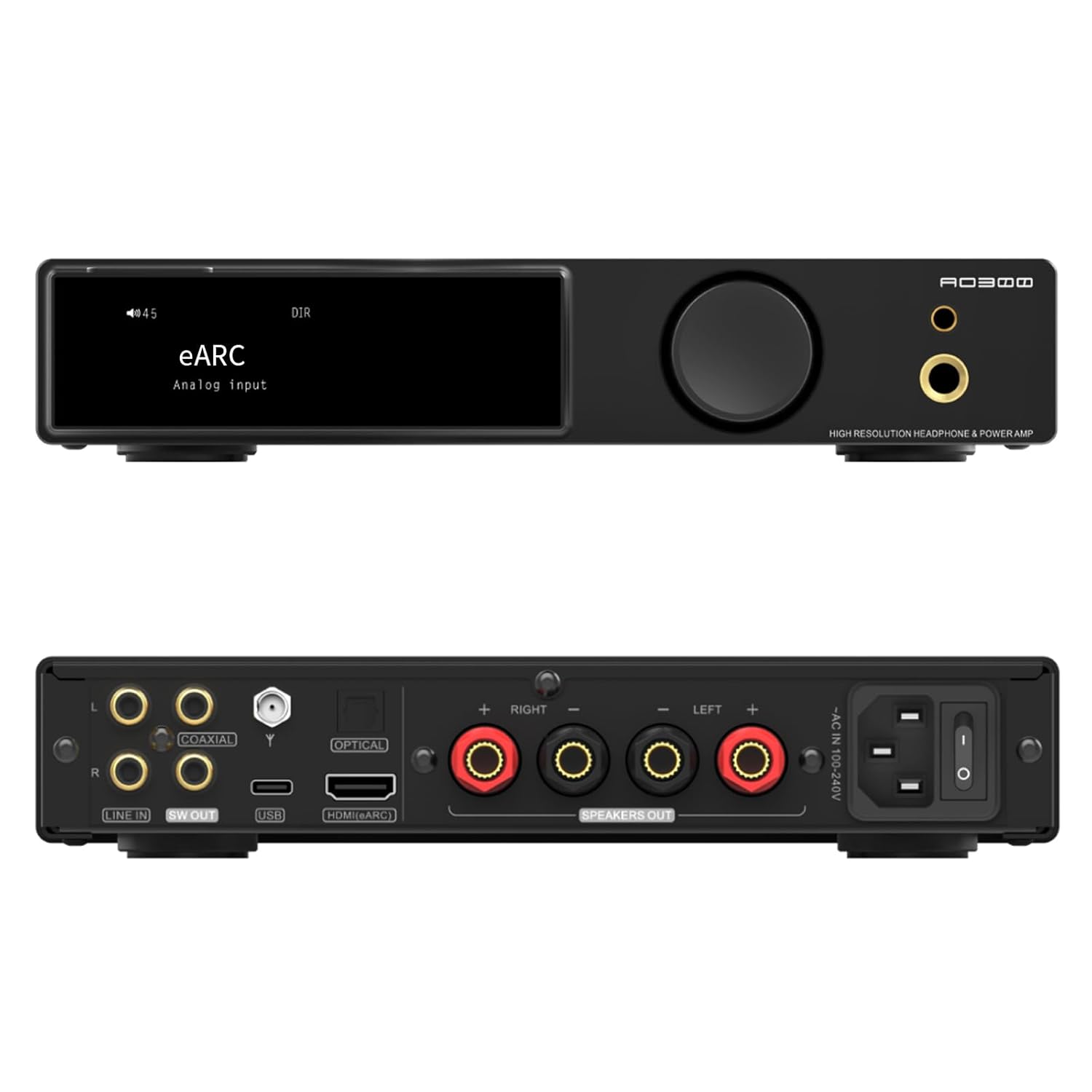
Pros
- Exceptional sound quality with crystal-clear audio output on both headphone and speaker channels
- Compact design packs 165W of power without distortion, easily driving bookshelf speakers and high-impedance systems
- Versatile connectivity and integrated DAC eliminate cable clutter and component switching hassles
- Comprehensive control options via physical knob and full-function remote for convenient operation
- Professional-grade audio components (CS43131 DAC, MA5332MS amplifier) at entry-level pricing
Cons
- Menu navigation requires multiple knob presses to switch between headphone and speaker outputs without remote
- Display design appears basic and outdated compared to modern audio equipment aesthetics
- User manual includes incomplete translations for some EQ settings and features
The SMSL AO300 PRO is a comprehensive all-in-one solution for audiophiles and music enthusiasts seeking professional-quality audio without the complexity of separate components. This integrated DAC amplifier combines premium decoding capabilities with powerful amplification, making it ideal for desktop setups, home theater systems, and anyone transitioning from basic PC audio to serious listening.
What sets this unit apart is its impressive technical foundation and real-world performance. The CS43131 DAC chip with XMOS XU-316 interface handles demanding hi-res formats including PCM 32bit/768kHz, DSD256, and full USB MQA decoding. The MA5332MS power amplifier delivers 165W at 4 ohms with an incredibly low 0.003% distortion rating, meaning you get both power and precision. Users consistently report crystal-clear headphone output and speakers that play loud without audible distortion, even with demanding music genres.
Build quality reflects its professional audio heritage. The compact chassis houses sophisticated audio components while remaining approachable for desktop environments. Connectivity is extensive with USB, optical, coaxial, and RCA inputs plus balanced 4.4mm and standard 6.35mm headphone outputs. The physical control knob combined with a full-function remote provides flexibility, though menu navigation requires multiple steps without the remote. Eight EQ modes and five filter options allow personalization for different listening preferences and music genres.
Minor considerations include a basic display design and incomplete user manual translations for some settings. The menu system, while functional, requires patience when switching outputs without the remote. These are minor trade-offs given the audio performance and feature set at this price point.
The SMSL AO300 PRO delivers exceptional value for anyone seeking integrated hi-fi audio with modern connectivity, hi-res support, and genuine amplification power. It successfully bridges entry-level and professional audio worlds, making it a recommended choice for upgrading from standard computer or TV audio.
Audio Decoding: CS43131 DAC chip, XMOS XU-316 interface, supports PCM 32bit/768kHz, DSD256, USB MQA
Amplification: MA5332MS Class D amplifier, 165W x2 at 4 ohms, 85W x2 at 8 ohms
Volume Control: NJW1194 electronic volume control, 0.003% THD+N
Headphone Outputs: 4.4mm balanced, 6.35mm standard jack
Audio Inputs: USB, optical, coaxial, RCA, HDMI eARC
EQ Modes: 8 modes, 5 filter options
Channels: 2.1 configuration with subwoofer expansion support
Accessories: Remote control, USB cable, power cable, HDMI cable, user manual
Warranty: 1 year
Who Should Buy This: The AO300 PRO is ideal for desktop audio enthusiasts, home theater upgraders, and music lovers seeking integrated solutions. It suits anyone currently using computer or TV speakers wanting significant audio improvement without component complexity.
Best Use Cases: Desktop music listening with headphones or bookshelf speakers, home theater audio enhancement via HDMI eARC, garage or office audio systems, and anyone needing both headphone and speaker amplification from one device.
Comparison Considerations: Unlike separate DAC and amplifier combinations, this unit eliminates cable management and component stacking. The 165W output easily handles most home speaker systems. Hi-res format support via USB and optical makes it future-proof for quality music sources.
Setup Tips: Use the included remote for convenient output switching. Explore the 8 EQ modes to optimize sound for your specific speakers or headphones. Connect via USB for best quality when using a computer as source. HDMI eARC connection works best with CEC-compatible TVs for synchronized control.

Pros
- Exceptional sound quality with dual ES9219C DAC chips and support for multiple hi-res formats
- Versatile dual output options (3.5mm and 4.4mm) accommodate virtually any headphone or IEM
- Built-in microphone enables hands-free calling without switching audio setups
- Premium titanium construction with excellent build quality and durability
- Compact portable form factor makes it ideal for mobile and desktop use
Cons
- Battery life limited to approximately 3 hours of continuous use, requiring frequent charging
- Mobile app interface lacks polish and could benefit from improved user experience design
- Customer support responsiveness appears limited based on user feedback
The FiiO BTR7 is a premium portable Bluetooth DAC amplifier designed for audiophiles and music enthusiasts who refuse to compromise on sound quality while on the go. This compact device bridges the gap between wireless convenience and high-fidelity audio, making it perfect for smartphone users, laptop workers, and car audio setups seeking lossless wireless connectivity.
The standout feature is undoubtedly the dual ES9219C DAC chips paired with support for virtually every major high-resolution Bluetooth codec including LDAC, aptX Adaptive, aptX HD, and native DSD256 playback. Users report exceptional clarity and dynamics, with the amplifier easily powering demanding headphones up to 45 ohms. The dual 3.5mm and 4.4mm balanced outputs provide flexibility that few competitors offer, allowing you to switch between single-ended and balanced configurations without additional adapters.
Build quality impresses with its premium titanium construction and compact form factor that fits easily in a pocket or bag. The inclusion of a built-in microphone with cVc 8.0 noise cancellation is a practical touch that eliminates the need to switch audio setups when taking calls. Bluetooth 5.1 connectivity ensures reliable, stable connections across devices.
The primary drawback is battery life, which maxes out around 3 hours of continuous playback. For stationary use via USB, this limitation disappears, but mobile users will need to plan accordingly. The mobile app also feels dated and lacks the polish expected at this price point, though the core audio functionality remains unaffected.
The FiiO BTR7 represents an excellent investment for discerning listeners who prioritize audio quality and codec support over all-day battery endurance. It delivers studio-quality sound in a portable package and earns strong recommendations from users who value lossless wireless audio.
Audio Processing: XMOS XUF208 chip, dual ES9219C DAC chips per channel, supports PCM up to 384kHz and native DSD256
Bluetooth Support: Bluetooth 5.1 with LDAC, aptX Adaptive, aptX LL, aptX HD, aptX, AAC, and SBC codec support. Includes cVc 8.0 noise cancellation and MQA 8x rendering in USB DAC mode
Outputs: 3.5mm single-ended headphone output and 4.4mm balanced headphone output
Additional Features: Built-in microphone with CTIA in-line control support, USB interface, 2-channel audio, portable form factor
Materials: Premium titanium construction, Upper temperature rating 50 degrees Celsius
Best For: Audiophiles and music enthusiasts with high-quality headphones or IEMs who want lossless wireless audio. Also ideal for office workers, travelers, and PC users seeking portable high-resolution audio amplification.
Consider This If: You own demanding headphones requiring dedicated amplification, use multiple audio sources (smartphone, laptop, car), or prioritize codec support like LDAC and MQA over all-day battery life.
Skip If: You need 8+ hours of battery life per charge, require extensive customer support, or use only basic Bluetooth codecs like SBC. The BTR5 may be a better choice if battery longevity is your primary concern.
Pro Tips: Use USB wired mode when stationary for unlimited playback without battery concerns. The dual outputs let you maintain both balanced and single-ended headphones without switching devices. Ensure your music player app supports LDAC or aptX HD for optimal wireless quality.

Pros
- Exceptional audio clarity with distortion levels below 0.00013% for pristine sound reproduction
- MQA technology authenticates and decodes high-resolution masters from streaming and physical media
- Versatile connectivity options including USB, coaxial, and optical inputs for multiple source devices
- Lightweight and compact form factor fits easily on any desktop or media setup
- Broad OS support eliminates compatibility concerns across Windows, Mac, and Linux systems
Cons
- Requires driver installation on Windows systems, which may cause initial setup friction
- Limited physical controls may require external remote or software control for some users
- MQA support depends on source material availability, limiting benefits for non-MQA content
The SMSL SU-1 is a desktop audio DAC engineered for audiophiles and casual listeners seeking superior sound quality without breaking the bank. This compact converter transforms digital audio files and CD playback into high-fidelity listening experiences. It targets music enthusiasts who own quality headphones or speakers and want to unlock the full potential of their audio libraries.
The standout feature is MQA decoding capability, which restores original studio recordings that have been compressed for distribution. Combined with the premium AK4493S DAC chip delivering distortion below 0.00013%, the SU-1 reproduces music with exceptional clarity and precision. It handles extreme hi-res formats including 768kHz PCM and DSD512, ensuring future compatibility with emerging audio formats and maximizing detail retrieval from mastered recordings.
Build quality reflects its professional heritage with a copper chassis and solid construction in a compact 3.78 by 3.07 inch footprint. The included USB Type-C cable and straightforward coaxial or optical connections make setup intuitive. Weight at 195 grams keeps it portable for those who want studio-quality audio in multiple listening environments.
The main drawback involves Windows driver requirements, which may intimidate less technical users during initial setup. Additionally, MQA benefits only apply to MQA-encoded content, so standard MP3s and unmastered files won't experience the same enhancement. Some users may find the lack of onboard controls limiting compared to larger DACs with physical buttons.
The SMSL SU-1 represents excellent value for serious listeners ready to upgrade their audio chain. Its combination of MQA support, extreme format compatibility, and vanishingly low distortion makes it a smart investment for anyone with quality playback equipment and the desire to hear their music as intended by the artists and engineers who created it.
Audio Specifications: DAC Chip: AK4493S, Maximum Resolution: 768kHz PCM / DSD512, Distortion: Lower than 0.00013%, Channels: 2 (Stereo)
Connectivity: Input Interfaces: USB Type-C, Coaxial, Optical. Output: 3.5mm headphone jack and RCA connectors. Compatible Devices: Headphones, Speakers, Audio Receivers
Compatibility: Windows 7/8/8.1/10/11 (driver required), macOS 10.6+, Linux (driverless), Android, iOS
Physical Specifications: Dimensions: 3.78 inches L x 3.07 inches W, Weight: 195 grams, Material: Copper chassis, Included: SU-1 unit and USB Type-C cable
Who Should Buy: This DAC is ideal for audiophiles with quality headphones or speakers seeking transparent sound reproduction. Music production professionals, audio engineers, and serious music listeners benefit from MQA decoding and extreme format support. Those upgrading from basic onboard audio will experience significant quality improvements.
When to Consider Alternatives: If you primarily listen to compressed formats like Spotify or YouTube without access to hi-res masters, a simpler DAC may suffice. Users uncomfortable with driver installation on Windows may prefer plug-and-play options. Those needing balanced XLR outputs or multiple simultaneous outputs should explore larger desktop DACs.
Setup Tips: Install Windows drivers before connecting the device for optimal performance. Ensure your music source supports MQA or high-resolution formats to fully utilize the SU-1's capabilities. Use quality USB cables and optical/coaxial connections to minimize noise interference.
Value Assessment: At this price point, the SU-1 offers exceptional performance for the investment. The combination of MQA support, ultra-low distortion, and extreme format compatibility justifies the cost for serious listeners. Budget-conscious audiophiles will find this a gateway into high-resolution audio without excessive expense.
How to Choose Your MQA DAC
Decoding Type and Audio Formats
Not all MQA support is created equal. Look for a DAC that offers “full MQA decoding” or “MQA rendering.” This means the device handles the entire unfolding process internally for the most accurate sound. Also, confirm the DAC supports other high-resolution formats you use, like PCM up to 768kHz and DSD512. This ensures future compatibility beyond MQA sources.
Some models, like the SMSL SU-1, also support MQA-CD, allowing you to authenticate and decode high-resolution signals from compatible CD players. A versatile DAC should be a gateway to all your high-quality audio, not just one format.
Connectivity and System Integration
Consider where and how you’ll use the DAC. For a desktop setup, a unit with multiple inputs like USB, optical, and coaxial offers maximum flexibility to connect a computer, TV, or game console. If you plan to drive demanding headphones, a built-in amplifier with sufficient power is crucial. For speaker systems, look for dedicated line-level outputs or a model like the SMSL AO300 PRO DAC Amplifier that integrates a power amp.
Portability changes the requirements. A device like the FiiO BTR7 Headphone Amp Bluetooth Receiver prioritizes wireless connectivity via LDAC and a compact form factor. For the best signal integrity in a fixed system, a DAC with balanced outputs can provide superior noise rejection, especially over longer cable runs.
Key Performance Features
<!–Beyond the core decoding chip, several features enhance usability and sound. A high-quality digital interface chip, such as the XMOS XU-316 found in several models here, ensures stable data handling. Look for a high signal-to-noise ratio (SNR) and low total harmonic distortion (THD) numbers for a clean, detailed sound.
User-friendly extras include physical input switches, remote controls, and EQ customization. The FiiO K13 R2R’s 10-band parametric EQ, for example, lets you tailor the sound precisely to your headphones or preferences. If you value wireless freedom, ensure the DAC supports high-quality codecs like LDAC or aptX HD, as seen in our picks for the best DACs with bluetooth.
Matching to Your Budget and Use Case
<!–The ideal DAC strikes a balance between performance and your specific needs. A pure decoder like the SMSL SU-1 is a fantastic, cost-effective entry point into MQA if you already have a separate headphone or speaker amplifier. For an all-in-one desktop solution, the iFi Zen DAC 3 provides exceptional sound and a capable amp in a sleek package.
If your budget allows, investing in a feature-rich centerpiece like the FiiO K13 R2R Desktop DAC & Headphone Amp offers unique R2R sound technology, massive power, and extensive connectivity for a future-proof system. You can explore more options in our guides for the best DAC-AMPs under $500 or the best under $300. For those starting with a tighter budget, our roundup of the best DAC-AMPs under $200 is a great resource.
Final Thoughts
Upgrading to a dedicated DAC with MQA support is one of the most impactful steps you can take for your digital audio. Whether you seek the pristine detail of a studio master or the engaging musicality of a high-end decoder, there is a model here to transform your listening. For audiophiles building a versatile desktop system, the feature-packed FiiO K13 R2R Desktop DAC & Headphone Amp stands out with its unique R2R architecture and powerful output. Meanwhile, listeners who prioritize pristine decoding on a budget will find exceptional value in the capable and compact SMSL SU-1 MQA MQA-CD Audio Decoder AK4493S XU316. Explore our full comparison to find the perfect key to unlock your music’s highest potential.
Frequently Asked Questions
Do I need a special subscription to use an MQA DAC?
You need access to music that is encoded in the MQA format. Several major streaming services, such as Tidal, offer tiers that include MQA tracks. The DAC itself does not require a subscription; it decodes the files provided by your service or local music player. Your existing high-resolution FLAC or DSD files will also play through the DAC, utilizing its other supported formats.
What’s the difference between an MQA DAC and a regular Hi-Res DAC?
An MQA DAC is a specialized type of Hi-Res DAC. All MQA DACs support standard high-resolution PCM and DSD formats. The key addition is the integrated hardware and software required to fully decode and authenticate the MQA format. A regular Hi-Res DAC cannot unfold MQA files, so you would only hear the base layer of the audio, missing the fully expanded high-resolution information.
Can I use an MQA DAC with my gaming console or TV?
Yes, many MQA DACs are highly versatile. Look for models with optical or coaxial inputs, as these are common audio outputs on TVs, game consoles, and Blu-ray players. Some DACs, like the SMSL PS200PRO, even include a specific UAC1 mode for seamless compatibility with PlayStation 5 and Nintendo Switch, ensuring you get high-quality audio from all your entertainment sources. For more dedicated home theater integration, check our guide on the best desktop DACs under $500 for models with advanced connectivity.
Is an MQA DAC worth it if I don’t use Tidal?
Absolutely. While MQA is a significant feature, these devices are first and foremost excellent high-resolution DACs. They will improve the sound quality from any digital source by using superior internal components compared to standard computer or phone audio chips. You benefit from support for local hi-res files, other streaming services’ high-quality tiers, and better overall audio performance, making them a valuable upgrade regardless of your primary music source.


Write Your Review
No reviews yet. Be the first to share your experience!