

You want immersive, room-filling sound without the clutter of a separate amplifier and a tangle of wires. Traditional floorstanding speakers require an external receiver, adding complexity and cost to your home theater or music system. The solution is a streamlined setup with active, or powered, floorstanding speakers that have the amplification built right in.
This guide is for anyone seeking high-fidelity audio with minimal components. We have evaluated several leading models to help you find the perfect match for your space and listening preferences. For more options with specific connectivity, you can explore our guide on the best floorstanding speakers with HDMI ARC.
Buying Guide for Powered Floorstanding Speakers
Amplifier Power and Configuration
The integrated amplifier’s power rating, measured in watts, directly impacts volume and dynamic range. Look for models with sufficient power for your room size. Some speakers use a single amp, while others feature bi-amplification with separate amps for tweeters and woofers, which can offer greater control and clarity.
Pay attention to the speaker’s sensitivity rating as well. A higher sensitivity means the speaker produces more volume with less power, making it easier for the built-in amp to drive. This is a key factor in achieving clean, undistorted sound at higher listening levels.
Connectivity and Input Options
Modern active speakers offer a variety of inputs for versatility. Essential connections often include RCA analog inputs and optical digital inputs. For the ultimate in convenience, look for models with built-in Bluetooth for wireless streaming. Some advanced options even feature HDMI ARC, which allows a single-cable connection to your TV for both audio and control.
A dedicated subwoofer output is another valuable feature. It lets you add a powered sub later to extend the bass response for a full home theater experience. If you’re building a surround system, check out our broader selection in the main floorstanding speakers category.
Driver Technology and Sound Signature
The drivers are the heart of any speaker. For powered towers, examine the woofer size and material, which influences bass depth and midrange accuracy. Tweeter design is equally critical. Options range from soft dome and aluminum tweeters to advanced designs like AMT (Air Motion Transformer) or horn-loaded tweeters, each imparting a distinct character to the high frequencies.
Consider the overall sound signature you prefer. Some brands are known for a bright, detailed sound ideal for home theater, while others offer a warmer, more laid-back tone perfect for music listening. If immersive movie sound is your goal, models with integrated up-firing drivers for Dolby Atmos effects are worth serious consideration.
Design and Room Integration
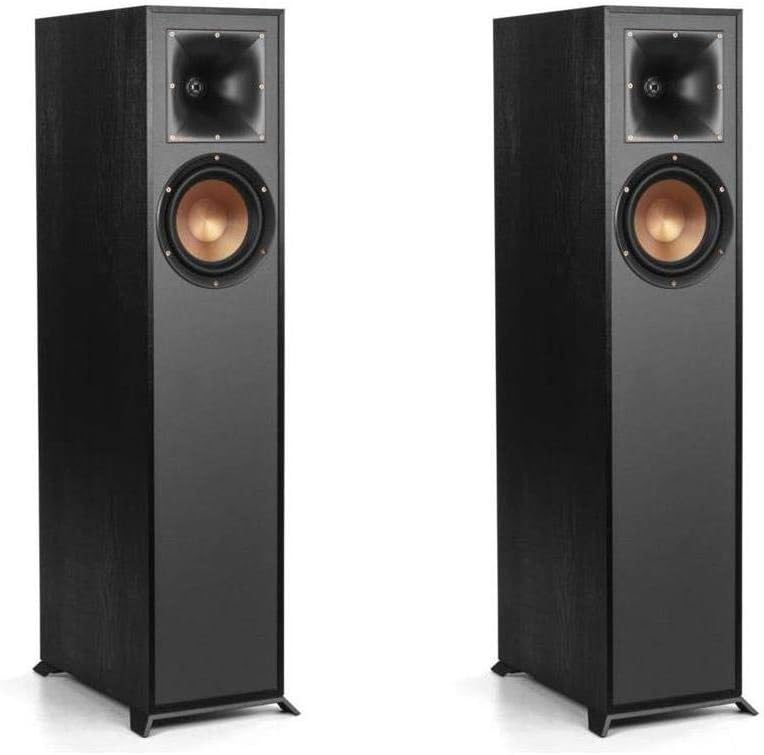
Since these are large speakers, their aesthetic should complement your room. Available finishes like walnut, black ash, or white allow you to match your decor. The cabinet construction also affects sound quality. Look for features like internally braced MDF enclosures and strategically placed ports, which help reduce unwanted resonance for cleaner bass.
Think about placement. Some speakers have front-firing ports, which offer more flexibility for positioning near walls, while rear-ported designs often need more space to breathe. Your room’s acoustics and layout will ultimately guide your final choice between different speaker designs, just as they would for bookshelf speakers or a dedicated subwoofer.
Final Thoughts
Choosing a powered floorstanding speaker is about finding the perfect balance of convenience and performance. For those seeking a superb all-in-one stereo solution with modern connectivity, the Fluance Ri91 Reference Stereo Powered is an excellent choice. If your primary goal is building an immersive, cinematic home theater with minimal separate components, the comprehensive Klipsch Reference 5.2 Dolby Atmos Home Theater system delivers breathtaking surround sound right out of the box. Whichever model you select, you’re investing in a simplified path to exceptional audio.
Frequently Asked Questions
What is the main advantage of floorstanding speakers with a built-in amplifier?
The primary advantage is a simplified setup. You eliminate the need for a separate stereo receiver or AV receiver, reducing cable clutter and component count. This often makes them more user-friendly and can be a cost-effective way to achieve high-quality sound without purchasing multiple pieces of equipment.
Can I use powered floorstanding speakers for a home theater system?
Absolutely. Many powered floorstanding speakers function perfectly as the front left and right channels in a surround sound system. You would typically connect them to a home theater processor or an AV receiver’s pre-amplifier outputs. Some models, like those with Dolby Atmos, are specifically designed as core components for immersive home theater setups.
Do active speakers sound better than passive ones with a separate amp?
Not necessarily better, but often more optimized. With active speakers, the amplifier is specifically matched and tuned to the drivers and cabinet by the manufacturer. This integration can reduce distortion and improve efficiency. The sound quality ultimately depends on the design and components of the specific speaker, whether active or passive.
How do I connect my TV to a pair of powered floorstanding speakers?
The connection method depends on your TV’s outputs and the speaker’s inputs. The most common and high-quality method is using a digital optical cable from your TV’s optical audio out to the speaker’s optical input. If your speakers and TV support it, an HDMI ARC connection is even more convenient, as it can carry high-quality audio and allow you to control volume with your TV remote.


Write Your Review
No reviews yet. Be the first to share your experience!