

You are ready to capture your music, start a podcast, or improve your live stream’s audio. The foundation of that professional sound lies in your audio interface. A sleek silver interface not only looks great on your desk but also serves as the critical bridge between your microphones, instruments, and your computer.
This guide is crafted for musicians, content creators, and home studio enthusiasts seeking clarity and reliability. We have evaluated six leading silver audio interfaces, comparing their specs, features, and real-world performance to help you make an informed choice. For a look at other popular color options, check out our guide on the best black audio interfaces.
Pros
- Exceptional portability with bus-powered USB-C connectivity allows recording anywhere without external adapters
- Professional-grade phantom power support makes it easy to use quality condenser microphones
- Low-latency direct monitoring and loopback functionality provide real-time audio control for streaming and content creation
- Multi-platform compatibility across Windows, macOS, iOS, and Android expands creative possibilities
- Compact design with sleek aesthetics fits perfectly in cramped spaces or mobile setups
Cons
- Limited to 2 input channels, which may constrain users needing to record multiple instruments or microphones simultaneously
- Single 5-star review provides minimal user feedback on long-term reliability or real-world performance in various scenarios
- Relatively heavy at 9.9 pounds for a portable interface, which may impact true on-the-go mobility
The Zoom AMS-24 is a compact USB audio interface designed for musicians, podcasters, streamers, and content creators who demand professional audio quality without sacrificing portability. This 2-in/4-out interface delivers 24-bit/96kHz resolution, making it suitable for everything from music production and voiceover work to live streaming and field recording.
What sets the AMS-24 apart is its thoughtful feature set packed into a small footprint. The built-in phantom power support means you can connect professional condenser microphones directly, eliminating the need for separate preamps or power supplies. Loopback functionality and direct monitoring capabilities give you precise control over your audio signal, ensuring low-latency performance whether you're streaming, recording overdubs, or monitoring live input. The single USB-C connection provides both bus power and audio I/O, dramatically simplifying your setup.
The device's compact, sleek design makes it an attractive addition to any workspace. At 9.9 pounds, it's reasonably portable, though not featherweight. Its versatility across Windows, macOS, iOS, and Android platforms means it integrates smoothly into virtually any production workflow, whether you're working on a desktop, laptop, or mobile device.
The main limitation is the 2-input channel configuration, which works well for solo recording or stereo pairs but may feel restrictive if you frequently need to record multiple sources simultaneously. Additionally, with only one verified customer review available, real-world long-term reliability data remains limited.
Overall, the Zoom AMS-24 represents an excellent balance of features, portability, and professional capability for its price point. It's an ideal choice for anyone seeking a dependable, feature-rich interface that doesn't require a dedicated power supply or complex setup. The 2-year warranty adds valuable peace of mind for your investment.
Audio Specifications: 2-in/4-out USB audio interface, 24-bit/96kHz maximum resolution, 96,000 Hz frequency response, 6 total channels.
Connectivity: USB-C connection for bus power and audio I/O, compatible with Windows, macOS, iOS, and Android operating systems.
Physical: Item weight 9.9 pounds, compact design suitable for studio and portable use.
Warranty: 2-year manufacturer warranty covering defects and hardware issues.
Model Information: Manufacturer part number ZAMS24, UPC 884354029593, 1 unit per package.
Who Should Buy This: Musicians recording at home or in the studio, podcasters and voiceover artists, live streamers on Twitch or YouTube, content creators needing portable audio capture, and field recordists working on location.
Key Considerations: The AMS-24 works best for single-source or stereo recording scenarios. If you need to record multiple instruments or microphones simultaneously, consider interfaces with more input channels. The bus-powered design means you won't need external power adapters, making it ideal for mobile setups.
Platform Compatibility: Full support for Windows and macOS desktop workflows, plus iOS and Android mobile recording opens creative possibilities for on-the-go production. Verify compatibility with your specific DAW or recording software before purchasing.
Phantom Power Advantage: If you own or plan to use condenser microphones, the built-in phantom power is a major advantage, eliminating the need for additional equipment and reducing cable count.

Pros
- Excellent audio quality with virtually undetectable noise floor and best-in-class specs
- Robust build quality with premium materials and over 200 reliability tests per unit
- Generous software bundle saves hundreds of dollars compared to purchasing separately
- True portability with USB-powered operation and compact design for on-the-go recording
- Solves latency issues common with built-in laptop soundcards for seamless DAW performance
Cons
- Device registration required before accessing driver updates, adding an extra setup step
- Limited to 1 primary input channel, may not suit complex multi-track simultaneous recording setups
- USB hub output limited to 250mA, restricting compatibility with power-hungry MIDI controllers
The Arturia MiniFuse 1 is a compact USB audio interface engineered for musicians, vocalists, podcasters, and content creators who need professional recording capabilities without overwhelming complexity. Whether you're setting up a home studio, recording on the go, or streaming from multiple workspaces, this interface delivers studio-grade sound in a portable package that fits in any setup.
The standout feature is the combination of professional audio specs and included software. With 192kHz sample rate, low-latency performance, and phantom power for condenser microphones, the MiniFuse 1 eliminates the latency problems that plague built-in laptop soundcards. Real users report crisp, clean audio with virtually undetectable noise, making it ideal for vocals, guitars, and synths. The included software bundle is exceptional: Ableton Live Lite for full music production, Analog Lab Intro for vintage synth sounds, Auto-Tune Unlimited for vocal perfection, and NI Guitar Rig 6 LE for professional guitar tones.
Build quality is genuinely impressive. The metal chassis feels solid, knobs have a premium tactile feel, and the interface goes through over 200 reliability tests before leaving the factory. The 5-year warranty is among the most comprehensive in the industry, reflecting Arturia's confidence in durability. Connectivity includes XLR mic input with 48V phantom power, TRS instrument inputs, MIDI I/O for synths and controllers, and a USB hub for connecting additional gear. The entire interface is powered by USB, eliminating the need for a power adapter and making it genuinely portable.
The main limitation is the single primary input channel, which works fine for most home recording scenarios but may feel restrictive for complex multi-track simultaneous recording. Device registration is required before accessing driver updates, adding a minor inconvenience to initial setup. The USB hub output is limited to 250mA, which may not power larger MIDI controllers.
For the price, the MiniFuse 1 represents exceptional value. It solves real problems like DAW latency, includes software worth hundreds of dollars separately, and comes with professional build quality and warranty support. Highly recommended for anyone serious about recording but unwilling to compromise on portability or budget.
Audio Specifications: Maximum sample rate 192kHz, 1 combo XLR mic/instrument input with 48V phantom power, 2 TRS instrument/line inputs, 2 balanced 1/4" TRS line outputs, 1 headphone output with volume control.
Connectivity: USB 2.0 connection, 5-pin MIDI input and output, built-in USB hub (250mA), compatible with Windows and macOS.
Physical Specifications: Dimensions 5.9"W x 3.9"D x 1.65"H, weight 14.4 ounces, compact portable design.
Software Included: Ableton Live Lite, Analog Lab Intro, Arturia FX, NI Guitar Rig 6 LE, Auto-Tune Unlimited, Splice Creator Plan.
Warranty: 5-year comprehensive warranty with 5-year EU spare parts availability.
Perfect For: Home studio musicians, guitarists and vocalists recording demos, podcasters and content creators, music educators and students, anyone upgrading from built-in laptop audio, producers who need portability across multiple workspaces.
May Not Be Ideal For: Professional studios requiring multiple simultaneous inputs, users needing extensive MIDI controller connectivity without power limitations, anyone unwilling to complete device registration for driver updates.
Best Use Cases: Solo acoustic recording, podcast and voiceover production, guitar and vocal demos, electronic music production with synths, streaming and content creation with game audio, travel and remote recording sessions.
Pros
- Excellent preamp quality produces bright, clear recordings with minimal noise floor
- Air mode adds professional polish to vocal and acoustic recordings without additional equipment
- Compact design perfect for home studios, bedroom producers, and mobile recording setups
- Included software suite eliminates need for expensive DAW purchases
- Highly reliable brand with strong reputation in professional audio industry
Cons
- Single microphone input limits simultaneous multi-instrument recording capabilities
- May require audio driver updates for optimal performance on some Windows systems
- Learning curve for beginners unfamiliar with audio interface operation and gain staging
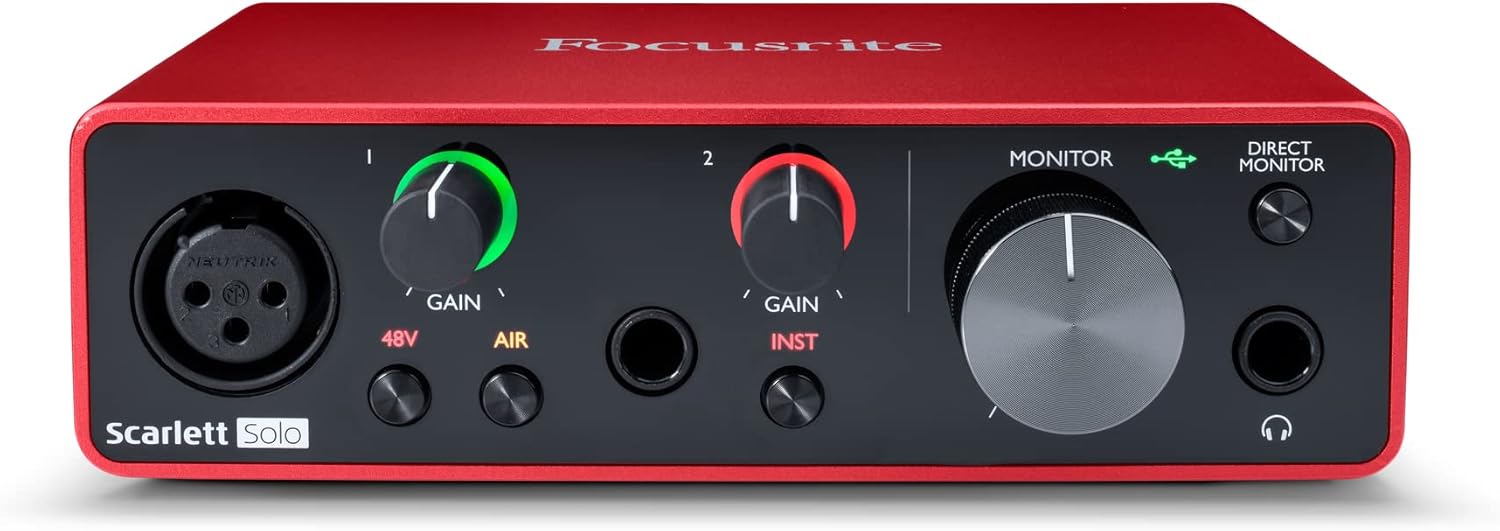
The Focusrite Scarlett Solo 3rd Gen is a professional USB audio interface designed for musicians, podcasters, and content creators who demand studio-quality recordings without the complexity of larger mixing consoles. This compact device bridges the gap between budget-friendly entry-level gear and expensive professional equipment, making it ideal for home studios, bedroom producers, and anyone serious about capturing professional-grade audio.
The standout feature is undoubtedly the high-performance microphone preamp paired with the innovative Air mode, which adds extra clarity and presence to vocals and acoustic instruments. The two high-headroom instrument inputs eliminate clipping and distortion, ensuring your guitar, bass, and other instruments shine through with clarity. Recording at up to 24-bit/192kHz resolution means your productions retain all sonic nuances, while the Gain Halo visual feedback system helps you nail perfect levels every time.
Build quality reflects Focusrite's professional heritage, with a solid metal chassis and intuitive front-panel controls that feel responsive and durable. The USB-C connectivity provides fast, reliable data transfer and modern compatibility with both Mac and Windows systems. The included software bundle (Pro Tools Intro+, Ableton Live Lite, Cubase LE) gives you everything needed to start producing immediately without additional software purchases.
The primary limitation is the single microphone input, which restricts simultaneous multi-track vocal or acoustic recording. Additionally, some Windows users report requiring driver updates for optimal performance. The learning curve for gain staging and audio interface operation may challenge complete beginners, though the included documentation is comprehensive.
The Focusrite Scarlett Solo 3rd Gen represents exceptional value for serious hobbyists and semi-professional creators. Its combination of pristine preamp quality, professional converters, intuitive design, and included software makes it the go-to choice for anyone upgrading from computer microphones or entry-level interfaces. The three-year warranty provides confidence in your investment.
Audio I/O: 1 XLR microphone input, 2 high-impedance instrument inputs, 2 balanced line outputs, headphone output
Audio Quality: 24-bit/192kHz recording and playback resolution with high-performance converters
Connectivity: USB-C to computer, compatible with all major audio recording software
Channels: 2 channels (stereo)
Features: Switchable Air mode, Gain Halo visual feedback, low-noise outputs, headphone monitoring
Software Included: Pro Tools Intro+, Ableton Live Lite, Cubase LE, Hitmaker Expansion
Warranty: 3-year manufacturer warranty worldwide
Compatible Devices: Microphones, instruments, personal computers, headphones, studio monitors
Who Should Buy: Musicians recording at home, podcasters seeking professional audio quality, guitarists and bassists needing quality instrument preamps, content creators upgrading from built-in computer audio, and producers working with limited space.
Who Should Look Elsewhere: Users needing simultaneous multi-microphone recording, those requiring extensive analog mixing features, or professionals running high-channel-count studios requiring more I/O options.
Setup Tips: Ensure your computer meets USB-C requirements and install drivers before first use. Spend time learning gain staging with the Gain Halo visual indicator to avoid clipping. Experiment with Air mode on different sources to understand its impact on your recordings.
Value Comparison: At this price point, the Scarlett Solo 3rd Gen outperforms competitors by offering superior preamp quality, professional software bundle, and proven brand reliability. The included software alone typically costs $200+ if purchased separately.
Pros
- Exceptional value at this price point with dual XLR inputs that competitors charge significantly more for
- Compact 7.5-inch width and lightweight design make it genuinely portable for on-the-go recording
- Zero-latency monitoring via USB/Direct switch eliminates the frustration of hearing delayed playback while recording new parts
- Included software suite jumpstarts your production immediately without additional purchases
- Transparent preamps deliver clean, professional-grade audio from entry-level to mid-range microphones
Cons
- Plastic construction feels lightweight, which some users perceive as lower build quality despite reliable performance
- 48kHz maximum sample rate is lower than some competing interfaces, limiting high-resolution audio work
- Gain staging may require careful management with certain microphones, as some users report insufficient gain at maximum levels
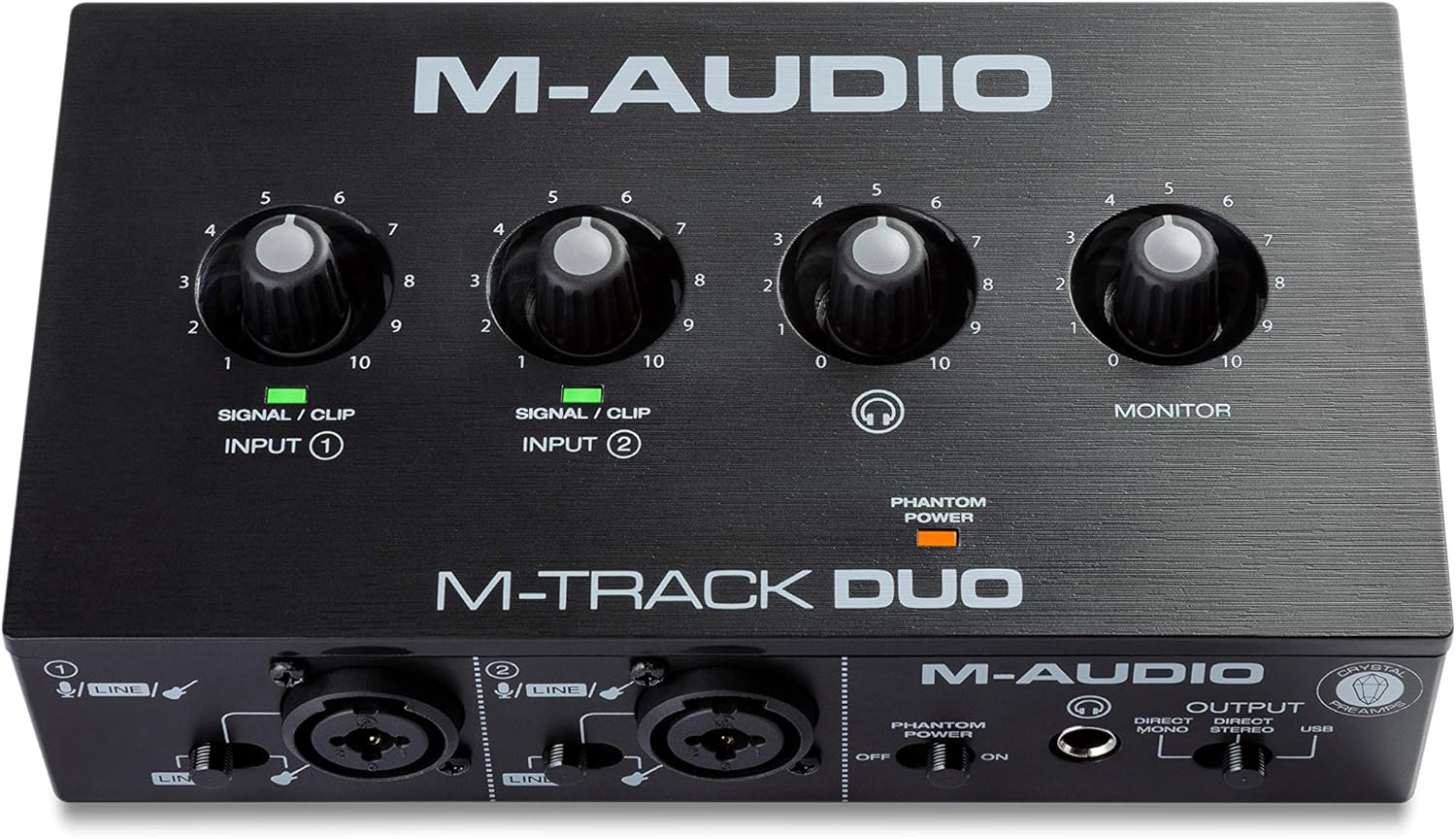
The M-Track Duo is a compact USB audio interface designed for podcasters, musicians, and content creators who need professional recording capabilities without the complexity or cost of larger studio setups. With dual XLR combo inputs, phantom power, and integrated instrument switching, this interface handles vocals, acoustic instruments, guitars, keyboards, and line-level devices with equal competence. It's the kind of gear that lets you go from idea to finished recording in minutes rather than hours.
What sets the M-Track Duo apart is its zero-latency direct monitoring feature, which eliminates the maddening delay that plagues cheaper interfaces. The USB/Direct switch lets you blend your live input signal with playback from your DAW, making it easy to record layered parts or add instruments to existing compositions. The transparent Crystal Preamps deliver clean, detailed audio that punches above its weight class, and phantom power support means you can work with professional condenser microphones without compromise.
Build quality is straightforward plastic construction that feels lightweight but proves durable in real-world use. The compact 7.5-inch width and 0.3kg weight make it genuinely portable, fitting easily into a laptop bag. All connections are professional-grade balanced XLR and quarter-inch TRS connectors, with a headphone output that supports standard stereo headphones via a quarter-inch adapter.
The main limitation is the 48kHz maximum sample rate, which is lower than some competing interfaces in higher price brackets. Additionally, some users report that gain staging requires careful management depending on your microphone, though this is rarely a dealbreaker for entry-level recording. The included MPC Beats software and ProTools First bundle provide legitimate production tools, though you'll likely graduate to more advanced DAWs as your skills develop.
The M-Track Duo delivers genuine value and reliability for anyone starting their recording journey or needing a portable backup interface. It handles its core mission of capturing clean, professional audio without fuss, making it an excellent choice for podcasters, singer-songwriters, and bedroom producers with realistic budgets.
Audio Specifications: Maximum sample rate of 48kHz with 16-bit resolution, 20kHz frequency response, and 1 megaohm impedance. Two channels of audio input and output.
Connectivity: Dual balanced XLR microphone inputs with phantom power, balanced quarter-inch line inputs, unbalanced quarter-inch instrument inputs, stereo quarter-inch main outputs, quarter-inch TRS headphone output, and USB Type B connection for computer and compatible iOS devices.
Dimensions and Weight: 7.5 inches wide by 4.34 inches deep by 2.13 inches tall, weighing just 0.3kg for maximum portability. Completely USB-powered with no external power supply required.
Compatibility: Works with Windows 7 and later via ASIO drivers, Mac OS High Sierra through Big Sur with class-compliant support, iOS with Apple Lightning to USB3 adapter, and Android devices. Compatible with all major DAWs including Logic Pro, ProTools, GarageBand, Studio One, Cubase, and Ableton Live.
Included Accessories: USB Type B to Type A cable, software download cards for MPC Beats and ProTools First, user guide, and safety documentation. Backed by a one-year manufacturer warranty.
Ideal For: This interface is perfect for podcasters launching their first show, musicians recording demos at home, content creators adding professional audio to videos, and anyone needing portable recording capability. It's also excellent for experienced engineers who need a reliable backup interface or travel-friendly setup.
Consider Alternatives If: You require sample rates above 48kHz for professional mastering work, need more than two simultaneous inputs, or demand premium metal construction and extensive onboard controls. However, for the vast majority of recording scenarios, the M-Track Duo delivers everything you need.
Budget Consideration: At this price point, the M-Track Duo offers exceptional value compared to single-channel competitors and provides genuine professional features like phantom power and zero-latency monitoring that many similarly-priced interfaces omit entirely.

Pros
- Exceptional I/O flexibility with ADAT, S/PDIF, and MIDI support for integrating external gear
- Intelligent gain management tools eliminate guesswork and reduce recording errors
- Professional converter quality rivals interfaces costing significantly more
- Includes substantial software bundle that adds real production value
- Reliable Focusrite build quality with 3-year manufacturer warranty
Cons
- Some users report a learning curve with continuous-turn knobs requiring visual confirmation of settings
- Rare power delivery issues reported by isolated users, though Amazon return policy provides protection
- Premium price point may be steep for hobbyists just starting out
The Focusrite Scarlett 18i16 4th Gen is a professional audio interface designed for serious home studio producers, recording engineers, and musicians who need extensive I/O connectivity and studio-grade sound quality. With 18 inputs and 16 outputs, this interface serves as the central hub for complex recording setups, hardware integration, and multitrack production workflows.
What sets this interface apart is its combination of professional-grade components and intelligent workflow tools. The four 4th generation microphone preamps deliver an impressive 69dB of gain, capable of capturing everything from whisper-quiet vocals to hard-hitting drums without compromise. The 24-bit/192kHz converters sourced from Focusrite's flagship RedNet range provide a 122dB dynamic range that rivals much more expensive interfaces. The Air modes add harmonic character and presence that gives recordings the polish of classic studio consoles, while Auto Gain and Clip Safe modes handle real-time level optimization so you can concentrate on the performance rather than technical adjustments.
Build quality is solid throughout, with a compact footprint that doesn't consume excessive desk real estate despite its impressive feature set. The interface connects via USB-C and works seamlessly across Mac, Windows, and iOS platforms. The included software bundle, featuring Pro Tools Intro+, Ableton Live Lite, Cubase LE, and professional effects, provides immediate production capability without additional software purchases.
The primary drawback involves the continuous-turn knobs on the interface, which require you to reference the display indicators for level confirmation rather than relying on tactile stops. This takes minor adjustment time for users transitioning from older Scarlett models. Additionally, while extremely rare, a small number of users have reported power delivery issues, though Amazon's return policy ensures protection against defective units.
The Focusrite Scarlett 18i16 4th Gen delivers exceptional value for professional and semi-professional studios. Its extensive connectivity, superior audio quality, and intelligent gain management make it an excellent choice for recording, mixing, and complex hardware integration. This interface rewards serious producers with the tools and sound quality needed to create professional recordings at home.
Connectivity and I/O: 18 inputs and 16 outputs including four XLR microphone inputs, two Hi-Z instrument inputs, eight line inputs, ADAT, S/PDIF, and MIDI I/O. USB-C connection supports Mac OS, Windows OS, and iOS.
Audio Quality: 24-bit resolution at up to 192kHz sample rate. 122dB dynamic range. Four 4th generation mic preamps with 69dB gain. Hi-Z inputs for direct instrument connection.
Physical Specifications: Dimensions 9.43 inches wide by 6.66 inches deep by 2.38 inches tall. Weight 3.8 pounds. Includes external power supply and USB cable.
Software and Support: Compatible with all audio recording software. Includes Pro Tools Intro+, Ableton Live Lite, Cubase LE, and Hitmaker Expansion. Three-year manufacturer warranty included.
Ideal For: Recording engineers and producers who need extensive I/O for multitrack recording, hardware integration, and complex routing. Musicians and producers working with multiple external instruments, processors, and effects. Anyone seeking professional-grade audio quality without the expense of traditional studio consoles.
Consider Alternatives If: You're a beginner looking for a simple 2-in/2-out interface for basic recording. You need Thunderbolt connectivity instead of USB-C. You require more than four microphone preamps on a single interface.

Pros
- Exceptional value for the price with professional-grade features like 48V phantom power and three monitoring modes
- Works seamlessly with Android devices, a rare feature in budget audio interfaces
- Plug-and-play setup with included adapters means no additional purchases needed to get started
- Lightweight and portable design fits easily in a backpack for mobile recording sessions
- Dual XLR/6.35mm input switching reduces gain adjustment needs and minimizes interference
Cons
- Build quality feels plastic and budget-oriented, with knobs and sliders that lack premium feel despite durability
- Windows plug-and-play mode introduces noticeable latency without third-party ASIO drivers
- Some users report occasional clicks, pops, and output level fluctuations during extended use
The Synido 2x2 is a compact, entry-level USB-C audio interface designed for home recording, podcasting, live streaming, and mobile music production. It targets budget-conscious creators who need professional features without premium pricing, making it ideal for beginners, bedroom producers, and content creators working across Windows, Mac, iOS, and Android platforms.
The standout feature is its three flexible monitoring modes that adapt to different workflows. Stereo mode isolates left and right channels for precise recording, Mix mode blends input and computer audio in real-time for live broadcasts, and USB mode handles post-production editing. Combined with 24-bit/48kHz audio depth, 48V phantom power, and a low-latency audio chip, the interface delivers clear, detailed recordings suitable for professional-quality content.
Design-wise, the Synido prioritizes portability and usability over premium materials. At just 300g and measuring 14 x 11.5 x 4.5 cm, it fits easily into bags and travel setups. The color-coded LED gain indicators (green, orange, red) provide intuitive visual feedback to prevent clipping and distortion. However, the plastic construction and budget-feeling controls reflect its price point, though users report they feel durable enough for regular use.
Notable drawbacks include Windows latency without third-party ASIO drivers, occasional audio artifacts (clicks and pops) reported by some users, and the plastic build quality. The instrument input gain could be stronger for passive guitars. These limitations are common at this price tier but worth considering for professional studio work.
Overall, the Synido 2x2 delivers impressive functionality for under $40, especially for Android compatibility and portable workflows. It excels as a first interface for beginners and mobile creators but may frustrate professionals seeking rock-solid stability and premium build quality. Recommended for podcasters, streamers, and traveling musicians willing to accept minor compromises for portability and affordability.
Audio Specifications: 24-bit depth, 48kHz maximum sample rate, 2-channel recording, XLR/6.35mm/Line-In inputs with Hi-Z switching, 48V phantom power, 3.5mm headphone output.
Connectivity: USB-C primary connection, includes USB-C to USB-A adapter for legacy devices. Compatible with Windows 7+, Mac OSX 10.11+, iOS 10.0+, and Android devices.
Physical Dimensions: 14 x 11.5 x 4.5 cm, 300g weight. Includes 3.5mm to 6.35mm adapter and USB-C data cable. 30-day warranty.
Best For: Home recording, podcasting, live streaming, mobile music production, and content creation on Windows, Mac, iOS, or Android devices.
Consider If: You need professional monitoring modes, 48V phantom power for quality microphones, portability, and Android compatibility in a budget-friendly package.
Skip If: You require zero-latency monitoring on Windows without drivers, premium build quality, or high-gain instrument inputs for passive guitars. For professional studio work, invest in higher-tier interfaces.
Pro Tips: Download a third-party ASIO driver on Windows for low-latency monitoring. Use an OTG adapter if powering from mobile devices to preserve battery life. The included 3.5mm to 6.35mm adapter works as a headphone output jack, expanding connectivity options.
Buying Guide: How to Choose Your Silver Audio Interface
Connectivity and Input/Output Needs
Your first consideration should be how many sources you need to record simultaneously. A solo vocalist or podcaster might only need one XLR mic input and a line input for an instrument. If you plan to record a drum kit, a synth, or multiple mics for a band, you will require more inputs, possibly with ADAT expansion.
Look at the outputs as well. You will need at least two balanced outputs for studio monitors. A dedicated headphone output with its own volume control is essential for monitoring. For musicians working with hardware, MIDI inputs and outputs, like those on the Arturia MiniFuse, are a significant bonus. Explore our guide on the best audio interfaces for synthesizers for more on connecting hardware gear.
Sound Quality and Preamps
The quality of the microphone preamplifiers is paramount. They determine how clean and detailed your recordings will be. Key specs to note are the bit depth and sample rate, with 24-bit/48kHz being a modern standard for high-fidelity recording. Some interfaces, like the Focusrite Scarlett series, include special modes like ‘Air’ to add clarity and presence to your sound.
All interfaces reviewed here offer 48V phantom power, which is necessary for using condenser microphones. A high-gain range, such as the 69dB found on the Focusrite Scarlett 18i16 4th Gen, is crucial for capturing quiet sound sources without introducing noise.
Software and Driver Support
Bundled software can add immense value. Most interfaces come with a Digital Audio Workstation (DAW) like Ableton Live Lite or Pro Tools Intro, along with plugin suites for effects and instruments. This software bundle can save you hundreds of dollars when starting out.
Reliable, low-latency drivers are non-negotiable for a smooth recording experience. Brands like Focusrite and Arturia are known for their stable driver support across macOS and Windows. Always confirm that the interface you choose has updated drivers compatible with your operating system.
Portability and Build Quality
If you need to move your setup between locations, size and durability matter. Compact, bus-powered interfaces like the Zoom AMS-24 or the M-AUDIO M-Track Duo are ideal for mobile recording or streaming on the go. They draw power directly from your computer’s USB port, eliminating the need for a separate power adapter.
Build quality ensures longevity. A metal chassis is more robust than plastic. Also, consider the warranty length as an indicator of the manufacturer’s confidence. Arturia backs the MiniFuse with a notable five-year warranty, while others typically offer one to three years. For recording louder sources, you might also need an interface suited for the task; see our recommendations for the best audio interfaces for drums.
Final Thoughts
Ultimately, the best silver audio interface for you depends on balancing your specific input needs with your budget. For most solo creators starting their journey, the Focusrite Scarlett Solo 3rd Gen remains a benchmark for its proven preamp quality and extensive software bundle. If you require more robust connectivity for a small home studio or band, the feature-packed Focusrite Scarlett 18i16 4th Gen is a powerful investment that will grow with your projects. You can browse our full category of audio interfaces for more options and detailed comparisons.
Frequently Asked Questions
What is the main advantage of a USB-C audio interface?
USB-C interfaces offer faster data transfer rates and often more reliable connections. Many are also bus-powered, making them highly portable. The connector is reversible, which is simply more convenient for plugging in.
Do I need an audio interface if I already have a USB microphone?
A USB microphone is an all-in-one solution, but it locks you into that single mic. An audio interface gives you flexibility. You can connect any XLR microphone, instruments like guitars and keyboards, and it typically provides higher sound quality and more control over your input levels.
Can I use a silver audio interface for live streaming?
Absolutely. Any of the interfaces listed here will drastically improve your stream’s audio over a built-in computer mic. Look for models with loopback or mix features, which allow you to blend your microphone with computer audio (like game sound or music) seamlessly for your audience.
How do I know if an interface is compatible with my computer?
First, check the system requirements for the interface’s drivers on the manufacturer’s website. Most modern interfaces support both Windows 10/11 and recent versions of macOS. For the latest compatibility information as of 2026, always refer to the official product support pages before purchasing.


Write Your Review
No reviews yet. Be the first to share your experience!