

You’ve built a cherished vinyl collection, each record holding not just music but memories. Yet, the final sound quality rests on the foundation of your turntable. An audiophile-grade player elevates this experience, revealing nuances and warmth that digital streams often miss.
This guide is crafted for those who hear the difference. We focus on turntables engineered for sonic purity, from their drive mechanisms to their precision cartridges. Our goal is to help you select a model that honors your records and transforms your listening space. For those newer to vinyl, our companion guide on the best turntables for beginners offers an excellent starting point.
Buying Guide: What Makes a Turntable Truly Audiophile-Grade?
Drive Mechanism: Belt-Drive vs. Direct-Drive
Your choice between belt-drive and direct-drive significantly impacts sound character. Belt-drive systems use a rubber belt to connect the motor to the platter, effectively isolating motor vibrations. This results in quieter operation and a purer analog sound, which many purists prefer.
Direct-drive turntables have the motor directly underneath the platter. They offer superior torque and speed stability, which is crucial for DJs and precise playback. For critical listening, models with high-quality, isolated direct-drive motors minimize the rumble that can plague cheaper versions.
The Heart of the Sound: Cartridge and Stylus
The cartridge is the transducer that converts physical groove modulations into an electrical signal. Its quality dictates channel separation, frequency response, and overall clarity. Moving Magnet (MM) cartridges, like the renowned Ortofon 2M Blue, are common and offer excellent performance with replaceable styli.
Upgradable cartridges are a hallmark of a serious turntable. They allow you to start with a solid performer and later invest in a higher-end model as your system grows. Exploring our dedicated review of the best turntables with cartridges can provide deeper insight into this critical component.
Vibration Control and Platter Design
Unwanted vibrations are the enemy of clear vinyl playback. They can originate from footsteps, speaker feedback, or even the motor itself. High-mass platters, made from materials like acrylic or die-cast aluminum, help dampen these resonances, leading to tighter bass and improved clarity.
Look for turntables with adjustable, damped feet. These provide a stable base and further isolate the plinth and tonearm from environmental vibrations. A solid, non-resonant plinth, often made from MDF or wood, completes this crucial isolation triangle.
Tonearm Geometry and Adjustability
A well-engineered tonearm ensures the stylus tracks the record groove with optimal alignment and minimal pressure. Features like adjustable counterweight and anti-skate control are essential for fine-tuning this interaction. Proper anti-skate prevents the tonearm from drifting inward, reducing channel imbalance and wear.
For enthusiasts who value this precise adjustability, our list of the best turntables with Anti-Skate highlights models that excel in this area. A tonearm with a removable headshell also adds flexibility for easy cartridge swaps.
Final Thoughts
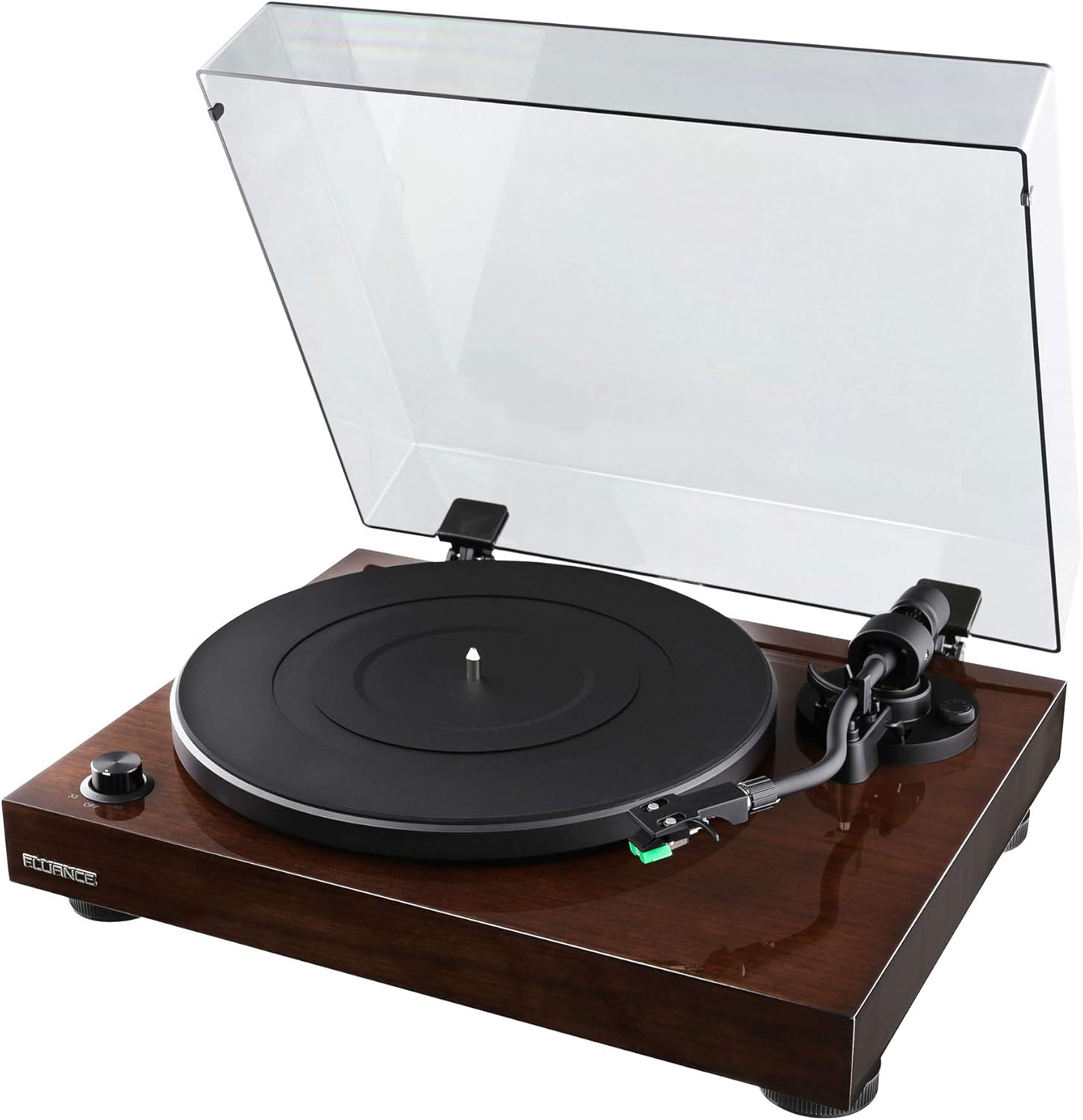
Your pursuit of the perfect vinyl experience is a rewarding journey that hinges on selecting the right foundation. For listeners seeking the pinnacle of analog warmth and detail, the meticulous engineering of the Fluance RT85 Turntable with Ortofon Cartridge presents a compelling choice with its high-mass acrylic platter and superb cartridge. Alternatively, if your setup demands modern versatility alongside fidelity, the fully-featured Audio-Technica AT-LP120XUSB-BK Direct-Drive offers direct-drive precision, USB output, and robust adjustability, making it a superb all-around performer for the discerning listener. You can explore more options in this category on our turntables hub.
Frequently Asked Questions
Do I need a separate phono preamp with an audiophile turntable?
It depends on your turntable and amplifier. Many modern turntables include a built-in, switchable phono preamp. If your receiver or amplifier has a dedicated “phono” input, it already contains a preamp. For the purest signal path, an external, dedicated phono preamp often provides superior sound quality over built-in options.
How important is speed accuracy for vinyl playback?
Extremely important. Inconsistent platter speed causes pitch fluctuations known as wow and flutter, which distort the music. High-quality turntables employ precision motors, often with electronic speed control or quartz locking, to maintain exact 33 1/3 or 45 RPM. This ensures the music plays exactly as recorded.
Can I use wireless headphones with a high-end turntable?
Yes, but it requires a specific setup. You would need a turntable with a line-level output (either built-in or via an external preamp) connected to a Bluetooth transmitter. Some newer turntables, like certain Audio-Technica models, have Bluetooth transmission built-in. For a wired, potentially higher-fidelity private listening experience, consider models featured in our guide to the best turntables with headphone jacks for private listening.
Is a heavier platter always better?
Generally, yes, within reason. A heavier platter has greater rotational inertia, which helps maintain consistent speed and reduces wow and flutter. It also better dampens vibrations. Materials like acrylic and metal are favored for their mass and damping properties. However, the overall motor and drive system must be robust enough to handle the weight efficiently.




Write Your Review
No reviews yet. Be the first to share your experience!