

You’re in the final circle, footsteps are closing in, and you need to hear their exact direction. A split-second audio delay can mean the difference between a Victory Royale and a frustrating defeat. For gamers and streamers, audio latency isn’t just an annoyance; it’s a direct threat to performance and immersion. Traditional motherboard audio often introduces enough lag to throw off your timing and break your concentration.
This guide is for players who demand audio that keeps up with their reflexes. We’ve evaluated a range of dedicated audio interfaces designed to deliver the ultra-low latency monitoring required for competitive gaming and seamless streaming. By bypassing your computer’s internal sound card, these devices provide a direct, high-fidelity audio path, ensuring what you hear is perfectly synchronized with what’s happening on screen.

Pros
- Exceptional sound quality and low noise floor that rivals interfaces costing significantly more
- Intuitive controls and layout make it accessible for beginners while offering professional features for experienced users
- Solid build quality with secure connections that won't loosen during transport or use
- Versatile I/O configuration supports multiple recording scenarios without needing additional equipment
- Seamless compatibility with popular recording software, DAWs, and streaming platforms
Cons
- Slightly bulkier and heavier than some competing portable interfaces, which may impact true mobile convenience
- GarageBand users may experience stereo recording limitations and need to work around single-channel or mono recording
The BlueAVS AR013 is a professional 2-in/4-out USB audio interface designed for musicians, podcasters, streamers, and content creators who demand studio-quality sound without unnecessary complexity. It bridges the gap between budget-friendly and high-end interfaces, offering genuine professional features at an affordable price point that makes it accessible to home studios and mobile recording setups.
The standout feature is its combination of 24-bit/192kHz recording capability with an impressive 103dB dynamic range and ultra-low distortion (THD+N below 0.003%). Real-world testing confirms this translates to clean, detailed recordings suitable for music production and podcasting. The zero-latency monitoring system with four modes allows performers to hear themselves in real time without distracting delay, while dual XLR/TRS combo inputs and 48V phantom power support both condenser microphones and dynamic instruments. PAD switches protect against clipping from powerful vocal performances and high-output gear.
Build quality impresses for the price, with solid connections, an angled compact design that fits naturally on desks, and balanced TRS outputs that ensure clean monitoring through studio speakers or headphones. Setup is genuinely plug-and-play for most users, with instant compatibility across Mac, Windows, and major DAWs including Logic Pro, Cubase, Reaper, and Ableton Live. The included USB-A to USB-C cable and comprehensive manual make getting started straightforward.
Minor drawbacks include a slightly larger footprint compared to some ultra-portable competitors, and GarageBand users may encounter stereo recording limitations requiring workarounds like mono recording. These are minor considerations that don't significantly impact the overall value proposition for most use cases.
The BlueAVS AR013 represents exceptional value for anyone building a home studio, upgrading from USB microphones, or seeking a reliable portable interface for streaming and content creation. Its professional sound quality, intuitive operation, and versatile I/O make it a smart investment that performs well beyond its price category.
I/O Configuration: 2 XLR/TRS combo inputs, 4 balanced TRS outputs, 2 headphone outputs
Audio Quality: 24-bit/192kHz maximum sample rate, 103dB dynamic range, THD+N less than 0.003%, 20Hz-20kHz frequency response
Connectivity: USB-C (USB 2.0), includes USB-A to USB-C adapter cable
Features: 48V phantom power, PAD switches, zero-latency monitoring with 4 modes, instrument/line toggle buttons, independent volume controls
Compatibility: Windows, macOS, iOS, Android, Linux. Works with Logic Pro, Cubase, Ableton Live, Reaper, Studio One, GarageBand, OBS Studio, Streamlabs, Zoom, and Audacity
Physical: 8.5 inches deep x 3.9 inches wide x 2.4 inches high, 1.3 pounds
Warranty: 1-year manufacturer's warranty covering original defects
Ideal For: Home studio builders, podcasters upgrading from USB mics, musicians recording guitars and vocals, streamers seeking professional audio quality, content creators using OBS or Streamlabs, and anyone wanting studio-quality sound without a steep learning curve.
Experience Level: Beginners will appreciate the straightforward layout and plug-and-play setup, while experienced producers will value the professional-grade specs and monitoring flexibility. No special technical knowledge required to get started recording immediately.
Use Cases: Music production, podcast recording, guitar and instrument tracking, vocal recording, live streaming, YouTube content creation, and mobile recording sessions. The dual inputs make it perfect for recording acoustic instruments and vocals simultaneously.
Not Ideal For: Users requiring more than 2 simultaneous inputs or those needing ADAT expansion for large mixing studios. Also may be overkill if you only need a single USB microphone input.
Pros
- Excellent preamp quality produces bright, clear recordings with minimal noise floor
- Air mode adds professional polish to vocal and acoustic recordings without additional equipment
- Compact design perfect for home studios, bedroom producers, and mobile recording setups
- Included software suite eliminates need for expensive DAW purchases
- Highly reliable brand with strong reputation in professional audio industry
Cons
- Single microphone input limits simultaneous multi-instrument recording capabilities
- May require audio driver updates for optimal performance on some Windows systems
- Learning curve for beginners unfamiliar with audio interface operation and gain staging
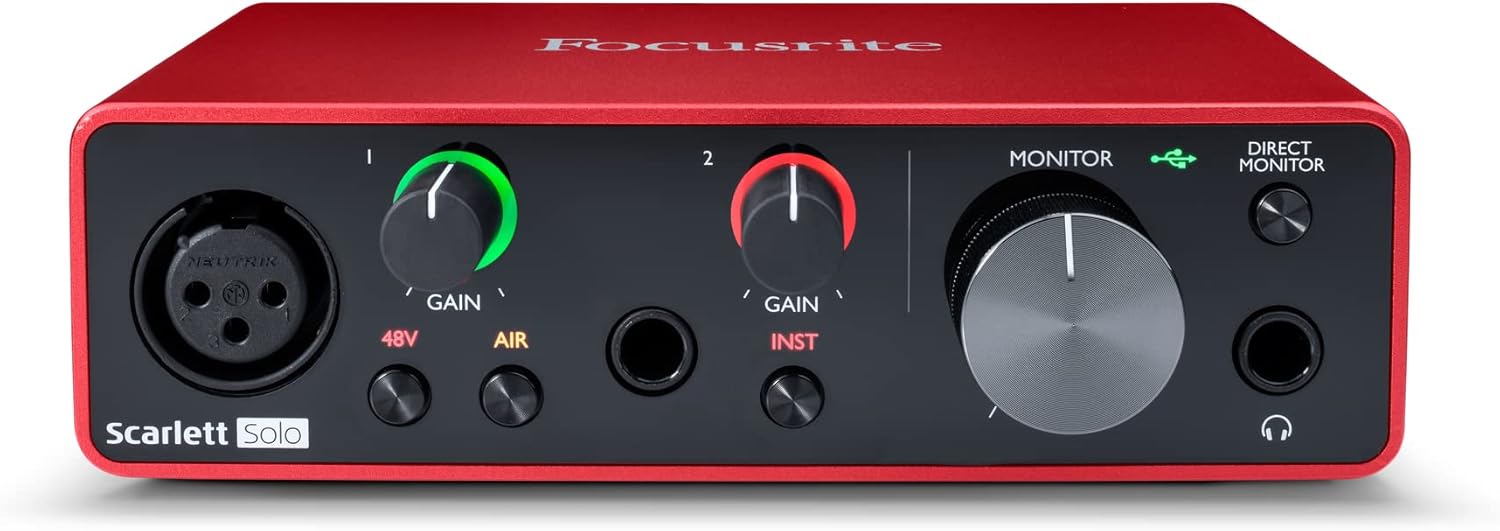
The Focusrite Scarlett Solo 3rd Gen is a professional USB audio interface designed for musicians, podcasters, and content creators who demand studio-quality recordings without the complexity of larger mixing consoles. This compact device bridges the gap between budget-friendly entry-level gear and expensive professional equipment, making it ideal for home studios, bedroom producers, and anyone serious about capturing professional-grade audio.
The standout feature is undoubtedly the high-performance microphone preamp paired with the innovative Air mode, which adds extra clarity and presence to vocals and acoustic instruments. The two high-headroom instrument inputs eliminate clipping and distortion, ensuring your guitar, bass, and other instruments shine through with clarity. Recording at up to 24-bit/192kHz resolution means your productions retain all sonic nuances, while the Gain Halo visual feedback system helps you nail perfect levels every time.
Build quality reflects Focusrite's professional heritage, with a solid metal chassis and intuitive front-panel controls that feel responsive and durable. The USB-C connectivity provides fast, reliable data transfer and modern compatibility with both Mac and Windows systems. The included software bundle (Pro Tools Intro+, Ableton Live Lite, Cubase LE) gives you everything needed to start producing immediately without additional software purchases.
The primary limitation is the single microphone input, which restricts simultaneous multi-track vocal or acoustic recording. Additionally, some Windows users report requiring driver updates for optimal performance. The learning curve for gain staging and audio interface operation may challenge complete beginners, though the included documentation is comprehensive.
The Focusrite Scarlett Solo 3rd Gen represents exceptional value for serious hobbyists and semi-professional creators. Its combination of pristine preamp quality, professional converters, intuitive design, and included software makes it the go-to choice for anyone upgrading from computer microphones or entry-level interfaces. The three-year warranty provides confidence in your investment.
Audio I/O: 1 XLR microphone input, 2 high-impedance instrument inputs, 2 balanced line outputs, headphone output
Audio Quality: 24-bit/192kHz recording and playback resolution with high-performance converters
Connectivity: USB-C to computer, compatible with all major audio recording software
Channels: 2 channels (stereo)
Features: Switchable Air mode, Gain Halo visual feedback, low-noise outputs, headphone monitoring
Software Included: Pro Tools Intro+, Ableton Live Lite, Cubase LE, Hitmaker Expansion
Warranty: 3-year manufacturer warranty worldwide
Compatible Devices: Microphones, instruments, personal computers, headphones, studio monitors
Who Should Buy: Musicians recording at home, podcasters seeking professional audio quality, guitarists and bassists needing quality instrument preamps, content creators upgrading from built-in computer audio, and producers working with limited space.
Who Should Look Elsewhere: Users needing simultaneous multi-microphone recording, those requiring extensive analog mixing features, or professionals running high-channel-count studios requiring more I/O options.
Setup Tips: Ensure your computer meets USB-C requirements and install drivers before first use. Spend time learning gain staging with the Gain Halo visual indicator to avoid clipping. Experiment with Air mode on different sources to understand its impact on your recordings.
Value Comparison: At this price point, the Scarlett Solo 3rd Gen outperforms competitors by offering superior preamp quality, professional software bundle, and proven brand reliability. The included software alone typically costs $200+ if purchased separately.

Pros
- Excellent value with included production software and 6GB+ of content
- Hardware monitoring with LCD display eliminates latency issues during recording sessions
- USB-C connection provides reliable, fast performance and works across Mac, PC, and iOS platforms
- Compact and portable design makes it ideal for bedroom studios, home offices, and mobile recording
- Two quality microphone preamps handle both vocals and instruments without additional gear
Cons
- Limited to 4 simultaneous inputs, which may feel restrictive for larger band recordings or complex setups
- USB-C only means you'll need adapters if using older USB-A devices or hubs
- Learning curve on some features like loopback routing for users new to audio interfaces
The MOTU M4 is a 4-in/4-out USB-C audio interface built for modern producers, podcasters, musicians, and content creators who need professional-grade sound quality without the bulk or price tag of larger mixing consoles. It's the perfect middle ground between entry-level USB interfaces and expensive studio-grade equipment, delivering serious features in a compact footprint.
What makes the M4 truly stand out is its combination of hardware monitoring with an LCD screen, which eliminates the frustrating latency that plagues many budget interfaces. The two dedicated microphone preamps deliver clean, professional recordings for vocals and instruments, while the loopback feature opens up possibilities for streaming, podcasting, and music production without needing external hardware. The included 6GB+ of free software and content transforms this from a simple interface into a complete production toolkit.
Build quality is solid and straightforward. The aluminum chassis feels durable despite its lightweight, portable design, making it suitable for both stationary studios and traveling musicians. The USB-C connection is modern and reliable, though it does require adapters for older devices. Navigation through the LCD screen is intuitive, and setup across Mac, Windows, and iOS platforms is refreshingly painless.
The main limitation is the 4-input cap, which restricts simultaneous recording to four sources. For solo artists and small projects this is fine, but larger band recordings or complex setups may feel constrained. Additionally, some users new to audio interfaces may find the loopback routing requires a learning curve to master.
The MOTU M4 earns its 4.6-star rating by delivering genuine professional features at an accessible price point. It's an excellent choice for anyone serious about recording who wants reliability, portability, and included software to get started immediately.
Connectivity: USB-C, compatible with Mac, Windows, and iOS devices
I/O Configuration: 4 inputs and 4 outputs with 2 dedicated microphone preamps
Total Channels: 8 channels
Features: Hardware monitoring with LCD screen, loopback functionality, zero-latency input monitoring
Included Software: 6GB+ of free content including Performer Lite and Live Lite production software
Design: Compact, portable aluminum chassis suitable for studio or mobile use
Who Should Buy: The MOTU M4 is ideal for home studio musicians, podcasters, content creators, and producers who need reliable multi-channel recording in a portable package. It's perfect for upgrading from basic USB audio solutions while staying budget-conscious.
Who Might Want to Look Elsewhere: If you need more than 4 simultaneous inputs for large ensemble recording, or if you prefer a purely software-based solution without hardware monitoring, consider larger interfaces or alternative options.
Setup Considerations: Ensure your computer has an available USB-C port or budget for a USB-C hub adapter. The included software requires internet connection for initial download and activation. Allow 30 minutes for complete setup and driver installation.
Value Assessment: At its price point, the M4 offers exceptional value when factoring in the included 6GB+ of production software. The hardware monitoring alone justifies the investment for serious recording work, as it eliminates the latency issues that frustrate users on cheaper interfaces.

Pros
- XLR input with 48V phantom power provides room to grow into professional microphone setups without expensive upgrades
- Individual channel faders give precise control over each audio source, preventing background noise and feedback issues
- Intuitive mute and monitor buttons on the front panel make real-time adjustments effortless during live broadcasts
- Exceptional value for money, offering features typically found in mixers costing two to three times more
- Includes customizable sound effects and voice modulation tools that enhance entertainment value for viewers
Cons
- XLR cable not included in the package, requiring separate purchase for full functionality
- Sound effect quality is basic compared to dedicated soundboard software alternatives
- Microphone preamp gain output is modest compared to higher-end professional audio interfaces
The FIFINE SC3 is a compact audio mixer purpose-built for gamers, streamers, and content creators who need professional-grade sound control without the learning curve or expense of traditional DJ equipment. This mixer bridges the gap between USB microphones and full studio setups, making it perfect for anyone transitioning from basic streaming audio to something more sophisticated.
The standout feature is the XLR microphone input paired with 48V phantom power, which lets you use high-quality condenser microphones immediately. Combined with four independent channel controls for microphone, line input, headphones, and line output, you gain granular control over your entire audio environment. The front-mounted mute and monitor buttons make real-time adjustments intuitive during live streams, while the monitoring feature provides confidence monitoring without latency issues that distract broadcasters.
Build quality feels solid for the price point, with sturdy faders and responsive buttons that withstand frequent use. The compact footprint (6.45 inches wide) fits neatly on any streaming desk without consuming valuable real estate. The customizable RGB lighting is vibrant but not fatiguing to the eyes, and the flowing color modes add visual interest to your setup without appearing gimmicky.
The main drawbacks are the modest microphone preamp gain compared to professional interfaces and the fact that XLR cables are sold separately. Additionally, the built-in sound effects quality is basic, though this is easily remedied with free soundboard software. These limitations are minor given the price and feature set.
The SC3 delivers excellent value for streamers, podcasters, and content creators seeking straightforward audio mixing with room to grow into more sophisticated setups. It's particularly recommended for anyone making the jump from USB microphones to XLR gear without wanting to invest in expensive professional equipment immediately.
Audio Inputs: XLR microphone input with 48V phantom power, 3.5mm line input, 3.5mm headset input
Audio Outputs: 3.5mm headphones jack, 3.5mm line output, 3.5mm headset output
Channels: 4 independent channels with individual volume control
Connectivity: USB-C to computer, 3.5mm jacks for audio devices
Additional Features: 4 programmable sound effect buttons (15 seconds each), 6 voice-changing modes, 12 auto-tune settings, RGB lighting with customizable patterns, mute and monitor buttons
Physical Dimensions: 6.45 inches wide x 4.44 inches deep x 1.6 inches tall
Weight: 0.5 kg (approximately 1.1 pounds)
Power Supply: USB-C from computer
Compatibility: Windows and Mac OS, works with OBS, Twitch, YouTube, TikTok
Warranty: 1 year manufacturer warranty
Included Accessories: USB cable, 3.5mm to 3.5mm audio cable, user manual
Who Should Buy This Mixer: The SC3 is ideal for beginner to intermediate streamers, podcasters, and content creators who want professional audio control without expensive equipment. It's perfect for anyone upgrading from a basic USB microphone to an XLR setup, or for streamers managing multiple audio sources like game audio, music, and microphone input simultaneously.
Who Might Want to Look Elsewhere: Professional audio engineers or high-end podcast studios requiring maximum microphone preamp gain should consider more expensive interfaces. If you exclusively use USB microphones, a simpler mixer may suffice. Those needing more than four channels should explore larger mixing consoles.
What You Need to Buy Separately: An XLR microphone cable is essential if you plan to use an XLR condenser microphone. A quality shielded XLR cable is recommended to ensure audio quality. Budget approximately 10 to 20 dollars for a reliable cable. You'll also need an XLR condenser microphone if you don't already own one.
Setup Tips: Connect the USB-C cable to your computer first for power and data. Use the included 3.5mm cable to connect audio devices like phones or tablets to the line input. Connect your XLR microphone to the XLR input. Plug your headphones into the headphones output. Start with all faders at mid-level and adjust from there. Test your audio levels in your streaming software before going live.
Best Use Cases: Twitch and YouTube streaming, podcast recording, TikTok content creation, Discord gaming sessions, online interviews, and music production for beginners.
Pros
- Exceptional value at this price point with dual XLR inputs that competitors charge significantly more for
- Compact 7.5-inch width and lightweight design make it genuinely portable for on-the-go recording
- Zero-latency monitoring via USB/Direct switch eliminates the frustration of hearing delayed playback while recording new parts
- Included software suite jumpstarts your production immediately without additional purchases
- Transparent preamps deliver clean, professional-grade audio from entry-level to mid-range microphones
Cons
- Plastic construction feels lightweight, which some users perceive as lower build quality despite reliable performance
- 48kHz maximum sample rate is lower than some competing interfaces, limiting high-resolution audio work
- Gain staging may require careful management with certain microphones, as some users report insufficient gain at maximum levels
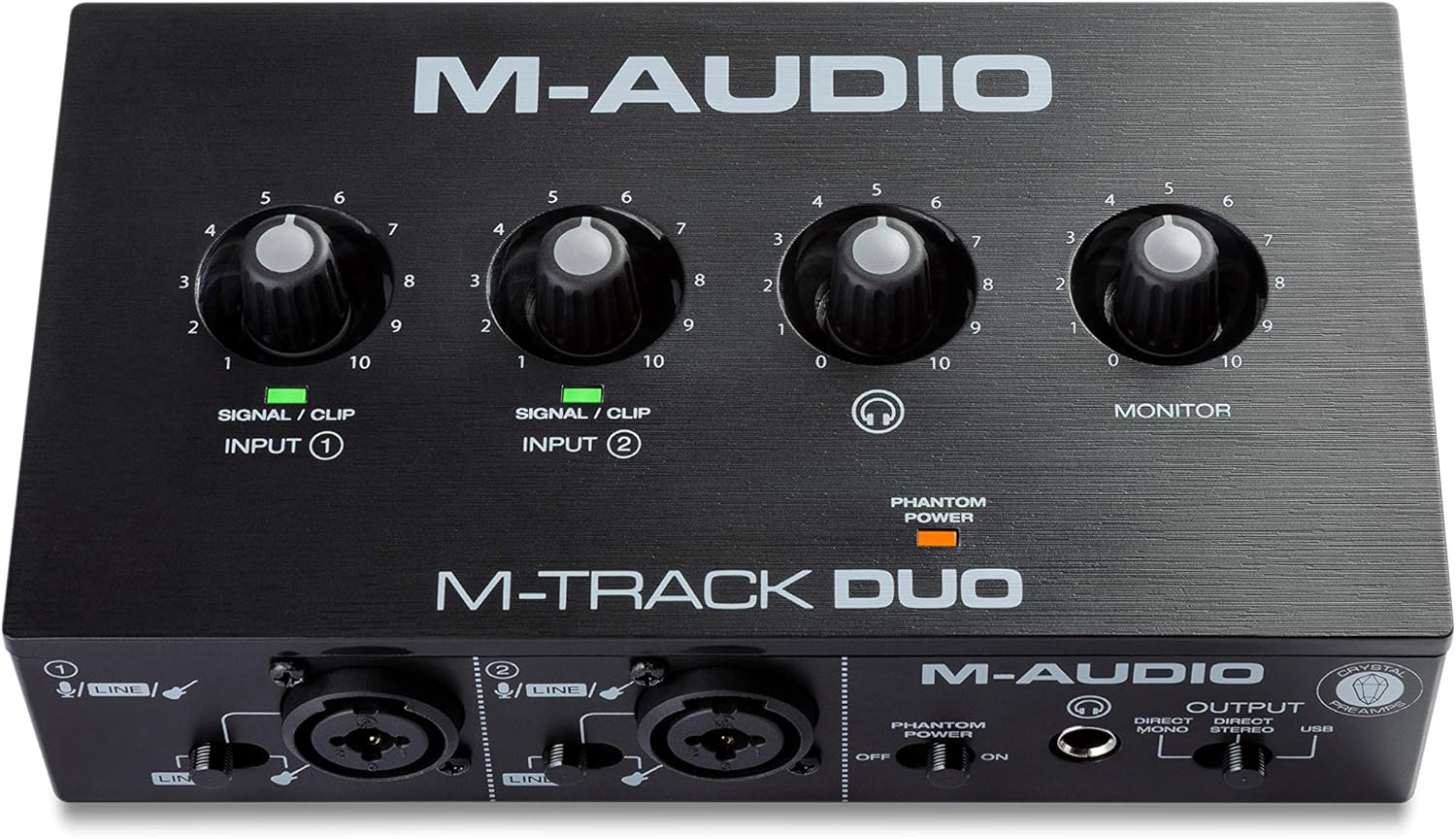
The M-Track Duo is a compact USB audio interface designed for podcasters, musicians, and content creators who need professional recording capabilities without the complexity or cost of larger studio setups. With dual XLR combo inputs, phantom power, and integrated instrument switching, this interface handles vocals, acoustic instruments, guitars, keyboards, and line-level devices with equal competence. It's the kind of gear that lets you go from idea to finished recording in minutes rather than hours.
What sets the M-Track Duo apart is its zero-latency direct monitoring feature, which eliminates the maddening delay that plagues cheaper interfaces. The USB/Direct switch lets you blend your live input signal with playback from your DAW, making it easy to record layered parts or add instruments to existing compositions. The transparent Crystal Preamps deliver clean, detailed audio that punches above its weight class, and phantom power support means you can work with professional condenser microphones without compromise.
Build quality is straightforward plastic construction that feels lightweight but proves durable in real-world use. The compact 7.5-inch width and 0.3kg weight make it genuinely portable, fitting easily into a laptop bag. All connections are professional-grade balanced XLR and quarter-inch TRS connectors, with a headphone output that supports standard stereo headphones via a quarter-inch adapter.
The main limitation is the 48kHz maximum sample rate, which is lower than some competing interfaces in higher price brackets. Additionally, some users report that gain staging requires careful management depending on your microphone, though this is rarely a dealbreaker for entry-level recording. The included MPC Beats software and ProTools First bundle provide legitimate production tools, though you'll likely graduate to more advanced DAWs as your skills develop.
The M-Track Duo delivers genuine value and reliability for anyone starting their recording journey or needing a portable backup interface. It handles its core mission of capturing clean, professional audio without fuss, making it an excellent choice for podcasters, singer-songwriters, and bedroom producers with realistic budgets.
Audio Specifications: Maximum sample rate of 48kHz with 16-bit resolution, 20kHz frequency response, and 1 megaohm impedance. Two channels of audio input and output.
Connectivity: Dual balanced XLR microphone inputs with phantom power, balanced quarter-inch line inputs, unbalanced quarter-inch instrument inputs, stereo quarter-inch main outputs, quarter-inch TRS headphone output, and USB Type B connection for computer and compatible iOS devices.
Dimensions and Weight: 7.5 inches wide by 4.34 inches deep by 2.13 inches tall, weighing just 0.3kg for maximum portability. Completely USB-powered with no external power supply required.
Compatibility: Works with Windows 7 and later via ASIO drivers, Mac OS High Sierra through Big Sur with class-compliant support, iOS with Apple Lightning to USB3 adapter, and Android devices. Compatible with all major DAWs including Logic Pro, ProTools, GarageBand, Studio One, Cubase, and Ableton Live.
Included Accessories: USB Type B to Type A cable, software download cards for MPC Beats and ProTools First, user guide, and safety documentation. Backed by a one-year manufacturer warranty.
Ideal For: This interface is perfect for podcasters launching their first show, musicians recording demos at home, content creators adding professional audio to videos, and anyone needing portable recording capability. It's also excellent for experienced engineers who need a reliable backup interface or travel-friendly setup.
Consider Alternatives If: You require sample rates above 48kHz for professional mastering work, need more than two simultaneous inputs, or demand premium metal construction and extensive onboard controls. However, for the vast majority of recording scenarios, the M-Track Duo delivers everything you need.
Budget Consideration: At this price point, the M-Track Duo offers exceptional value compared to single-channel competitors and provides genuine professional features like phantom power and zero-latency monitoring that many similarly-priced interfaces omit entirely.

Pros
- Exceptional audio quality with no background noise, even at budget price point
- Truly plug-and-play functionality works immediately on Windows, Mac, and Linux systems
- Dual combo jacks provide maximum flexibility for microphones, guitars, and line-level sources
- Lightweight and compact form factor ideal for desk space and portability
- Zero-latency monitoring enables confident tracking without hearing delay or echo
Cons
- LED illumination on gain knobs does not function as prominently displayed in product images
- Requires careful gain adjustment when connecting instruments with built-in preamps to avoid clipping
- Limited to 2 input channels, which may not suit users needing more simultaneous inputs
The PIYONE Q2 is a 2x2 USB-C audio interface designed for home recordists, podcasters, guitarists, and content creators who want professional-grade sound without complexity. It bridges the gap between budget-friendly and professional-quality recording, making it an ideal first interface for beginners or a secondary interface for established creators.
The standout feature is its genuine plug-and-play operation. Simply connect the USB-C cable to your computer, and the interface is recognized immediately on Windows, Mac, and Linux systems without any driver installation. The 24-bit/192kHz audio resolution captures professional-quality recordings with excellent clarity and minimal noise. The zero-latency direct monitoring feature eliminates tracking delays, allowing you to hear yourself in real-time without the frustrating latency that plagues cheaper interfaces. Dual XLR/TRS combo inputs with 48V phantom power provide flexibility for condenser microphones, dynamic mics, guitars, and line-level sources.
Build quality and design are impressive for the price. The compact form factor fits easily on any desk without consuming valuable space. The illuminated control knobs create a modern, professional aesthetic that looks great in any studio setup. The interface feels solid and well-constructed, with ergonomic knobs and buttons positioned for comfortable operation during long recording sessions.
One notable drawback is that the LED illumination on the gain knobs does not function as prominently as shown in product images, which may disappoint users specifically drawn to this visual feature. Additionally, users must exercise caution when adjusting gain levels with instruments that have built-in preamps, as excessive gain can cause clipping. The 2-channel limitation means this interface cannot handle multiple simultaneous inputs beyond two sources.
Verdict: The PIYONE Q2 delivers exceptional value for beginners and budget-conscious creators seeking professional audio quality without complexity. Its combination of studio-grade sound, zero-latency monitoring, and truly plug-and-play setup makes it an excellent choice for home recording, podcasting, and content creation. Recommended for anyone starting their recording journey or needing a reliable portable interface.
Audio Quality: 24-bit resolution, 192kHz maximum sample rate, high-performance converters, low-noise design
Connectivity: USB-C port (handles both data transfer and bus power), 3.5mm headphone jack
Inputs: 2 XLR/TRS combo jacks, 48V phantom power supply
Channels: 2 input channels, 2 output channels
Features: Zero-latency direct monitoring, monitor mix function, loopback capability, illuminated control knobs, class-compliant design
Compatibility: Mac, Windows PC, Linux, iOS (via USB-C adapter)
Physical: Compact portable design, 0.74 kg weight, Alloy Red finish
Warranty: 2-year limited warranty
Ideal For: Beginner recording artists, podcasters, singer-songwriters, content creators, home studio enthusiasts, and anyone seeking professional audio quality without complex setup requirements.
Perfect Use Cases: Recording vocals with condenser microphones, capturing acoustic guitar performances, podcasting and voice-over work, streaming with professional audio quality, music production on a budget, portable recording for travel or mobile content creation.
Not Ideal For: Users requiring more than 2 simultaneous inputs, professional studios with extensive I/O requirements, or those specifically seeking prominent LED illumination effects on control knobs.

Pros
- Exceptional audio clarity and gain headroom suitable for dynamic and condenser XLR microphones
- Intuitive touch controls with visual LED feedback eliminate the learning curve for beginners
- Wave Link software provides powerful routing capabilities without requiring external mixers
- Compact desktop footprint fits seamlessly into any streaming or podcasting setup
- Solid build quality with included 150cm USB-C cable and 2-year manufacturer warranty
Cons
- AI noise cancellation feature has limitations with persistent background noise like fans and room ambience
- Requires Windows 11 or macOS 14.2 and higher, excluding older system compatibility
- Some users report the onboard effects sound overly processed if not carefully tuned
The Elgato Wave XLR MK.2 is a professional-grade USB audio interface designed for content creators who demand studio-quality sound without complex setup. It's perfect for streamers, podcasters, and remote professionals who want to elevate their XLR microphone performance with minimal effort. The device bridges the gap between entry-level and professional audio gear by delivering serious power in a compact, user-friendly package.
What sets this interface apart is its combination of raw power and accessibility. The 80dB gain is genuinely impressive, allowing you to drive even quiet condenser microphones to broadcast levels. The ultra-low-latency monitoring at 24-bit, 48kHz resolution ensures you hear exactly what your audience hears with zero perceptible delay. The onboard DSP effects processor unifies voice enhancement, compression, and EQ in a single signal chain, meaning you can achieve polished audio without juggling multiple software plugins. Touch controls with customizable LED lighting make real-time adjustments intuitive, while Wave Link integration provides advanced routing for multi-application setups.
The build quality reflects Elgato's commitment to creator tools. The interface feels solid and premium with a thoughtful industrial design that complements professional workspaces. The included 150cm USB-C cable provides flexibility for desktop placement, and the compact footprint won't clutter your desk. The 2-year warranty demonstrates manufacturer confidence in longevity and reliability.
The primary limitation is that the AI noise cancellation feature struggles with persistent environmental noise like fans and room ambience, so you may still need acoustic treatment for optimal results. Additionally, the onboard effects can sound overly processed if not carefully adjusted, requiring some audio knowledge to dial in properly. System requirements are fairly current, requiring Windows 11 or macOS 14.2 or higher.
The Elgato Wave XLR MK.2 represents excellent value for creators serious about audio quality. It delivers professional-grade features in an accessible package that doesn't require deep technical knowledge. Whether you're upgrading from basic USB microphones or replacing aging audio interfaces, this device will noticeably improve your sound and streamline your workflow.
Audio Performance: 80dB gain, 24-bit resolution at 48kHz, 192kHz maximum sample rate, 2 channels, ultra-low-latency monitoring
Connectivity: USB-C to USB-C cable included (150cm), compatible with Laptop and Personal Computer
Compatibility: Windows 11 and higher, macOS 14.2 and higher, Stream Deck integration, Wave Link software required
Physical: 11.36 ounces, compact desktop form factor with touch controls and customizable LED feedback
Warranty: 2-year manufacturer warranty included
Best For: Content creators, streamers, podcasters, and remote professionals who use professional XLR microphones and want studio-quality audio without complex setup.
Ideal If You: Already own a quality XLR microphone, need ultra-low-latency monitoring, want built-in effects processing, or use Elgato's Stream Deck ecosystem.
Consider Alternatives If: You require extensive noise cancellation, use only USB microphones, have older computer systems, or prefer analog mixing consoles.

Pros
- Exceptional value for the price with professional-grade features like 48V phantom power and three monitoring modes
- Works seamlessly with Android devices, a rare feature in budget audio interfaces
- Plug-and-play setup with included adapters means no additional purchases needed to get started
- Lightweight and portable design fits easily in a backpack for mobile recording sessions
- Dual XLR/6.35mm input switching reduces gain adjustment needs and minimizes interference
Cons
- Build quality feels plastic and budget-oriented, with knobs and sliders that lack premium feel despite durability
- Windows plug-and-play mode introduces noticeable latency without third-party ASIO drivers
- Some users report occasional clicks, pops, and output level fluctuations during extended use
The Synido 2x2 is a compact, entry-level USB-C audio interface designed for home recording, podcasting, live streaming, and mobile music production. It targets budget-conscious creators who need professional features without premium pricing, making it ideal for beginners, bedroom producers, and content creators working across Windows, Mac, iOS, and Android platforms.
The standout feature is its three flexible monitoring modes that adapt to different workflows. Stereo mode isolates left and right channels for precise recording, Mix mode blends input and computer audio in real-time for live broadcasts, and USB mode handles post-production editing. Combined with 24-bit/48kHz audio depth, 48V phantom power, and a low-latency audio chip, the interface delivers clear, detailed recordings suitable for professional-quality content.
Design-wise, the Synido prioritizes portability and usability over premium materials. At just 300g and measuring 14 x 11.5 x 4.5 cm, it fits easily into bags and travel setups. The color-coded LED gain indicators (green, orange, red) provide intuitive visual feedback to prevent clipping and distortion. However, the plastic construction and budget-feeling controls reflect its price point, though users report they feel durable enough for regular use.
Notable drawbacks include Windows latency without third-party ASIO drivers, occasional audio artifacts (clicks and pops) reported by some users, and the plastic build quality. The instrument input gain could be stronger for passive guitars. These limitations are common at this price tier but worth considering for professional studio work.
Overall, the Synido 2x2 delivers impressive functionality for under $40, especially for Android compatibility and portable workflows. It excels as a first interface for beginners and mobile creators but may frustrate professionals seeking rock-solid stability and premium build quality. Recommended for podcasters, streamers, and traveling musicians willing to accept minor compromises for portability and affordability.
Audio Specifications: 24-bit depth, 48kHz maximum sample rate, 2-channel recording, XLR/6.35mm/Line-In inputs with Hi-Z switching, 48V phantom power, 3.5mm headphone output.
Connectivity: USB-C primary connection, includes USB-C to USB-A adapter for legacy devices. Compatible with Windows 7+, Mac OSX 10.11+, iOS 10.0+, and Android devices.
Physical Dimensions: 14 x 11.5 x 4.5 cm, 300g weight. Includes 3.5mm to 6.35mm adapter and USB-C data cable. 30-day warranty.
Best For: Home recording, podcasting, live streaming, mobile music production, and content creation on Windows, Mac, iOS, or Android devices.
Consider If: You need professional monitoring modes, 48V phantom power for quality microphones, portability, and Android compatibility in a budget-friendly package.
Skip If: You require zero-latency monitoring on Windows without drivers, premium build quality, or high-gain instrument inputs for passive guitars. For professional studio work, invest in higher-tier interfaces.
Pro Tips: Download a third-party ASIO driver on Windows for low-latency monitoring. Use an OTG adapter if powering from mobile devices to preserve battery life. The included 3.5mm to 6.35mm adapter works as a headphone output jack, expanding connectivity options.

Pros
- Exceptional value proposition at under $30 with features typically found in interfaces costing 3-4x more
- Immediate plug-and-play functionality on Windows and Mac systems without driver installation hassles
- Low-noise preamp and clean audio signal praised by users for guitar and vocal recording applications
- Lightweight and compact form factor makes it ideal for travel recording kits and portable studio setups
- Includes both XLR and 1/4-inch input compatibility for professional and consumer-grade equipment
Cons
- Limited to 2 channels, restricting multi-track recording capabilities for more complex home studio setups
- Some users report XLR input failures after extended use, suggesting potential long-term durability concerns
- Maximum 48kHz sample rate is lower than professional interfaces, limiting advanced audio production workflows
The XTUGA Q-12 is a budget-friendly USB audio interface designed for beginners, students, and home studio enthusiasts who need reliable recording capabilities without breaking the bank. It functions as a complete 2-channel recording solution for PC-based music production, podcasting, gaming, and mobile karaoke applications. The interface delivers professional 16-bit/48kHz audio resolution, which is suitable for most home recording projects and casual content creation.
The standout feature is its zero-latency recording capability combined with switchable 48V phantom power for condenser microphones. Users consistently report seamless vocal tracking without noticeable audio delays, and the dual input system accommodates both professional XLR connections and standard 3.5mm microphone jacks. The plug-and-play USB connection eliminates driver installation frustration, working immediately on Windows and Mac systems. Many reviewers highlight the impressive audio clarity and low noise floor for the price point.
Build quality reflects its budget positioning with a compact plastic housing that feels solid but not premium. The miniature mixer form factor is convenient for home studios and travel setups. Power consumption is minimal since the interface draws power directly from USB, making it compatible with portable USB battery packs for truly mobile recording scenarios. The included one-year warranty provides basic peace of mind for early adopters.
The primary drawback is the limited 2-channel configuration, which restricts simultaneous multi-track recording. Additionally, some users have reported XLR input reliability issues after a year of use, raising questions about long-term durability. The 48kHz maximum sample rate, while adequate for most applications, falls short of professional standards for mastering-grade audio production.
Verdict: The XTUGA Q-12 represents exceptional value for beginners and budget-conscious creators. Its combination of plug-and-play convenience, zero-latency performance, and dual input flexibility makes it an ideal entry point into home recording. However, buyers should manage expectations regarding durability and upgrade to a more robust interface if planning intensive professional use beyond the first year.
Audio Specifications: 16-Bit resolution, 48kHz sample rate, dual 2-channel configuration with XLR and 3.5mm microphone inputs. Switchable 48V phantom power for condenser microphones. Frequency response optimized for vocal and instrument recording.
Connectivity: USB 2.0 connection for PC and Mac computers. Class-compliant audio interface compatible with Audacity, Ableton Live, FL Studio, Pro Tools, and other major DAW software. No external power adapter required, powered entirely via USB.
Physical Dimensions: 5.98 inches depth by 4.92 inches width by 1.97 inches height. Weighs 0.31 kg (approximately 11 ounces). Compact design suitable for desktop studios and portable recording kits. One-year manufacturer warranty included.
Best For: This interface is ideal for beginners starting their first home studio, students learning music production, podcasters needing simple recording setup, gamers seeking quality voice chat, and content creators working with limited budgets. It excels for solo vocal recording, acoustic guitar tracking, and mobile karaoke applications.
Consider Alternatives If: You need more than 2 simultaneous recording channels, require sample rates above 48kHz for professional mastering, or plan intensive daily professional use where durability is critical. Musicians recording full bands or complex arrangements should consider interfaces with more input options.
Setup Tips: Use quality XLR cables and microphones to maximize audio quality. For Windows users seeking ASIO functionality, download ASIO4ALL software for improved performance. Pair with a decent condenser microphone and audio monitoring headphones to fully leverage the phantom power feature. Connect to a powered USB hub if your computer has limited USB power availability.

Pros
- Exceptional value for money, delivering professional audio specs at under $30
- Intuitive controls and zero-latency monitoring make it accessible for beginners and professionals alike
- Versatile connectivity supports everything from condenser mics to guitars with independent gain adjustment
- Compact and portable design ideal for home studios, mobile recording, and on-location work
- No driver installation required, works immediately across multiple operating systems and devices
Cons
- Quality control issues reported by some users, including missing buttons on certain units
- May require additional power solutions for certain Android devices lacking full OTG compliance
- Limited to 2x2 channel configuration, not suitable for multi-track recording setups
The Jolgoo 2x2 USB audio interface is a compact recording solution designed for musicians, podcasters, content creators, and home studio enthusiasts who demand professional audio quality without breaking the bank. This budget-friendly interface packs studio-grade specifications into a portable form factor, making it an accessible entry point for anyone serious about audio recording.
The standout feature is undoubtedly the zero-latency direct monitoring capability, which allows performers to hear themselves in real-time without distracting delay. Combined with 24-bit/192kHz audio conversion, users consistently report capturing crystal-clear vocals, acoustic instruments, and podcast audio with impressive clarity. The 48V phantom power support means you can connect professional condenser microphones, elevating your recording quality significantly. Independent gain controls and LED peak indicators help prevent clipping, giving you precise control over input levels.
Build quality is solid with a sturdy metal housing designed to shield against interference. The interface includes dedicated headphone monitoring, stereo line outputs for studio monitors, and both USB-C and USB-A cable options. Its compact size makes it equally at home on a desktop or packed into a mobile recording rig. Setup is genuinely plug-and-play across Windows, macOS, iOS, and Android devices, with full compatibility for major DAWs like Pro Tools, Ableton, and GarageBand.
Some users have reported quality control concerns, including missing buttons on certain units, which is disappointing at any price point. Additionally, some Android devices may require a power bank due to OTG compliance variations. The 2x2 channel configuration also limits it to stereo recording, which is fine for most solo recording scenarios but won't support multi-track setups.
The Jolgoo 2x2 delivers impressive value for budget-conscious recordists. It successfully bridges the gap between toy interfaces and expensive professional gear, making professional-quality recording accessible to everyone. Recommended for beginners exploring audio production, podcasters seeking portable solutions, and musicians wanting reliable recording without premium pricing.
Audio Specifications: 24-bit resolution, 192kHz maximum sample rate, 2x2 channel configuration, XLR/line combo inputs with independent gain control, 48V phantom power support, zero-latency direct monitoring.
Connectivity: USB connection, includes both USB-C and USB-A cables, compatible with Windows, macOS, iOS, and Android devices. Headphone monitoring output and stereo line outputs for studio monitors.
Compatibility: Works with Avid Pro Tools, Ableton Live, Steinberg Cubase, GarageBand, Audacity, and other mainstream DAWs. Driver-free operation for immediate plug-and-play setup.
Physical: Rugged metal construction for durability and interference shielding, weighs 0.81 kg, compact design suitable for desktop and mobile recording. Includes 12-month manufacturer warranty.
Best For: Home studio recording, podcasting, voiceover work, singer-songwriter demos, and anyone transitioning from smartphone recording to dedicated audio equipment. Excellent for beginners learning audio production fundamentals.
Consider This If: You need professional audio quality on a tight budget, require portable recording capabilities, or want to upgrade from built-in computer audio. The phantom power support makes it particularly valuable if you plan to invest in quality microphones.
Not Ideal For: Professional multi-track recording sessions requiring more than 2 channels, or users requiring extensive technical support. Quality control issues suggest checking your unit carefully upon arrival.
Power Considerations: USB-powered design eliminates need for external power supplies. Note that some Android devices may not provide sufficient power via OTG, in which case a powered USB hub or power bank solves the issue.
Choosing the Right Low Latency Interface
Monitoring Modes Are Crucial
The core feature for gaming is a reliable zero-latency monitoring path. Look for interfaces with a dedicated direct monitor switch or a software mix function. This allows you to hear your microphone and game audio in real time, without the processing delay that causes an echo effect in your headphones.
Some models, like the plug and play audio interfaces, offer multiple monitoring modes. These can include stereo, mono, or a mix that blends your mic with computer audio instantly. This flexibility is key for adjusting your personal audio mix on the fly.
Connection Stability and Driver Support
Your interface’s connection type and driver software directly impact latency stability. USB-C interfaces generally offer robust, high-bandwidth connections suitable for the task. Class-compliant, driverless operation can be a major advantage for simplicity, ensuring quick setup and fewer conflicts.
However, for the absolute lowest and most consistent latency, especially on Windows, an interface with a dedicated, optimized ASIO driver is often superior. This is a common feature in prosumer models from brands like Focusrite and MOTU, which are excellent entry-level audio interfaces for serious gamers.
Input and Output Flexibility
Consider your current and future setup. A single XLR/TRS combo input is sufficient for a dedicated gaming microphone. If you plan to also stream with a co-host, play a guitar, or connect multiple audio sources, look for two or more preamps. Balanced TRS outputs will provide clean audio to your studio monitors without interference.
Also, check for a dedicated, powerful headphone output. This ensures you can drive high-impedance gaming headsets to sufficient volume without distortion. A front-panel headphone jack with its own volume knob is a highly convenient feature during long sessions.
Build Quality and Form Factor
A metal chassis is preferred for durability and its ability to shield against electromagnetic interference from your PC components. Since these devices live on your desk, a compact footprint is valuable for saving space. Many of the top picks are bus powered audio interfaces, drawing power directly from your computer’s USB port to reduce cable clutter.
Physical controls like gain knobs, mute buttons, and large monitoring mix dials are more reliable and faster to adjust than software faders, especially in the heat of a game. Tactile feedback helps you make changes without looking away from your screen.
Final Thoughts
Upgrading to a dedicated audio interface is one of the most impactful changes you can make for your gaming audio. For streamers seeking pristine vocal quality and ultra-low latency, the Focusrite Scarlett Solo 3rd Gen USB-C Audio remains a benchmark for reliability and sound. If your priority is maximum simplicity with direct hardware monitoring and a compact design, the BlueAVS USB Audio Interface offers excellent performance and is incredibly easy to integrate into any setup. Explore more options in our dedicated audio interfaces category to find the perfect match for your battlestation.
Frequently Asked Questions
What exactly causes audio latency in gaming?
Latency is the delay between an audio signal being generated and when you hear it. In gaming, it’s often caused by slow or overloaded internal sound cards, inefficient audio drivers, and software processing chains. A dedicated interface uses higher-quality components and optimized drivers to minimize this buffer time, often reducing latency to imperceptible levels.
Can I use an audio interface with any gaming headset?
Yes, but you may need an adapter. Most gaming headsets use a single 3.5mm combo jack for audio and mic. Audio interfaces typically have separate 1/4″ headphone outputs and XLR/TRS mic inputs. You will need a splitter cable to separate the headset’s audio and mic signals into the correct ports on the interface.
Do I need an expensive interface for good low latency performance?
Not necessarily. While pro-grade models offer advanced features, many budget-friendly interfaces now provide excellent direct monitoring capabilities. The key is to look for the “zero-latency monitoring” or “direct monitor” feature specifically. Many driverless audio interfaces offer this function at a very accessible price point, making low latency achievable without a large investment.
Will an audio interface improve my in-game sound quality?
Absolutely. Beyond fixing latency, an external interface provides a cleaner, more powerful audio signal path. This results in less background noise, a wider dynamic range, and more detailed soundscapes. You’ll hear subtle cues like distant reloads or faint footsteps with greater clarity, which can provide a tangible competitive advantage.


Write Your Review
No reviews yet. Be the first to share your experience!