

You have a great idea for a song, a podcast episode that needs recording, or you’re ready to go live. The last thing you want is to spend hours installing drivers and troubleshooting software conflicts. This is where plug and play audio interfaces shine. They promise a simple connection to professional sound, letting you focus on creation.
This guide is for anyone who values simplicity alongside quality. Whether you’re a musician capturing a riff, a poducer setting up a stream, or a beginner building a first home studio, we’ve reviewed a range of interfaces that deliver on the plug and play promise. For more on driver-free operation, see our dedicated guide on the best driverless audio interfaces.
Pros
- Excellent preamp quality produces bright, clear recordings with minimal noise floor
- Air mode adds professional polish to vocal and acoustic recordings without additional equipment
- Compact design perfect for home studios, bedroom producers, and mobile recording setups
- Included software suite eliminates need for expensive DAW purchases
- Highly reliable brand with strong reputation in professional audio industry
Cons
- Single microphone input limits simultaneous multi-instrument recording capabilities
- May require audio driver updates for optimal performance on some Windows systems
- Learning curve for beginners unfamiliar with audio interface operation and gain staging
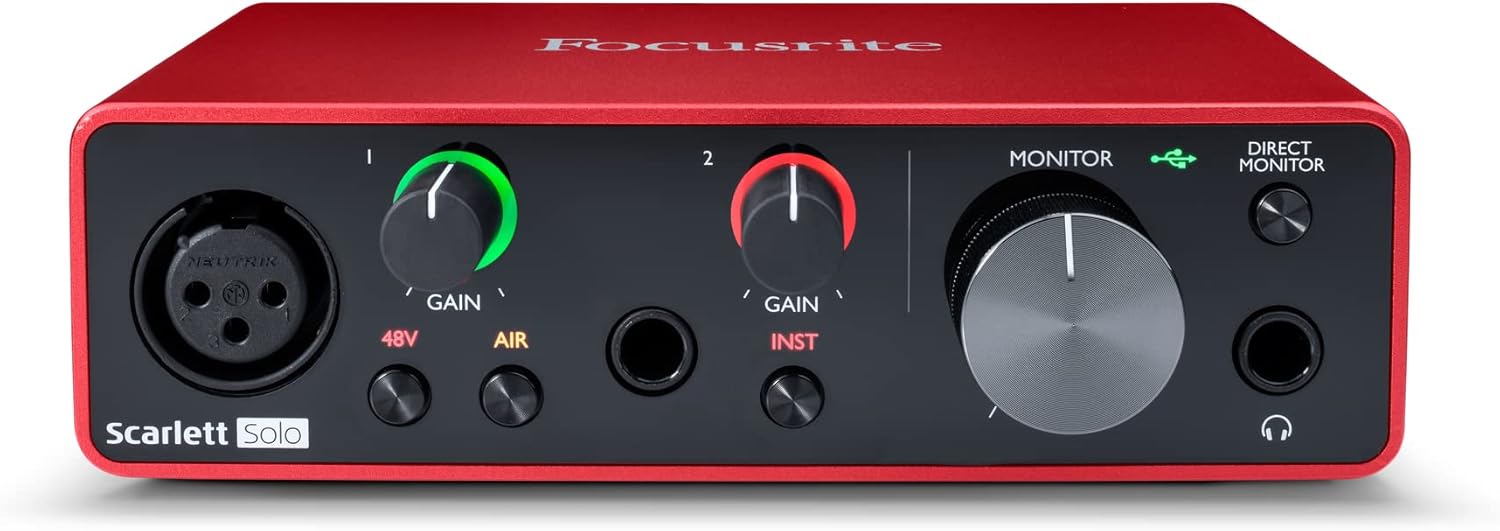
The Focusrite Scarlett Solo 3rd Gen is a professional USB audio interface designed for musicians, podcasters, and content creators who demand studio-quality recordings without the complexity of larger mixing consoles. This compact device bridges the gap between budget-friendly entry-level gear and expensive professional equipment, making it ideal for home studios, bedroom producers, and anyone serious about capturing professional-grade audio.
The standout feature is undoubtedly the high-performance microphone preamp paired with the innovative Air mode, which adds extra clarity and presence to vocals and acoustic instruments. The two high-headroom instrument inputs eliminate clipping and distortion, ensuring your guitar, bass, and other instruments shine through with clarity. Recording at up to 24-bit/192kHz resolution means your productions retain all sonic nuances, while the Gain Halo visual feedback system helps you nail perfect levels every time.
Build quality reflects Focusrite's professional heritage, with a solid metal chassis and intuitive front-panel controls that feel responsive and durable. The USB-C connectivity provides fast, reliable data transfer and modern compatibility with both Mac and Windows systems. The included software bundle (Pro Tools Intro+, Ableton Live Lite, Cubase LE) gives you everything needed to start producing immediately without additional software purchases.
The primary limitation is the single microphone input, which restricts simultaneous multi-track vocal or acoustic recording. Additionally, some Windows users report requiring driver updates for optimal performance. The learning curve for gain staging and audio interface operation may challenge complete beginners, though the included documentation is comprehensive.
The Focusrite Scarlett Solo 3rd Gen represents exceptional value for serious hobbyists and semi-professional creators. Its combination of pristine preamp quality, professional converters, intuitive design, and included software makes it the go-to choice for anyone upgrading from computer microphones or entry-level interfaces. The three-year warranty provides confidence in your investment.
Audio I/O: 1 XLR microphone input, 2 high-impedance instrument inputs, 2 balanced line outputs, headphone output
Audio Quality: 24-bit/192kHz recording and playback resolution with high-performance converters
Connectivity: USB-C to computer, compatible with all major audio recording software
Channels: 2 channels (stereo)
Features: Switchable Air mode, Gain Halo visual feedback, low-noise outputs, headphone monitoring
Software Included: Pro Tools Intro+, Ableton Live Lite, Cubase LE, Hitmaker Expansion
Warranty: 3-year manufacturer warranty worldwide
Compatible Devices: Microphones, instruments, personal computers, headphones, studio monitors
Who Should Buy: Musicians recording at home, podcasters seeking professional audio quality, guitarists and bassists needing quality instrument preamps, content creators upgrading from built-in computer audio, and producers working with limited space.
Who Should Look Elsewhere: Users needing simultaneous multi-microphone recording, those requiring extensive analog mixing features, or professionals running high-channel-count studios requiring more I/O options.
Setup Tips: Ensure your computer meets USB-C requirements and install drivers before first use. Spend time learning gain staging with the Gain Halo visual indicator to avoid clipping. Experiment with Air mode on different sources to understand its impact on your recordings.
Value Comparison: At this price point, the Scarlett Solo 3rd Gen outperforms competitors by offering superior preamp quality, professional software bundle, and proven brand reliability. The included software alone typically costs $200+ if purchased separately.

Pros
- Exceptional value for budget-conscious beginners and experienced musicians on tight budgets
- Midas preamp technology ensures professional-grade sound quality that punches above its price class
- Straightforward setup requires minimal technical knowledge, making it ideal for first-time users
- Durable metal casing and proven track record provide confidence in long-term reliability
- Direct monitor switch and headphone output enable comfortable tracking without latency issues
Cons
- Monitor output quality is noticeably lower than higher-end interfaces, limiting mixing accuracy
- Signal and clipping indicator lights only activate above 50% gain, potentially missing some input issues
- Limited to 48 kHz base sample rate, though it can handle up to 96 kHz with some DAWs
The Behringer UMC22 is a compact 2x2 USB audio interface designed for solo musicians, podcasters, home recordists, and anyone entering the world of digital audio production. This interface brings professional recording capabilities to your laptop or desktop computer without the complexity or expense of high-end gear. It is specifically built for creators who prioritize simplicity, affordability, and reliable performance over flashy features.
The standout feature is undoubtedly the Midas-designed mic preamp, which carries decades of professional audio heritage into this budget-friendly package. Users consistently report that the preamp delivers surprisingly clean, detailed recordings of vocals and acoustic instruments. The combination XLR/TRS input jack accommodates both microphones and line-level gear, while the dedicated 1/4 inch instrument input lets you connect guitars or keyboards without needing external adapters. Direct monitoring capability allows you to hear yourself in real-time during recording, dramatically improving performance quality and reducing latency frustration.
Build quality is solid with an all-metal chassis that feels more durable than competitors at this price point. The interface requires no external power supply thanks to USB bus power, and driver installation is straightforward on both Windows and Mac systems. Setup takes minutes rather than hours, and the device integrates seamlessly with Pro Tools, Ableton Live, Cubase, and virtually every other major DAW on the market. The compact size makes it genuinely portable for mobile recording sessions or travel.
The main limitations are that the monitor output quality is noticeably compromised compared to higher-tier interfaces, and the signal indicator lights require above 50% gain to function properly. The base sample rate tops out at 48 kHz, though some configurations support up to 96 kHz. These tradeoffs are reasonable given the price point and intended use case.
The UMC22 remains an excellent first interface or backup solution for anyone serious about recording but unwilling to spend hundreds of dollars. After a decade on the market with thousands of satisfied users, it has proven its reliability and value proposition repeatedly. For under fifty dollars, you get professional-grade preamp technology, plug-and-play simplicity, and genuine recording capability that will not disappoint beginners or budget-conscious professionals alike.
Audio Connectivity: 2 inputs via combination XLR/TRS jack plus 1/4 inch instrument input, 2 outputs via 1/4 inch TRS jacks, USB 2.0 connection
Audio Quality: 48 kHz sample rate standard, up to 96 kHz maximum, 24-bit resolution, Midas-designed mic preamp with phantom power support
Physical Specs: Ultra-compact all-metal housing, USB bus powered, no external power supply required, weight approximately 16 ounces
Compatibility: Windows and Mac computers, compatible with Pro Tools, Ableton Live, Cubase, and all major DAW software
Features: Direct monitor select switch, headphone output with dedicated volume control, signal and clip indicator LEDs, +48V phantom power switch
Who Should Buy: This interface is perfect for beginners making their first recording setup investment, podcasters needing reliable voice capture, home musicians recording guitar or vocals, and experienced engineers seeking an affordable backup interface. It excels for solo artists working in small spaces or mobile recording situations.
Who Should Look Elsewhere: If you need professional mixing and mastering capabilities with pristine monitor output, or if you require more than two simultaneous inputs, consider stepping up to a higher-tier interface. Producers working at 192 kHz or requiring FireWire connectivity should also explore alternatives.
Setup Tips: Install drivers before connecting the device. Use quality balanced XLR cables for microphone connections to minimize noise. Position the interface on a stable surface away from magnetic interference. Adjust input gain so the signal peaks around 75% to avoid clipping while maintaining headroom.
Best Use Cases: Home recording studios, podcasting setups, guitar and vocal recording, bedroom producer setups, educational environments, and as a portable backup interface for traveling musicians.

Pros
- Instant setup with no installation, charging, or technical knowledge needed
- Dual-signal monitoring lets you hear your guitar plus app audio simultaneously
- Extremely portable design clips to pocket, belt, or guitar strap for mobile recording
- Included USB-C cable and Lightning adapter support multiple iOS and Android devices
- Signal indicator light provides visual feedback to prevent distortion
Cons
- Not suitable for real-time software amp simulations or effects processing
- Dry signal cannot be muted, so you'll always hear your unprocessed guitar tone
- Android device compatibility varies and requires OTG enabled in phone settings
The JOYO MOMIX CAB is a compact guitar audio interface designed for musicians who want to record high-quality dry guitar tracks directly on their smartphones. It bridges the gap between traditional recording interfaces and mobile convenience, making it perfect for singer-songwriters, bedroom producers, and guitarists who capture ideas on the go. This device is specifically engineered for those who prioritize portability and ease of use over complex real-time effects processing.
The standout feature is its zero-latency direct monitoring system, which passes your guitar's clean signal straight to your headphones while simultaneously sending it to your phone for recording. This means you'll never experience the frustrating delay that plagues many mobile recording solutions. The plug-and-play design is genuinely hassle-free: connect via USB-C or Lightning, plug in your guitar and headphones, and start recording immediately. The included signal indicator light turns green for clean input or red when levels are too hot, providing helpful visual feedback to prevent distortion.
Build quality reflects JOYO's budget-friendly philosophy without cutting corners. The pocket-sized design with back clip is genuinely clever, allowing you to attach the interface to your pocket, belt, or guitar strap for truly mobile recording sessions. The included USB-C cable and Lightning adapter ensure broad compatibility across iOS and Android devices, though Android users need to enable OTG in their phone settings. Construction feels solid despite the compact form factor.
The main limitation is that this interface is designed for clean signal recording only. The dry signal cannot be muted, and it's not intended for real-time software amp simulations or effects processing. If you need to apply effects during recording, you'll need a different solution. Additionally, Android compatibility varies by device model, so you may encounter connection issues depending on your specific phone.
The JOYO MOMIX CAB is an excellent choice for guitarists seeking affordable, portable recording without complexity. It excels at capturing dry tracks for later processing, practicing with backing tracks, and live streaming. If you need real-time effects or plan to record multiple instruments, look elsewhere. For solo guitarists and mobile recording enthusiasts, this pocket-sized interface delivers genuine value.
This interface is ideal for solo guitarists, singer-songwriters, and mobile content creators who prioritize portability and simplicity. If you frequently capture song ideas during rehearsals, practice sessions, or inspiration strikes away from your main studio, the MOMIX CAB's pocket-sized design and zero-setup requirements make it invaluable. Live streamers and social media creators will appreciate the instant connectivity and dual-signal monitoring.
It's particularly well-suited for musicians who plan to apply effects and processing during post-production rather than in real-time. Bedroom producers who record dry guitar tracks for layering and mixing will benefit from the clean signal quality. However, if you need real-time amp modeling, multi-track recording, or complex effects processing during recording, you should consider a more feature-rich audio interface. Similarly, if you record with multiple instruments simultaneously, this single-channel solution won't meet your needs.
Setup is genuinely simple. For iPhone users, connect the included Lightning adapter to your phone, then attach the MOMIX CAB to the adapter. For Android users, connect the included USB-C cable to your phone and enable USB On-The-Go (OTG) in your phone settings. Plug your guitar into the 6.35mm input jack and your headphones into the 3.5mm output jack. Open your phone's built-in recorder app or download a compatible recording application like Voice Memos, Audacity, or a dedicated music recording app.
The signal indicator light will glow green when your guitar signal is clean and optimal. If it turns red, your input is too hot, indicating you should turn down your guitar's volume to prevent distortion. You'll hear both your guitar's direct signal and any audio from your phone's apps through your headphones simultaneously. This dual-signal monitoring is the key to the zero-latency advantage. Note that the included USB-C cable is specifically tested with this interface, so use it rather than third-party alternatives to avoid connection issues.

Pros
- Unique hybrid connectivity allows simultaneous recording on computer and mobile devices without workflow interruptions
- Exceptional audio quality at 24-bit/192kHz with extremely low noise floor ideal for professional home studios
- Versatile dual XLR inputs accommodate most professional microphones for podcasting, streaming, and music production
- Intuitive independent controls for mute, headphone, and monitor functions provide precise streaming flexibility
- Included ProStudio 2 software with loopback routing and VST effects adds professional production capabilities
Cons
- Limited to 2 channels, which may be restrictive for users needing more simultaneous audio inputs
- Steep learning curve for ProStudio 2 software features despite intuitive hardware controls
- Requires USB power, limiting portability compared to some battery-powered alternatives
The MAONO P2 is a hybrid USB audio interface designed for content creators who work across multiple devices. Whether you're a podcaster recording on desktop while monitoring mobile uploads, a streamer managing simultaneous audio sources, or a musician tracking guitars and vocals across platforms, this interface bridges the gap between stationary and mobile production workflows. Its dual USB connectivity with MFi certification means you can connect a computer and phone or iPad at the same time without sacrificing quality or functionality.
What sets the P2 apart is its studio-grade audio performance paired with practical creator-focused features. The dual XLR inputs capture 24-bit/192kHz audio with a class-leading -130dB EIN, ensuring your vocals and instruments sound pristine even in untreated home studios. Independent mute controls, real-time signal indicators, and low-latency direct monitoring give you precise control during live streams and recordings. The included ProStudio 2 software handles complex audio routing, VST effects, and multi-source loopback capture, letting you blend backing tracks, desktop audio, and instrument inputs seamlessly.
The hardware itself reflects its creator-focused design philosophy. The compact aluminum-alloy chassis features an ergonomic 15-degree tilt that keeps controls within comfortable reach during long recording sessions. At desk-friendly dimensions, it works equally well in a dedicated home studio or as part of a mobile setup. Build quality feels solid, and the modern aesthetic fits contemporary workspace aesthetics without looking overly technical.
The main limitation is the 2-channel configuration, which restricts simultaneous inputs compared to larger interfaces. Additionally, while the ProStudio 2 software is powerful, its learning curve may challenge beginners unfamiliar with audio routing and VST workflows. USB power dependency also means you'll need a reliable power source for mobile use, unlike some battery-powered alternatives.
The MAONO P2 delivers excellent value for podcasters, streamers, and musicians who need professional audio quality without the complexity and cost of larger interfaces. Its hybrid connectivity solves real workflow problems for multi-device creators, and the audio performance justifies the investment for anyone serious about content quality.
Audio Quality: 24-bit/192kHz recording resolution, -130dB EIN, 56dB gain
Connectivity: Dual USB ports with USB-C to USB-A/C cable included, MFi-certified for iOS devices
Inputs: 2x XLR connectors for condenser and dynamic microphones
Channels: 2 channels with independent controls
Monitoring: Direct low-latency monitoring with independent headphone and monitor controls
Compatibility: Mac, PC, iPhone, Android, cameras, guitars, microphones, headphones, smartphones, tablets
Software: ProStudio 2 with VST effects, noise reduction, loopback routing, ASIO support
Supported Platforms: Ableton Live, Studio One, Logic Pro, Cubase, GarageBand, FL Studio, OBS, Twitch, Discord, YouTube, TikTok
Design: Aluminum-alloy housing, 15-degree ergonomic tilt, compact desk-friendly dimensions
Best For: Content creators who record across multiple devices, podcasters managing simultaneous audio sources, streamers needing independent controls, musicians tracking instruments and vocals with professional quality, and anyone transitioning between desktop and mobile production workflows.
Consider This If: You need more than 2 simultaneous audio inputs or prefer simpler software with less routing complexity. Also consider if you require battery-powered portability for field recording without USB power access.
Setup Requirements: USB power source, compatible microphones with XLR connectors or adapters, and basic familiarity with audio interface software. ProStudio 2 requires a computer or mobile device with sufficient processing power for VST effects.
Real-World Performance: Expect professional-grade vocal and instrument recordings suitable for commercial podcasts, streaming broadcasts, and music production. The dual connectivity eliminates common workflow interruptions when managing content across platforms, making it particularly valuable for creators juggling multiple distribution channels simultaneously.

Pros
- Exceptional value for the price with professional-grade features like 48V phantom power and three monitoring modes
- Works seamlessly with Android devices, a rare feature in budget audio interfaces
- Plug-and-play setup with included adapters means no additional purchases needed to get started
- Lightweight and portable design fits easily in a backpack for mobile recording sessions
- Dual XLR/6.35mm input switching reduces gain adjustment needs and minimizes interference
Cons
- Build quality feels plastic and budget-oriented, with knobs and sliders that lack premium feel despite durability
- Windows plug-and-play mode introduces noticeable latency without third-party ASIO drivers
- Some users report occasional clicks, pops, and output level fluctuations during extended use
The Synido 2x2 is a compact, entry-level USB-C audio interface designed for home recording, podcasting, live streaming, and mobile music production. It targets budget-conscious creators who need professional features without premium pricing, making it ideal for beginners, bedroom producers, and content creators working across Windows, Mac, iOS, and Android platforms.
The standout feature is its three flexible monitoring modes that adapt to different workflows. Stereo mode isolates left and right channels for precise recording, Mix mode blends input and computer audio in real-time for live broadcasts, and USB mode handles post-production editing. Combined with 24-bit/48kHz audio depth, 48V phantom power, and a low-latency audio chip, the interface delivers clear, detailed recordings suitable for professional-quality content.
Design-wise, the Synido prioritizes portability and usability over premium materials. At just 300g and measuring 14 x 11.5 x 4.5 cm, it fits easily into bags and travel setups. The color-coded LED gain indicators (green, orange, red) provide intuitive visual feedback to prevent clipping and distortion. However, the plastic construction and budget-feeling controls reflect its price point, though users report they feel durable enough for regular use.
Notable drawbacks include Windows latency without third-party ASIO drivers, occasional audio artifacts (clicks and pops) reported by some users, and the plastic build quality. The instrument input gain could be stronger for passive guitars. These limitations are common at this price tier but worth considering for professional studio work.
Overall, the Synido 2x2 delivers impressive functionality for under $40, especially for Android compatibility and portable workflows. It excels as a first interface for beginners and mobile creators but may frustrate professionals seeking rock-solid stability and premium build quality. Recommended for podcasters, streamers, and traveling musicians willing to accept minor compromises for portability and affordability.
Audio Specifications: 24-bit depth, 48kHz maximum sample rate, 2-channel recording, XLR/6.35mm/Line-In inputs with Hi-Z switching, 48V phantom power, 3.5mm headphone output.
Connectivity: USB-C primary connection, includes USB-C to USB-A adapter for legacy devices. Compatible with Windows 7+, Mac OSX 10.11+, iOS 10.0+, and Android devices.
Physical Dimensions: 14 x 11.5 x 4.5 cm, 300g weight. Includes 3.5mm to 6.35mm adapter and USB-C data cable. 30-day warranty.
Best For: Home recording, podcasting, live streaming, mobile music production, and content creation on Windows, Mac, iOS, or Android devices.
Consider If: You need professional monitoring modes, 48V phantom power for quality microphones, portability, and Android compatibility in a budget-friendly package.
Skip If: You require zero-latency monitoring on Windows without drivers, premium build quality, or high-gain instrument inputs for passive guitars. For professional studio work, invest in higher-tier interfaces.
Pro Tips: Download a third-party ASIO driver on Windows for low-latency monitoring. Use an OTG adapter if powering from mobile devices to preserve battery life. The included 3.5mm to 6.35mm adapter works as a headphone output jack, expanding connectivity options.

Pros
- Exceptional value proposition at under $30 with features typically found in interfaces costing 3-4x more
- Immediate plug-and-play functionality on Windows and Mac systems without driver installation hassles
- Low-noise preamp and clean audio signal praised by users for guitar and vocal recording applications
- Lightweight and compact form factor makes it ideal for travel recording kits and portable studio setups
- Includes both XLR and 1/4-inch input compatibility for professional and consumer-grade equipment
Cons
- Limited to 2 channels, restricting multi-track recording capabilities for more complex home studio setups
- Some users report XLR input failures after extended use, suggesting potential long-term durability concerns
- Maximum 48kHz sample rate is lower than professional interfaces, limiting advanced audio production workflows
The XTUGA Q-12 is a budget-friendly USB audio interface designed for beginners, students, and home studio enthusiasts who need reliable recording capabilities without breaking the bank. It functions as a complete 2-channel recording solution for PC-based music production, podcasting, gaming, and mobile karaoke applications. The interface delivers professional 16-bit/48kHz audio resolution, which is suitable for most home recording projects and casual content creation.
The standout feature is its zero-latency recording capability combined with switchable 48V phantom power for condenser microphones. Users consistently report seamless vocal tracking without noticeable audio delays, and the dual input system accommodates both professional XLR connections and standard 3.5mm microphone jacks. The plug-and-play USB connection eliminates driver installation frustration, working immediately on Windows and Mac systems. Many reviewers highlight the impressive audio clarity and low noise floor for the price point.
Build quality reflects its budget positioning with a compact plastic housing that feels solid but not premium. The miniature mixer form factor is convenient for home studios and travel setups. Power consumption is minimal since the interface draws power directly from USB, making it compatible with portable USB battery packs for truly mobile recording scenarios. The included one-year warranty provides basic peace of mind for early adopters.
The primary drawback is the limited 2-channel configuration, which restricts simultaneous multi-track recording. Additionally, some users have reported XLR input reliability issues after a year of use, raising questions about long-term durability. The 48kHz maximum sample rate, while adequate for most applications, falls short of professional standards for mastering-grade audio production.
Verdict: The XTUGA Q-12 represents exceptional value for beginners and budget-conscious creators. Its combination of plug-and-play convenience, zero-latency performance, and dual input flexibility makes it an ideal entry point into home recording. However, buyers should manage expectations regarding durability and upgrade to a more robust interface if planning intensive professional use beyond the first year.
Audio Specifications: 16-Bit resolution, 48kHz sample rate, dual 2-channel configuration with XLR and 3.5mm microphone inputs. Switchable 48V phantom power for condenser microphones. Frequency response optimized for vocal and instrument recording.
Connectivity: USB 2.0 connection for PC and Mac computers. Class-compliant audio interface compatible with Audacity, Ableton Live, FL Studio, Pro Tools, and other major DAW software. No external power adapter required, powered entirely via USB.
Physical Dimensions: 5.98 inches depth by 4.92 inches width by 1.97 inches height. Weighs 0.31 kg (approximately 11 ounces). Compact design suitable for desktop studios and portable recording kits. One-year manufacturer warranty included.
Best For: This interface is ideal for beginners starting their first home studio, students learning music production, podcasters needing simple recording setup, gamers seeking quality voice chat, and content creators working with limited budgets. It excels for solo vocal recording, acoustic guitar tracking, and mobile karaoke applications.
Consider Alternatives If: You need more than 2 simultaneous recording channels, require sample rates above 48kHz for professional mastering, or plan intensive daily professional use where durability is critical. Musicians recording full bands or complex arrangements should consider interfaces with more input options.
Setup Tips: Use quality XLR cables and microphones to maximize audio quality. For Windows users seeking ASIO functionality, download ASIO4ALL software for improved performance. Pair with a decent condenser microphone and audio monitoring headphones to fully leverage the phantom power feature. Connect to a powered USB hub if your computer has limited USB power availability.

Pros
- Immediate setup with no complicated driver downloads or software installation needed
- Excellent value for beginners and podcasters seeking professional sound quality at an affordable price point
- Robust build quality with durable metal construction suitable for portable recording setups
- Effective phantom power delivery works reliably with condenser microphones
- Sensitive preamps detect subtle audio details, encouraging better recording space treatment
Cons
- Compatibility issues reported with Pro Tools and potentially other professional DAWs may restrict workflow options
- Limited to 2-in/2-out configuration, which may feel restrictive for multi-track recording projects
- Some users report microphone input compatibility challenges with certain condenser mic models
The CIXUN 2x2 USB-C audio interface is a plug-and-play recording solution designed for beginners, content creators, podcasters, and home studio enthusiasts. It bridges the gap between consumer-grade and professional equipment by offering studio-grade specifications at an accessible price point without requiring technical expertise to set up.
The standout feature is its studio-grade 24-bit/192kHz audio resolution combined with genuine 48V phantom power support, enabling users to work with professional condenser microphones immediately out of the box. The interface features dual XLR/TS inputs with up to 80dB of gain, providing flexibility for vocals, guitars, and various microphone types. Real-world performance proves solid for podcast recording, voice-over work, and music production, with users praising how the sensitive preamps reveal background noise details that encourage better acoustic treatment.
Build quality impresses with a durable metal chassis that feels professional and portable. The included adapter kit covers USB-A, USB-B, and 3.5mm connections, ensuring compatibility across different devices and setups. Direct monitoring enables low-latency audio feedback during recording, and the straightforward control layout makes operation intuitive even for complete beginners.
Notable drawbacks include reported compatibility issues with professional DAWs like Pro Tools, which may disappoint users with existing workflows in those systems. The 2-in/2-out channel limitation suits simple recording scenarios but may feel restrictive for multi-track projects. Some users report occasional microphone input compatibility challenges, though phantom power generally functions reliably.
The CIXUN 2x2 represents excellent value for anyone starting their recording journey or upgrading from built-in computer audio. It delivers genuine quality improvements over onboard sound cards and offers the professional features needed for quality podcast production and music recording without the complexity or price tag of larger interfaces.
Audio Resolution: 24-bit/192kHz sampling rate
Connectivity: USB-C (USB 2.0 compatible)
Channels: 2 in, 2 out
Inputs: Dual XLR/TS combo connectors, 1/4-inch instrument input with Hi-Z selector
Outputs: Dual stereo outputs with direct monitoring
Phantom Power: 48V with indicator light
Input Gain: Up to 80dB
Compatibility: Windows and macOS (native drivers)
Power: Bus-powered via USB
Construction: Metal chassis
Warranty: 2-year premium warranty
Included Accessories: USB-C to USB-A adapter, USB-A to USB-C adapter, USB-A to USB-B adapter, 6.35mm to 3.5mm audio adapter, user manual
Best For: This interface suits podcasters, voice-over artists, bedroom producers, and streamers who need reliable recording quality without technical complexity. It works well for solo artists recording vocals or acoustic instruments and content creators building their first home studio.
Consider Alternatives If: You use Pro Tools as your primary DAW, need more than 2 input channels, or plan multi-track recording sessions. Professional audio engineers requiring extensive third-party plugin support may find limitations here.
Getting Started: Connect via USB-C to your computer, plug in your microphone using the XLR input with phantom power enabled, and select the CIXUN as your audio device in your recording software. No driver installation needed for Windows and macOS. Test with your headphones using the built-in monitoring feature before recording.
Pro Tips: Use the Hi-Z selector for guitar recording to preserve tone and clarity. Enable phantom power only when using condenser microphones to avoid potential damage to dynamic mics. The sensitive preamps mean your recording space acoustics matter more than with consumer equipment, so address echo and background noise first for best results.
Buying Guide
Connectivity and Compatibility
Your first check should be the connection type and what devices it supports. Most modern interfaces use USB-C for fast data transfer and reliable power. Some, like the MAONO P2 Hybrid USB Audio Interface Dual XLR, offer dual USB ports for simultaneous computer and mobile recording. Ensure the interface is compatible with your operating system without requiring special drivers for basic functionality.
Consider your input needs. A single combo XLR/TRS jack is perfect for a solo vocalist or guitarist. If you plan to record two microphones simultaneously, like for an interview podcast, look for dual preamps. For mobile creators, interfaces designed for phones, such as the JOYO Guitar Audio Interface for Phone, offer ultra-portable solutions. Beginners will appreciate our roundup of the best Entry-Level audio interfaces.
Sound Quality and Latency
Professional recording hinges on clean preamps and high-resolution conversion. Look for interfaces that support 24-bit depth and sampling rates of 48kHz or higher for detailed audio capture. A low Equivalent Input Noise (EIN) figure, often below -120dB, indicates a quiet preamp suitable for sensitive condenser microphones.
Latency, the delay between input and output, can ruin a recording session. All reviewed interfaces offer some form of direct monitoring, which sends your input signal directly to your headphones with zero delay. This is essential for tracking vocals or instruments in real time. For applications where ultra-low system latency is critical, such as gaming or real-time effects processing, explore our list of the best audio interfaces for low latency gaming.
Monitoring and Control Features
Effective monitoring is non-negotiable. A dedicated, powerful headphone output with its own volume control is a must. Some interfaces provide separate mix controls, allowing you to blend your direct input with playback from your computer. This is invaluable for recording with a backing track or during a live stream.
Visual feedback is equally important. LED meters or halo rings around gain knobs, like those on the Focusrite Scarlett Solo, provide instant confirmation of your input level. This helps you avoid clipping and distortion, ensuring a clean recording from the start. Look for interfaces that draw power directly from your computer’s USB port for maximum portability, a feature covered in our guide to best bus powered audio interfaces.
Final Thoughts
Choosing the right plug and play audio interface simplifies your creative workflow immensely. For the solo musician or poducer seeking proven reliability and excellent bundled software, the Focusrite Scarlett Solo 3rd Gen USB-C Audio remains a top-tier choice. If your priority is extreme portability and direct phone recording for capturing ideas on the go, the JOYO Guitar Audio Interface for Phone offers a compelling, budget-friendly solution. For a broader look at options in this category, visit our main audio interfaces page.
Frequently Asked Questions
What does “plug and play” mean for an audio interface?
It means the interface is designed to work immediately upon connecting it to your computer or mobile device, typically via USB. Most modern operating systems recognize these devices automatically, using built-in class-compliant drivers. This eliminates the need to manually install manufacturer software to get basic recording and playback functionality, making setup incredibly fast and user-friendly.
Do I still need phantom power with a plug and play interface?
Yes, if you plan to use a condenser microphone. Phantom power is a feature of the interface’s preamps, not its connectivity. Many plug and play models, including several in our review, include a +48V phantom power switch. Always ensure the interface you choose offers this feature if your microphone requires it, as it’s essential for powering the microphone’s internal electronics.
Can I use a plug and play audio interface for live streaming?
Absolutely. Plug and play interfaces are excellent for streaming due to their ease of setup. They provide a far superior audio source compared to your computer’s built-in microphone or a basic USB mic. Look for models with loopback or mix features, which allow you to blend your voice with computer audio (like game sound or music) seamlessly before sending it to your streaming software, ensuring your audience hears a balanced, professional mix.
Are there any limitations to plug and play interfaces?
The primary trade-off for simplicity can be advanced features or ultra-low latency for real-time effects processing. While class-compliant drivers work universally, installing a manufacturer’s dedicated ASIO (Windows) or Core Audio (Mac) driver can often provide lower latency and access to more advanced routing or mixer controls. For most recording, podcasting, and streaming tasks, the standard plug and play functionality is more than sufficient for 2026.


Write Your Review
No reviews yet. Be the first to share your experience!