

You are miles from the nearest outlet, your phone battery is in the red, and darkness is settling around your campsite. This common outdoor scenario highlights the need for more than just a portable charger. You need a power source that also provides visibility and safety. The ideal solution is a portable battery pack equipped with a reliable LED flashlight, merging emergency power with essential lighting.
This guide focuses on identifying the most capable portable batteries that integrate a flashlight, a critical feature for camping, hiking, and emergency preparedness. We have assessed key models based on capacity, durability, and practical lighting features. Our goal is to help you find a unit that keeps your devices charged and illuminates your path when you need it most.
Buying Guide
Battery Capacity and Output Power
Capacity, measured in milliamp-hours (mAh), determines how many device charges you can expect. For extended outdoor trips, a higher capacity like 38800mAh provides multiple full charges for smartphones and tablets. Equally important is the output wattage, which dictates charging speed.
Look for fast-charging standards such as USB-C Power Delivery. A 22.5W output can significantly reduce charging times compared to standard 5W or 10W ports. This ensures your phone gains a meaningful charge during a short break on the trail. For more on fast-charging technology, explore our guide to the best fast chargers for laptops.
Flashlight Functionality and Modes
A built-in flashlight transforms a simple power bank into a vital emergency tool. Evaluate the brightness and beam distance to ensure it is adequate for navigating dark paths or setting up a tent at night. The most versatile units offer multiple lighting modes beyond a simple steady beam.
SOS and strobe modes are invaluable for signaling in an emergency situation. Some models feature dual LEDs, providing both a focused beam and a wider area light. This dual functionality adds a layer of security to your outdoor kit without requiring you to carry a separate flashlight.
Durability and Weather Resistance
Outdoor gear must withstand rough handling. A portable battery designed for adventure should have a rugged construction. Key certifications to look for include IP65 or IP67 ratings, which confirm protection against dust and water splashes.
Shockproof features guard against accidental drops onto hard surfaces. This ruggedness ensures your power source remains functional during rainy hikes, dusty job sites, or unexpected falls. Choosing a durable model is a core principle for selecting the best portable chargers for outdoor use.
Convenience and Portability
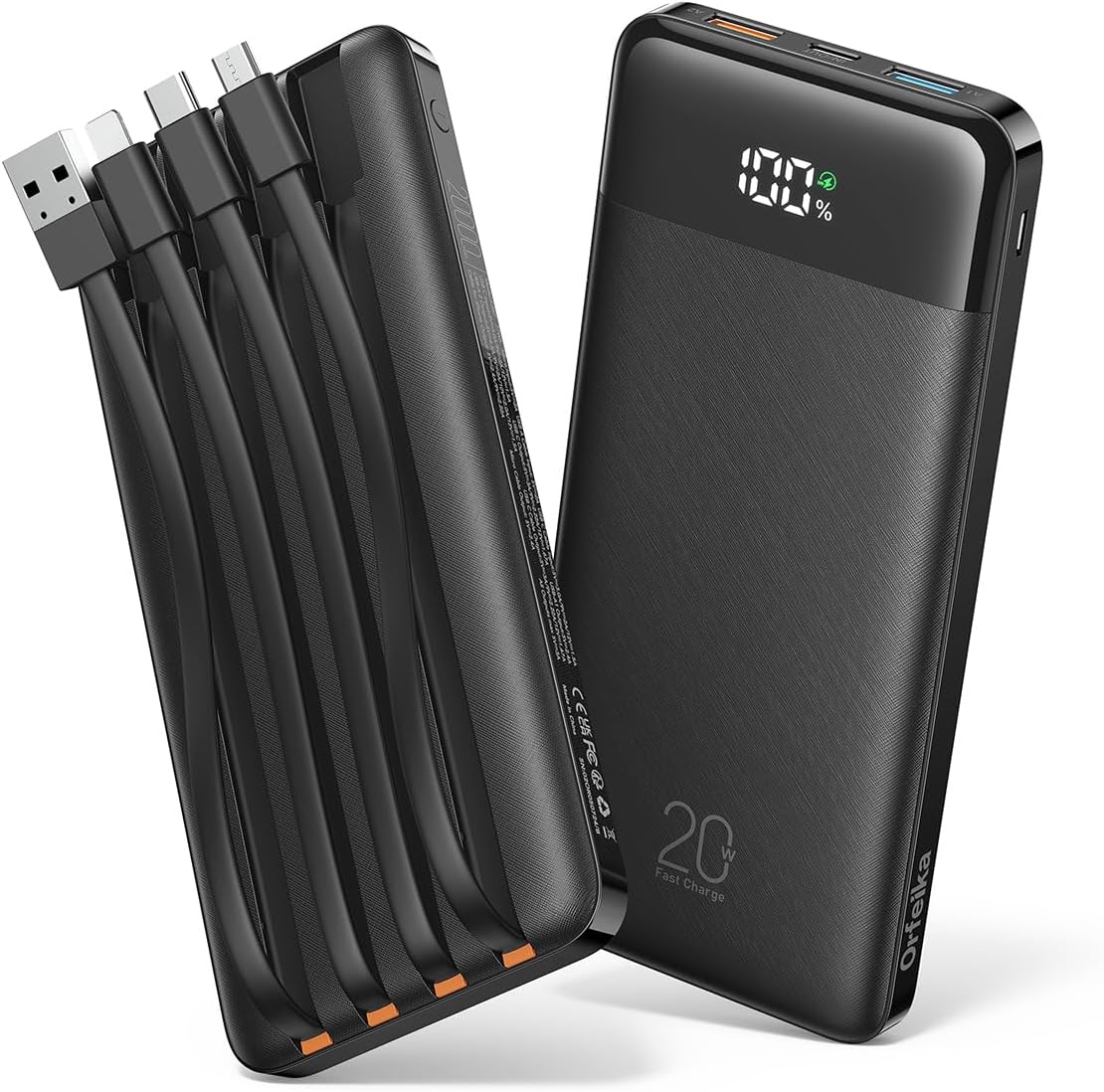
Convenience features drastically improve the user experience. Built-in charging cables eliminate the need to pack separate cords, reducing clutter and the chance of forgetting a vital cable. Look for models that include USB-C, Micro-USB, and Lightning cables integrated into the body.
Additional ports allow for charging multiple devices simultaneously. While wireless charging is a premium convenience found in some models, as seen in our review of the best power banks with wireless charging, integrated cables offer more reliable and faster wired connections in the field. Consider the overall size and weight to ensure it fits comfortably in your backpack.
Final Thoughts
For adventurers seeking a comprehensive power and light solution, the Solar Charger Power Bank 38800mAh stands out with its massive capacity, built-in cables, and dual-mode flashlights. Its rugged, weather-resistant design makes it a trustworthy companion for demanding environments. If your needs are more urban-centric, you might also explore options from our broader selection in the Chargers & Batteries category, which includes sleek models perfect for daily commutes or keeping your Android device powered throughout the day.
Frequently Asked Questions
How long does it take to recharge a large portable battery with solar panels?
Solar charging is significantly slower than using a wall outlet and is highly dependent on sunlight intensity. A full solar recharge for a 38800mAh bank can take multiple days of direct, optimal sunlight. It is best viewed as an emergency backup method to slowly top up the bank when no other power source is available, not as a primary charging solution.
Can I use a portable battery with a flashlight while it’s charging my devices?
Yes, most quality power banks allow simultaneous use. You can typically charge your phone or other devices via the USB ports while using the built-in LED flashlight. The flashlight draws a minimal amount of power, so it has a negligible impact on the overall capacity available for your devices.
Are portable batteries with flashlights allowed in carry-on luggage?
Yes, portable chargers or power banks with integrated flashlights are generally permitted in carry-on luggage by major airlines like the FAA and TSA. There are capacity restrictions, usually limiting power banks to 100 watt-hours. A 38800mAh bank at 3.7V is approximately 143 watt-hours, which may exceed carry-on limits for some airlines, so always check your specific airline’s policy before traveling.
What does an IP65 rating mean for a power bank?
An IP65 rating indicates a high level of protection against environmental elements. The “6” means it is completely dust-tight, preventing fine particles from entering the device. The “5” signifies it is protected against water jets from a nozzle, making it resistant to rain, splashes, and low-pressure water. This rating confirms the unit is suitable for use in wet and dusty outdoor conditions.


Write Your Review
No reviews yet. Be the first to share your experience!