

You’ve curated a collection of pristine vinyl, but your current turntable fails to reveal the full depth and detail pressed into those grooves. The sound feels veiled, lacking the dynamic punch and spatial clarity you know your records contain. This common frustration often stems from a tonearm that introduces resonance and tracking error, masking the music’s true potential.
Our guide focuses on turntables engineered with carbon fiber tonearms, a material celebrated for its exceptional rigidity and low mass. These components are critical for accurate stylus tracking and reduced distortion. We have assessed several leading models to help you find the perfect match for your high-fidelity aspirations. Whether you prioritize classic analog purity or modern connectivity, a superior listening experience awaits.
Buying Guide for Turntables with Carbon Fiber Tonearms
Tonearm Design and Adjustability
A carbon fiber tonearm’s primary advantage is its stiffness-to-weight ratio. This rigidity minimizes bending and resonance that can color the sound. Look for models that offer adjustable Vertical Tracking Angle (VTA).
This feature allows you to fine-tune the cartridge’s angle relative to the record surface. Proper VTA ensures the stylus sits perfectly in the groove, optimizing channel separation and high-frequency detail. It is a hallmark of a serious, customizable turntable designed for long-term ownership.
Vibration Isolation and Plinth Construction
The benefits of a precise tonearm are lost if vibrations reach the stylus. Effective isolation is paramount. High-mass designs, especially dual-plinth constructions, decouple the motor and bearing from the tonearm platform.
This separation drastically reduces acoustic feedback and mechanical noise. It ensures the stylus only reads the information in the record groove, not the rumble of your floor or the hum of the motor. For a stable foundation, explore our guide on the best turntables with cork mats as well.
Platter Material and Rotational Stability
The platter’s job is to spin the record with unwavering speed accuracy. Materials like heavy acrylic are popular for their anti-resonant properties and rotational inertia. A dense platter resists speed variations, reducing wow and flutter.
Acrylic also matches the physical properties of vinyl, which can lead to a more coherent soundstage. The platter works in concert with a high-torque, speed-controlled motor to deliver rock-solid rotation, a key factor in musical timing and pitch accuracy.
Connectivity and System Integration
Consider how the turntable will connect to your existing audio system. A built-in, switchable phono preamp provides flexibility, allowing connection to both dedicated phono inputs and standard line-level inputs. For modern setups, features like Bluetooth 5.3 streaming offer wireless convenience.
Also, check for outputs like RCA and optical SPDIF. Protecting your investment is also crucial, so a quality dust cover is essential. Your turntable should integrate seamlessly, whether into a vintage stereo stack or a contemporary wireless multi-room system.
Final Thoughts
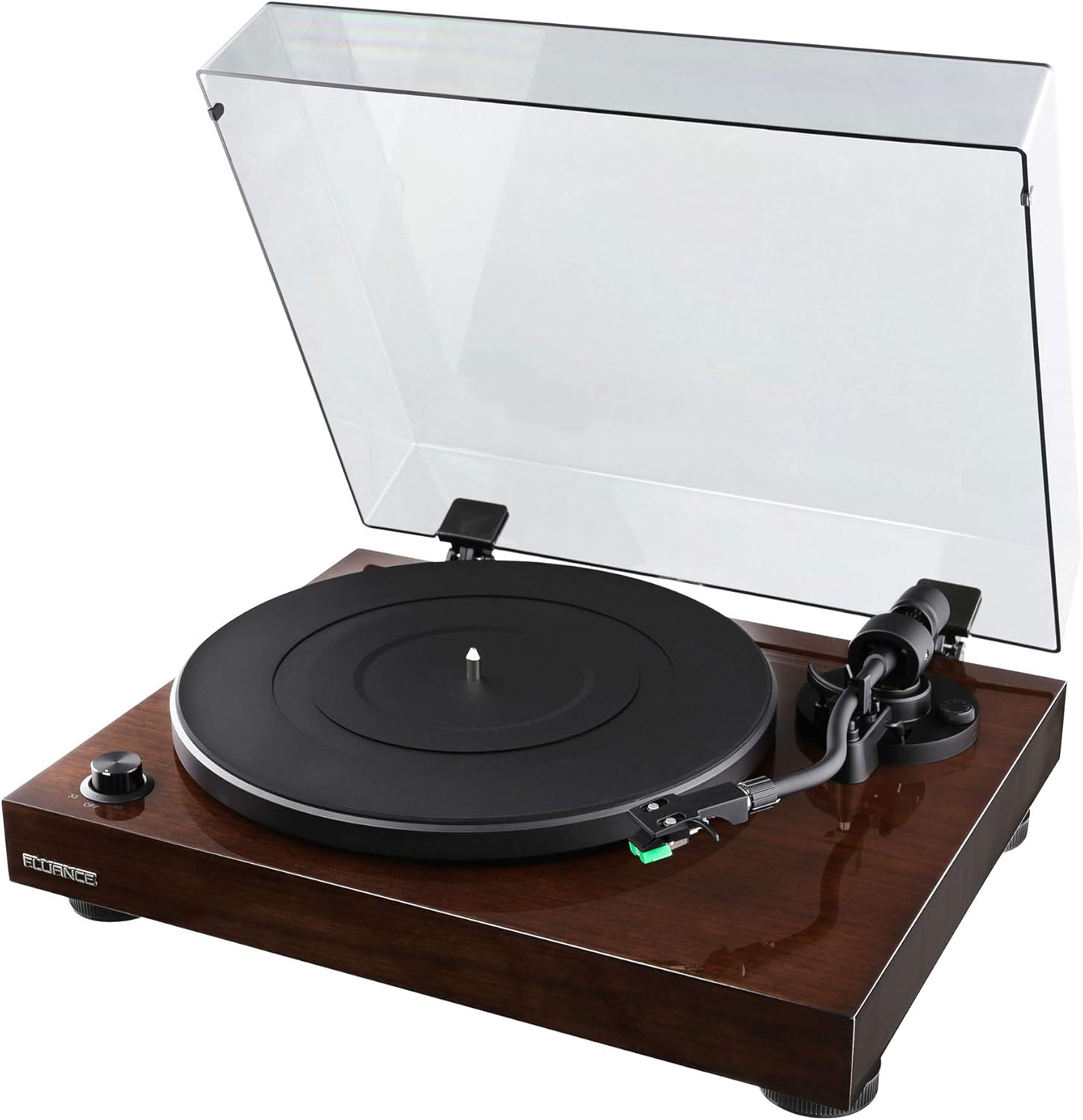
Choosing a turntable with a carbon fiber tonearm is a significant step toward unlocking the full potential of your vinyl collection. For the purist seeking uncompromised analog performance, the meticulous engineering of the Fluance RT87 Reference High Fidelity Turntable is compelling. If your lifestyle demands both high fidelity and wireless flexibility, the feature-rich Record Player,Bluetooth Turntable from MEKNICGLOBAL presents a versatile modern solution. Both paths lead to a profoundly more engaging listening experience.
Frequently Asked Questions
Why is a carbon fiber tonearm better for a turntable?
Carbon fiber offers an exceptional combination of high rigidity and low mass. This means the tonearm resists bending and resonance more effectively than many metals or plastics. The result is improved tracking of the record groove, lower distortion, and the retrieval of finer musical details, providing a cleaner, more accurate sound.
Do I need a special preamp for these high-end turntables?
Many premium turntables include a built-in, switchable phono preamp. This gives you the option to use it if your amplifier lacks a dedicated phono input, or bypass it for a higher-quality external preamp. It is a valuable feature for system flexibility. For further signal chain optimization, review our insights on HiFi DACs.
How important is the platter material on a turntable?
Extremely important. The platter’s mass and material affect rotational stability and vibration damping. Heavy platters, often made of acrylic or machined metal, increase rotational inertia. This helps maintain consistent speed, reducing audible wow and flutter. Materials like acrylic also help dissipate resonance, contributing to a quieter, more focused background.
Can I upgrade the cartridge on a turntable with a carbon fiber tonearm?
Absolutely. In fact, one of the advantages of a high-quality tonearm is its ability to properly support and reveal the performance of upgraded cartridges. The adjustable VTA found on many carbon fiber arms allows you to precisely calibrate a new cartridge for optimal performance. This makes your turntable a long-term platform for sonic exploration. For compatible upgrades, browse our turntable accessories category.




Write Your Review
No reviews yet. Be the first to share your experience!