

Your vinyl collection represents a significant investment in both money and musical passion. Dust, pet hair, and accidental bumps are the sworn enemies of that investment. A turntable without a proper cover is an open invitation for damage. This guide is dedicated to helping you find the best turntables with dust covers, a critical feature for any serious or casual listener looking to preserve their records and their player.
We focus on models where the cover is integrated, well-designed, and built to last, ensuring your setup remains pristine. Whether you are building your first system or upgrading an old one, this review will point you toward the ideal player for your needs.
Our Top Pick

Buying Guide: Choosing Your Turntable
Drive Type: Belt vs. Direct
The motor’s connection to the platter defines the drive type. Belt-drive turntables use a rubber belt to isolate motor vibrations, often resulting in a quieter, more musical sound. They are popular for their sonic character and are a common choice for home listening.
Direct-drive models have the motor directly connected to the platter, offering superior torque and speed stability. This makes them excellent for precise speed control and DJ use. Your choice depends on whether you prioritize classic audiophile warmth or rock-solid performance.
Operation: Manual, Automatic, or Semi-Automatic
How much interaction do you want with your turntable? Fully automatic models, like our top pick, handle the entire process. They move the tonearm to the record’s edge and return it at the end, which is fantastic for convenience and preventing stylus wear.
Manual turntables require you to lift and place the tonearm yourself. They offer a more hands-on, traditional experience and often omit extra circuitry that could theoretically affect sound. Semi-automatic models are a middle ground, automatically returning the tonearm but requiring manual cueing at the start.
Build Quality and Anti-Resonance
The turntable’s construction directly impacts sound. A heavy, well-isolated platter resists vibration and maintains consistent speed. Features like a die-cast aluminum platter, as seen in the Audio-Technica AT-LP60X-BK, help minimize wow and flutter.
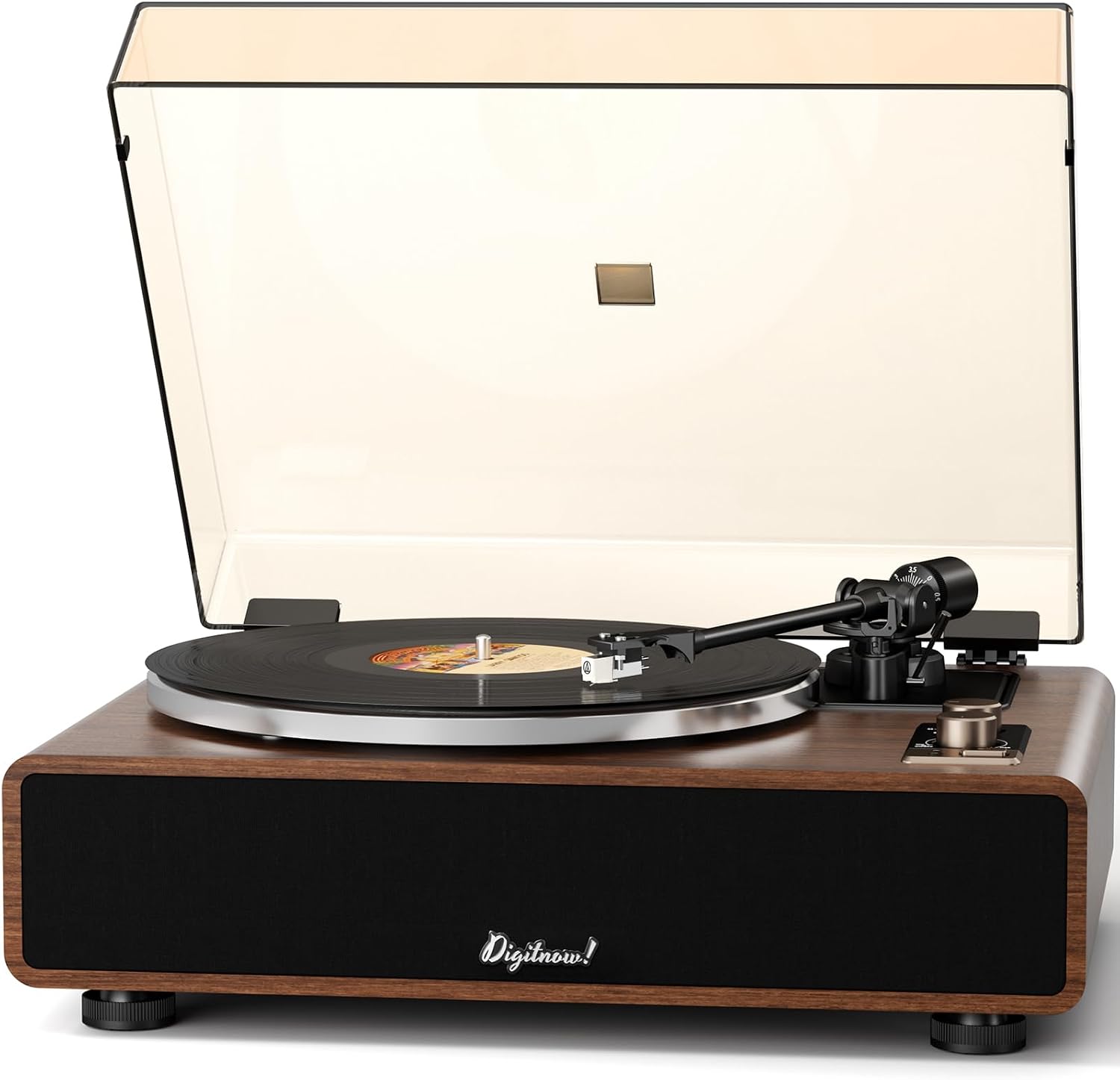
Look for a solid base and a dust cover that fits snugly without rattling. The cover itself should be thick enough to dampen external sound and protect against impacts. A flimsy cover can introduce resonance, defeating its purpose. For more on technical performance, explore our guide on turntables with low wow and flutter.
Final Thoughts
Selecting the right turntable with a dust cover is about balancing protection, performance, and personal preference. For those seeking ultimate plug-and-play convenience with reliable sound, the Audio-Technica AT-LP60X-BK Fully Automatic is a standout choice that simplifies the vinyl experience. If your needs lean toward more manual control or different connectivity options, exploring other models within the broader turntable category is your next best step.
Frequently Asked Questions
Why is a dust cover so important for a turntable?
A dust cover is essential because it protects the sensitive stylus and spinning record from dust, spills, and physical damage. Even tiny particles can cause pops and surface noise on your records and accelerate stylus wear. Keeping the cover closed when not in use is the simplest way to maintain your system’s longevity and sound quality.
Should I play records with the dust cover up or down?
It is generally recommended to play records with the dust cover open or removed. A closed cover can sometimes trap vibrations and resonance, potentially affecting the sound. However, in dusty environments, playing with the cover down might be necessary. If you hear a boxy or resonant sound, try playing with the cover off to see if it makes a difference.
Can I add a dust cover to a turntable that doesn’t have one?
Yes, you often can. Many manufacturers sell proprietary dust covers for their models, and there are also universal aftermarket covers available. You will need to ensure the dimensions match your turntable’s chassis. For a wide selection of compatible accessories, check out our turntable accessories page. Proper fit is crucial to avoid instability or vibration.
Are belt-drive or direct-drive turntables better for home listening?
For dedicated home listening, belt-drive turntables are often preferred. Their design isolates motor vibrations, which can lead to a quieter, more nuanced sound. Direct-drive turntables excel in speed accuracy and durability, making them fantastic for DJ use or modern setups requiring robust performance. The “better” choice depends entirely on your listening priorities and habits.


Write Your Review
No reviews yet. Be the first to share your experience!