

You place your favorite record on the platter, lower the stylus, and wait for that rich, warm sound. Instead, you notice a slight waver in the pitch, a subtle warble that pulls you out of the music. This common frustration is often caused by wow and flutter, technical terms for speed instability that can mar your listening experience.
For audiophiles and casual listeners alike, a turntable engineered for low wow and flutter is non-negotiable. It ensures the rotational speed remains constant, preserving the artist’s intended pitch and timing. This guide is dedicated to helping you find a turntable that delivers rock-solid stability, whether you’re building a dedicated hi-fi system or simply enjoying your vinyl collection. We have assessed models from trusted brands like Fluance and Audio-Technica, focusing on the engineering that minimizes these unwanted artifacts.
Buying Guide: Choosing a Turntable for Speed Stability
Drive Type: Belt vs. Direct
The motor’s connection to the platter is a primary factor. Belt-drive turntables use a rubber belt to isolate motor vibrations, which can reduce rumble and often contribute to lower wow and flutter in well-designed models. Direct-drive turntables have the motor directly attached, offering instant start-up and consistent torque, which also supports speed stability.
Your choice depends on priority. Belt-drive is classic for audiophile listening, while direct-drive is robust for DJing and offers precise pitch control. For critical listening focused on speed accuracy, reviewing options like the best turntables with high torque motors can provide additional context on drive performance.
Motor and Plinth Isolation
Even the best motor generates vibrations. Effective isolation is key to preventing those vibrations from reaching the platter and tonearm, where they can manifest as flutter. Look for features like a heavy, anti-resonant plinth (often MDF or wood), separate motor boards, and isolation feet.
High-mass designs absorb energy, while strategic decoupling stops vibration transfer. This engineering is crucial for silence between notes and pure tone during playback. Exploring turntables with isolated motors highlights models built specifically with this advanced damping in mind.
Platter Mass and Material
A heavy platter acts as a flywheel, maintaining rotational inertia for consistent speed. Materials like die-cast aluminum or acrylic are common. Acrylic is particularly valued for its anti-static properties and ability to dampen resonances, matching the density of vinyl records for cleaner sound.
The mass helps smooth out minor speed variations from the motor or belt. A well-damped, heavy platter is a hallmark of turntables designed for low wow and flutter, contributing directly to that locked-in, stable sound you desire.
Speed Control and Calibration
Precise speed control mechanisms are vital. Look for features like quartz lock, which uses a digital circuit to compare and correct platter speed against a crystal reference. Variable pitch controls, often found on DJ models, allow for fine adjustments but also indicate a capacity for precise calibration.
These systems actively combat wow and flutter by continuously monitoring and correcting rotational speed. For users who value this level of adjustment, our guide to the best turntables with pitch adjustment delves deeper into this functionality.
Final Thoughts
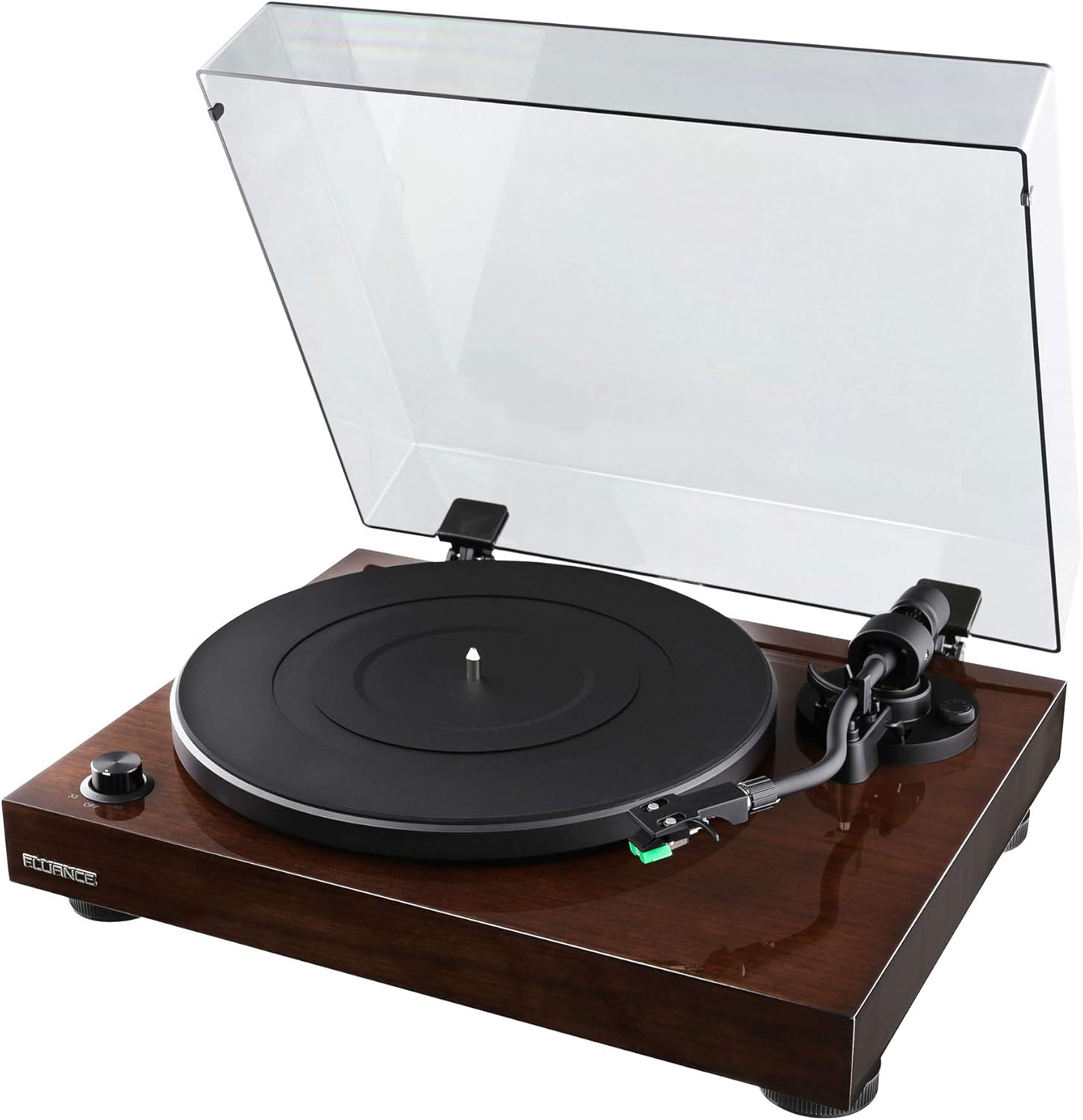
Selecting a turntable with low wow and flutter fundamentally enhances your vinyl experience by ensuring faithful, stable playback. For those seeking an exceptional high-fidelity foundation, the meticulous engineering of the Fluance RT87 Reference High Fidelity Turntable offers outstanding isolation and speed control. Alternatively, if you need versatile performance for both listening and digitizing, the feature-rich Audio-Technica AT-LP120XUSB-BK Direct-Drive provides professional-grade stability and connectivity, making it a superb all-around choice.
Frequently Asked Questions
What is an acceptable wow and flutter specification for a good turntable?
For serious listening, look for a specification of 0.1% or lower. Many high-quality models reviewed here meet or exceed this standard. Lower percentages indicate greater speed stability, which directly translates to more accurate pitch and a cleaner sound. Specifications below 0.05% are often found in higher-end audiophile designs.
Can I reduce wow and flutter on my existing turntable?
Some improvements are possible. Ensure your turntable is on a perfectly level, solid surface away from speakers. Check that the drive belt is clean, intact, and correctly installed. A heavier aftermarket platter mat can sometimes increase inertia. However, significant reduction is typically a matter of inherent design, so upgrades may be limited.
Is direct-drive or belt-drive better for minimizing wow and flutter?
Both can excel. Modern direct-drive motors with servo control are highly precise, offering excellent speed stability. High-quality belt-drive systems effectively isolate motor vibration, which also minimizes flutter. The best choice depends on the specific model’s engineering; both types are represented among the top performers for low wow and flutter in 2026.
Do I need a special turntable to convert my records to digital files?
Speed stability is even more critical for digitizing, as wow and flutter will be permanently recorded. A turntable with a built-in preamp and USB output simplifies the process. For a dedicated setup, you might explore our recommendations for the best turntables for digitizing vinyl, which prioritize clean, stable signal paths alongside conversion features.




Write Your Review
No reviews yet. Be the first to share your experience!